This article contains affiliate links. If you buy through them, we may earn a commission at no extra cost to you.
How this article was made: Research-based comparison. It draws on published information from makers, retailers, and reference sources, not on hands-on testing.
The Short Answer: Which Sashiko Pattern Book to Buy
For a first sashiko book, Simply Sashiko is the easiest starting point: 36 patterns with actual-size templates, in English, for about $13. If you want one reference to keep for years, choose The Ultimate Sashiko Sourcebook. The other three picks each do one job well: a pattern dictionary, a pattern-a-day sampler, and a book built around mending clothes.
| Book | Price | Best for | Patterns / projects (per publisher) | Pages |
|---|---|---|---|---|
| Simply Sashiko | $12.74 | A first book | 36 patterns, actual-size templates | 120 |
| The Ultimate Sashiko Sourcebook | $17.84 | One all-round reference | Over 100 traditional patterns | 128 |
| Essential Sashiko | $13.87 | A pattern dictionary | 92 patterns, 11 projects | 96 |
| Sashiko 365 | $20.77 | Daily practice | 365 patterns on four-inch squares | 144 |
| Make and Mend | $11.97 | Mending clothes | 15 projects | 160 |
I have not stitched my way through these books. The descriptions below are based on the publishers’ own descriptions and the details on each Amazon listing, and prices are the US Amazon prices as of October 3, 2026. Book prices change often, so check the current price before you buy.
All five are written in English, so there is no need to work from Japanese-only diagrams. If you are completely new to the craft, What Is Sashiko? explains the basics first.
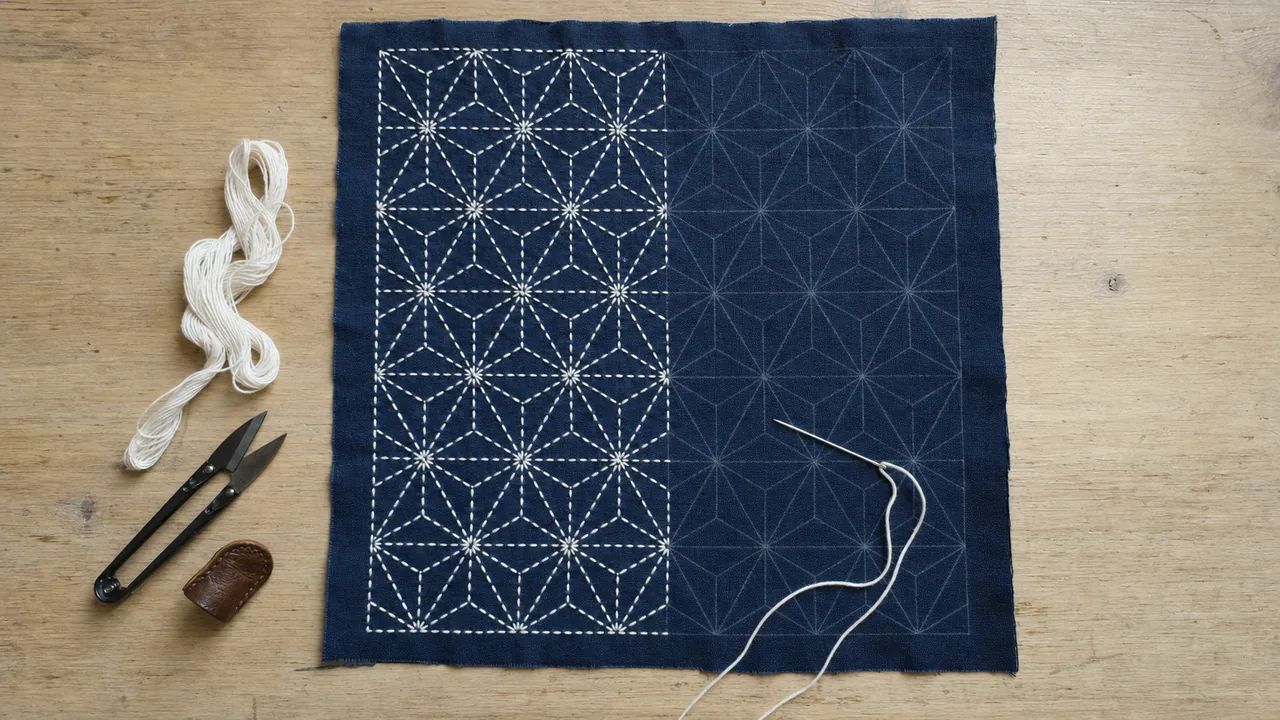
How to Choose a Sashiko Pattern Book
Pick the book by what you want to do with it: learn the stitch, look up patterns, practice daily, or repair clothing. A book that is perfect for one of these can be frustrating for another.
A few things are worth checking on any listing before you buy:
- Templates: actual-size templates save you from enlarging or redrawing a pattern before you can transfer it to fabric
- Pattern type: *moyozashi* patterns are drawn with lines of running stitch, while *hitomezashi* (“one-stitch”) patterns are built on a grid; some books cover both, some focus on one
- Patterns versus projects: a pattern collection gives you designs to use anywhere, while a project book walks you through finished items such as pouches, placemats, or a mended pair of jeans
- Language: many beautiful sashiko books are published only in Japanese, so confirm the language on the listing
A book does not replace materials. You still need a needle, thread, and fabric, which our guides to sashiko starter kits, sashiko thread, and sashiko fabric cover in detail.
The Five Books in Detail
Best First Book: Simply Sashiko
Simply Sashiko: Classic Japanese Embroidery Made Easy — $12.74 (paperback)
The publisher describes this as simple but thorough lessons on 36 different sashiko patterns, with step-by-step instructions and color photos that cover everything from transferring a pattern to the stitching itself. The listing also names actual-size templates and small projects to try the patterns on, including pouches, little purses, placemats and napkins, and covered brooches and buttons.
Thirty-six patterns is a manageable number for a beginner, and the templates mean you can start without drawing a grid of your own. It is the pick for someone who wants to learn the craft and finish a few small things.
Book Check
Author: Nihon Vogue
Publisher: Tuttle Publishing
Published: November 10, 2020
Length: 120 pages
Language: English
Format checked: Paperback
Checked Against: amazon.com
Last Checked: 2026-10-03
Best All-Round Reference: The Ultimate Sashiko Sourcebook
The Ultimate Sashiko Sourcebook: Patterns, Projects and Inspirations — $17.84 (paperback)
Susan Briscoe’s sourcebook has been in print since 2005. The publisher’s description lists the origins and cultural background of sashiko, step-by-step guidance on getting started, from choosing materials to the stitching, over 100 traditional patterns, and project ideas with a gallery of finished work.
That mix of background, technique, and a large pattern library is why it suits readers who want a single book to return to. A hardcover updated edition was published on May 20, 2025 (144 pages, $26.52 at the time of checking); its listing says it adds 12 new designs and one new project.
Book Check
Author: Susan Briscoe
Publisher: David & Charles
Published: May 27, 2005
Length: 128 pages
Language: English
Format checked: Paperback
Checked Against: amazon.com
Last Checked: 2026-10-03
Best Pattern Dictionary: Essential Sashiko
Essential Sashiko: A Dictionary of the 92 Most Popular Patterns — $13.87 (hardcover)
This one is organized as a reference. According to the publisher it provides full-size templates and patterns for 92 sashiko stitches, covers both moyozashi (straight, curved and zigzag line) and hitomezashi patterns, and includes a grid for creating diagonal stitch patterns. Instructions for 11 simple projects, such as bags, pouches, placemats and book covers, are included.
Choose it if you already know how to stitch and mainly want patterns to look up. Stock was limited at the time of checking: the listing showed only 5 copies left, with more on the way.
Book Check
Author: Boutique-sha
Publisher: Tuttle Publishing
Published: November 22, 2022
Length: 96 pages
Language: English
Format checked: Hardcover
Checked Against: amazon.com
Last Checked: 2026-10-03
Best for Daily Practice: Sashiko 365
Sashiko 365: Stitch a New Sashiko Embroidery Pattern Every Day of the Year — $20.77 (paperback)
Also by Susan Briscoe, this book presents 365 patterns, one for each day of the year, each stitched on a four-inch square of fabric. The listing says every pattern is shown as a photograph of the stitched sample next to a diagram of the stitch direction and order on the grid, and that the squares can be joined into a sampler quilt or the patterns repeated over larger pieces.
It is the most structured option here, which makes it a good fit if you want a daily habit rather than a set of finished projects.
Book Check
Author: Susan Briscoe
Publisher: David & Charles
Published: November 8, 2022
Length: 144 pages
Language: English
Format checked: Paperback
Checked Against: amazon.com
Last Checked: 2026-10-03
Best for Mending Clothes: Make and Mend
Make and Mend: Sashiko-Inspired Embroidery Projects to Customize and Repair Textiles and Decorate Your Home — $11.97 (hardcover)
Jessica Marquez’s book is described by its publisher as sashiko-inspired: fifteen projects that apply the running stitch to both repair and decoration. The examples named on the listing include repairing torn jeans and mending a ripped hem, as well as making pillows, napkins, a tablecloth, and a tote bag. The publisher says it suits both seasoned makers and total beginners.
Note the word “inspired”: this is a modern project book rather than a catalog of traditional patterns. For the technique behind a durable repair, see our guide to sashiko for clothing repair.
Book Check
Author: Jessica Marquez
Publisher: Watson-Guptill
Published: August 21, 2018
Length: 160 pages
Language: English
Format checked: Hardcover
Checked Against: amazon.com
Last Checked: 2026-10-03
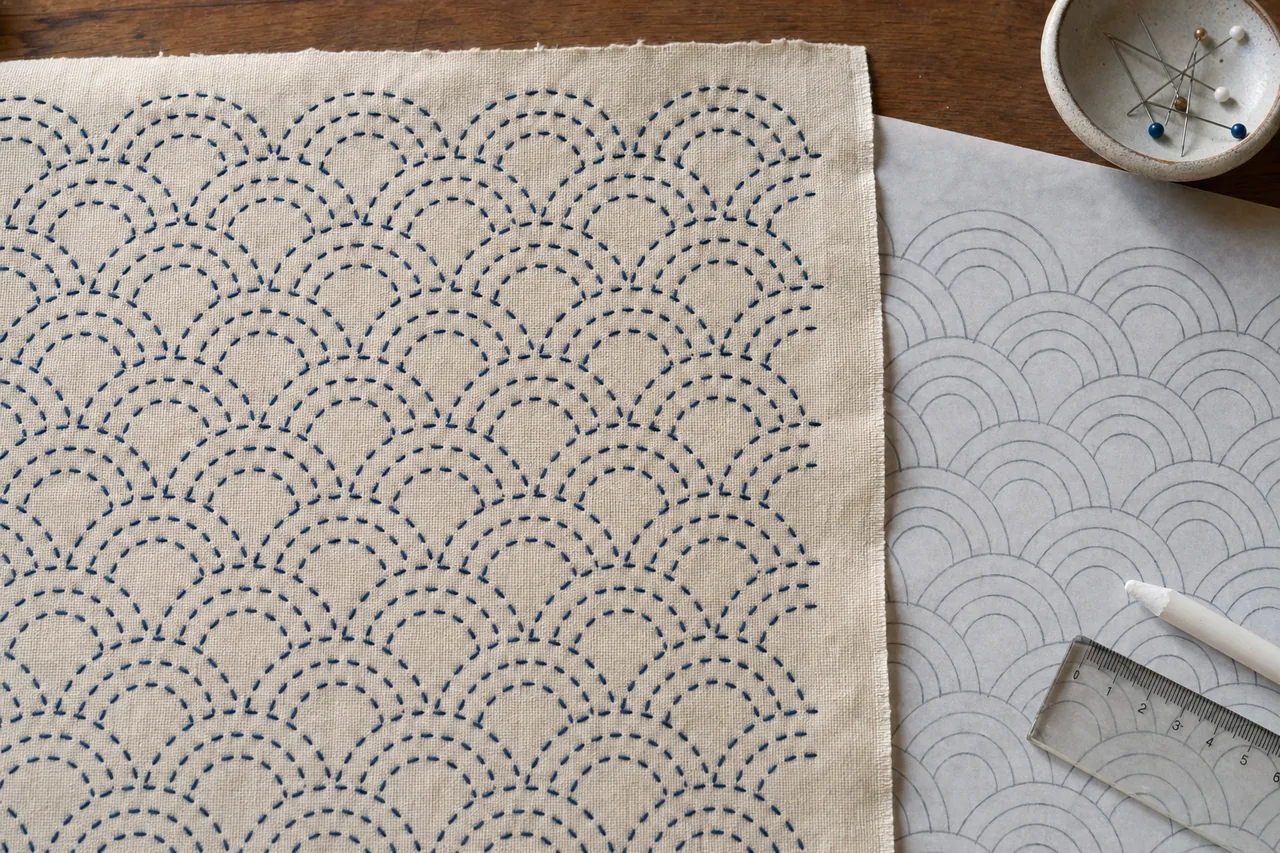
What a Pattern Book Will Not Give You
A book supplies patterns and instructions; it does not supply the feel of the stitch, and it does not include materials. Even stitch length comes from practice, whichever book you choose.
Before the book arrives, it helps to have these ready:
- A sashiko needle and thread: longer and thicker than ordinary sewing supplies
- Plain woven cotton or linen: a medium-weight fabric that a needle passes through easily
- A way to mark the fabric: a chalk pencil or water-soluble marker for transferring templates
Our step-by-step guide on how to sashiko stitch walks through the basic running stitch, so you can practice on a scrap while you decide which patterns to try first.
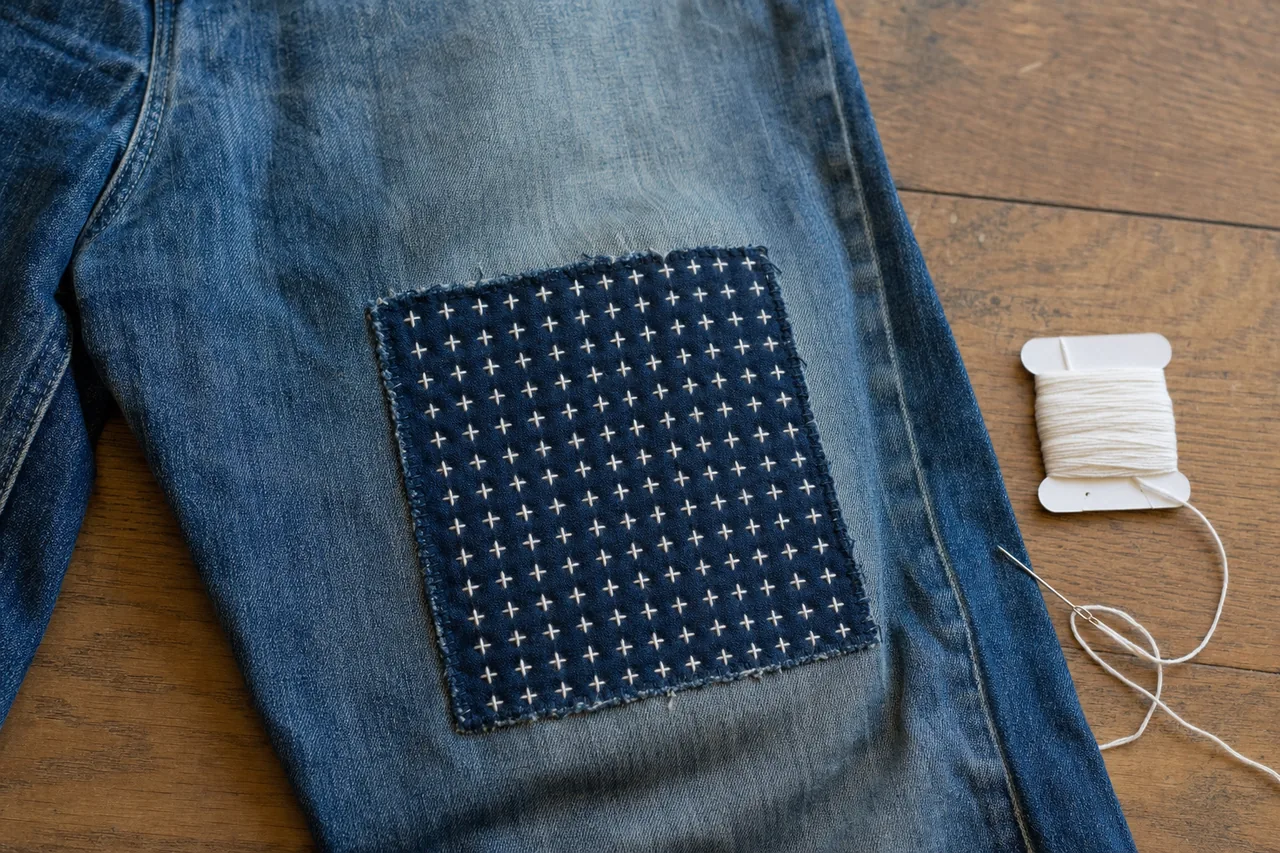
What You Will Also Need
To copy a pattern from a book onto cloth, you need a way to mark it and a fabric that keeps it straight.
- A marking tool for dark fabric — Clover White Chaco Liner (about $9.39 on Amazon.com, October 2026): a fine line of white chalk powder for copying a pattern grid onto indigo cloth; it brushes off after stitching.
- Cloth with a printed grid — Daruma Sashiko 100% Cotton Sewing Cloth with Grid Line and Fabric Marking Pencil (about $22.80 on Amazon.com, October 2026): the grid makes it much easier to scale a book pattern onto fabric.
You will also need sashiko needles; Best Sashiko Needles compares four packs from Japanese makers by length and eye.
Frequently Asked Questions
What is the best sashiko book for a complete beginner?
Simply Sashiko is the most beginner-oriented of the five: its publisher describes simple lessons on 36 patterns, step-by-step photos, and actual-size templates. The Ultimate Sashiko Sourcebook also covers getting started, alongside a much larger pattern library.
Are these sashiko books written in English?
Yes. All five listings give the language as English. Several are English editions of books by Japanese publishers, such as Nihon Vogue and Boutique-sha.
Do sashiko pattern books include templates?
Some do. Simply Sashiko and Essential Sashiko both state actual-size or full-size templates on their listings. For the other books, check the listing before you buy if templates matter to you.
Which book is best for mending jeans?
Make and Mend is the one built around repair: its listing names repairing torn jeans and mending a ripped hem among its fifteen projects.
Do I need a book to learn sashiko?
No. The basic running stitch can be learned from a short tutorial. A book becomes useful when you want a range of patterns, templates to trace, and projects to follow.
Ready to start stitching? Pair your book with the right materials: see our guides to sashiko starter kits and sashiko thread.