This article contains affiliate links. If you buy through them, we may earn a commission at no extra cost to you.
How this article was made: Research-based comparison. It draws on published information from makers, retailers, and reference sources, not on hands-on testing.
Quick picks
- Olympus Sashiko Thread 20m 4-Skein Color Bundle — $8.60: four 20 m skeins of 100% cotton thread in white and blues
- DARUMA Sashiko Thread Thick 5-Color Komorebi Set — $15.80: five colors with an English manual
- DARUMA Sashiko Thread Thin 5-Color Amaoto Set — $15.80: five colors of the thinner, four-ply thread with an English manual
Prices on Amazon.com, checked October 8, 2026.
- What Makes Sashiko Thread Different — The Short Answer
- Key Characteristics of Sashiko Thread
- Thick or Thin: What the Makers’ Specifications Say
- Olympus vs Daruma: What Each Maker Says
- Top Picks by Price Tier — Quick Comparison
- Each Product in Detail
- Choosing Your Colors: Traditional Palettes and Beginner-Friendly Strategies
- Frequently Asked Questions
- Can I use embroidery floss instead of sashiko thread?
- How much thread do I need for a project?
- Thick or thin thread — which should a beginner choose?
- Is sashiko thread sold in skeins or on cards, and does it matter?
- What is the difference between Olympus and Daruma sashiko thread?
- Is sashiko thread made in Japan?
- Final Thoughts: Which Thread Should You Start With?
What Makes Sashiko Thread Different — The Short Answer
For a first try, this guide recommends the Olympus Sashiko Thread 20m 4-Skein Color Bundle, because at $8.60 it is the lowest-priced of the three picks; choose a Daruma set if you want to pick between the thinner four-ply thread and the thicker six-ply thread. Prices were checked on Amazon.com on October 20, 2026.
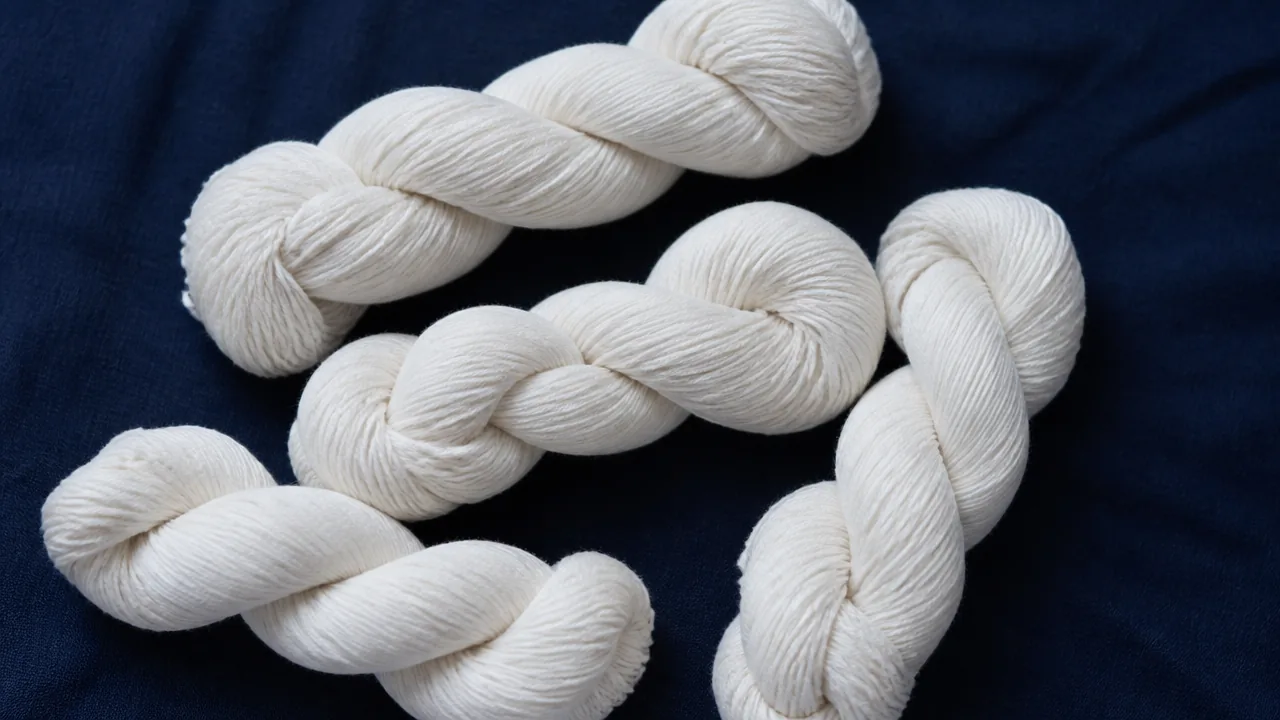
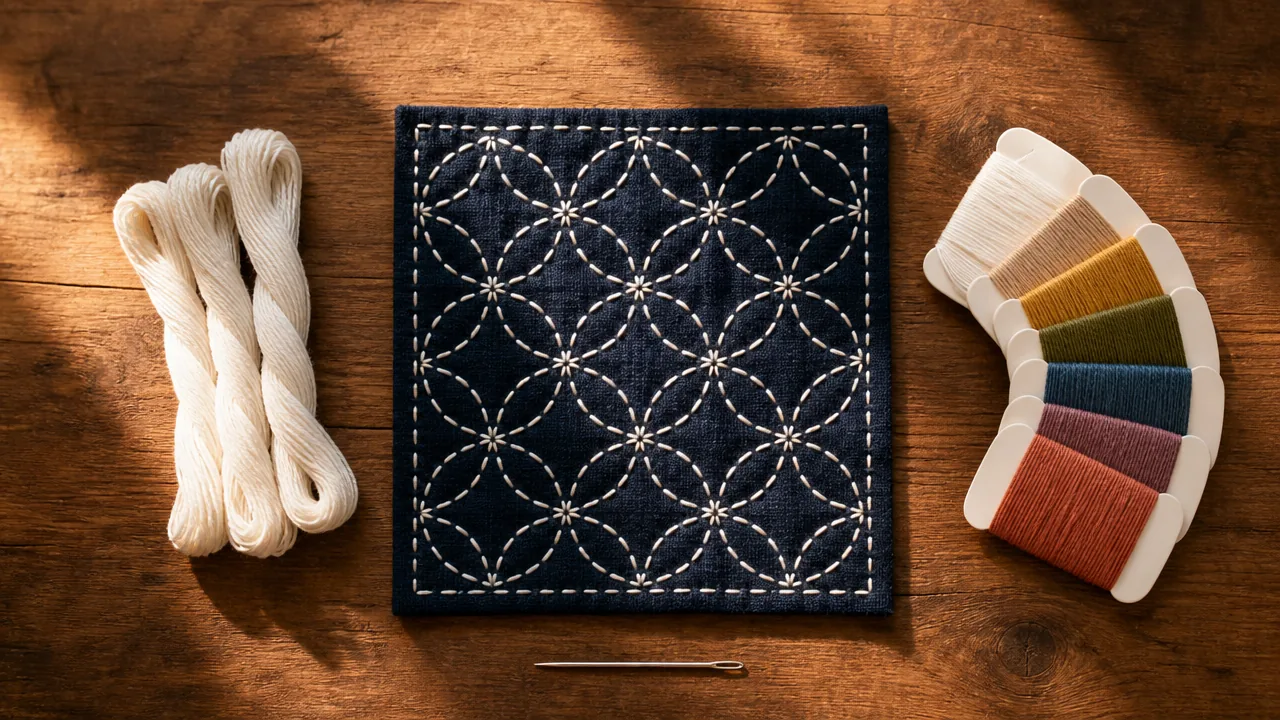
Sashiko thread is not embroidery floss. Where embroidery floss is made of six separable strands designed to be split and recombined, sashiko thread is a single, loosely twisted strand worked as-is, straight from the skein or card. That loose twist gives it a matte, low-sheen surface that catches light softly against indigo fabric — exactly the visual effect traditional sashiko is known for. If you are new to the craft and want to understand the broader history behind the stitching, What Is Sashiko? Meaning, History and Patterns of Japanese Stitching is a good place to start before you buy anything.
Key Characteristics of Sashiko Thread
Understanding what you are buying before you compare prices will save you frustration later. Here is what separates a proper sashiko thread from general-purpose sewing supplies:
- Twist structure: Sashiko thread is typically a loosely twisted, single-strand construction. You do not split it. You run it through the needle whole.
- Finish: The surface is generally matte rather than glossy. This is intentional — a high-sheen thread would undercut the quiet, geometric beauty of sashiko patterns on woven fabric.
- Thickness options: The market broadly divides into thick (太番手) and thin (細番手) weights. Thick thread works well on traditional utility projects and creates bold, clearly visible stitch lines. Thin thread suits finer work, detailed patterns, and lighter base fabrics.
- Material: Virtually all sashiko threads sold for hand stitching are 100% cotton, which is consistent with the historical roots of the craft.
- Color tradition: Traditionally, white thread on indigo-dyed fabric is the classic combination — a heritage linked to Japan’s long history of natural dyeing. Modern sashiko thread now comes in dozens of colors, but white and navy remain the most recognizable starting point.
Thick or Thin: What the Makers’ Specifications Say
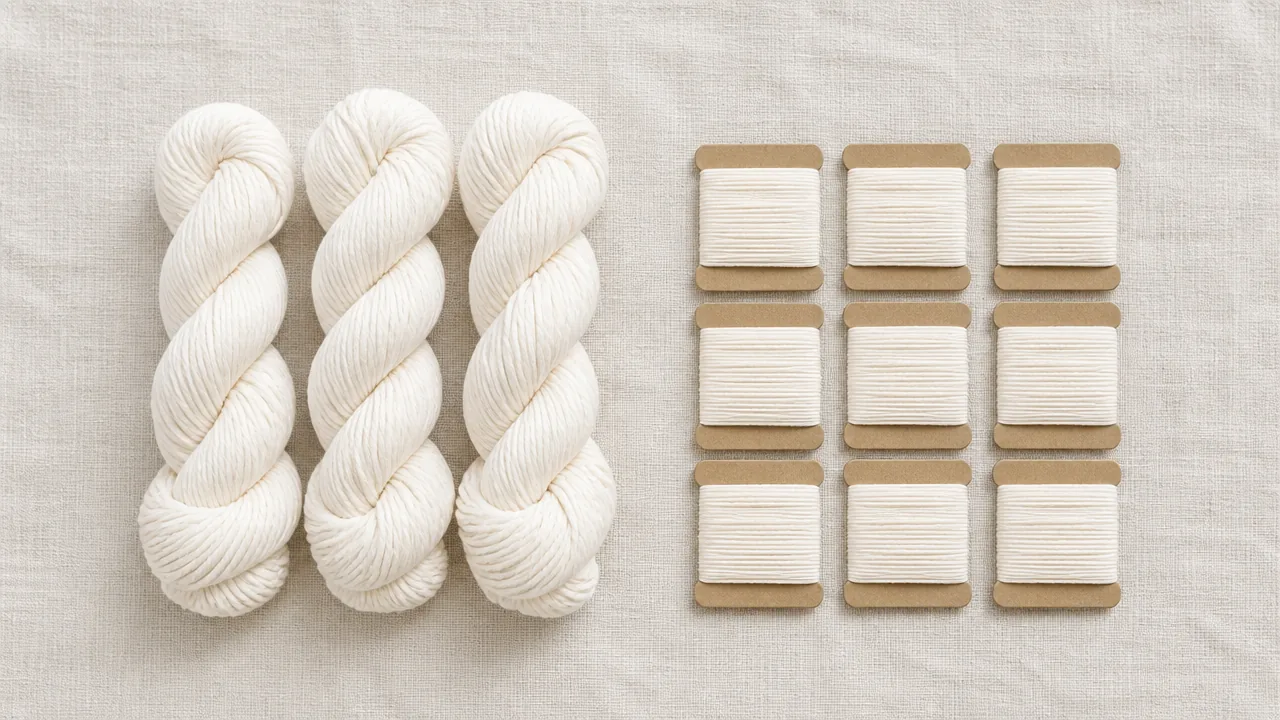
The two Daruma threads in this guide differ in the number of plies. Daruma’s page for its thin thread describes it as four-ply and the most standard thickness, easy to stitch in patterns from fine to large. On its page for the thicker thread, the maker describes a six-ply, slightly thicker thread that makes each stitch stand out, and recommends it for large patterns. Olympus’s product page gives 100% cotton and 20 m per skein, and says the thread is used as it is, without separating the strands.
| Thread | Plies | Length | Colors | Made in |
|---|---|---|---|---|
| Daruma sashiko thread, thin, card | 4 | 40 m per card | 37 | Japan |
| Daruma sashiko thread, thick (aibuto), card | 6 | 30 m per card | 29 | Japan |
| Olympus sashiko thread | Not stated | 20 m per skein | 40 solid colors, plus shaded and mixed | Not disclosed |
Specifications are from the makers’ own product pages (daruma-ito.co.jp, olympus-thread.com), read on October 8, 2026. The sets below contain these threads; the colors in each set are chosen by the seller.
Olympus vs Daruma: What Each Maker Says
Olympus and Daruma describe their sashiko threads in different terms, so the table below sets out only what each maker states on its own product pages; it does not rank one above the other. Daruma is the brand of Yokota Co., Ltd. Sources: Olympus sashiko thread, Daruma thin and Daruma aibuto, read on October 20, 2026.
| Olympus sashiko thread | Daruma thin | Daruma aibuto (thicker) | |
|---|---|---|---|
| Material | 100% cotton | 100% cotton | 100% cotton |
| Twist | Not stated on the product page | Four-ply | Six-ply |
| Thickness, as the maker puts it | Not stated | The most standard thickness | Slightly thicker |
| Solid colors | 40 | 37 (cards) | 29 (cards) |
| Other color types | Shaded (8), mixed (7) and colorful (8) | Kasuri-dyed: 2-, 3- and 8-color | Kasuri and rainbow |
| Put-up | Skeins (20 m in the Amazon bundle) | 40 m cards; 40 m and 170 m skeins | 30 m cards; 40 m and 100 m skeins |
| Country of production | Not stated | Japan | Japan |
| Maker’s description | Soft cotton that is easy to stitch, for beginners through experienced stitchers | Easy to stitch in patterns from fine to large | Each stitch stands out; recommended for large patterns |
To try a thread on a real pattern, Traditional Sashiko Patterns has seven designs with printable sheets, and How to Sashiko Stitch walks through the running stitch.
Top Picks by Price Tier — Quick Comparison
The three products below were in stock on Amazon.com on October 8, 2026, and the prices are the ones shown that day. Prices change, so check the current price on the listing before buying.
| Product | Price | Tier | Best For |
|---|---|---|---|
| Olympus Sashiko Thread 20m 4-Skein Color Bundle | $8.60 | Entry | First-time buyers wanting traditional colors at low commitment |
| DARUMA Sashiko Thread Thick 5-Color Komorebi Set | $15.80 | Mid | Large patterns and bold stitch lines, with an English manual |
| DARUMA Thin Sashiko Thread, 5 Colors (Amaoto) | $15.80 | Mid | Finer patterns, with the thinner four-ply thread |
Note: if you are still deciding whether to buy thread separately or as part of a complete tool set, check our Best Sashiko Starter Kit 2026: Top Picks by Skill Level guide first — it covers needles, fabric, and hoops alongside thread.
Each Product in Detail
Olympus Sashiko Thread 20m 4-Skein Color Bundle (see on Amazon)
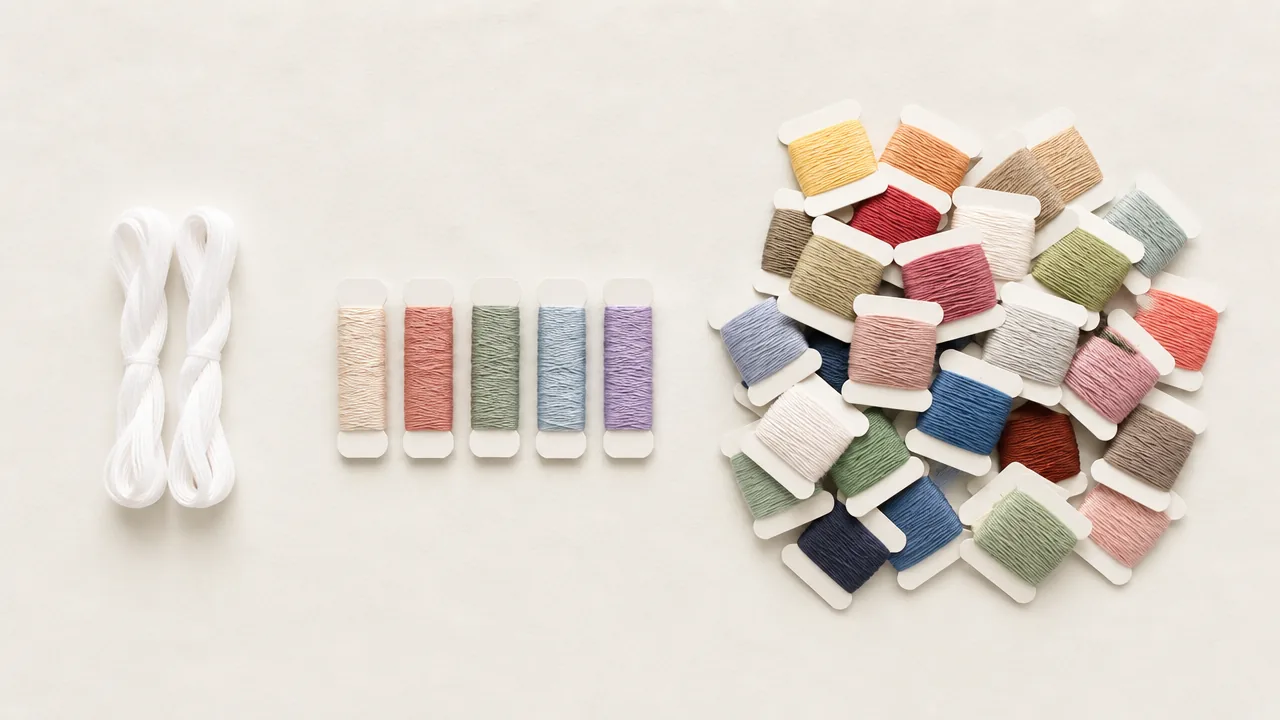
Made by Olympus Thread Manufacturing Co., this bundle gives you four 20-meter skeins — 80 meters total — in White (#01), Cobalt Blue (#10), Royal Blue (#18), and a Blue & White variegated color (#52), a white-and-blue set in line with the white-on-indigo look of classic sashiko. Olympus’s product page gives 100% cotton and 20 m per skein. At $8.60 (October 8, 2026), this is the lowest-risk way to find out whether you enjoy working with authentic sashiko thread before committing to a larger purchase. The skein format is traditional and easy to wind onto a thread bobbin or small card if you prefer a tidier storage setup.
Also on Amazon UK.
—
DARUMA Sashiko Thread Thick 5-Color Komorebi Set (see on Amazon)
Made by YOKOTA CO., LTD. — the company behind the Daruma brand — this set gives you five cards of thick-weight thread, each 32.8 yards long, in the “Komorebi” (dappled forest light) palette. An English-language manual is included, which is genuinely useful for beginners who are unfamiliar with traditional sashiko patterns and tension. Daruma lists the thicker thread as six-ply, 30 m per card, and made in Japan. Priced at $15.80 (October 8, 2026), it costs roughly twice the Olympus bundle but provides color variety, a thicker thread that shows stitch lines boldly, and the manual as a practical bonus. One honest note: the product page specifies that the gift packaging is not manufactured by Daruma itself, so if the presentation matters to you — for example, as a gift — go in with realistic expectations about what the outer packaging looks like.
Also on Amazon UK / Amazon.de.
—
DARUMA Sashiko Thread Thin 5-Color Amaoto Set (see on Amazon)
Also from YOKOTA CO., LTD., this set has five cards of the thin thread, each 43.7 yards (40 m) long, in the “Amaoto” palette, with an English manual. Daruma describes this thread as four-ply and the most standard thickness, and lists it as made in Japan. At $15.80 on Amazon.com (October 8, 2026), it costs the same as the thick Komorebi set, so the choice between the two is about thread weight rather than price. As with the thick set, the listing says the gift packaging is not made by Daruma. The 37-color thin set that this guide listed earlier was no longer offered on this listing on October 8, 2026.
Choosing Your Colors: Traditional Palettes and Beginner-Friendly Strategies
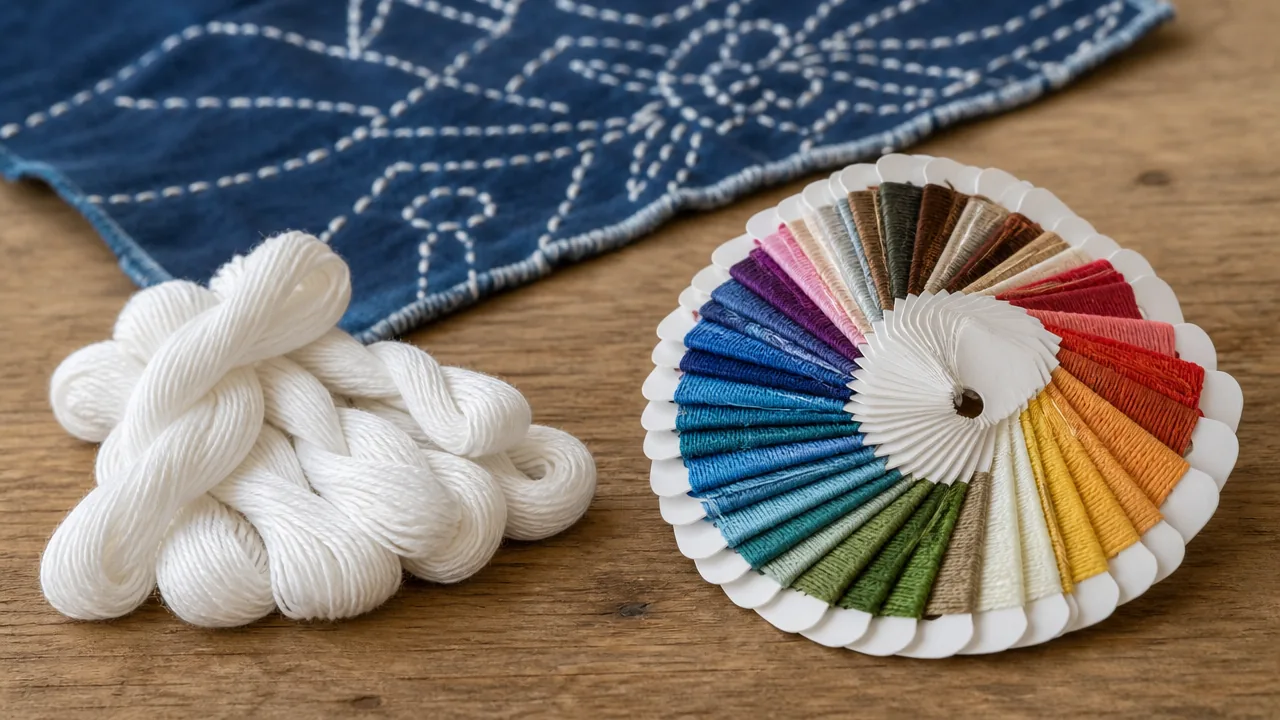
Color choice in sashiko is more deliberate than it might seem at first. The traditional aesthetic is built on high contrast — most often white thread on dark indigo fabric — and that contrast is what makes the geometric patterns legible from across a room. If you are buying your first thread, starting with white or off-white is almost always the right call, regardless of which product tier you choose. It pairs with the widest range of base fabrics and lets you learn the stitch patterns without the additional variable of color balance.
Once you are comfortable with the stitching itself, expanding toward blues and naturals is a natural next step. The Olympus four-skein bundle is essentially pre-curated for this progression — the cobalt and royal blue tones sit comfortably within the indigo family without being identical to it, giving your work some tonal variation while staying historically grounded. For a deeper look at how this color tradition connects to the broader Japanese textile heritage, the piece on What Is Boro? The Poverty-Born Aesthetic Behind Sashiko adds useful context. For more on what these specific colors have traditionally signified, see Sashiko Thread Colors: What They Traditionally Mean.
If you are working on a project with a specific mood or planning to display finished pieces as décor, the Komorebi palette in the Daruma thick set offers something softer — muted, earthy tones that evoke natural light rather than the stark contrast of the traditional look. The thin Amaoto set is the one to choose if you want the finer thread.
What You Will Also Need
Thread alone is not enough to start; add these two items if you do not already have them.
- Sashiko needles — Clover Sashiko Needles (about $6.04 on Amazon.com, October 8, 2026): eight long needles in four sizes; regular embroidery needles are too short for loading several stitches at once. Best Sashiko Needles compares this pack with three others by length and eye. Also on Amazon UK / Amazon.de.
- A pre-printed practice cloth — Olympus Sashiko Sampler Traditional Shippo Tsunagi, Blue (about $9.99 on Amazon.com, October 2026): the stitching lines are printed on the cloth and wash out, so there is nothing to mark. Also on Amazon.de.
Frequently Asked Questions
Can I use embroidery floss instead of sashiko thread?
Technically yes, but the result will look and feel different. Embroidery floss is made of six separable strands with a noticeable sheen, and it is designed to be divided for different line weights. Sashiko thread is a single loosely twisted strand with a matte finish — that specific texture is a large part of what makes sashiko stitching visually distinctive. If you substitute embroidery floss, especially at full six-strand thickness, you may find it harder to pull through densely woven fabric evenly, and the surface sheen will catch light in a way that looks noticeably different from traditional sashiko work. For occasional practice it will do, but it is not a like-for-like swap.
How much thread do I need for a project?
This depends on the pattern density, your stitch length, and the size of the finished piece. Because these variables differ so widely, it is difficult to give a single reliable number — and anyone who tells you “you need exactly X meters for a coaster” is oversimplifying. A practical approach: start with one of the entry-level products to get a feel for your thread consumption per pattern, then scale up. Both the Olympus bundle (80m total) and the Daruma thick set (roughly 164 yards across five cards) give you enough to complete small to medium practice projects before you run short.
Thick or thin thread — which should a beginner choose?
Daruma describes its thin, four-ply thread as the most standard thickness, easy to stitch in patterns from fine to large, and its six-ply thread as slightly thicker, making each stitch stand out, which it recommends for large patterns. For a first project with a large, simple pattern, this guide suggests the thicker thread — like the Daruma Komorebi set — because each stitch is easier to see.
Is sashiko thread sold in skeins or on cards, and does it matter?
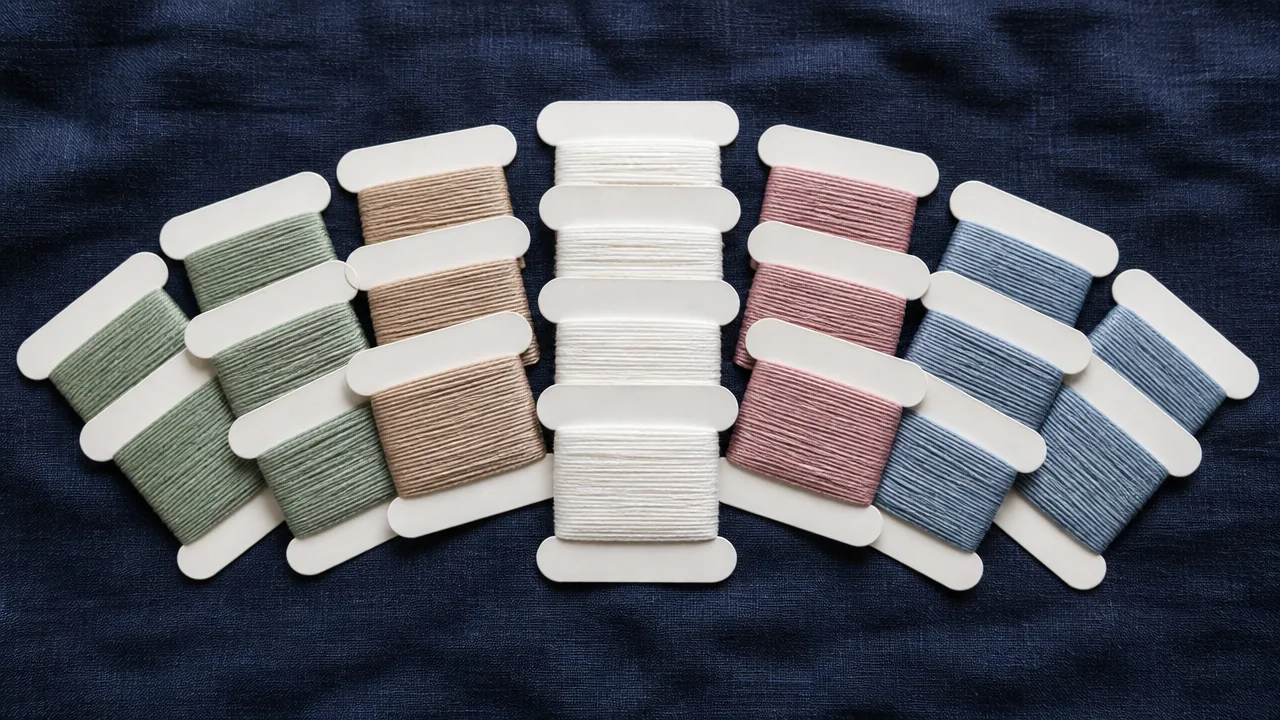
Both formats are common, and the thread quality is not determined by the packaging format. Skeins (loose loops of thread, like the Olympus product) are the more traditional presentation; you unwind what you need and cut to length. Card-wound thread (like both Daruma options) is tidier to store and easier to portion, which many beginners find more practical. Either format works the same way once the thread is in the needle.
What is the difference between Olympus and Daruma sashiko thread?
They are described differently by their makers. Daruma, a brand of Yokota, describes its thin thread as four-ply and the most standard thickness, and its aibuto as six-ply and slightly thicker, recommended for large patterns. Olympus describes its thread as soft 100% cotton that is easy to stitch, and offers 40 solid colors plus shaded, mixed and colorful types. This guide does not rank one above the other.
Is sashiko thread made in Japan?
It depends on the maker. Daruma lists Japan as the country of production for its thin and aibuto card threads. The Olympus product page does not state where its thread is made.
Final Thoughts: Which Thread Should You Start With?
For most beginners, the decision comes down to two questions: how much do you want to spend upfront, and do you already know which colors you want to work with?
If you are genuinely unsure whether sashiko stitching will stick as a hobby, the Olympus Sashiko Thread 20m 4-Skein Color Bundle is the easiest entry point. The price is low, the colors are historically appropriate, and you will have enough thread to work through several small patterns before needing to restock.
If you are already committed to learning and want practical guidance alongside your supplies, the DARUMA Sashiko Thread Thick 5-Color Komorebi Set adds real value through its English manual and the thick-weight thread that makes learning stitch consistency easier.
And if you want the finer, four-ply thread for smaller patterns, the DARUMA Sashiko Thread Thin 5-Color Amaoto Set gives you five colors of the thinner thread at the same price as the thick set.
All three prices are approximate and may differ when you visit Amazon.com, so check the current listing before purchasing. And if you have not yet put together your basic stitching supplies, our Best Sashiko Starter Kit 2026: Top Picks by Skill Level covers everything else you will need alongside your thread.
If you are still pulling your kit together, our full starter kit guide has everything you need in one place.