How this article was made: Research-based comparison. It draws on published information from makers, retailers, and reference sources, not on hands-on testing.
Two Knives, Two Entirely Different Jobs
The deba and the yanagiba are both traditional Japanese single-bevel knives designed specifically for fish — but they are built for opposite ends of the process. The deba breaks down whole fish; the yanagiba slices the cleaned flesh into sashimi. Buying the wrong one for your needs is an easy mistake to make.
This article walks through what each knife is, how its construction shapes what it can and cannot do, and how to decide which one — or whether both — belongs in your kitchen.
What Is a Deba? The Knife That Breaks Down Fish
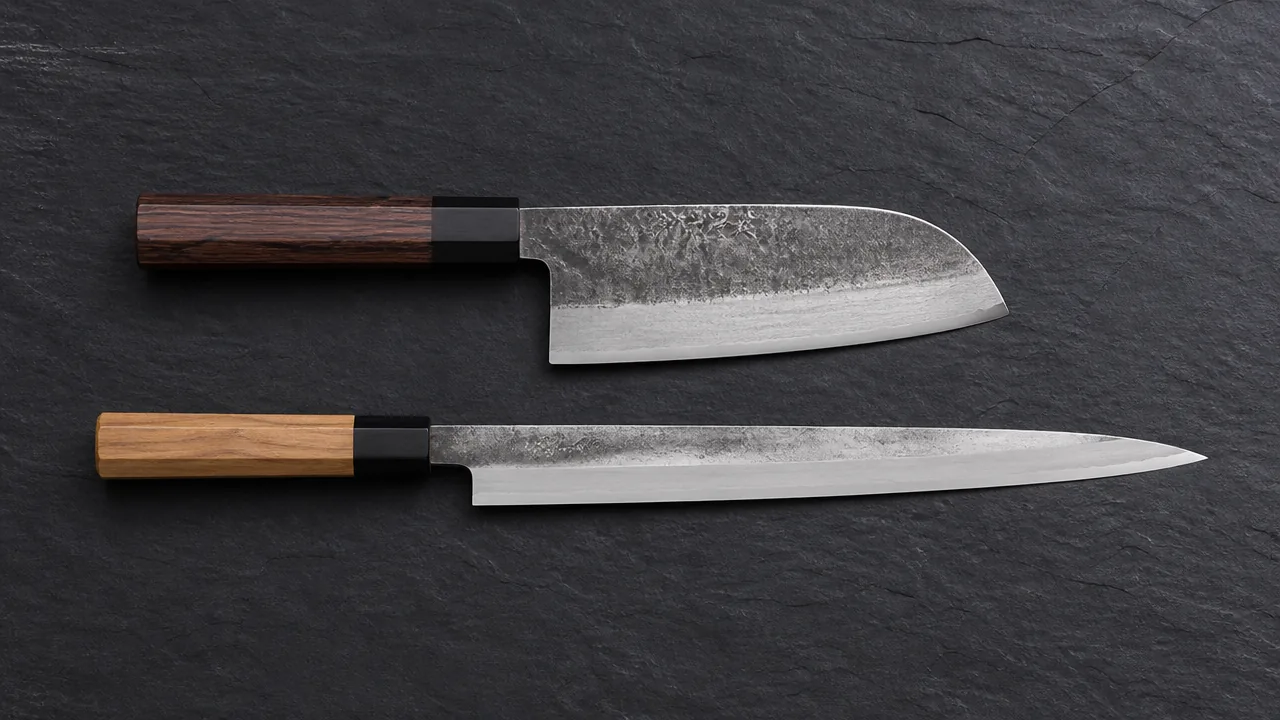
The deba is the workhorse of the Japanese fish kitchen. Its job is mechanical and forceful: cutting through fish heads, severing bones, and breaking a whole fish down into filleted portions ready for the next stage of preparation.
To do that work reliably, the deba is built thick and heavy. The spine of the blade is notably robust, giving the knife real mass behind each cut. That weight is intentional — it’s what allows the blade to drive cleanly through bone without the chef needing to apply excessive wrist force. The blade profile tapers sharply toward the edge, concentrating that mass where it meets the cutting surface.
In terms of blade length, debas are generally shorter than yanagiba — typically falling somewhere in the range of roughly 150mm to 210mm, though the right size depends largely on the size of fish you’re working with. Smaller debas suit home-sized fish like mackerel or sea bream; larger ones are more common in professional kitchens handling bigger specimens.
Like the yanagiba, the deba is a single-bevel knife — ground and sharpened on one face only, with the other side left flat or very slightly hollow (the ura). This asymmetric geometry produces a clean, directional cut and is one of the defining characteristics of traditional Japanese knife craft. For a deeper look at why single-bevel construction matters, Single Bevel vs Double Bevel Japanese Knives: What’s the Real Difference? covers the structural logic in full.
What Is a Yanagiba? The Knife That Slices Sashimi
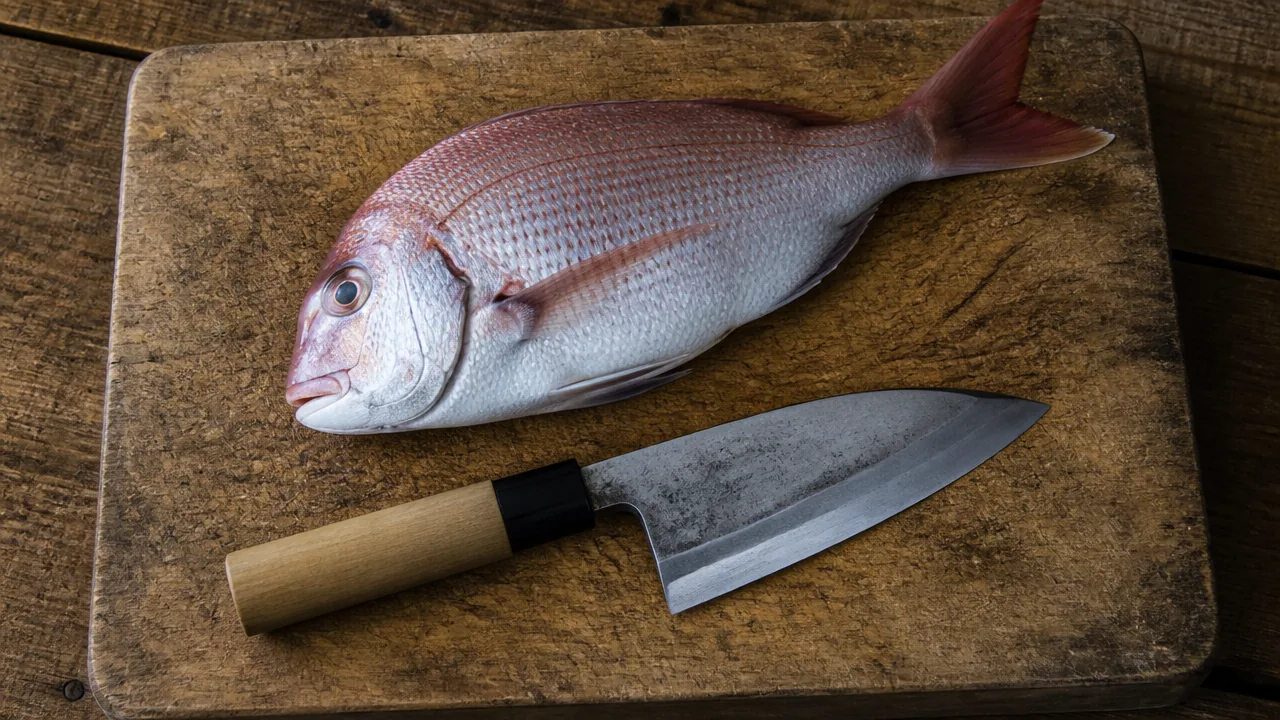
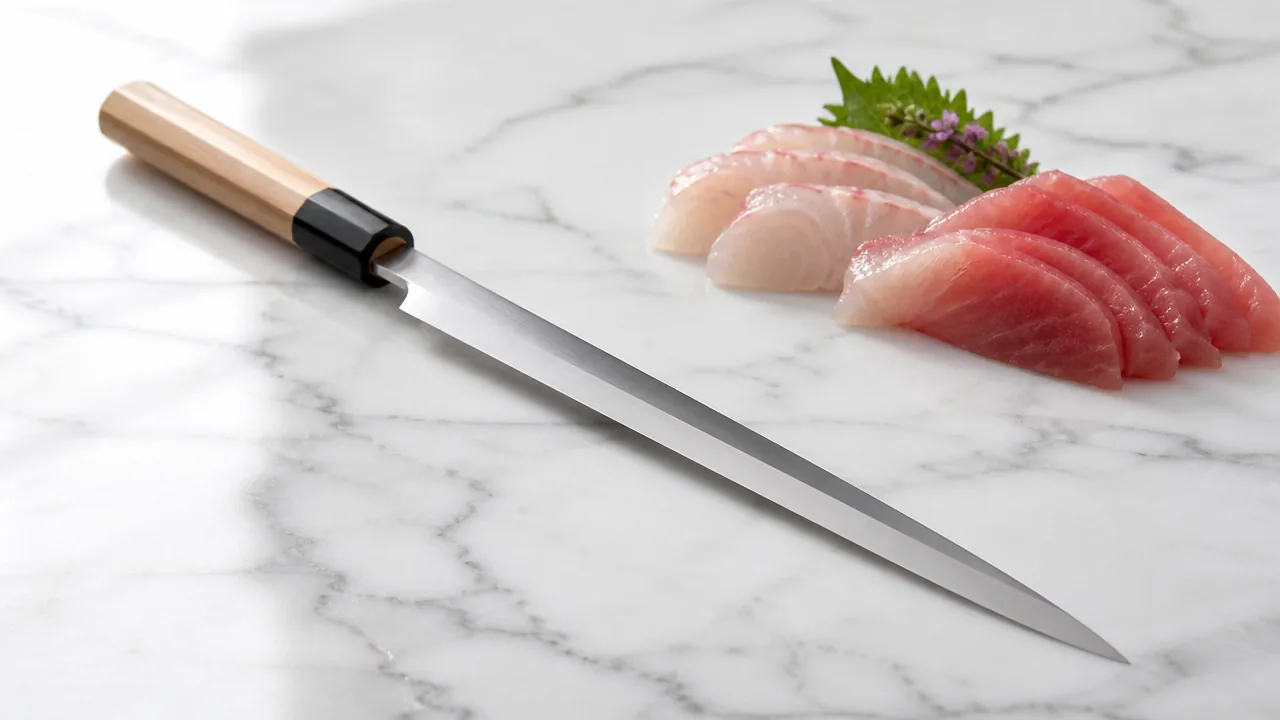
Where the deba is about force, the yanagiba is about precision and restraint. This is the knife a sushi chef reaches for after the fish has already been broken down — its entire design is optimized for drawing long, uninterrupted slices through clean fish flesh. Its double-bevel counterpart, used mainly for slicing meat, is the sujihiki; Best Japanese Sujihiki Knife 2026 compares three 240mm sujihiki.
The most immediately noticeable feature of a yanagiba is its length. Blade lengths generally run from around 270mm to 330mm, with 270mm and 300mm considered the most practical range for home use. A 330mm yanagiba has an impressive presence, but in a typical home kitchen it can be awkward to maneuver without a long, clear run of counter space. As noted in our guide to the Best Japanese Knife for Sushi, the longer end of the range can be unwieldy in a home kitchen.
The blade itself is thin and light — a stark contrast to the deba. This thinness serves a specific purpose: it reduces drag as the blade passes through fish, keeping the cut smooth and the flesh undisturbed. Because the yanagiba is also single-bevel, the flat back of the blade pushes each sliced piece gently away from the knife rather than compressing or tearing it. The result, when the technique is correct, is a clean face on every slice — the visual standard that defines quality sashimi.
The pulling motion used with a yanagiba — drawing the blade toward the body in a single long stroke — is made possible by that blade length. Shorter strokes create drag marks and uneven surfaces. The length is not decorative; it is functional.
Structural Differences at a Glance
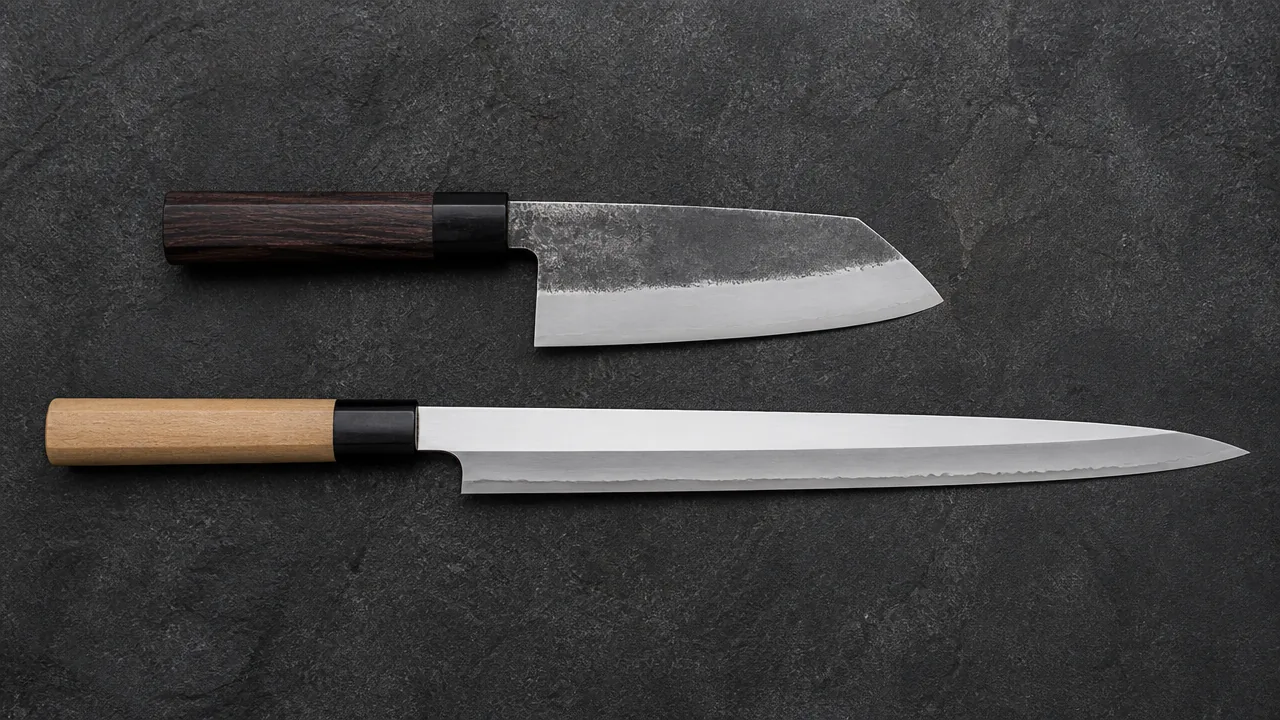
The differences between these two knives are not subtle — they are obvious as soon as you compare the two blade profiles. The table below summarizes the key structural contrasts.
| Feature | Deba | Yanagiba |
|---|---|---|
| Primary purpose | Breaking down whole fish, cutting through bone | Slicing sashimi and sushi fish |
| Blade length | Generally shorter, roughly 150mm–210mm range | Generally longer, roughly 270mm–330mm range |
| Blade thickness | Notably thick at the spine; tapers sharply to edge | Thin throughout; built for low-resistance slicing |
| Weight | Heavy; mass is part of how it works | Light; minimizes fatigue during repeated slicing |
| Bevel type | Single bevel (片刃) | Single bevel (片刃) |
| Edge geometry | Robust, angle optimized for bone-cutting force | Fine, angle optimized for clean flesh cuts |
| Cutting motion | Chopping, pressing, rocking through joints | Long pulling stroke, tip to heel |
| Suited for home use? | Only if you regularly break down whole fish | Practical for anyone preparing sashimi at home |
One point worth noting for left-handed cooks: because both knives are single-bevel, handedness matters significantly. The majority of deba and yanagiba knives sold outside Japan are ground for right-handed use. Left-handed versions exist but typically need to be sourced specifically — they are not always stocked at general retailers.
Which One Do You Actually Need?
For most home cooks, this question has a clearer answer than it might first appear.
If you regularly buy whole fish and break them down yourself — removing heads, running a knife along the spine, separating fillets from bones — a deba earns its place. Best Japanese Deba Knife compares three picks by fish size, steel and bevel. Without it, you’re doing bone work with a knife that was never designed for it, which is both inefficient and hard on the blade. The deba’s weight and thickness make tasks that would damage a thinner knife feel controlled and straightforward.
If, on the other hand, you buy fish already filleted or as pre-cut portions, a deba will sit unused in your drawer most of the time. The knife is genuinely specialized, and outside of whole-fish butchery it has limited crossover utility.
For those who want to slice sashimi cleanly at home, the yanagiba is the practical choice. Its length and thin grind produce the smooth, single-stroke cuts that define properly prepared sashimi — something a shorter or thicker knife simply cannot replicate.
If you want both: that’s a reasonable position for someone who sources whole fish regularly and also prepares sashimi. They do genuinely different jobs and do not replace each other. The decision simply comes down to which tasks you actually perform in your kitchen.
For guidance on choosing between them based on your cooking habits, the Best Japanese Knife for Sushi guide goes into further practical detail on the yanagiba side of this decision.
It’s also worth noting that the steel a knife is made from affects how both knives behave over time — harder steels hold an edge longer but require more careful maintenance, particularly for a single-bevel grind. Japanese Knife Steel Types Explained: VG-10 vs Damascus vs Aogami and Shirogami is a useful reference once you’ve decided which knife type fits your needs.
Frequently Asked Questions
Can I use a deba knife to slice sashimi?
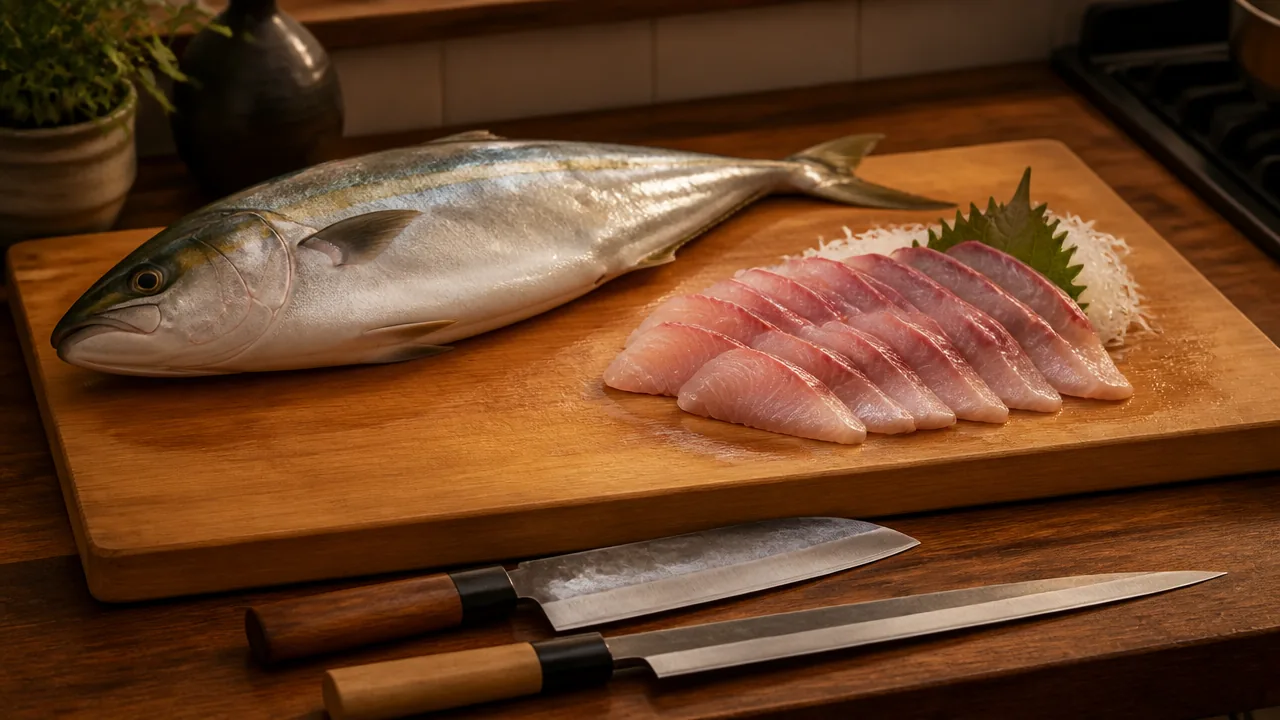
Technically you can cut fish with a deba, but it will not produce sashimi-quality slices. The blade is too thick and too short to perform the long pulling stroke that gives yanagiba-cut sashimi its clean, undisturbed surface. Using a deba for slicing is like using a cleaver to peel an apple — it works after a fashion, but the tool is simply wrong for the job. If sashimi presentation matters to you, the yanagiba’s thin grind and blade length are not optional details.
Can I use a yanagiba to break down a whole fish?
This is not advisable, and doing so risks damaging the knife. The yanagiba’s blade is thin and optimized for slicing through flesh — it is not built to handle bone contact. Attempting to cut through a fish spine or drive through a head with a yanagiba can chip or crack the edge. Single-bevel knives with fine grinds are particularly vulnerable to lateral stress. Use the right knife for each stage of the process.
Do I need both knives as a home cook?
Most home cooks do not need both. The honest answer is that a deba is only genuinely useful if you buy whole fish and break them down yourself — and in many households, fish arrives already filleted. For the majority of people interested in Japanese fish knives, the yanagiba is the one that will actually get used. If you do butcher whole fish regularly, adding a deba makes sense. If you don’t, it’s a specialized tool that will rarely leave the drawer.
How do I sharpen a deba or yanagiba at home?
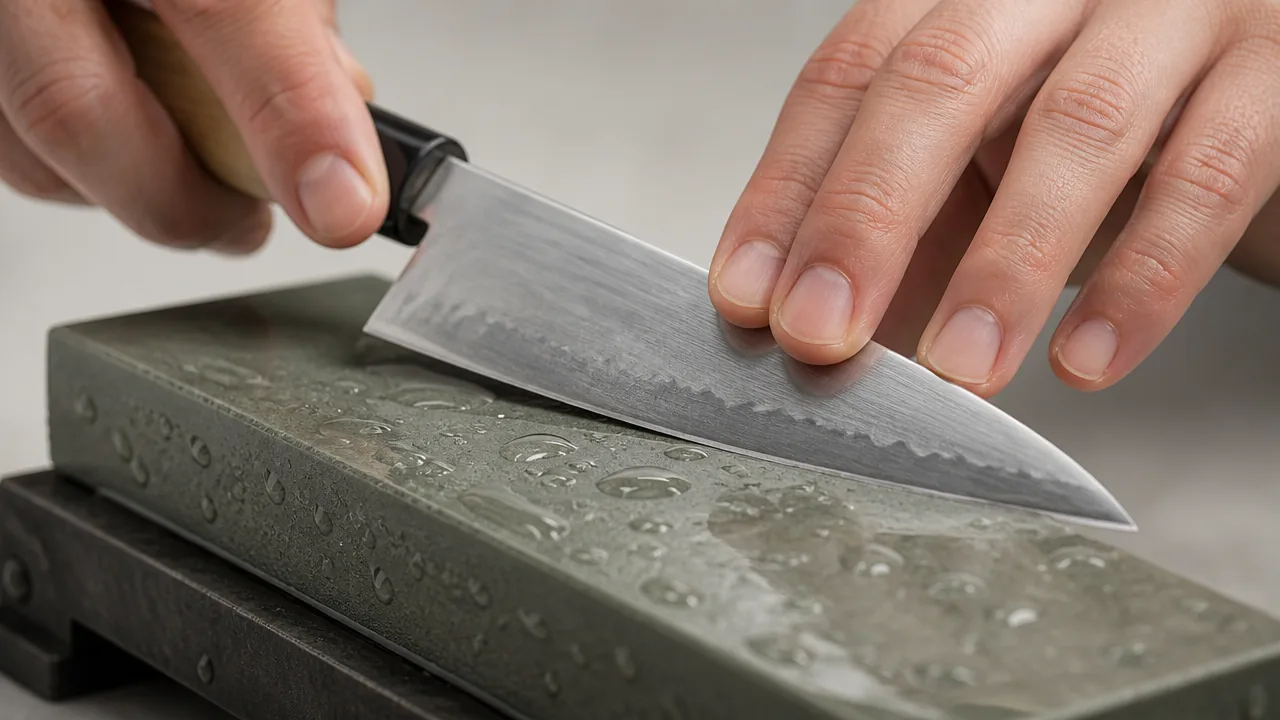
Because both are single-bevel knives, the sharpening approach is different from double-bevel knives. The primary work is done on the flat (sharpened) face of the blade, maintaining the original bevel angle; Tojiro’s guide says to lay the existing bevel flat on the stone and follow it. The ura (the hollow or flat back face) is not sharpened with a new angle; it is lightly stroked on the stone only to remove the burr that forms during sharpening. Applying a new bevel to the back would alter the knife’s geometry and undermine its cutting behavior. Whetstone sharpening is strongly preferred over pull-through or electric sharpeners, which are not suited to single-bevel geometry.
Final Thoughts
The deba and yanagiba represent two distinct philosophies within Japanese knife craft — one built for power and structural work, the other for precision and finish. They share single-bevel construction and a deep connection to fish cookery, but the similarities largely end there. Understanding what each knife is actually designed to do makes it easier to choose purposefully rather than collecting tools that overlap without complementing each other.
For most home cooks, the yanagiba is where this journey begins. For those who regularly work with whole fish, the deba earns a place alongside it. Neither knife is better in an absolute sense — each is simply right for the task it was made for.
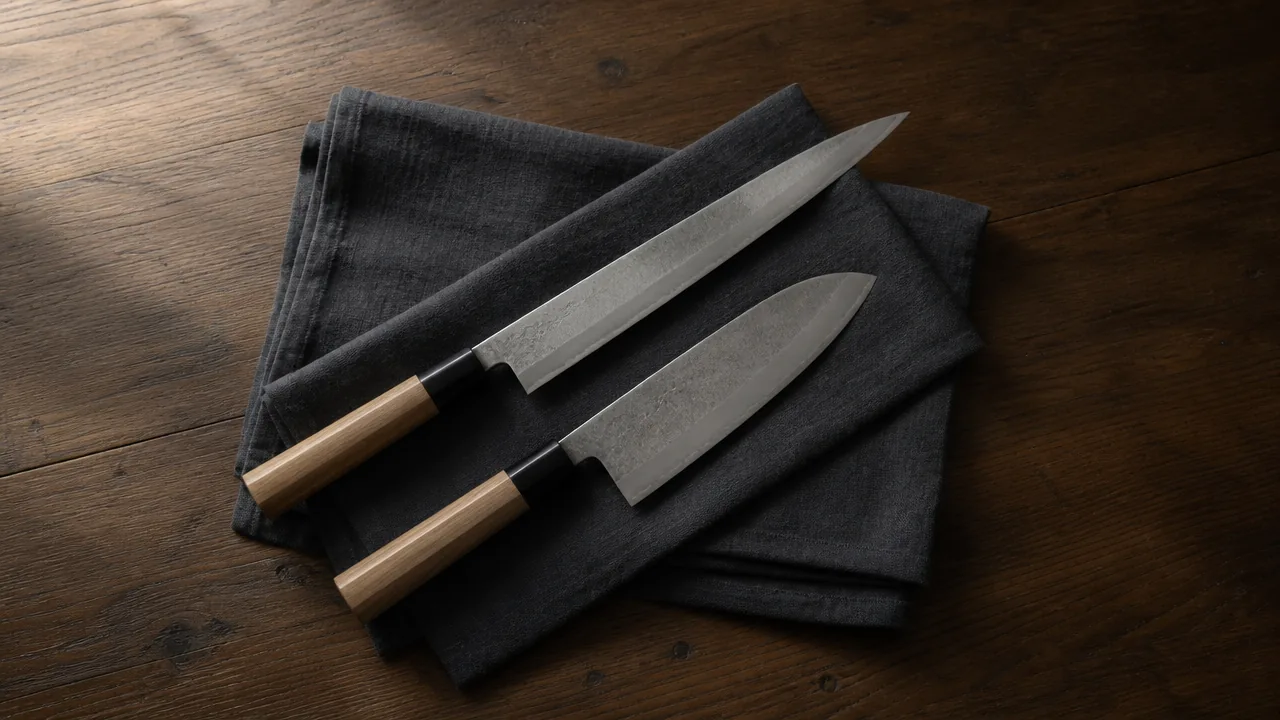
Thinking about which Japanese knife to start with? Our guide to the Best Japanese Knife for Sushi walks through the yanagiba in more depth — including blade length, steel considerations, and what to look for as a first-time buyer.