How this article was made: Field reported. It is based on my own visit and photos; visiting details were checked against the official website.
- Why I Visited Sakai Knife Museum CUT
- HIBANA: A Seven-Tier Chandelier Made from About 300 Knife Pieces
- The Forging Exhibits: Belt Hammer, Raw Steel, and 17 Stages of a Knife
- The Knife Types Corner: From Deba to Noodle Knives
- The Five Points Panel: What Makes Sakai Knives Different
- Visiting Information (Checked Against the Official Site)
- Final Thoughts
- Frequently Asked Questions
Why I Visited Sakai Knife Museum CUT
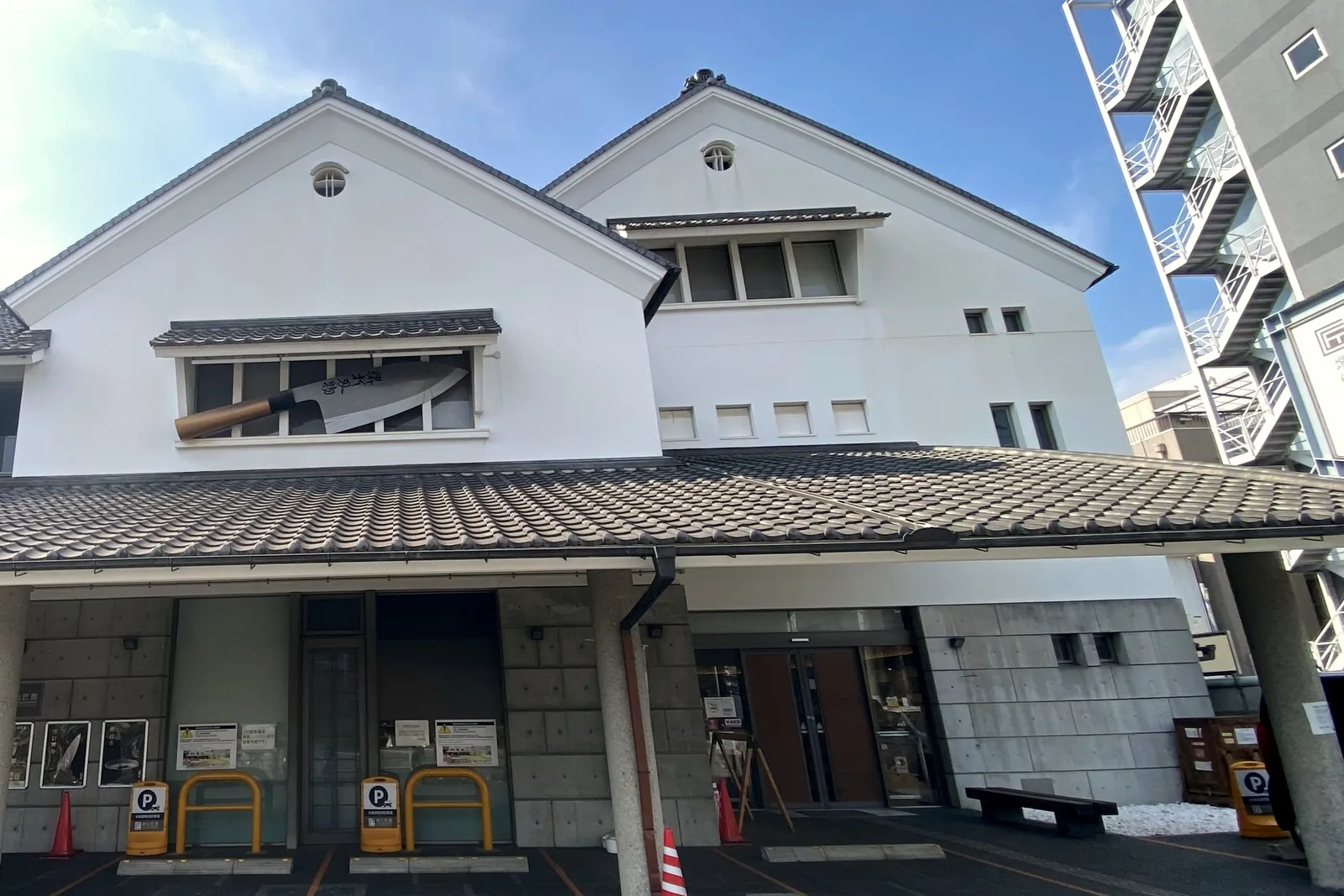
Sakai Knife Museum CUT is a free museum in Sakai, Osaka, that shows how Sakai kitchen knives are made, from raw steel to a finished blade. It occupies the second floor of the Sakai Traditional Crafts Museum (Sakai Denshokan), a short walk from the Hankai Tramway.
Most of what Japan Craft Finds publishes about knives comes from specifications, maker information, and buyer reviews. That is useful, but it is not the same as standing in front of the tools and half-finished blades that sit behind a word like “Sakai” on a product listing. So I visited CUT on September 24, 2026, and every photo in this article was taken on that visit.
According to Sakai City’s announcement, the museum reopened under the nickname CUT in April 2021, a name chosen to introduce Sakai’s knives from many different “cuts,” or angles. This report walks through the exhibits in the order I found most useful, then lists the visiting details, which I checked against the official website rather than relying on memory.
My 97-second video walks through the museum without narration: the knife displays and HIBANA, the history panels, how a knife is made, the knife types, and the belt hammer.

HIBANA: A Seven-Tier Chandelier Made from About 300 Knife Pieces
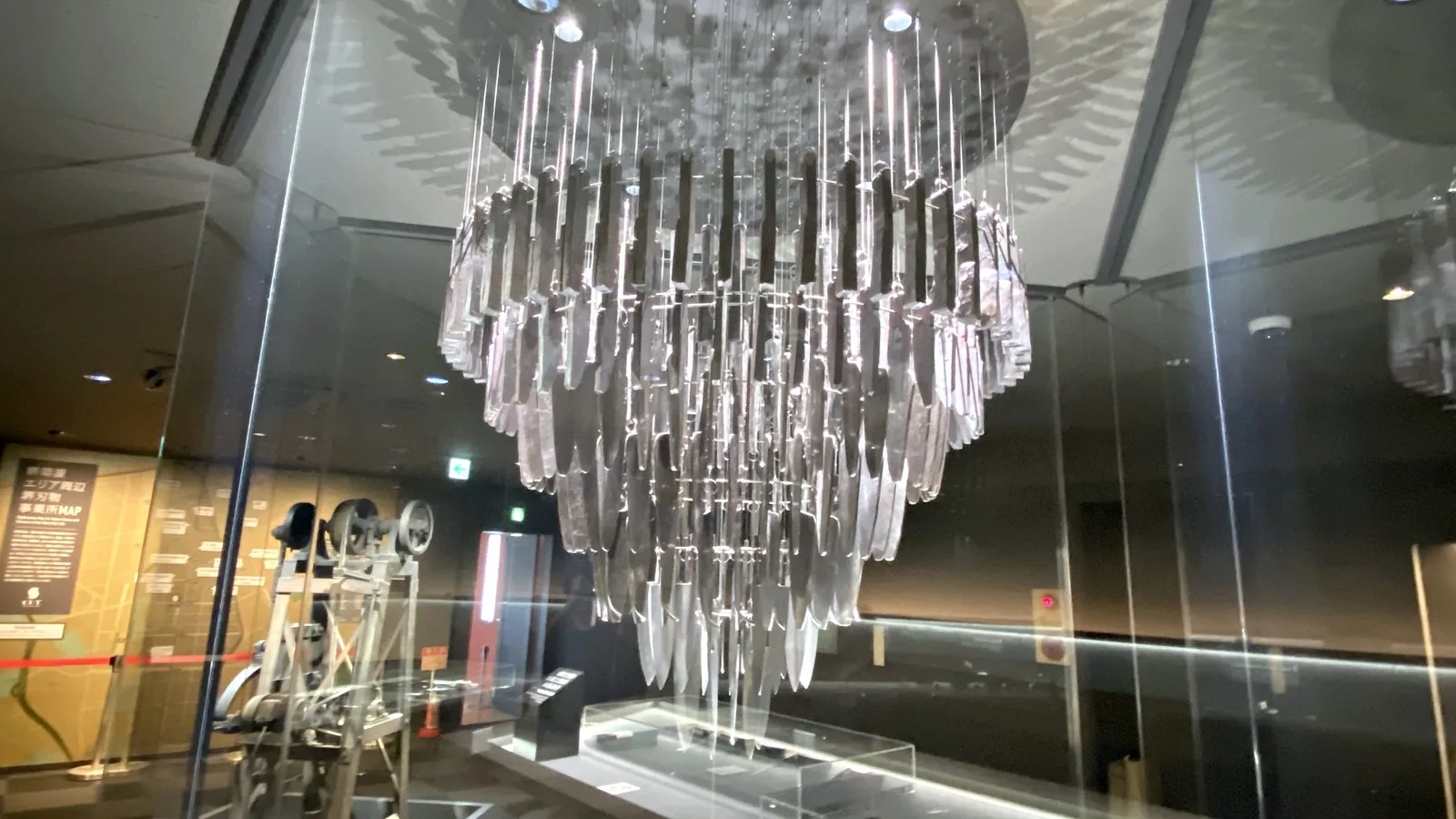
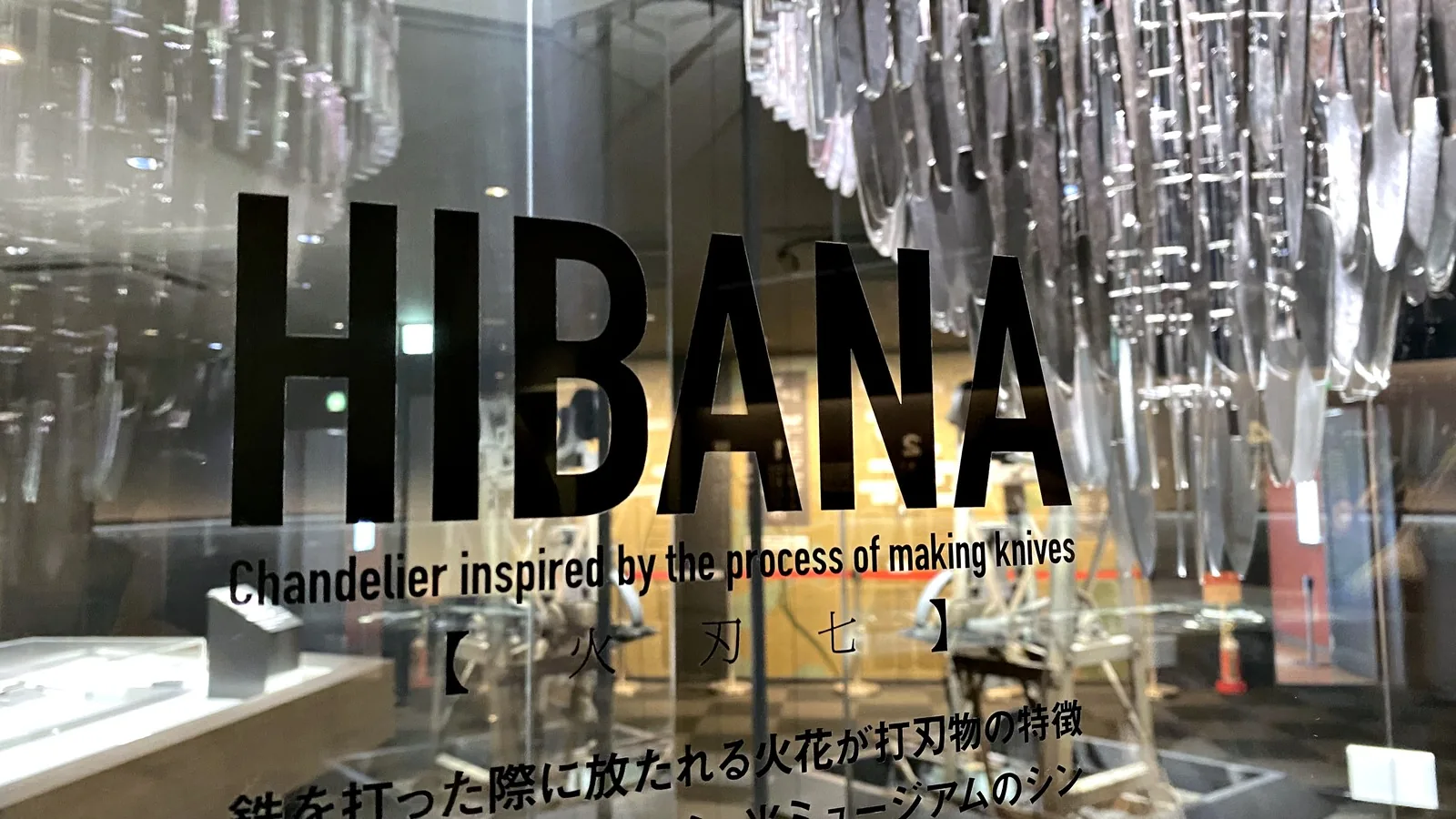
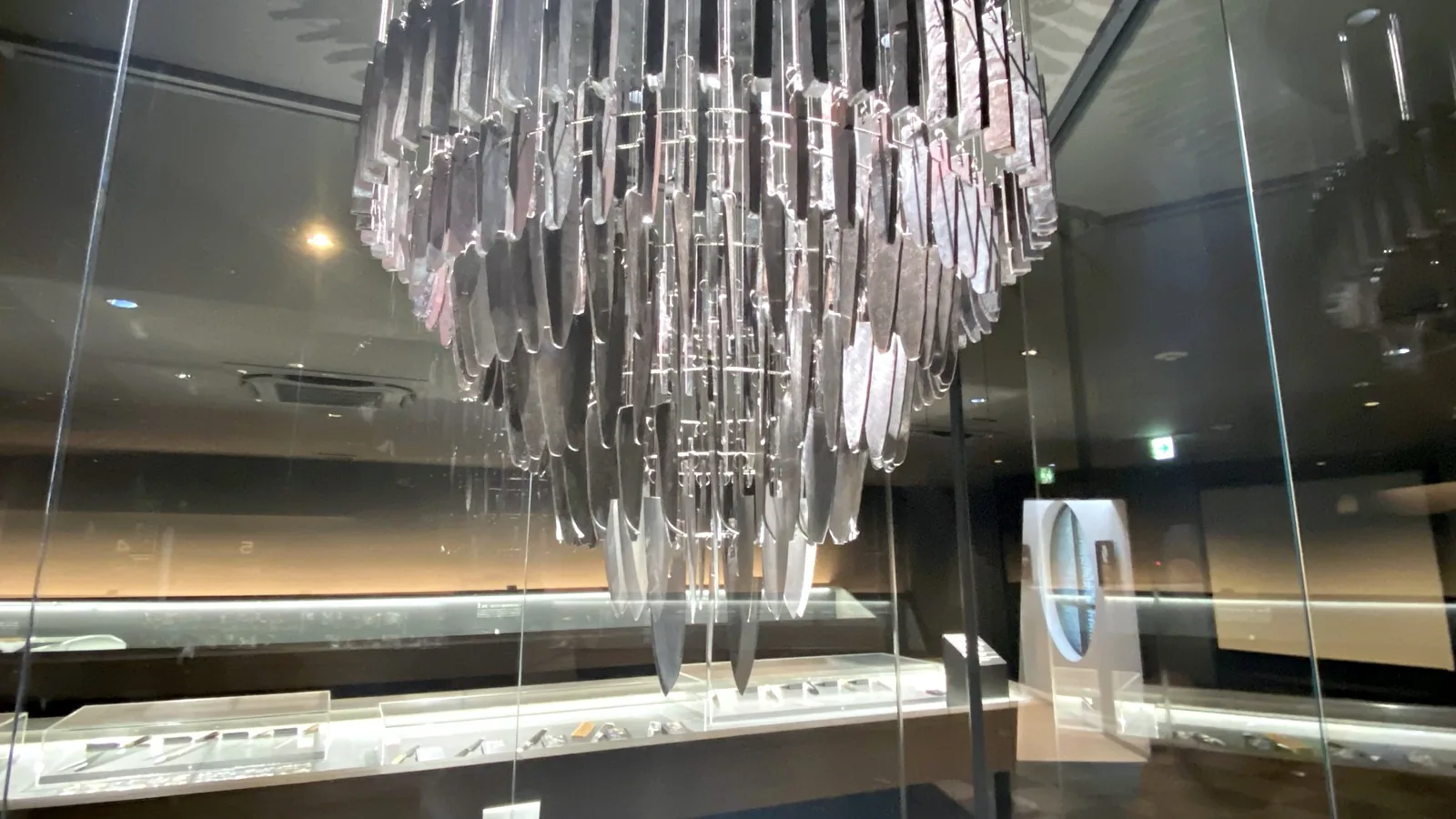
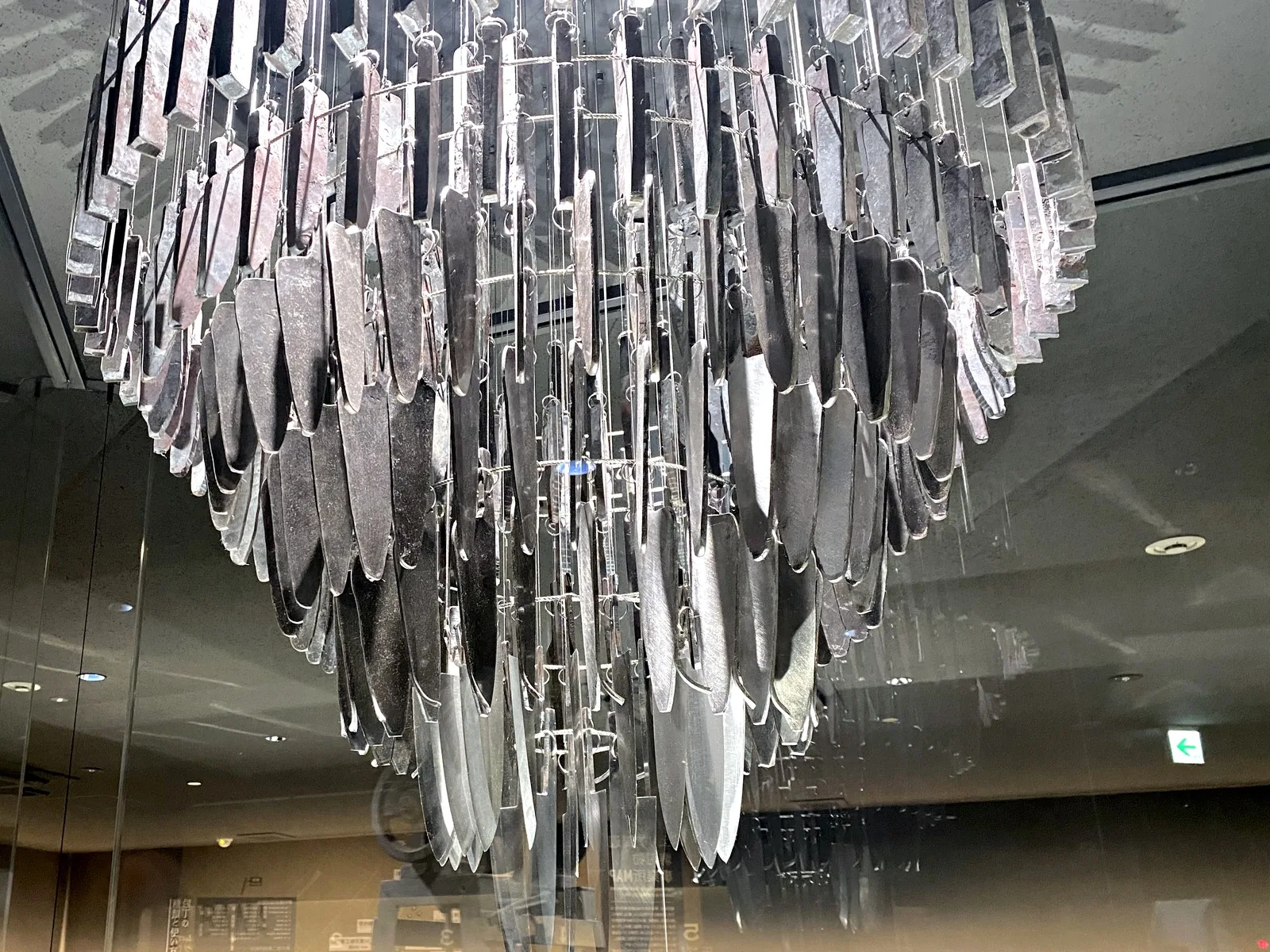
HIBANA is the centerpiece of the museum: a seven-tier chandelier that, according to the museum, craftsmen built from about 300 knife pieces. It hangs inside a glass enclosure, and it is the first thing most visitors will photograph.
The name is written 火刃七, and hibana is the Japanese word for sparks. The museum explains that it takes its motif from the sparks thrown off when heated steel is struck, which it presents as a signature of hand-forged knives. Sakai City’s description adds that seven stages were chosen from the many steps of making a forged knife, and that the pieces are arranged so a knife appears to take shape from the ceiling downward.
You can see that idea clearly from below. The upper tiers are made of dark, rough bars of steel, while the lowest tiers are bright, finished blades. The museum describes HIBANA as a display you will not find anywhere in Japan outside Sakai. For a closer look at the name and the seven tiers, see HIBANA at Sakai Knife Museum: The Chandelier Made from About 300 Knife Pieces.
The Forging Exhibits: Belt Hammer, Raw Steel, and 17 Stages of a Knife
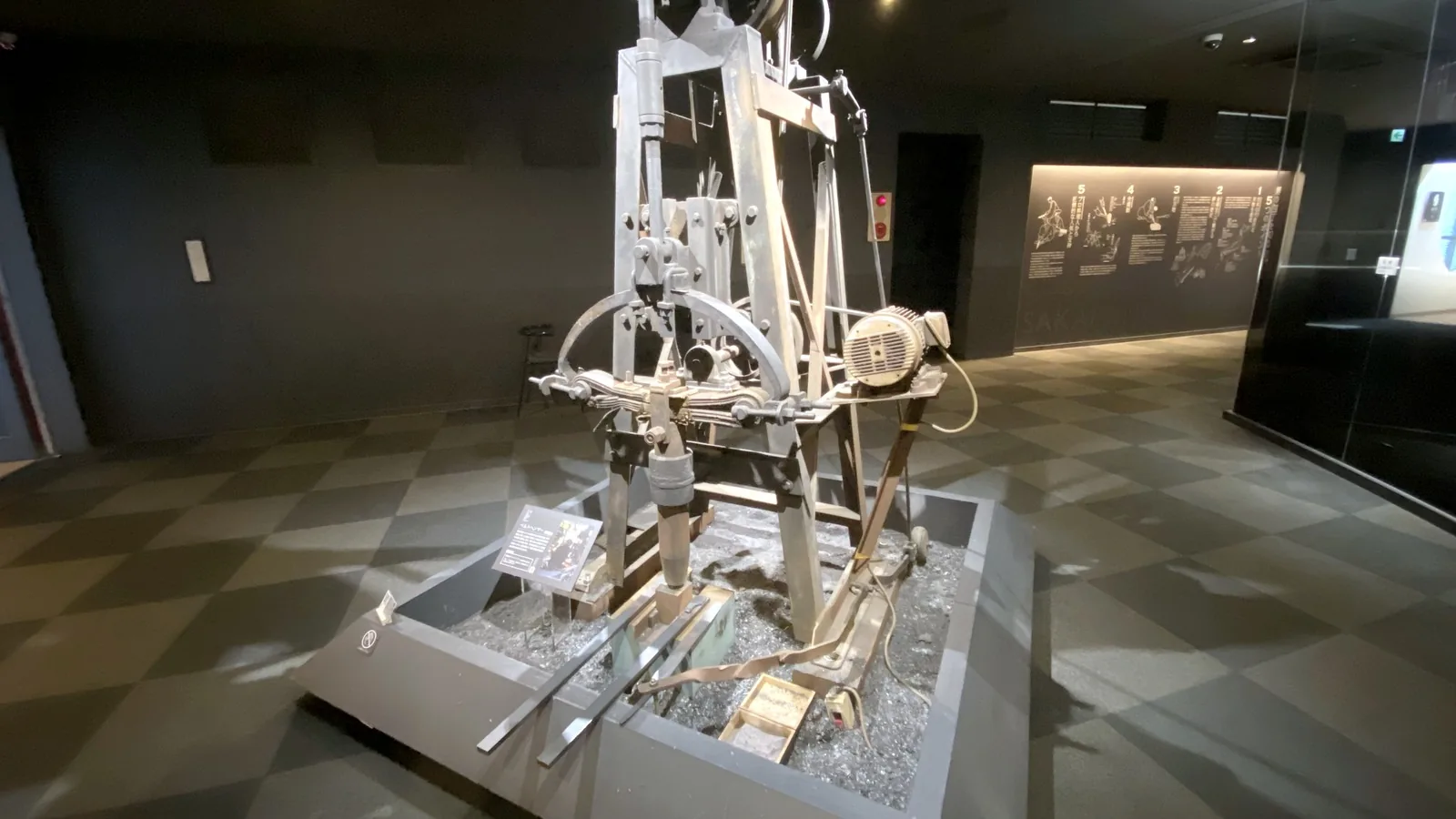
The forging area shows the machines, raw materials, and half-finished blades behind a Sakai knife, starting with a belt hammer that the museum says was in use from around 1950. According to Sakai City, this kind of power hammer was used to forge-weld hard steel (hagane) onto a bar of soft iron (jigane) after both were heated in the forge.
That two-layer construction is the norm for the knives shown here: a thin core of hard steel that takes the edge, supported by softer iron. If you want to see how the rarer single-steel approach differs, What Is Honyaki? explains it in detail.
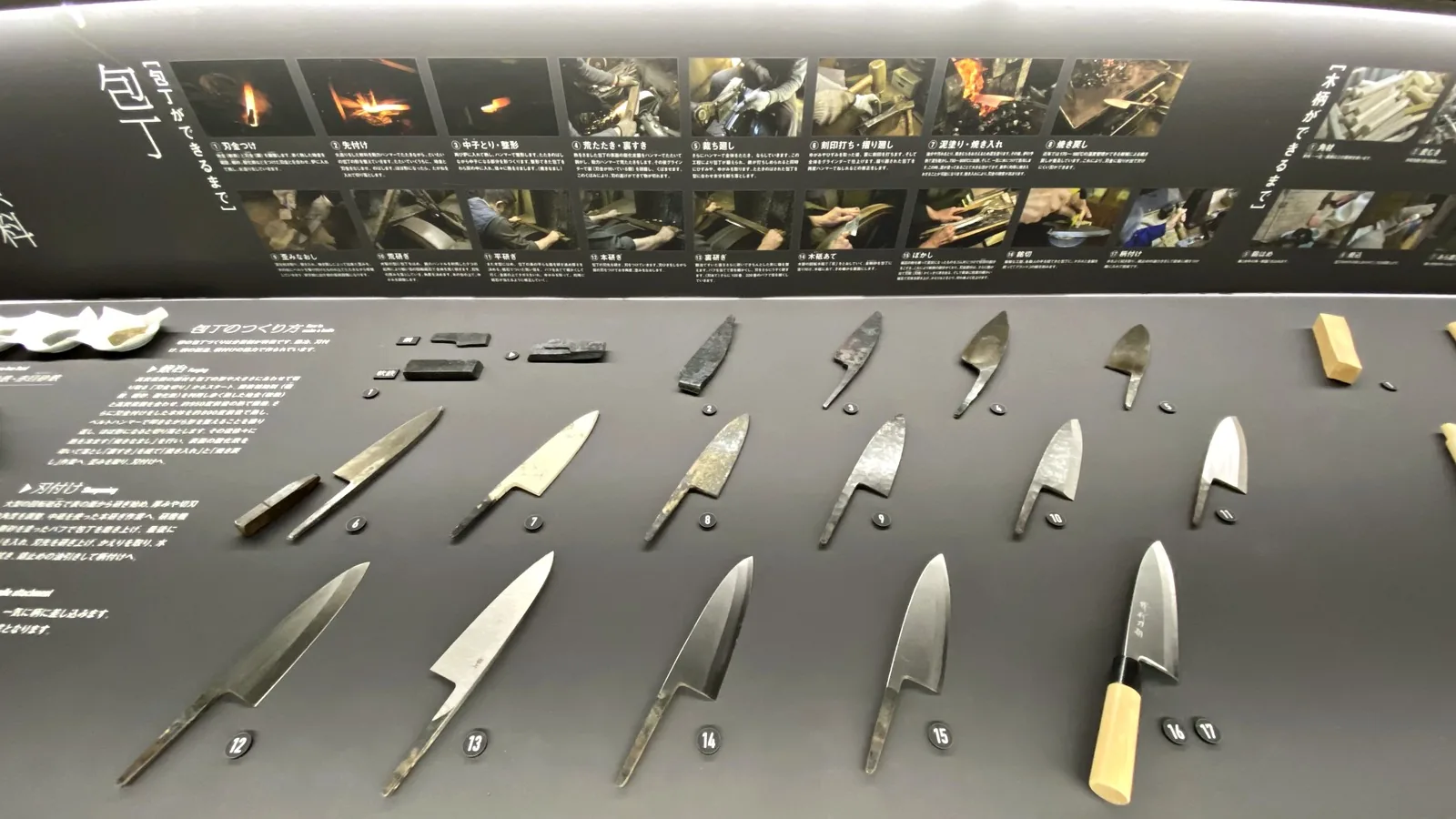
The most useful display for a knife buyer is a long case with 17 numbered pieces, running from small blocks of steel to a finished deba with its wooden handle. The panel above it names each stage, including:
- Hagane-tsuke: joining the hard steel to the soft iron
- Yaki-ire and yaki-modoshi: hardening in a clay coating, then tempering
- Hon-togi and ura-togi: fine sharpening of the front and the back of the blade
- Mei-kiri: engraving the maker’s name
- E-tsuke: fitting the handle
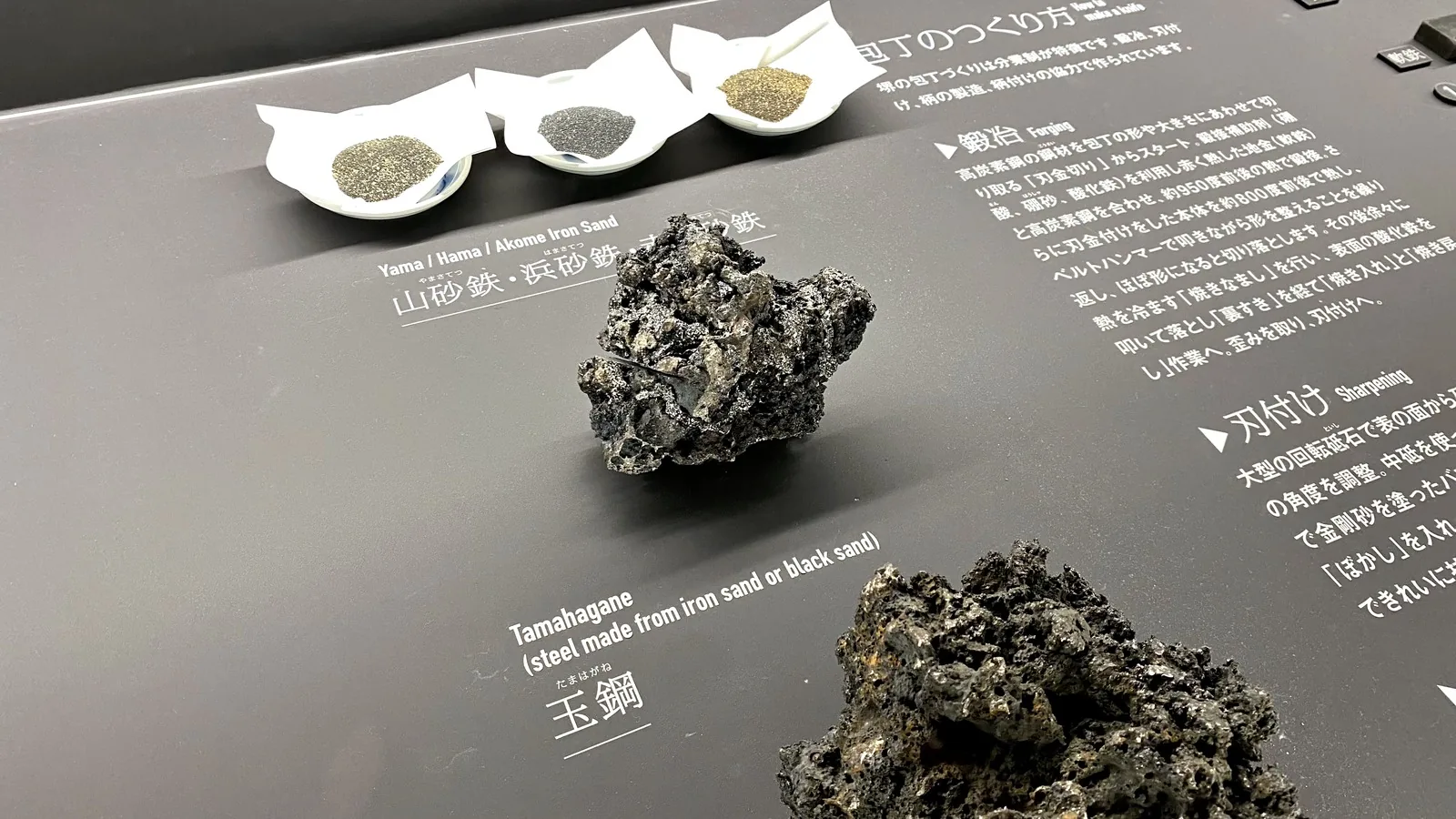
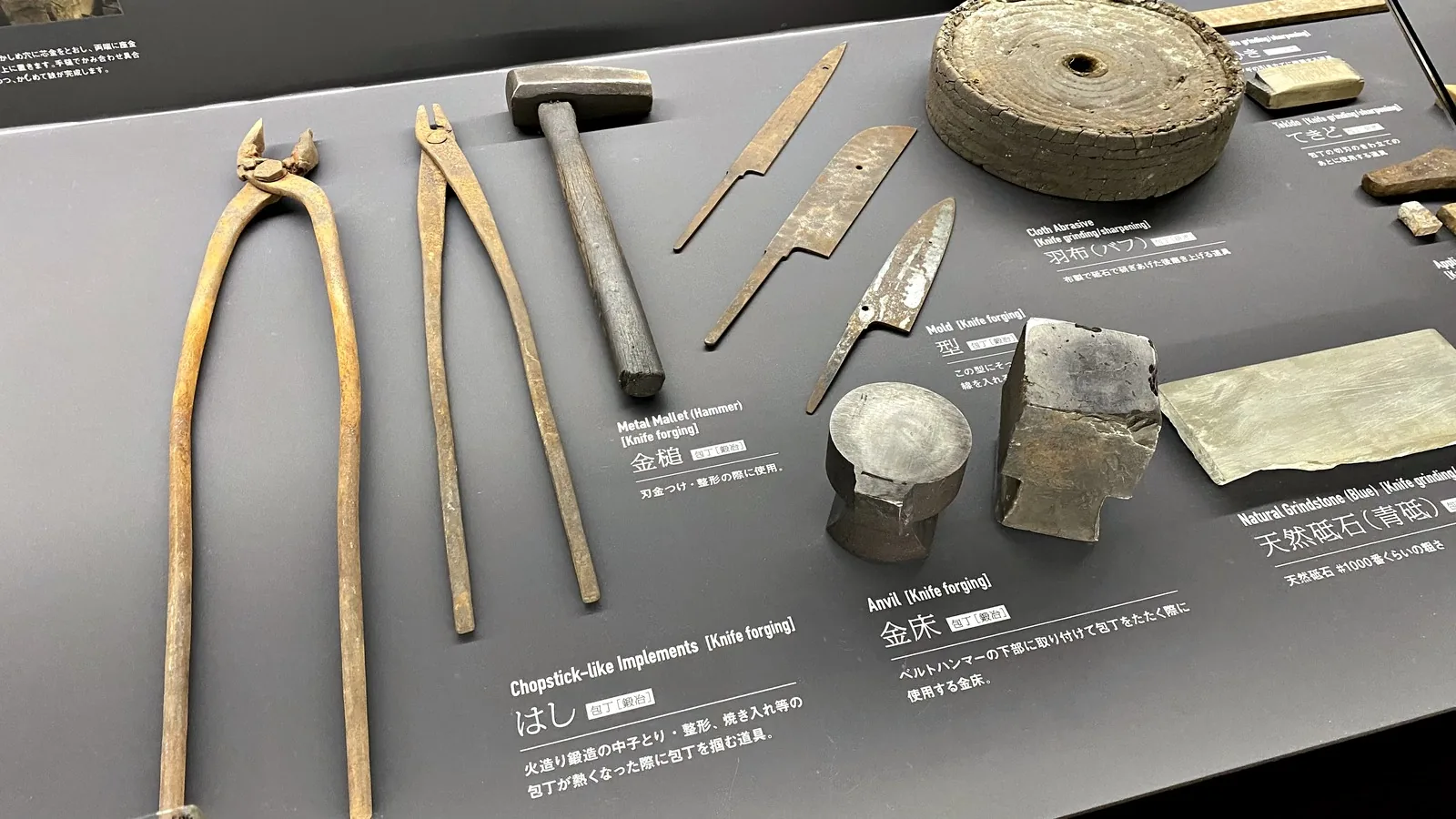
Nearby cases show raw materials, including iron sand and lumps of tamahagane, and the hand tools of the trade: long tongs, a hammer, an anvil, a natural whetstone, and a cloth buffing wheel.
The Knife Types Corner: From Deba to Noodle Knives
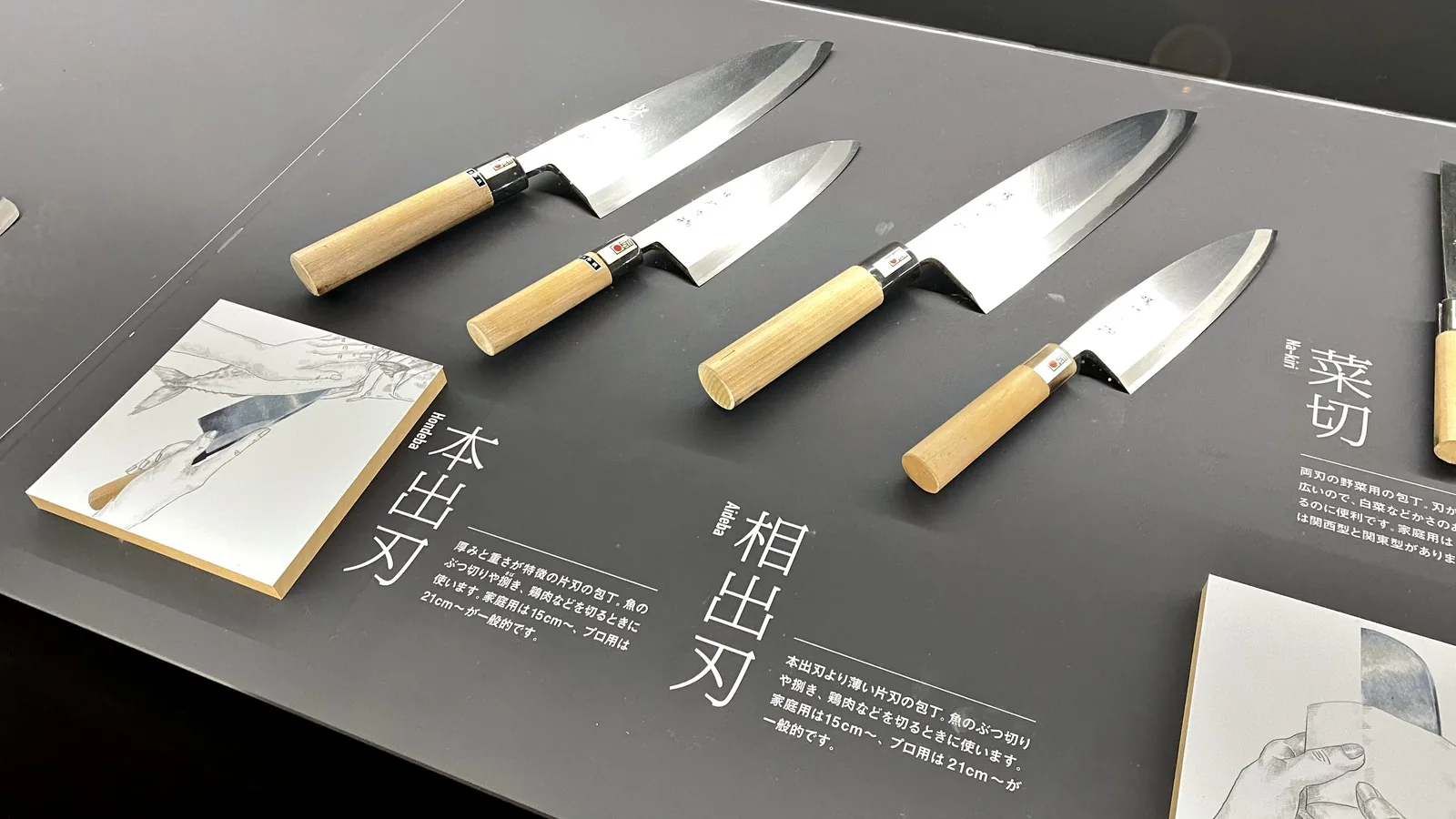
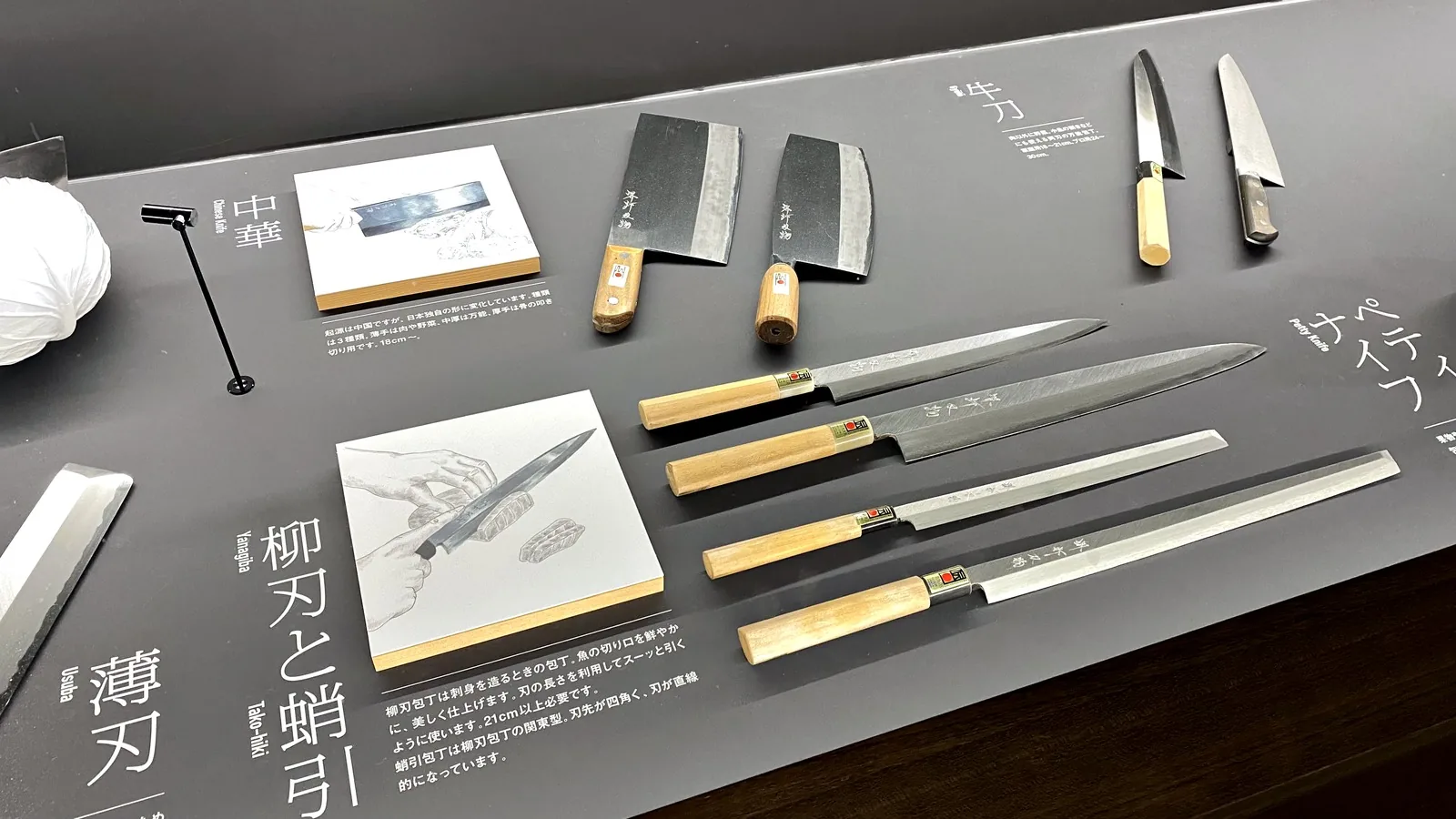
The “Varieties of Knives and Their Uses” corner lays out traditional Japanese knives side by side, each paired with a hand-drawn card showing how it is held and used. For readers who find single-bevel knives confusing, this is the part of the museum that makes the differences easy to see.
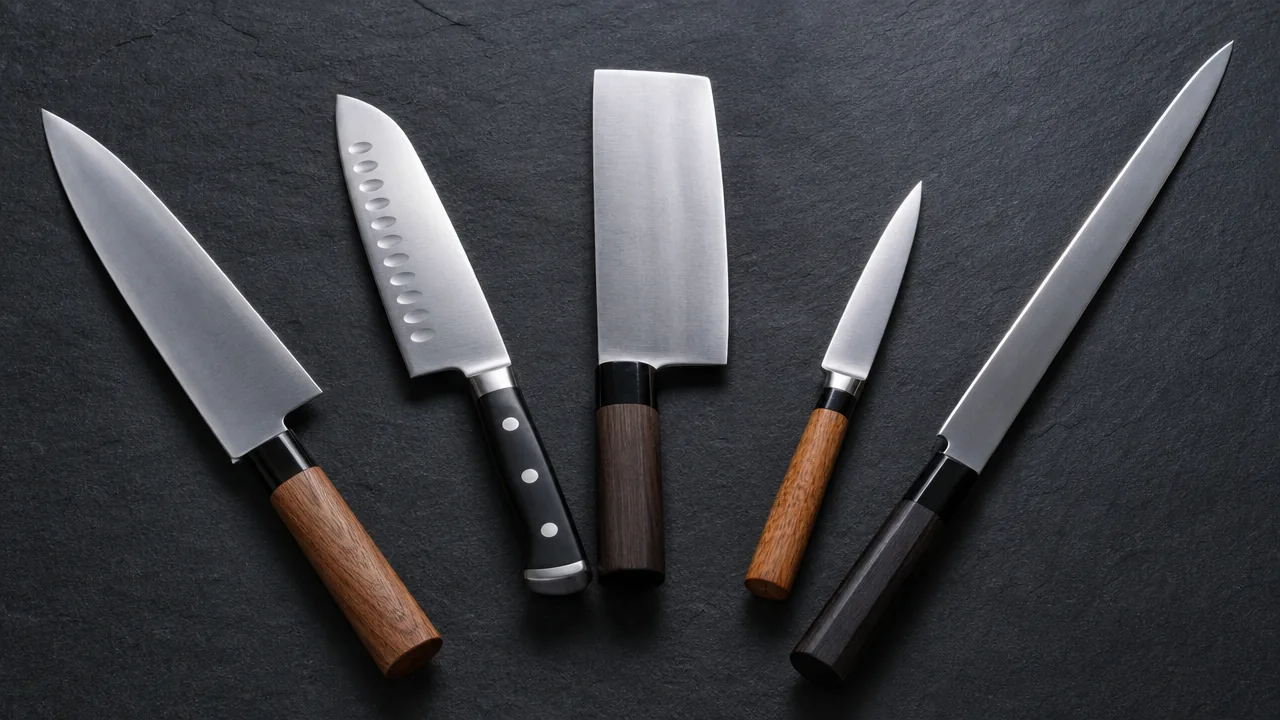
The heavy hon-deba and the thinner ai-deba sit next to each other, so the difference in thickness is obvious at a glance. Long yanagiba and takohiki slicers are shown with the thin, flat usuba, alongside everyday gyuto, petty knives, and a Chinese cleaver. Our guide Deba vs Yanagiba covers how the two main fish knives differ in use.
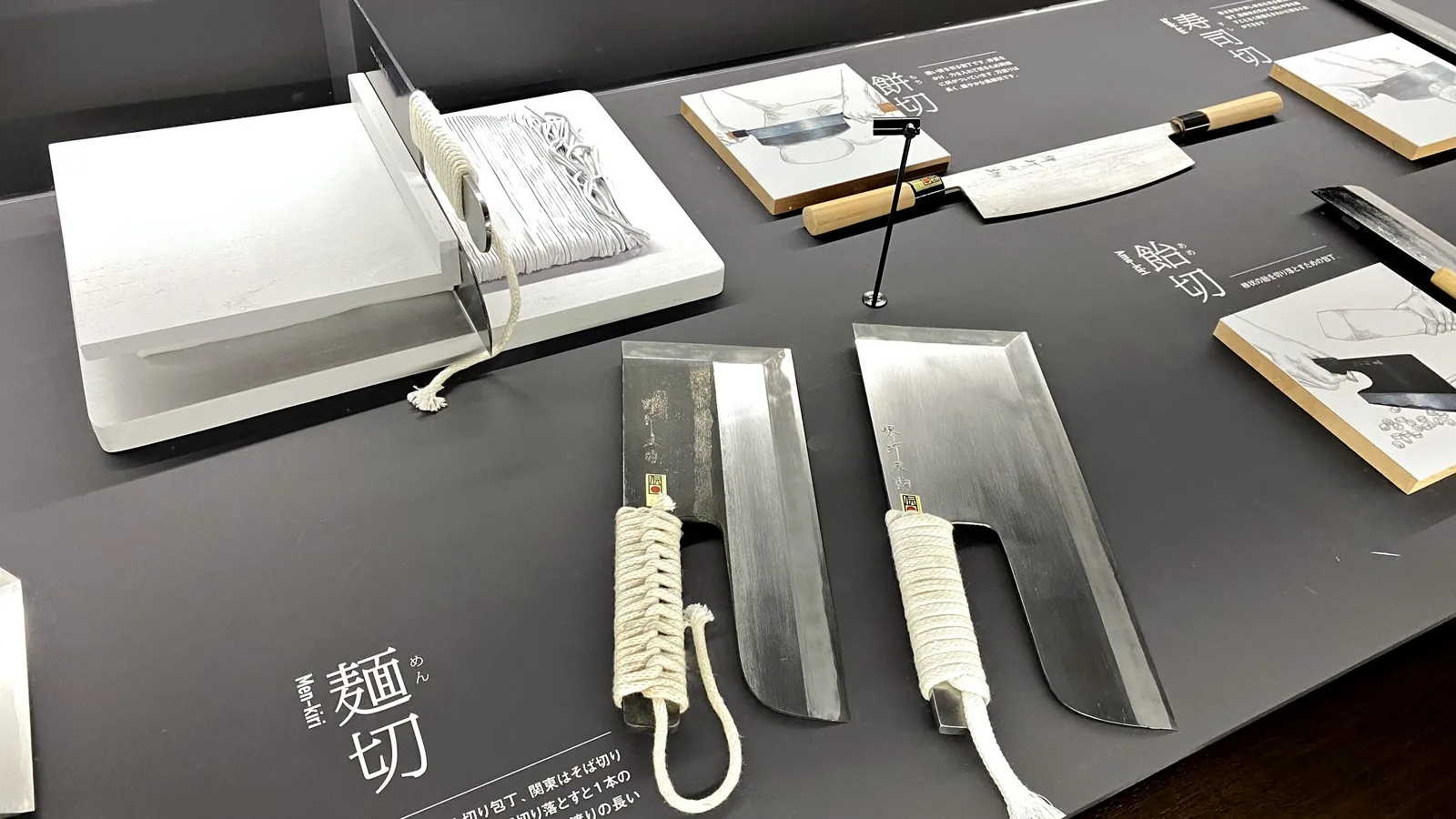
The specialist knives were the most striking. A pair of menkiri noodle knives, with cord-wrapped handles and long straight edges, is displayed next to a board and cutting guide used for noodles.
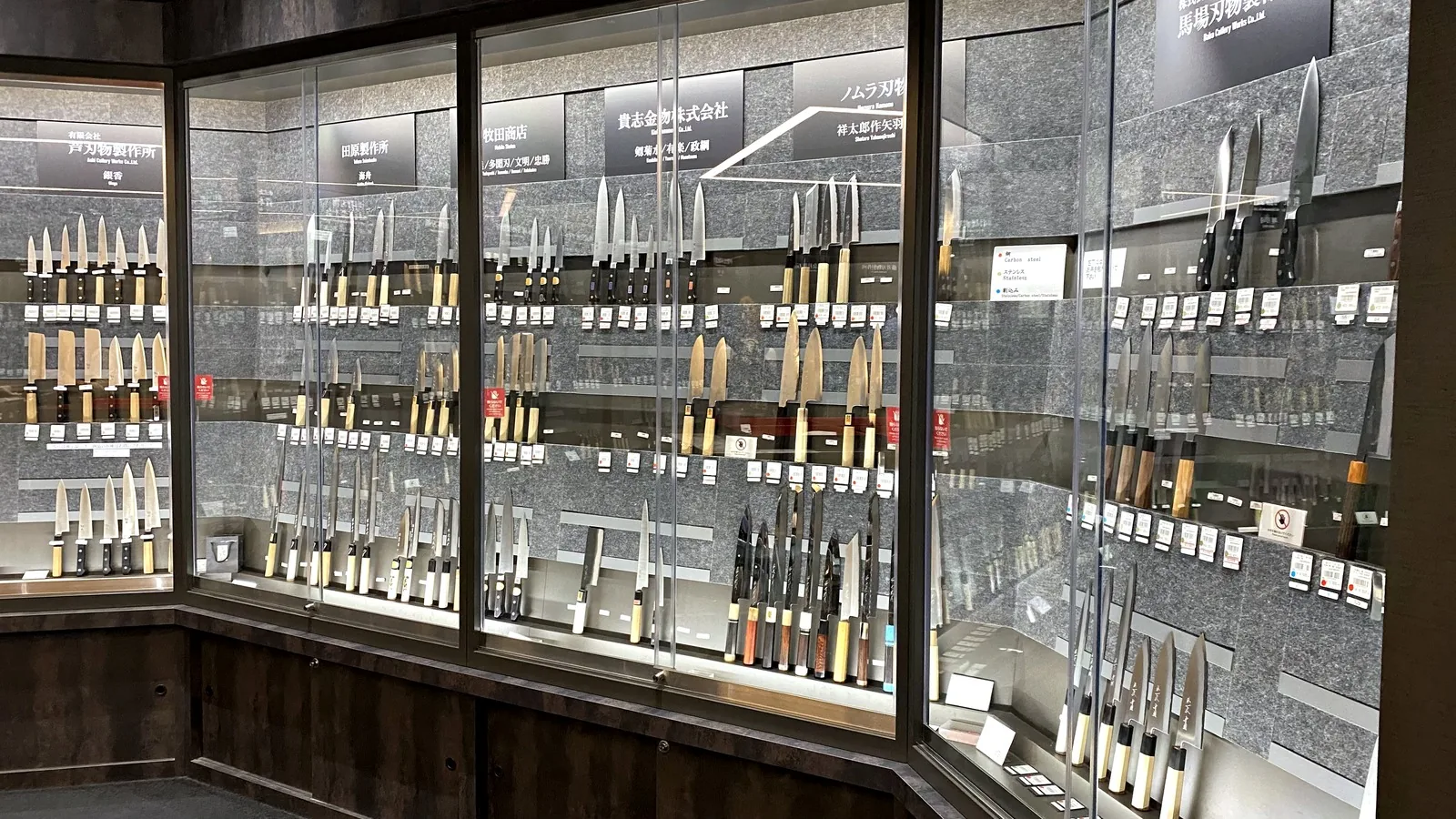
The same building also has a knife shop, TAKUMI SHOP, where knives are displayed in glass cases grouped by maker. It is a useful way to compare how different makers approach similar knife types.
The Five Points Panel: What Makes Sakai Knives Different
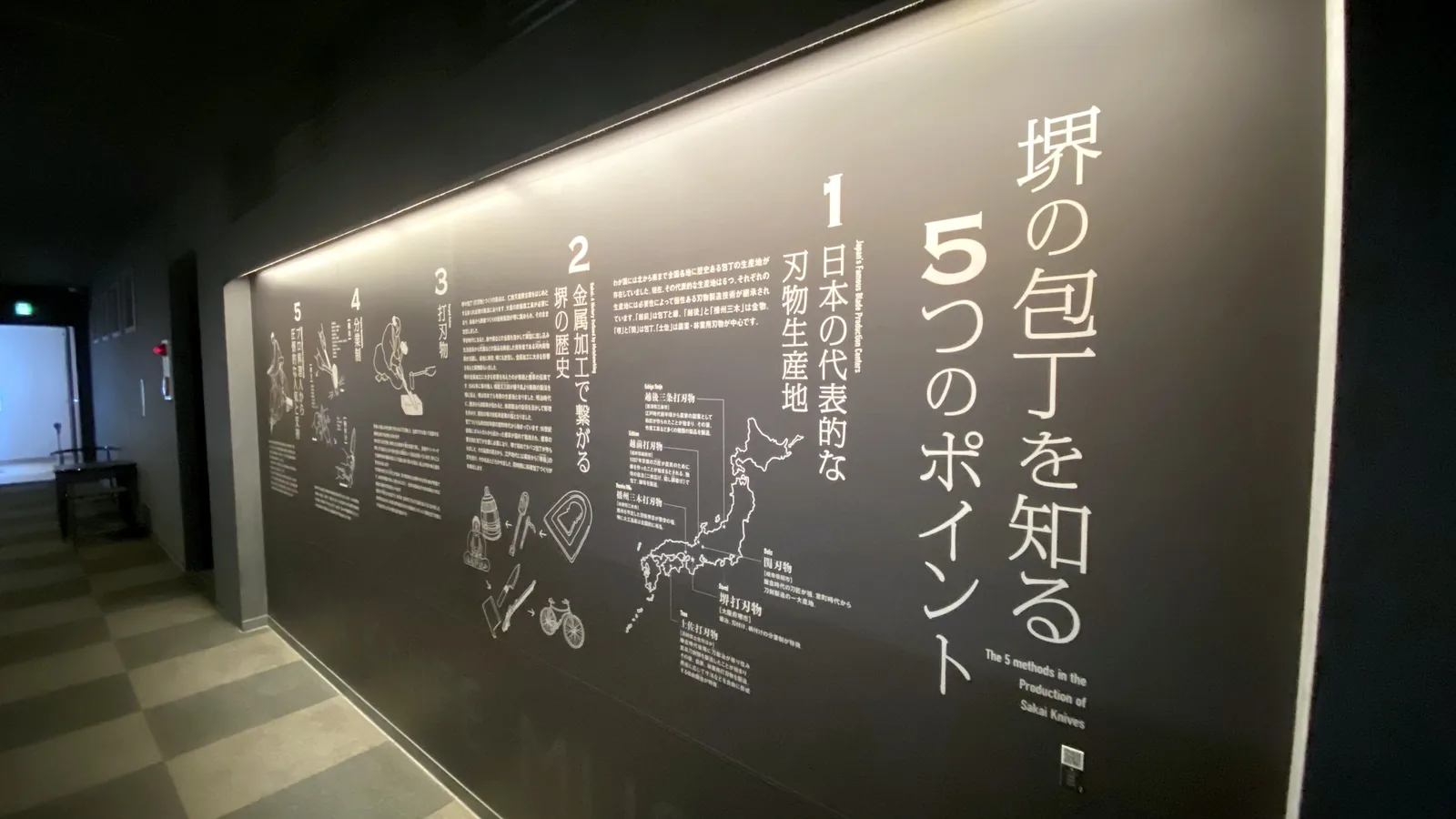
A long wall panel titled 堺の包丁を知る5つのポイント, roughly “five points for understanding Sakai knives,” sums up the museum’s message under five headings. Its English subtitle reads “The 5 methods in the Production of Sakai Knives.” Here is what each heading covers, in my own summary.
- One of Japan’s representative knife-making regions. A map shows six blade-making areas: Echigo-Sanjo, Echizen, Banshu-Miki, Seki, Sakai, and Tosa. The panel notes that Sakai and Seki center on kitchen knives, and that Sakai is known for a division of labor between forging, sharpening, and handle fitting.
- A history connected by metalworking. The panel traces Sakai’s knives to a much longer local history of metalworking, with illustrations running from an ancient keyhole-shaped burial mound to knives and bicycles.
- Uchi-hamono, or hand-forged blades. These are knives shaped by heating and hammering steel, which is exactly what the forging exhibits show.
- Division of labor. Separate specialists handle forging, sharpening, and handle fitting rather than one person doing everything. What Is Shokunin Spirit? looks at the craftsman culture behind this.
- Strong support from professional chefs. The museum presents Sakai knives as widely used and trusted by professional cooks.
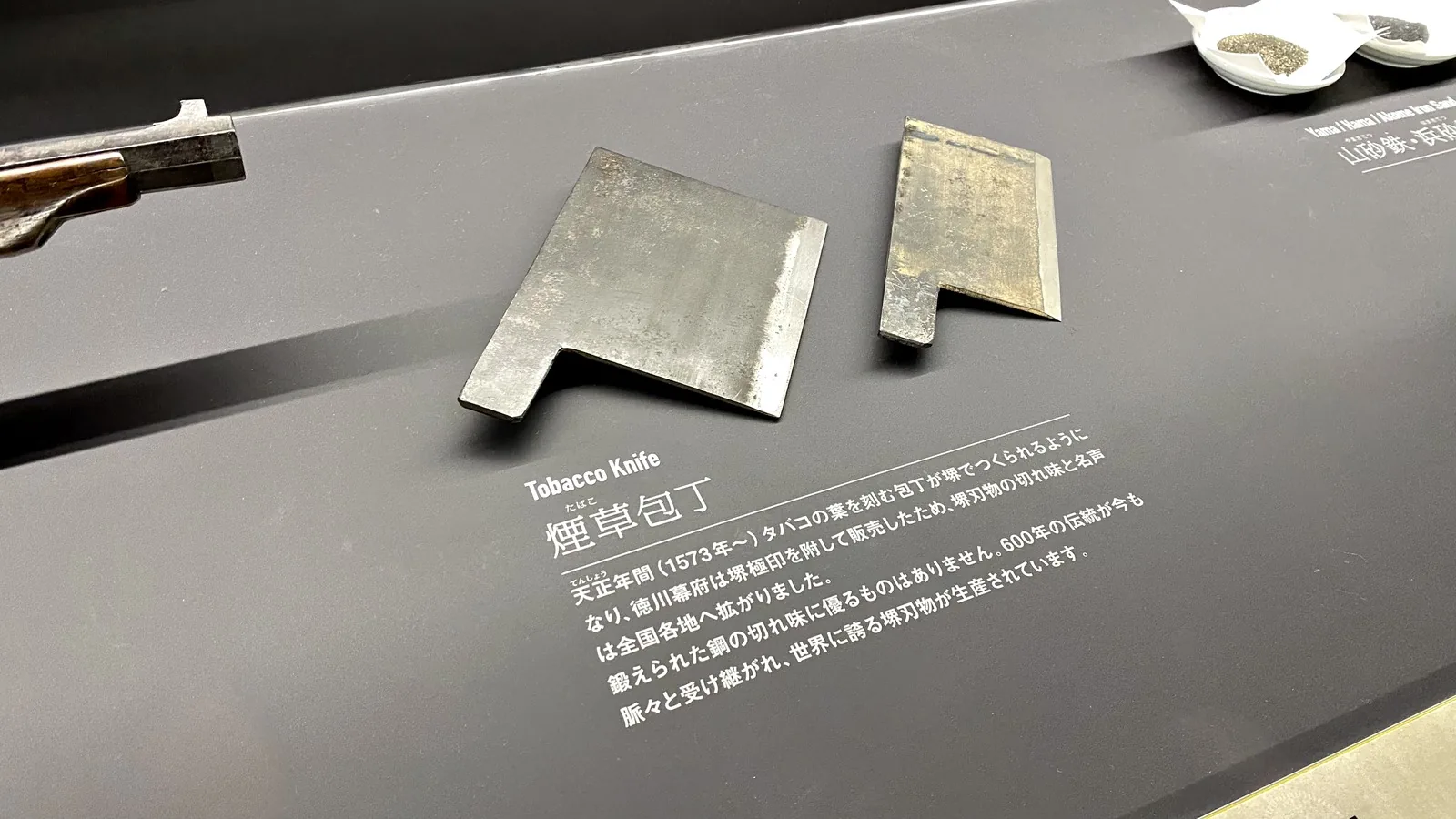
A small case nearby adds a historical detail. According to its panel, knives for cutting tobacco leaves were made in Sakai from the Tensho era (from 1573), and the Tokugawa shogunate sold them with a “Sakai Kiwame” seal of approval, which helped spread the reputation of Sakai’s blades across Japan. For the longer story, from iron tools for the burial mounds to gun-making after 1543, see The History of Sakai Knives. The panel speaks of a 600-year tradition. Claims like this are often described as part of Sakai’s story, and they are best read as the museum’s framing rather than precise dates.
Visiting Information (Checked Against the Official Site)
Admission to CUT is free, and it is open from 10:00 to 17:00, but it closes on the third Tuesday of each month, so check the date before you go. The details below come from the official Sakai Traditional Crafts Museum website, checked on September 26, 2026.
- Name: Sakai Knife Museum CUT, 2nd floor of the Sakai Traditional Crafts Museum (Sakai Denshokan)
- Address: 1-1-30 Zaimokucho-nishi, Sakai-ku, Sakai, Osaka 590-0941
- Hours: 10:00 to 17:00
- Closed: The third Tuesday of each month (the following day if it is a public holiday), and December 28 to January 3
- Admission: Free
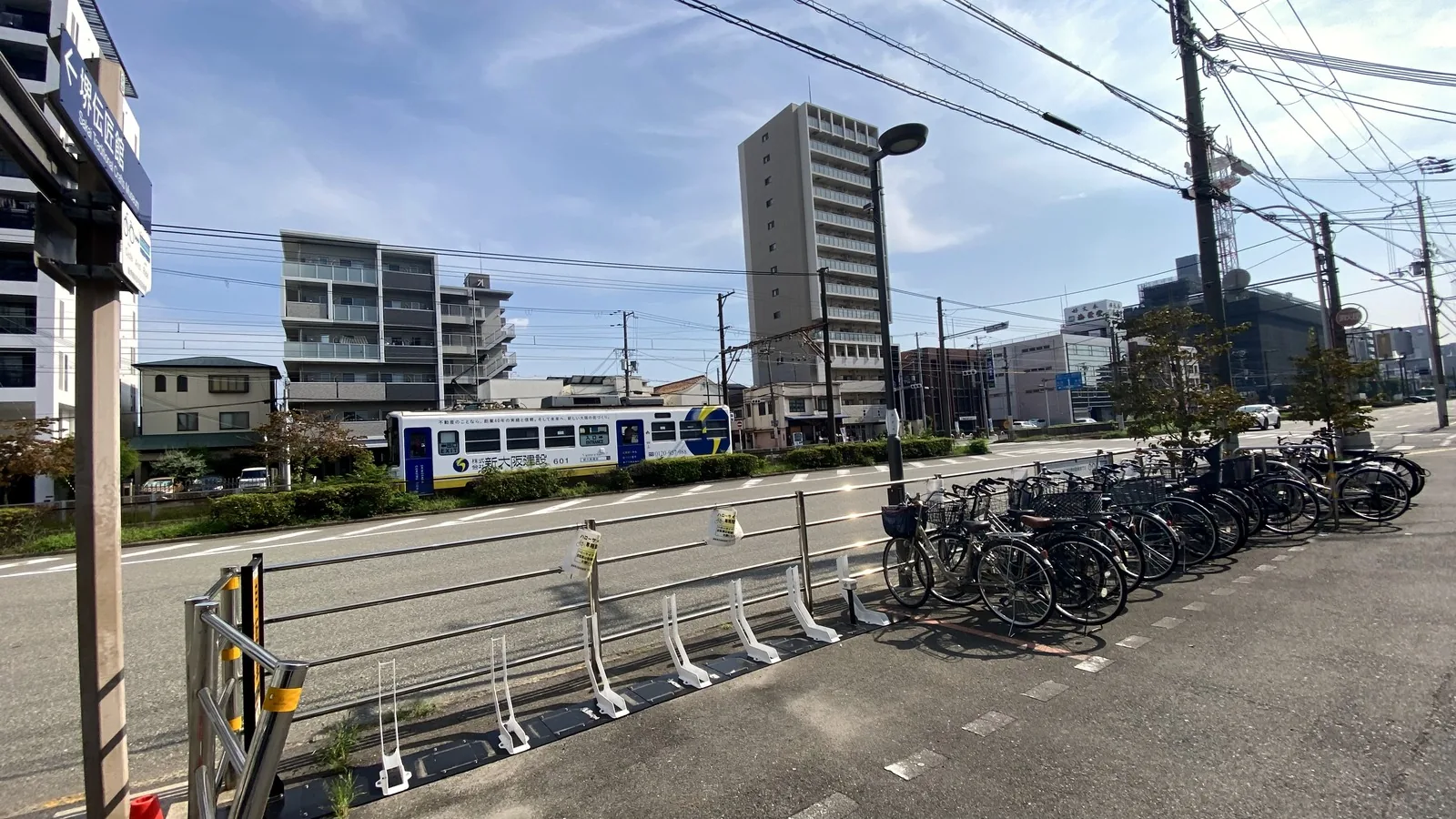
- By tram: About 3 minutes on foot southwest of Myokokuji-mae stop on the Hankai Tramway
- By train: About 15 minutes on foot northeast of Sakai Station on the Nankai Line
- By bus: Right by the Hanadaguchi stop on Nankai Bus
- Parking: Five spaces at the building
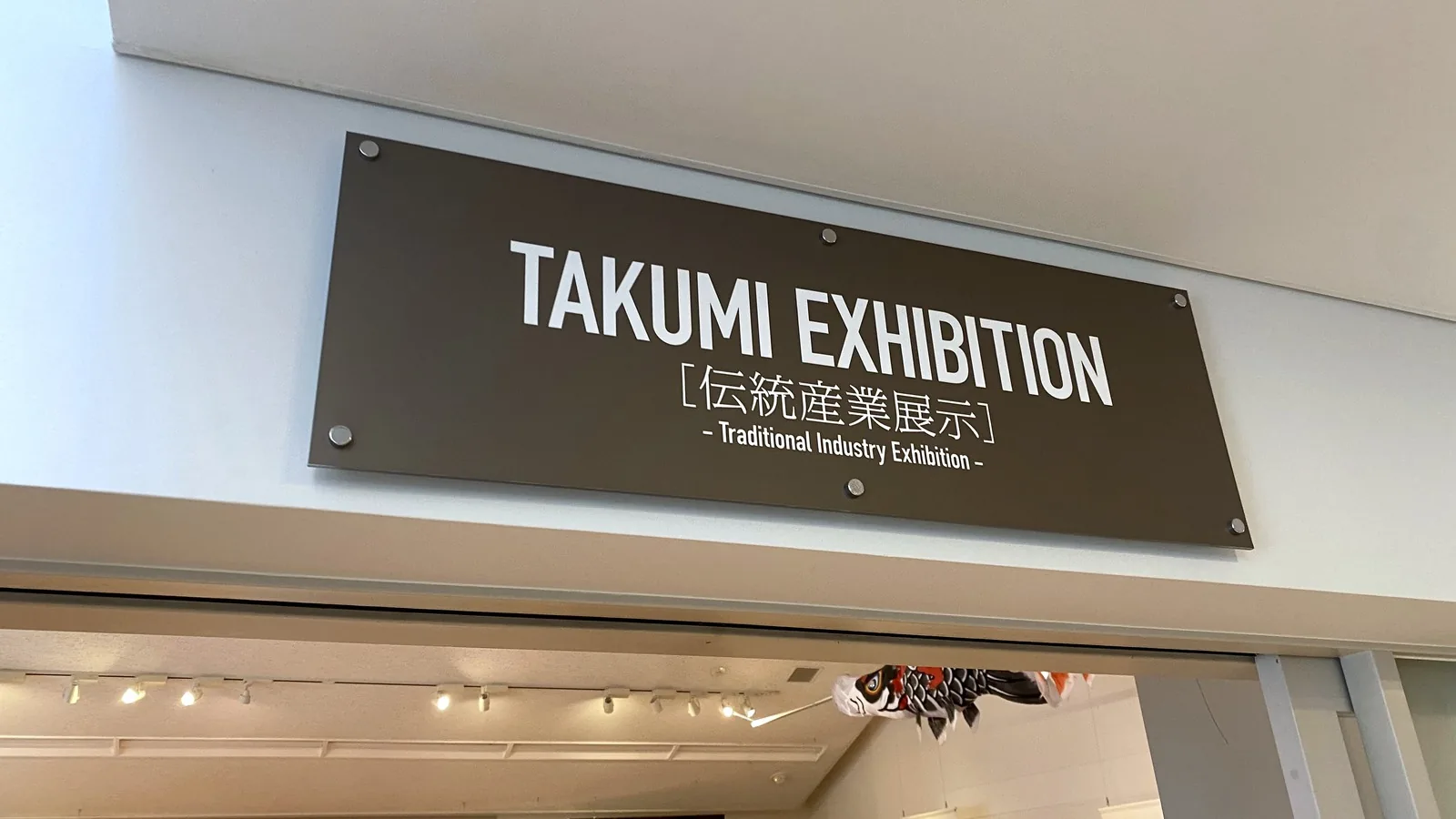
The building also has the TAKUMI SHOP for knives and whetstones, and a TAKUMI EXHIBITION on Sakai’s other traditional industries. Hours and closing days can change, so confirm them on the official CUT page and the access page before you travel.
Final Thoughts
CUT is worth a visit if you want to understand what “Sakai” actually means on a knife, not just see nice blades. The 17-stage display and the Five Points panel explain in a few minutes why the forged knives shown here are made from two layers of metal, and why several specialists touch each blade.
That context carries straight over to buying. When a listing says a knife is from Sakai, it points to this system of forging, sharpening, and handle fitting, although the individual maker still matters more than the town. Best Japanese Knife Brands covers how to weigh region against maker when you shop.
Frequently Asked Questions
Is Sakai Knife Museum CUT free?
Yes. The official website lists admission as free. The museum is open from 10:00 to 17:00 and closes on the third Tuesday of each month and over the New Year period.
How long does a visit take?
The exhibits fit on one floor. My own photos span about 45 minutes from arriving at the building to leaving, including time in the shop.
Is there English information?
Many display labels include English titles, and some panels have QR codes for English, Chinese, and Korean explanations. Detailed panel text is mostly in Japanese.
Can you buy knives there?
Yes. The same building has TAKUMI SHOP, which sells knives and whetstones.
How do I get there?
The nearest stop is Myokokuji-mae on the Hankai Tramway, about 3 minutes on foot. Sakai Station on the Nankai Line is about 15 minutes on foot.
If you are planning a knife-focused trip to Osaka, CUT is a free and compact first stop that makes Sakai’s workshops and knife shops much easier to understand.