How this article was made: Research-based comparison. It draws on published information from makers, retailers, and reference sources, not on hands-on testing.
The Pattern Itself Does Not Make a Knife Cut Better
A Damascus pattern does not, by itself, make a knife sharper or hold an edge longer. The wavy or rippled surface is a byproduct of how the outer layers of steel are folded and forge-welded together, and it sits around the outside of the blade rather than at the cutting edge. What actually determines how a knife cuts and how long it stays sharp is the core steel at the center of the blade, not the pattern wrapped around it.
This guide explains why the pattern forms, what it can and cannot tell you about a knife, and when paying extra for it is worth it.
What Damascus Steel Actually Is
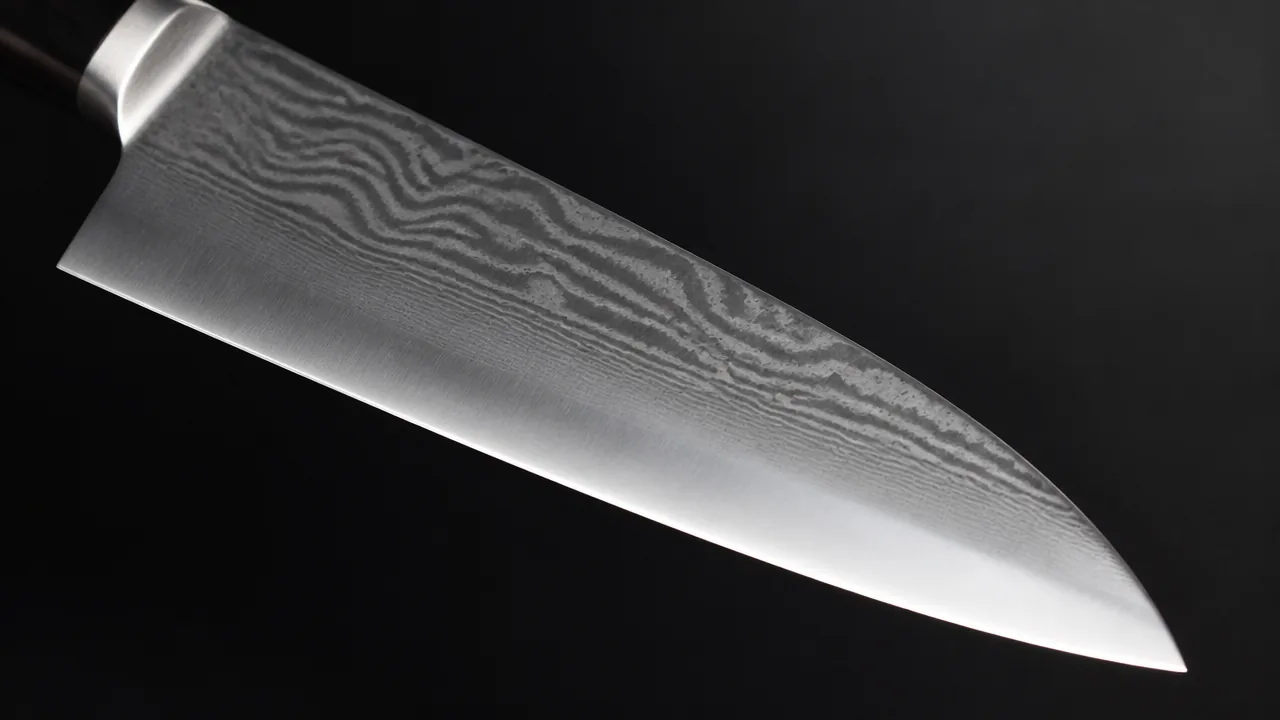
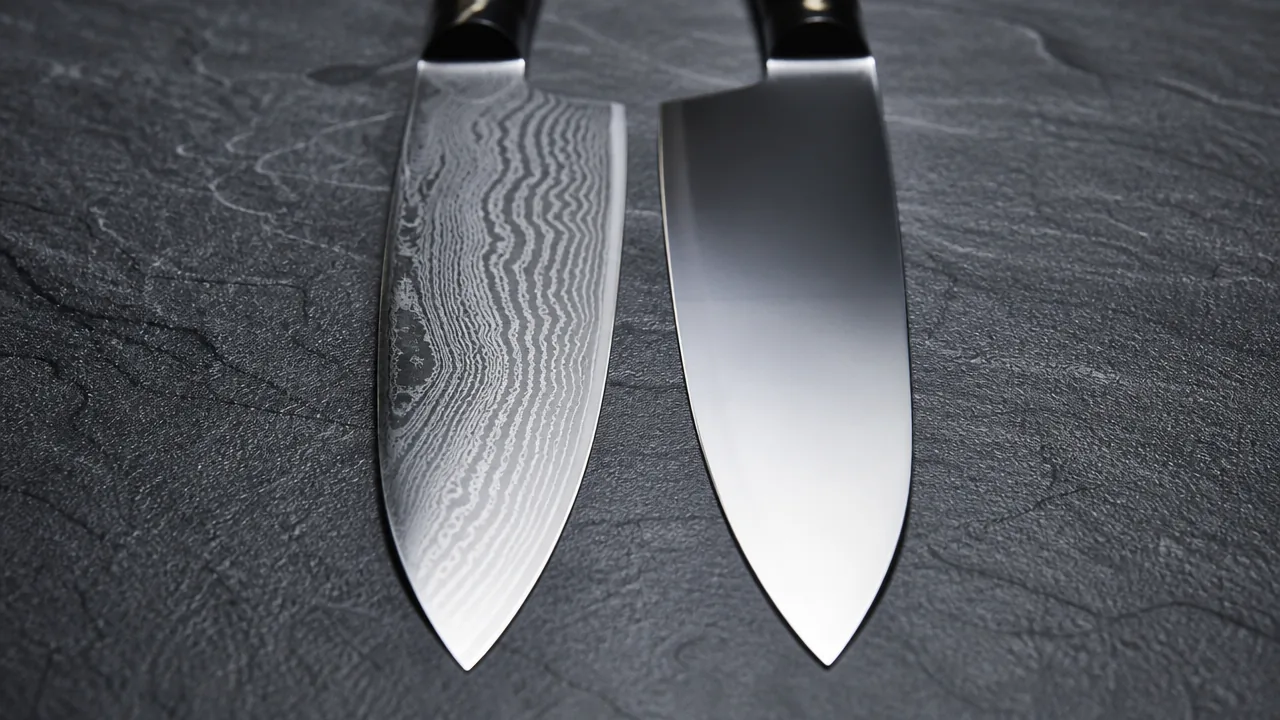
Damascus, in the context of modern Japanese knives, refers to a construction method, not a grade of steel. A bladesmith stacks alternating layers of two or more steel types, forge-welds them under heat and pressure, and then folds and re-welds the stack repeatedly, building up dozens or even over a hundred layers. That layered billet is then forged around a separate, harder core steel that will become the actual cutting edge, and the whole assembly is ground and shaped into a blade.
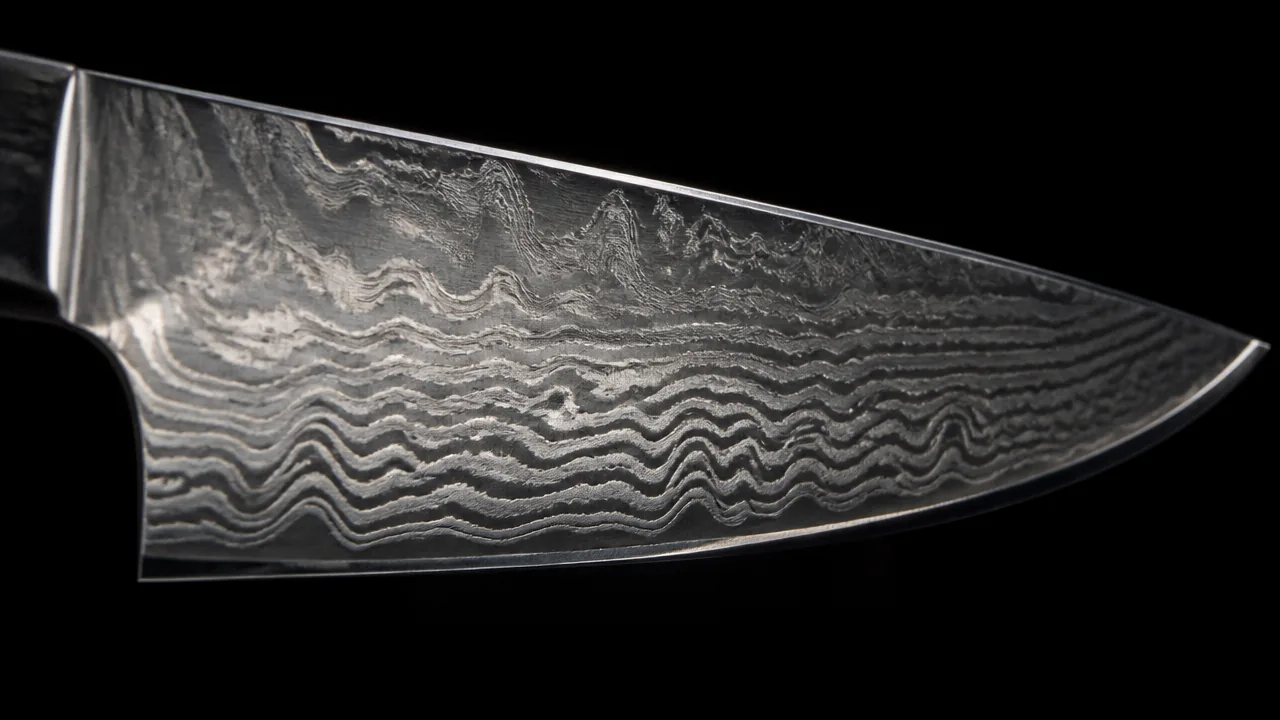
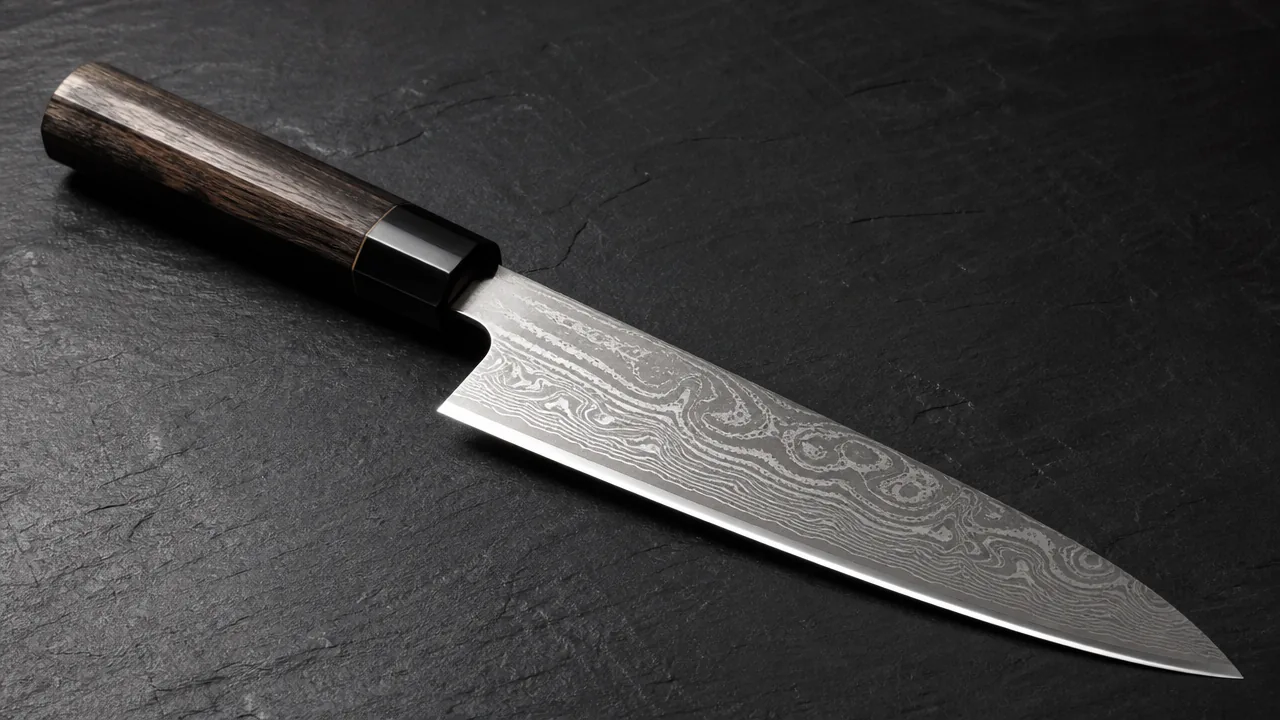
The wavy pattern appears afterward, once the blade is polished and etched. Because the different steel layers respond slightly differently to the etching acid or the polishing process, their boundaries become visible as light and dark bands. The specific wave, ladder, or random pattern depends on how the smith folded and manipulated the billet, but none of that folding happens to the core steel itself, which stays intact from start to finish.
This is why a Damascus knife is sometimes described as having a jacket around a core: the layered, patterned steel wraps around the sides of the blade, while a separate, single piece of steel forms the edge that actually does the cutting.
So Why Doesn’t the Pattern Affect Performance?
Cutting performance comes down to a small set of properties at the edge itself: what steel is there, how hard it was heat-treated to (measured in HRC), and how thin and precisely that edge was ground. None of those properties belong to the Damascus cladding layers, which typically sit well back from the edge and are usually a softer, more flexible steel chosen for looks and for protecting the core rather than for sharpness.
Our guide to Japanese Knife Steel Types Explained covers this same point in more detail: Damascus is a manufacturing technique, not a steel type, and two knives with visually similar Damascus patterns can perform very differently depending on what core steel sits at the center. A VG-10 core behaves like VG-10 whether or not it is wrapped in Damascus cladding, and the same is true for a carbon-steel core like Aogami or Shirogami.
A useful way to think about it: the pattern tells you about the outside of the blade, not the edge. When you are actually evaluating a Damascus knife, the pattern is not the specification that matters — the core steel and its hardness are.
When Damascus Is Worth Paying For — and When It Isn’t
None of this makes Damascus a bad choice, since it does offer a few genuine advantages, just not the one people often assume.
- Appearance: the pattern is a real, hand-produced visual effect, and for a lot of cooks the look alone justifies the premium, especially for a knife bought as a gift or centerpiece.
- Some corrosion resistance at the sides: when a carbon-steel core is clad in stainless Damascus layers, the sides of the blade get some protection from rust that a bare carbon-steel knife would not have. The exposed edge, where the core steel is ground thin, is still the core steel and can still oxidize if left wet, so this benefit is partial rather than complete.
- Resale and gift appeal: a Damascus finish photographs well and reads as a meaningful upgrade to someone who is not evaluating knives by spec sheet.
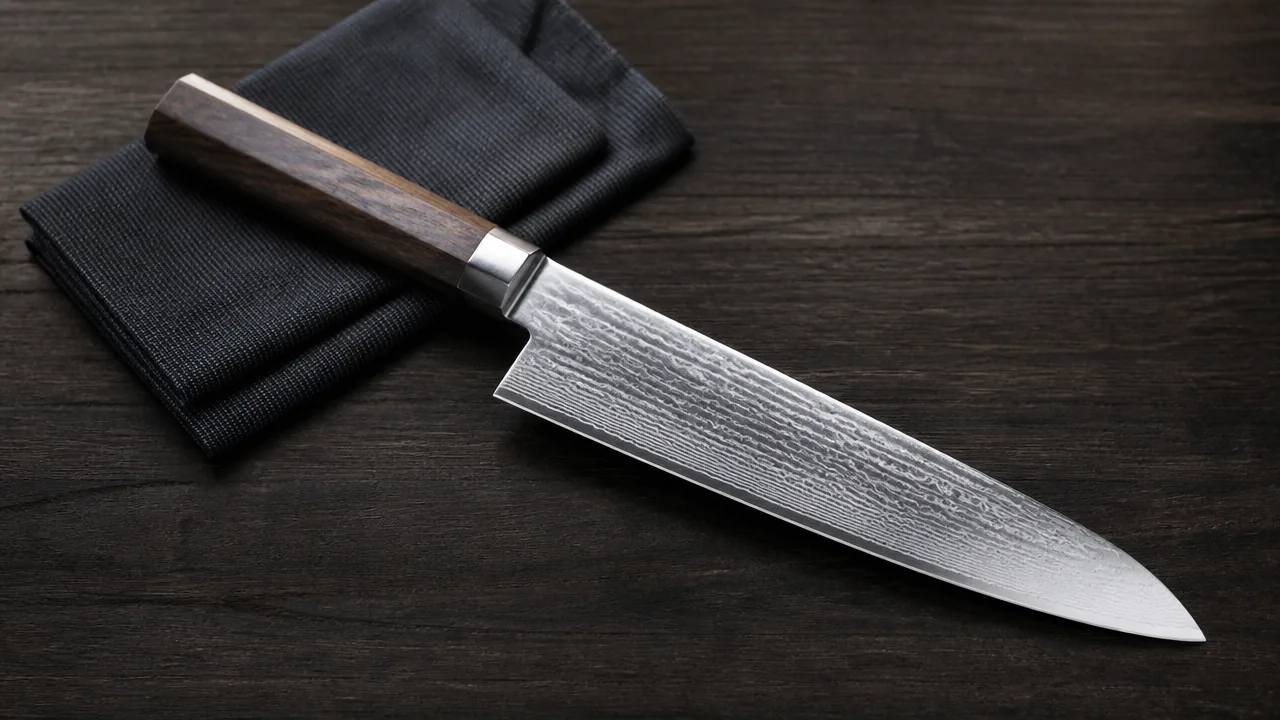
Our Best Japanese Gyuto Knife 2026 guide includes the Kanetsune KC-200, a VG-10 core wrapped in 33-layer Damascus cladding, as a mid-range pick. Its performance comes from the VG-10 core, the same as it would with no cladding at all — the Damascus construction adds the pattern and a modest price premium, not a different level of sharpness.
If your budget is tight and you have to choose between a plain-finish knife with a better core steel and a Damascus-pattern knife with a lesser core, the plain knife with the better core will cut and hold an edge better. Choose Damascus when the look matters to you and the core steel is one you would have chosen anyway.
Frequently Asked Questions
Does Damascus steel rust less?
It depends on the core. If the core is stainless steel, corrosion resistance is about the same with or without Damascus cladding. If the core is carbon steel, stainless Damascus cladding can protect the sides of the blade from rust, but the exposed cutting edge is still carbon steel and can still oxidize if left wet.
Is Damascus steel sharper than plain steel?
No. Sharpness and edge retention come from the core steel and how it was heat-treated, not from the Damascus cladding. A plain-finish knife and a Damascus knife with the same core steel will sharpen and perform the same way.
Is a higher layer count better?
Not necessarily for performance. A higher layer count generally changes the visual pattern — finer, denser lines — rather than the cutting ability. More layers can mean more labor in producing the billet, which is often reflected in price, but it does not by itself indicate a better core steel.
Can Damascus cladding chip or wear differently from the core?
The cladding is typically a softer steel than the core, so it is not the part doing the cutting and is not exposed to the same edge stress. Over years of sharpening, the visible cladding pattern near the edge can gradually thin as material is removed, but this is a cosmetic change rather than a performance one.
Related Reading
For the fuller picture of how Japanese knife steels compare, Japanese Knife Steel Types Explained covers VG-10, Damascus, Aogami, and Shirogami side by side. If you are shopping for a Gyuto specifically, Best Japanese Gyuto Knife 2026 includes both Damascus and plain-finish picks across price tiers. And if you are also weighing edge geometry, Single Bevel vs Double Bevel Japanese Knives covers a separate but equally misunderstood spec.
Use the guides above to see how Damascus and plain-finish knives compare by core steel and price before you decide.