This article contains affiliate links. If you buy through them, we may earn a commission at no extra cost to you.
How this article was made: Research-based comparison. It draws on published information from makers, retailers, and reference sources, not on hands-on testing.
Quick picks
- Seki Kotetsu Nakiri VG-10 Migaki 165mm — ~$174 (US total, est. ~$231): daily cooks who prep vegetables often
- Sakai Takayuki 33 Layer Damascus Nakiri 165mm — $153.00 at Chubo Knives (US only): VG10 core, mahogany handle
- Sakai Takayuki 45 Layer Damascus Wa Nakiri 160mm — $175.00 at Chubo Knives (US only): AUS10 core, octagonal walnut handle
- Tojiro Basic Nakiri VG-10 165mm — ~$67 (US total, est. ~$98): first-time nakiri buyers; in stock at SharpEdge on October 16, 2026
- Tojiro VG-10 Nakiri DP Hammered 165mm — ~$191 (US total, est. ~$252): VG-10 core, hammered kuro-uchi finish, riveted handle; in stock at SharpEdge on October 16, 2026
SharpEdge and Chubo prices and stock as of October 16, 2026; SharpEdge prices are converted from euros at the October 9 ECB rate; US totals are estimates that include shipping and the 25% tariff.
For readers in the US
- Sakai Takayuki 33 Layer Damascus Nakiri 165mm — $153.00 at Chubo Knives: VG10 core, mahogany handle; ships from Japan with US duties paid, per Chubo; $15 shipping on orders under $200
- Sakai Takayuki 45 Layer Damascus Wa Nakiri 160mm — $175.00 at Chubo Knives: AUS10 core, octagonal walnut handle; same shipping terms
For readers in the UK and Europe
- Seki Kotetsu Nakiri VG-10 Migaki 165mm — €155.00 at SharpEdge
- Tojiro VG-10 Nakiri DP Hammered 165mm — €170.00 at SharpEdge
Prices and stock checked October 16, 2026. Sakai Takayuki is a product of Aoki Hamono Seisakusho of Sakai, according to the maker’s site. SharpEdge prices are in euros and exclude shipping; taxes are worked out at checkout.
- The Short Answer: Which Nakiri to Buy
- Why the Nakiri Is Built Specifically for Vegetables
- How to Choose the Right Nakiri: Length, Steel, and Bevel
- Top Nakiri Knife Picks: Entry-Level to Professional
- Caring for Your Nakiri: What You Need to Know
- Frequently Asked Questions
- Which Nakiri Is Right for You? Final Recommendations
The Short Answer: Which Nakiri to Buy
For a home kitchen, this guide recommends a 165mm double-bevel nakiri in stainless steel, because 160mm to 170mm handles a full head of cabbage in one pass and stainless steel resists rust with less upkeep than carbon steel. The picks below are listed with the knives in stock first.
- Vegetable prep most days: Seki Kotetsu Nakiri VG-10 Migaki 165mm, €155.00 (about $174; US total, est. about $231). A VG-10 core in a blade the retailer describes as extremely thin; in stock at SharpEdge on October 16, 2026
- In the US, with Damascus cladding: Sakai Takayuki 33 Layer Damascus Nakiri 165mm, $153.00, or Sakai Takayuki 45 Layer Damascus Wa Nakiri 160mm, $175.00, both at Chubo Knives, which ships from Japan with US duties paid, per Chubo; in stock on October 16, 2026
- A first nakiri at the lowest price: Tojiro Basic Nakiri VG-10 165mm, €60.00 (about $67; US total, est. about $98). A VG-10 core and a riveted pakkawood handle; in stock at SharpEdge on October 16, 2026
- A hammered finish, still stainless: Tojiro VG-10 Nakiri DP Hammered 165mm, €170.00 (about $191; US total, est. about $252). A VG-10 core clad in softer stainless steel, hardened to 61 HRC per SharpEdge, with a kuro-uchi hammered finish; in stock at SharpEdge on October 16, 2026
Why the Nakiri Is Built Specifically for Vegetables
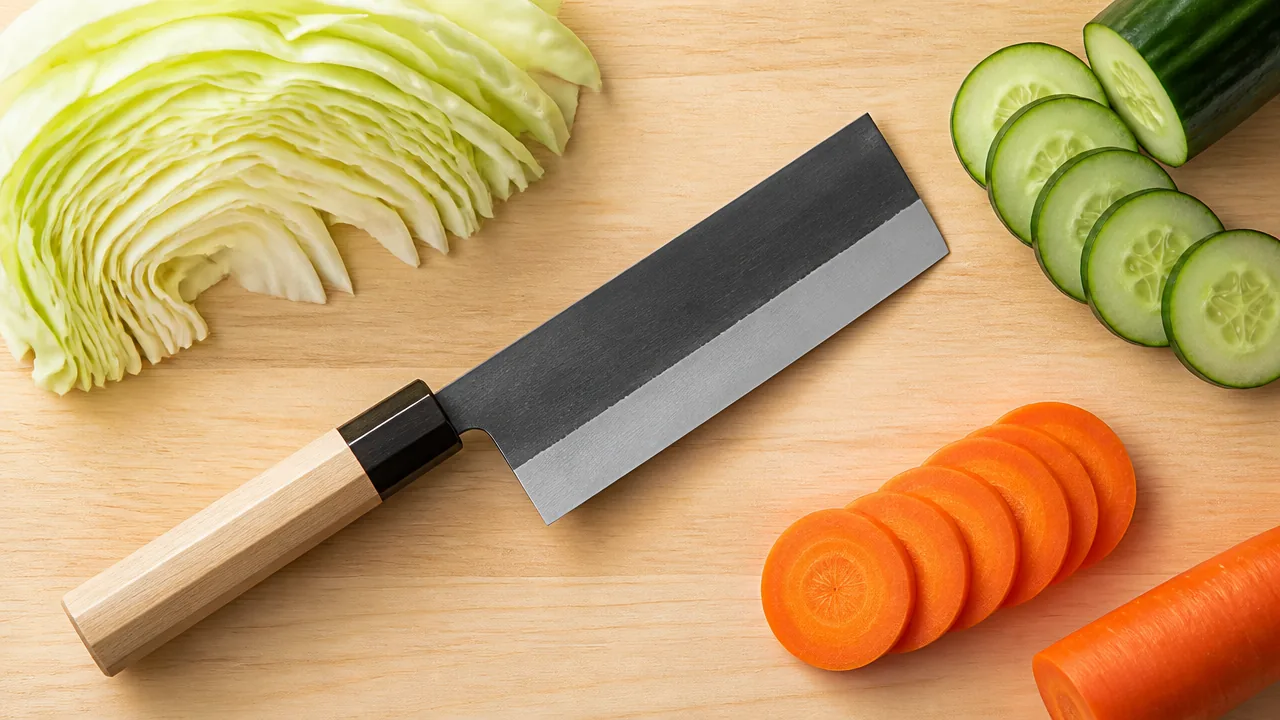
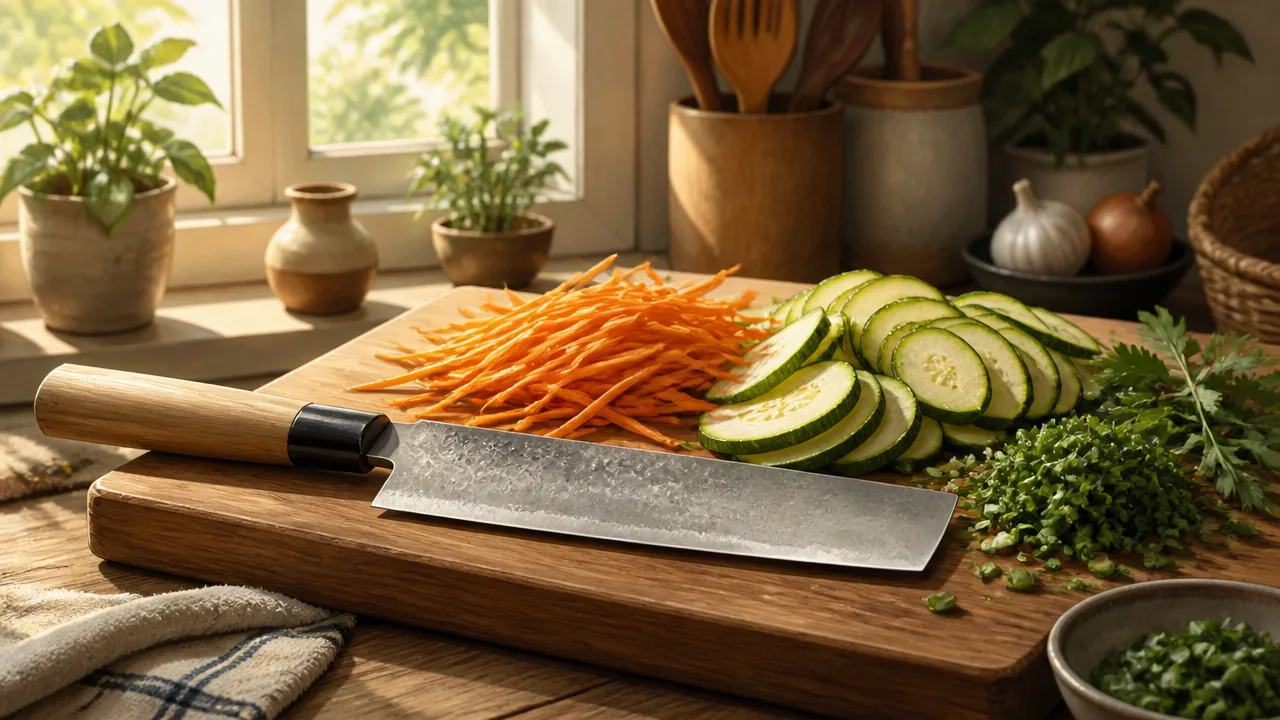
The nakiri is Japan’s dedicated vegetable knife — a category built around one job: slicing, dicing, and chopping vegetables with minimal effort and maximum precision. Among all Japanese knife styles, it stands apart for exactly this specialization. Unlike a Gyuto or Santoku — both of which are general-purpose knives designed to handle meat, fish, and produce — the nakiri features a straight, rectangular blade that makes full contact with the cutting board on every stroke. There is no rocking motion required, which means less fatigue during long prep sessions and cleaner, more uniform cuts.
The blade profile also eliminates the need to “push” food away as you cut, since the flat edge runs parallel to the board throughout the entire cut. This matters especially when working through dense root vegetables like carrots or burdock, where an angled blade can cause uneven slices.
If you are deciding between blade shapes, our Santoku vs Gyuto vs Nakiri comparison offers a useful side-by-side breakdown.
How to Choose the Right Nakiri: Length, Steel, and Bevel
Before buying a nakiri, it helps to understand the three decisions that will shape your experience most: blade length, steel type, and bevel grind.
Blade length for most home kitchens falls between 160mm and 170mm. This range is long enough to handle a full head of cabbage or a large daikon in a single pass, while still being maneuverable on a standard home cutting board. Professional prep cooks who deal with high-volume work sometimes prefer slightly longer blades, but for most buyers, 165mm is a comfortable sweet spot. See our Japanese Knife Blade Length Guide for how this compares across other Japanese knife types.
On steel, the choice broadly comes down to stainless versus high-carbon:
- Stainless steel alloys like VG-10, AUS-10, and DSR-1K6 resist rust and require less active maintenance. They are the practical choice for everyday home use or humid kitchen environments.
- High-carbon steels such as Aogami Super (also called Blue Super steel) achieve a finer edge and tend to hold it longer, but they require careful drying after each use and are more prone to patina or surface oxidation if neglected.
- HRC (Rockwell Hardness) ratings give you a rough sense of how long an edge will hold: makers publish their own figures (Shun hardens its VG10 and VG-MAX steel to 60–61, and MAC gives 57 to 61 for its knives). Shun notes that harder steel holds an edge longer, and that micro-chipping can be the downside of very hard steel.
Finally, consider the bevel. Most nakiri knives sold internationally are double bevel (ryoba), meaning the blade is ground on both sides and can be used comfortably by right- or left-handed cooks. Traditional single bevel (kataba) nakiri blades exist and produce exceptionally clean cuts, but they require more skill to sharpen and are generally aimed at experienced users. For beginners, a double bevel is the safer and more forgiving starting point. Single Bevel vs Double Bevel Japanese Knives explains the difference in detail. If you are newer to Japanese knives overall, the Best Japanese Knife for Beginners guide covers foundational concepts worth reading before making a purchase. And if a dedicated vegetable knife feels like more specialization than you need right now, Best Japanese Chef Knife Under $100 rounds up versatile all-purpose options in a similar price range. If you would rather keep the search to a firm $150 ceiling, Best Japanese Nakiri Under $150 narrows the field to three knives in that range.
Top Nakiri Knife Picks: Entry-Level to Professional
The three knives below cover a deliberate range of price points and user profiles, verified directly against current listings. On October 16, 2026, all three were in stock at SharpEdge, a Japanese knife retailer. Each represents a different level of commitment in terms of both cost and maintenance. SharpEdge prices in euros, so the US dollar figures below are approximate, converted at the ECB reference rate of 1 EUR = 1.1206 USD on October 9, 2026, and do not include shipping. Inside SharpEdge explains how the shop works.
| Tier | Price | US total (est.)* | Steel | HRC | Blade Length | Handle | Best For | Made in |
|---|---|---|---|---|---|---|---|---|
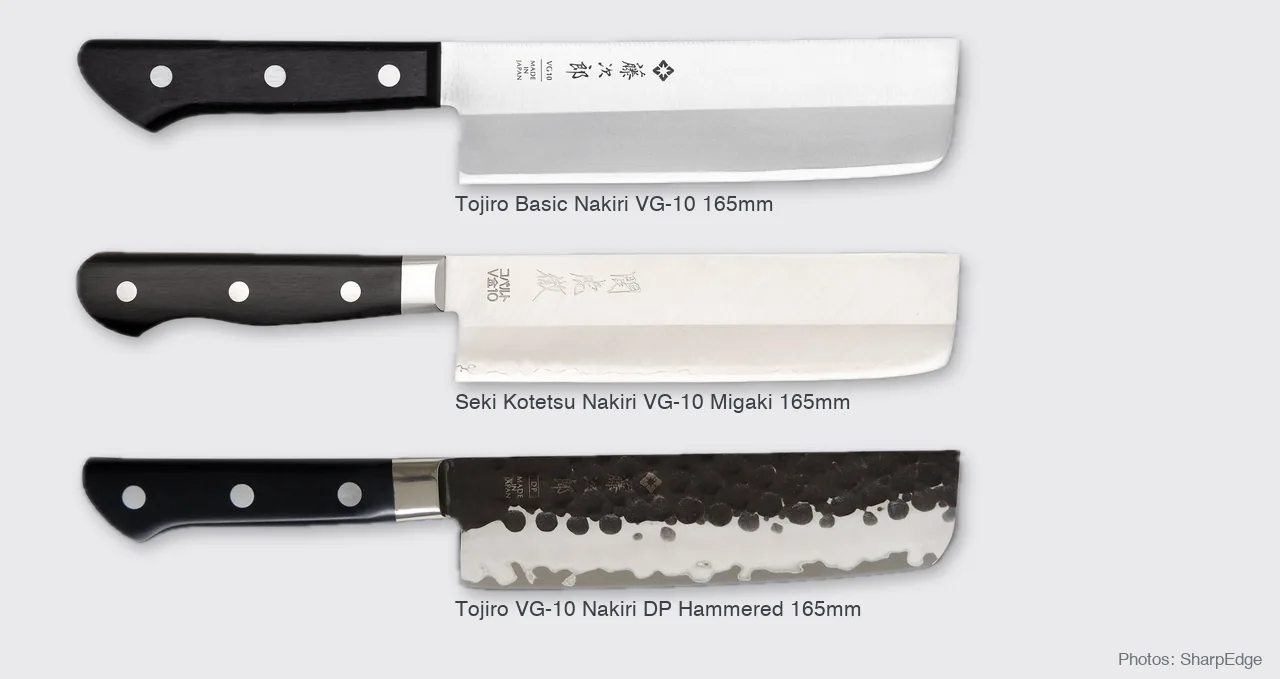
| Mid-Range — Seki Kotetsu Nakiri VG-10 Migaki 165mm |
~$174 (€155.00) | ~$231 | VG-10 core, san-mai (three-layer) | Not listed | 165mm | Pakkawood, Western-style | Daily cooks who prep vegetables often | Japan (Seki) |
| Pro — Tojiro VG-10 Nakiri DP Hammered 165mm |
~$191 (€170.00) | ~$252 | VG-10 core, softer stainless cladding | 61 (per SharpEdge) | 165mm | Stamina wood, Western-style, riveted | Cooks who want a hammered finish with stainless care | Japan (Tsubame-Sanjo) |
| Entry — Tojiro Basic Nakiri VG-10 165mm |
~$67 (€60.00) | ~$98 | VG-10 core, san-mai (three-layer) | Not listed | 165mm | Pakkawood, Western-style | First-time nakiri buyers | Japan (Tsubame-Sanjo) |
*US total (est.) is an estimate for a US buyer, including shipping and the 25% tariff, as of October 2026, based on SharpEdge’s shipping page: (price + €10 shipping) × 1.25 for orders under €300, or price × 1.25 for orders of €300 or more, which ship free. Example: a €51 knife came to €76.10 at checkout for a New York address on October 3, 2026. Tariff rates can change.
Entry-level (under $75)
Tojiro Basic Nakiri VG-10 165mm — €60.00 (approximately $67)
US buyers: about $98 in total with shipping and the 25% tariff. In stock at SharpEdge on October 16, 2026.
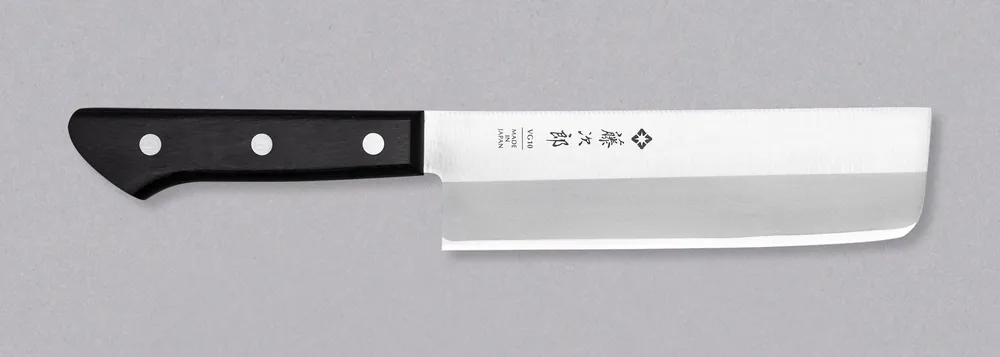
This is the entry point of the lineup. Tojiro’s Basic series is designed for home use: a VG-10 stainless core clad in softer steel, a plain polished (migaki) finish, and a riveted pakkawood handle that feels immediately familiar to cooks coming from non-Japanese knives. It is straightforward to maintain and gives a first-time buyer a dedicated vegetable knife without a significant investment.
Japan Check
Made in: Japan (Tojiro, Tsubame-Sanjo, Niigata)
Steel: VG-10 stainless core, san-mai construction
HRC: not stated by the retailer
Blade Length: 165mm, double bevel
Checked Against: sharpedgeshop.com
Last Checked: 2026-10-02
Mid-range (around $174)
Seki Kotetsu Nakiri VG-10 Migaki 165mm [Black Pakkawood] — €155.00 (approximately $174)
US buyers: about $231 in total with shipping and the 25% tariff.
![Seki Kotetsu Nakiri VG-10 Migaki 165mm [black pakkawood]](https://japan-craft-finds.com/wp-content/uploads/2026/10/seki-kotetsu-nakiri-vg-10-migaki-165mm-black-pakkawood-photo.webp)
Stepping into the mid-range, this knife from Yasuda Hamono in Seki uses the same VG-10 core steel, but in a thinner, more finely finished blade. The retailer describes the blade as extremely thin, which is what makes a nakiri glide through dense vegetables, and the polished finish and pakkawood handle keep maintenance simple. This is a strong choice for home cooks who prepare vegetables daily and want a clear step up without taking on carbon steel care.
Japan Check
Made in: Japan (Yasuda Hamono, Seki, Gifu Prefecture)
Steel: VG-10 stainless core, three-layer construction
HRC: not stated by the retailer
Blade Length: 165mm, double bevel
Checked Against: sharpedgeshop.com
Last Checked: 2026-10-02
Hammered VG-10 (around $190)
Tojiro VG-10 Nakiri DP Hammered 165mm — €170.00 (approximately $191)
US buyers: about $252 in total with shipping and the 25% tariff. In stock at SharpEdge on October 16, 2026.
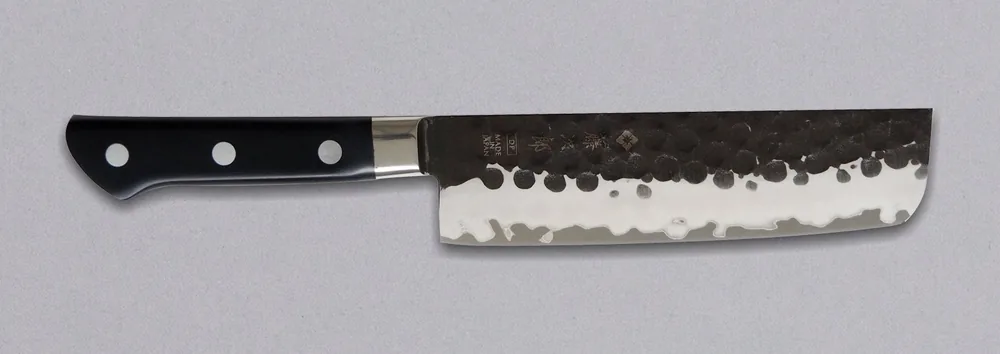
This is the top of the price range in this guide, from Tojiro. SharpEdge lists a VG-10 core clad in softer stainless steel and hardened to 61 HRC, a hammered, kuro-uchi finish whose dents help food release, and a stamina wood handle with a stainless bolster and three rivets. Because the cladding is stainless, the care is the same as for the other two picks: hand wash and dry. It is the pick here for cooks who want a more textured, darker finish without taking on carbon steel care.
Japan Check
Made in: Japan (Tojiro, Tsubame-Sanjo, Niigata)
Steel: VG-10 stainless core, softer stainless cladding
HRC: 61 (per SharpEdge)
Blade Length: 165mm, double bevel
Checked Against: sharpedgeshop.com (specifications, price, stock), tojiro.net (maker)
Last Checked: 2026-10-16
Caring for Your Nakiri: What You Need to Know
Nakiri knives, like all Japanese blades, reward attentive maintenance with years of reliable performance. The care routine does not need to be complicated, but a few consistent habits make a significant difference.
- Wash by hand immediately after use. Shun’s FAQ says knives get knocked around during a dishwasher cycle and that many dishwashing detergents contain corrosive agents that can pit or corrode the blade.
- Dry the blade fully before storing it. This is especially important for carbon steel knives — even a few minutes of sitting wet on a counter can begin surface oxidation.
- Use a softer cutting board that gives under the blade, such as wood. Shun’s FAQ lists glass, ceramic, marble, plastic and acrylic among the hard surfaces to avoid.
- Store the knife on a magnetic knife strip or in a knife block that holds the blade without contact between edges. Loose drawer storage causes micro-damage over time.
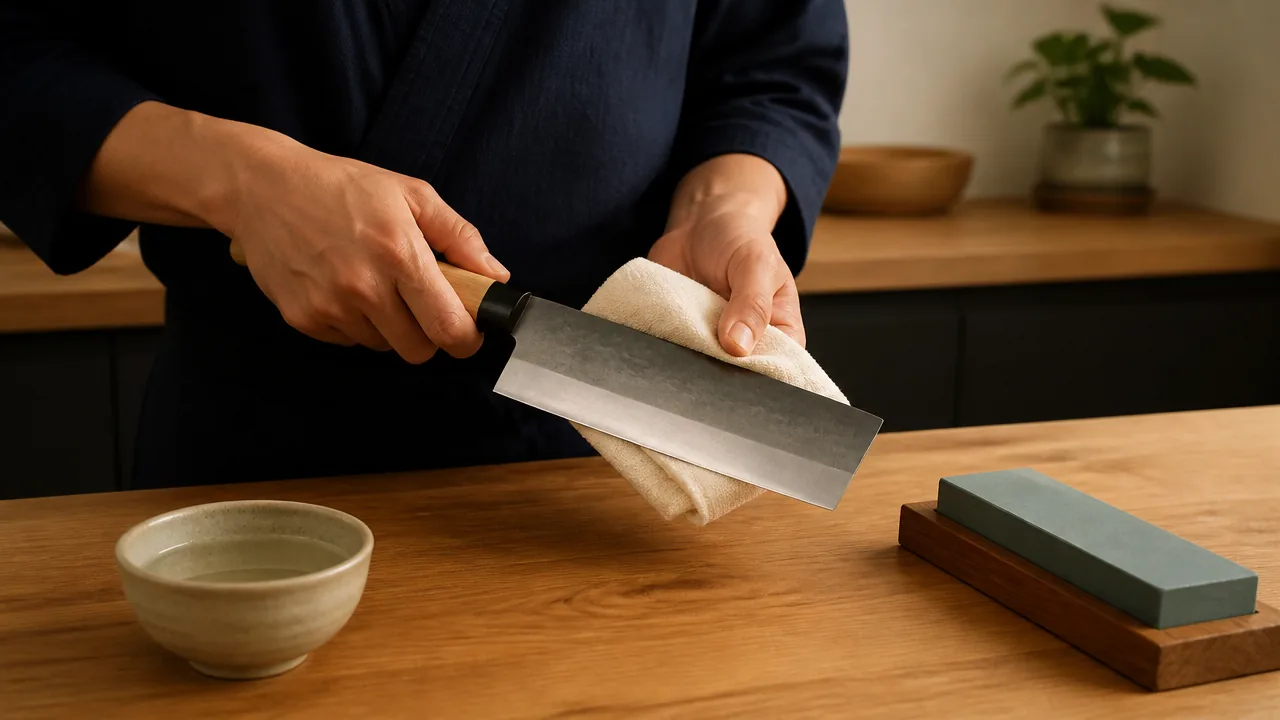
For sharpening, nakiri blades respond well to whetstones. The flat double-bevel geometry is actually one of the more beginner-friendly edges to maintain on a stone. If you are new to freehand sharpening, our Best Japanese Knife Sharpening Stones for Beginners guide walks through stone grit selection and technique in practical terms. A pull-through sharpener can touch up an edge in a hurry, but for a knife in the $150+ range, a proper whetstone session every few months will preserve both the edge geometry and the blade’s long-term value.
Frequently Asked Questions
Is a Nakiri better than a Santoku for vegetables?
For pure vegetable prep, yes — the nakiri’s flat, rectangular blade and full-contact push-cut design edge out the Santoku, which is built as a general-purpose knife that also handles meat and fish reasonably well. A Santoku’s slightly rounded tip and shorter length make it more versatile overall, but if vegetables are the bulk of what you cut, the nakiri’s dedicated geometry produces cleaner, more uniform cuts with less effort. For a full side-by-side, see Santoku vs Gyuto vs Nakiri: Which Japanese Knife Do You Actually Need.
Can a Nakiri be used for meat or fish?
A nakiri can handle soft, boneless cuts of meat or fish in a pinch, but it is not designed for it. The blade lacks a pointed tip for precision work, and the thin edge geometry is not built to handle bone, sinew, or skin. For a knife that comfortably covers both vegetables and proteins, a Gyuto or Santoku is the better single-knife choice.
Is a Nakiri hard to sharpen?
No — nakiri knives are one of the more beginner-friendly shapes to sharpen. Because most are double bevel with a flat edge, they respond predictably to a whetstone without the angle-matching challenges that single bevel knives present. See Best Japanese Knife Sharpening Stones for Beginners for a practical introduction to grit selection and technique.
How is a Nakiri different from a Chinese cleaver?
Both have a tall, rectangular blade, but they are built for different jobs. A Chinese cleaver is heavier and thicker, designed to handle some bone and heavier chopping in addition to vegetables. A nakiri is thinner and lighter, optimized purely for clean vegetable cuts, and is not intended for anything with bone or significant resistance.
Product images are illustrative renderings based on retailer product photos.
What is the best nakiri knife for a home cook?
This guide recommends a 165mm double-bevel nakiri in stainless steel for a home kitchen, because that length handles large vegetables in one pass and stainless steel needs less upkeep than carbon steel. Among the three picks here, that is the Seki Kotetsu Nakiri VG-10 Migaki 165mm, or the lower-priced Tojiro Basic Nakiri VG-10 165mm when it is in stock.
What size nakiri should I buy?
For most home kitchens, 160mm to 170mm. That is long enough to cut a full head of cabbage or a large daikon in a single pass and still easy to handle on a standard home cutting board. All three picks in this guide are 165mm.
Which Nakiri Is Right for You? Final Recommendations
After comparing steel types, price points, and user profiles, the right nakiri comes down to how and how often you cook.
For everyday home cooking, the Tojiro Basic is the low-risk starting point. It performs reliably, requires minimal maintenance, and gives you a clear sense of whether a dedicated vegetable knife fits your cooking style before you invest more.
For the home cook who is serious about produce-forward meals, the Seki Kotetsu VG-10 model hits the balance most people are looking for: refined enough to feel like a real upgrade, durable enough to use daily without anxiety, and priced in a range where quality is genuinely felt in use.
For gifting, the Seki Kotetsu and the Tojiro DP Hammered are both stainless and easy to live with; the Tojiro has a dark, hammered kuro-uchi finish. The Japanese Knife Gift Set for Beginners page is also worth checking if you want to pair the knife with complementary accessories.
For cooks who want a hammered, darker finish without carbon steel care, the Tojiro VG-10 Nakiri DP Hammered is the pick of the three, because its VG-10 core is clad in stainless steel.
If you are still weighing whether a nakiri is the right blade shape for your kitchen at all, the Santoku vs Gyuto vs Nakiri: Which Japanese Knife Do You Actually Need article gives a thorough, unbiased comparison of all three. Sometimes the best nakiri is the one you buy knowing exactly why you chose it over the alternatives.
Ready to find your nakiri? Every model covered above is linked directly to SharpEdge, and the comparison table gives you a quick side-by-side before you decide.