This article contains affiliate links. If you buy through them, we may earn a commission at no extra cost to you.
How this article was made: Research-based comparison. It draws on published information from makers, retailers, and reference sources, not on hands-on testing.
- The First Choice Every Kintsugi Beginner Has to Make
- Authentic Urushi Kits: Traditional Craft with Real Demands
- Synthetic Resin Kits: The Accessible Starting Point
- Authentic or Synthetic? How to Decide Based on Your Actual Goals
- Getting Started: The Essentials You’ll Need Either Way
- Frequently Asked Questions
- Which Path Fits You Best? A Final Word
The First Choice Every Kintsugi Beginner Has to Make
You’ve just cracked a favorite bowl, and instead of throwing it away, you want to try kintsugi — the Japanese art of repairing broken ceramics with gold. The philosophy is rooted in wabi-sabi, the idea that imperfection and impermanence carry their own beauty. But before you order anything, you’ll run into a decision that shapes your entire experience: do you use a traditional urushi lacquer kit, or go with a modern synthetic resin kit?
This isn’t just a matter of preference. The two approaches differ significantly in materials, process, drying time, safety considerations, and the kind of result you’ll get. Authentic kits use real urushi lacquer (derived from the Toxicodendron vernicifluum tree) and genuine gold powder — materials that have been central to Japanese craft for over a thousand years. Synthetic kits, on the other hand, use epoxy or acrylic-based adhesives paired with metallic powder, making them faster and more accessible for casual DIY projects.
Neither is universally better. The right choice depends on what you want to do with the repaired piece, how much time you’re willing to invest, and whether you’re drawn to the craft itself or simply want a quick, attractive fix.
Authentic Urushi Kits: Traditional Craft with Real Demands
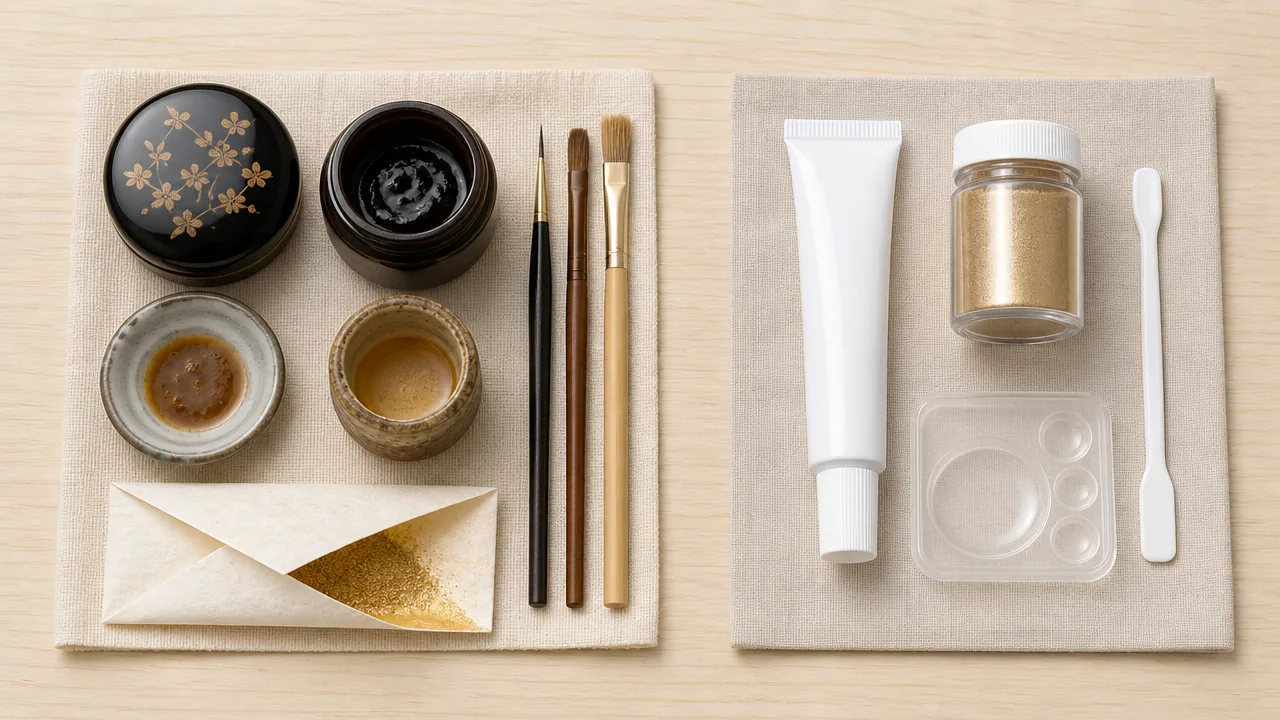
A genuine urushi lacquer kit uses ki-urushi (raw lacquer) or a refined form of it as the adhesive and finishing medium, combined with hon-kinpun — actual gold powder ground to a fine, consistent grade. The Chimahaga Kintsugi Repair Kit for Beginners -Standard- ($195 on Amazon.com, October 3, 2026; 4.3 stars from only 15 ratings so far) is a good example of a kit that stays close to traditional Japanese workshop methods: Chimahaga says it contains the same materials and tools used in its kintsugi classes in Japan.
Makers of urushi kits such as Chimahaga describe completely hardened urushi as food-safe. However, the curing process matters enormously here — uncured or partially cured urushi contains urushiol, the same compound found in poison ivy, which can cause significant skin reactions in sensitive individuals. This is not a reason to avoid it, but it does mean you need to work in a ventilated space, wear gloves, and allow adequate curing time (Chimahaga and Tsugu Tsugu both say to wait about a month after the repair is finished before using the piece). Is Kintsugi Food Safe? goes through what the makers say, material by material.
The process itself also unfolds slowly. Urushi requires a warm, humid environment to cure — a traditional method called muro involves a small humidified box. Expect multiple application stages spread across days or even weeks. For someone who values the meditative pace of traditional craft, this is part of the appeal. For someone who wants a repaired mug by the weekend, it may be frustrating.
Authentic urushi kits are best suited for people who treat kintsugi as a craft practice, not just a repair task. The investment in time and care is real, but so is the quality of the outcome.
Synthetic Resin Kits: The Accessible Starting Point
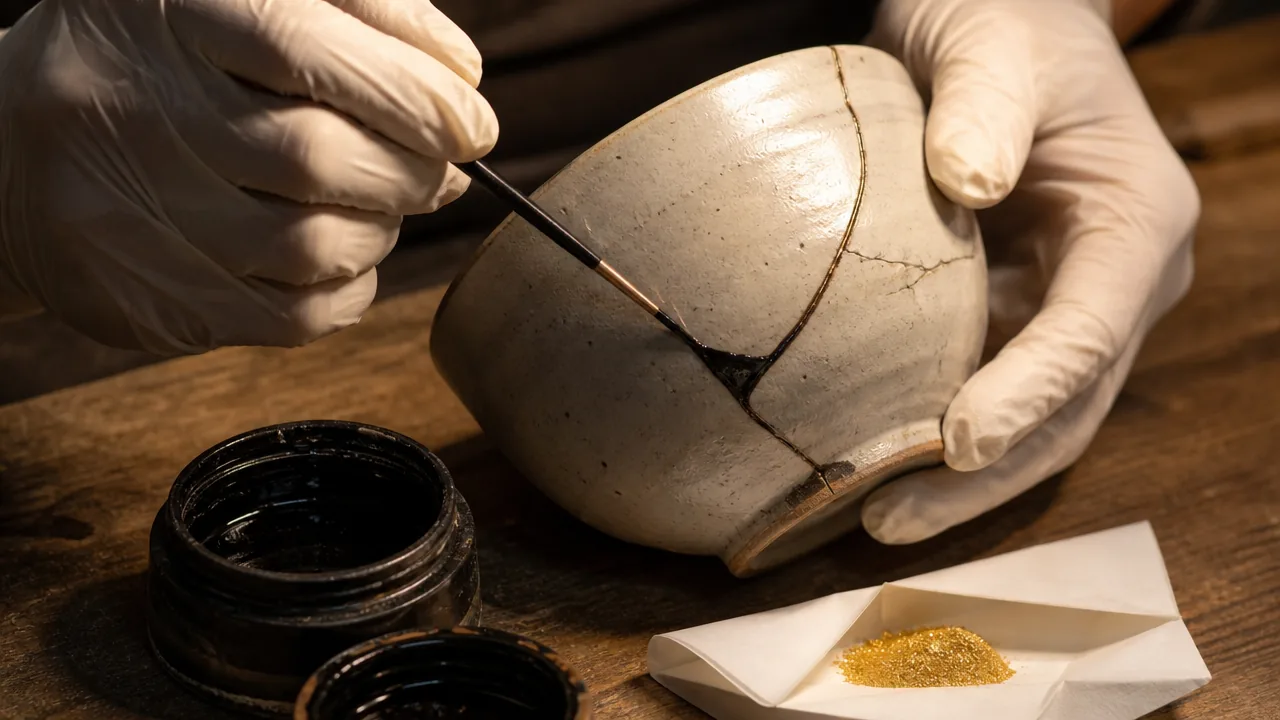
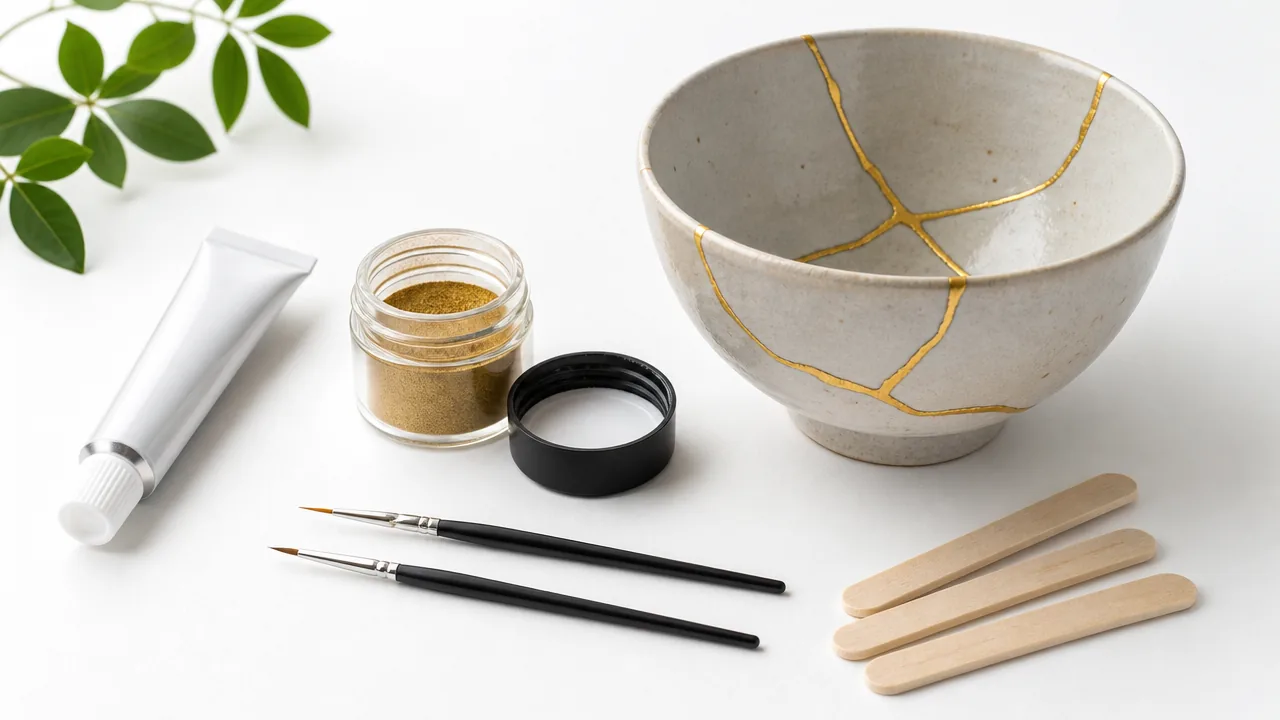
Synthetic resin repair kits have made kintsugi accessible to a much wider audience, and for good reason. Instead of urushi, these kits use epoxy resin or a similar acrylic-based adhesive, paired with metallic powder — usually brass, copper, or mica-based gold-tone pigment rather than actual hon-kinpun. The result still produces the characteristic golden-veined aesthetic, though it differs from a traditional urushi repair in both texture and longevity.
The practical advantages are meaningful for beginners:
- Curing is far quicker: the seller of the iienjoy kit below says its epoxy is fully cured in 24 hours, compared to a month or more for a full urushi repair
- No urushiol, the compound in raw urushi that can cause skin reactions
- No need for a humidity-controlled curing environment
- More forgiving of application errors — many epoxy-based adhesives allow repositioning before they set
- Kits are widely available and relatively affordable
Synthetic kits, including the one featured below (which its seller describes as food-safe), are suited to decorative pieces, pottery you display rather than use for food, and anyone who wants to explore the aesthetic of kintsugi without committing to a lengthy learning curve.
One point worth being clear about: most synthetic resin kits are not rated for food-contact use. If you plan to repair a plate or bowl you’ll actually eat from, check the manufacturer’s specifications carefully. This is a real limitation compared to fully cured urushi repairs.
If you’d like to dip a toe in without a big commitment, the iienjoy Kintsugi Repair Kit Gold ($21.99 on Amazon.com, October 3, 2026) is a gentle place to start — it comes with everything pre-packaged and doesn’t ask you to learn urushi handling on day one. Its seller describes it as food-safe, but the listing cites no test standard or certification, so treat that as the seller’s claim. It’s a low-pressure way to see whether kintsugi clicks for you before deciding whether to invest in a full traditional setup. If you want other colors too, there is also a 4-color version ($29.99).
Authentic or Synthetic? How to Decide Based on Your Actual Goals
The honest answer is that neither kit type is universally superior — they’re designed for different situations. Here’s a practical way to think through the choice:
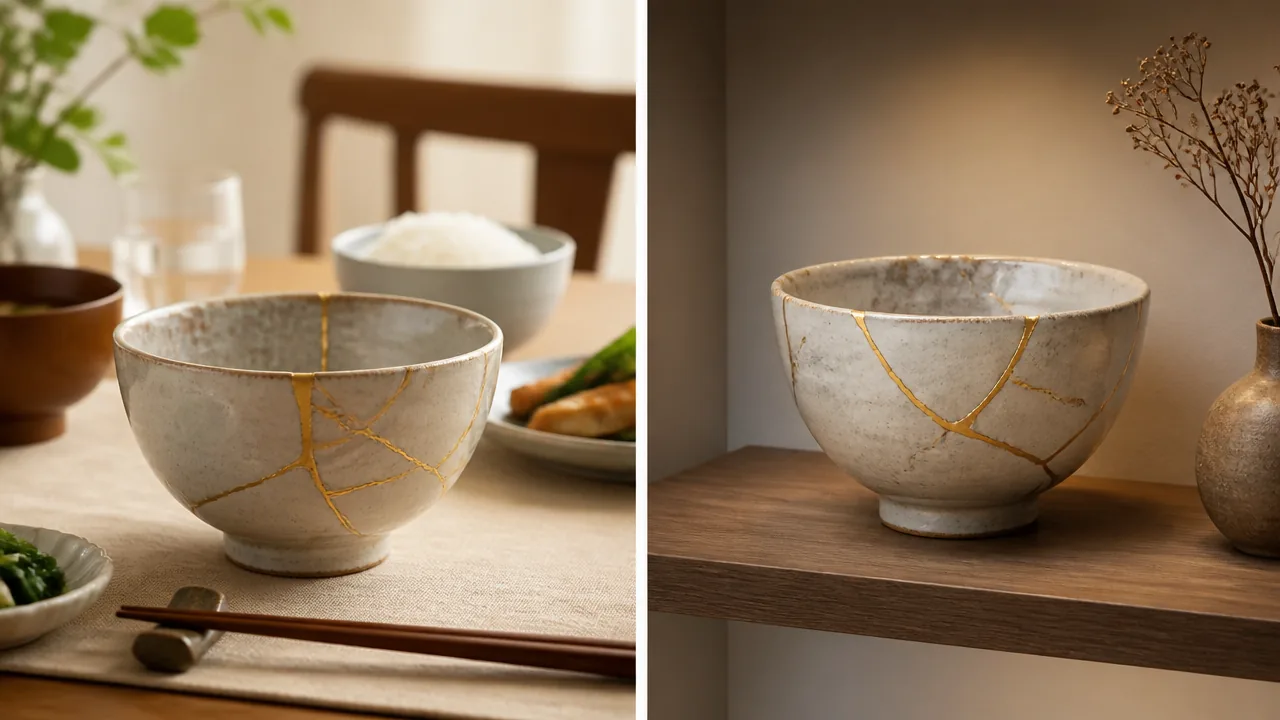
If you’re repairing a bowl, cup, or plate that you intend to use for food or drink, an authentic urushi lacquer kit is the more appropriate path, provided you allow full curing time and follow proper handling guidelines. Fully cured urushi has a long history of safe use in Japanese food culture. A synthetic resin repair kit, in most cases, is not designed for this application.
If your goal is a decorative piece — a vase, a display bowl, a ceramic art object — either option works. A synthetic kit will get you there faster, and the visual result is often quite close to a traditional repair for decorative purposes.
If you’re new to kintsugi and want to understand whether the craft resonates with you before investing significant time or money, starting with a synthetic kit is a reasonable approach. The lower barrier to entry lets you experiment with composition, application technique, and the aesthetics of gold repair without the steep learning curve of urushi handling.
For those who find they’re drawn deeper into Japanese craft traditions, the transition to authentic materials becomes a natural next step. The mindset shift that comes with working slowly, respecting the material, and accepting imperfect results is genuinely part of what makes traditional kintsugi meaningful — something that connects to the broader Japanese craft philosophy also explored in practices like sashiko visible mending.
Getting Started: The Essentials You’ll Need Either Way
Regardless of which direction you choose, a functional kintsugi setup requires a handful of core items. You don’t need a professional studio, but cutting corners on materials — especially the adhesive and gold powder — tends to show in the finished result.
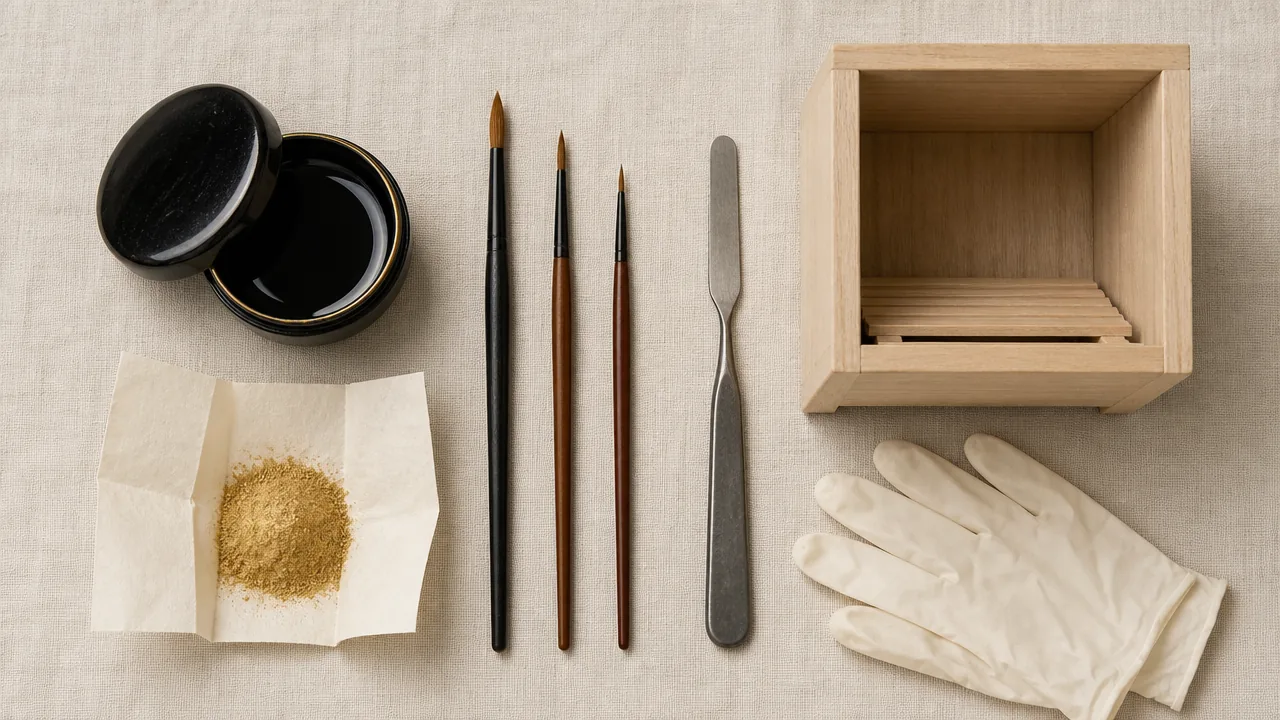
For an authentic approach, you’ll want:
- Ki-urushi or a beginner-grade urushi lacquer kit with pre-mixed adhesive
- Hon-kinpun (genuine gold powder)
- A small selection of fine brushes suited to lacquerwork
- A spatula or palette knife for mixing
- Protective gloves and a well-ventilated workspace
- A simple muro setup (a lidded box with a damp cloth) for curing
For the order in which these are used with urushi, see How to Do Kintsugi at Home: Step-by-Step.
For a synthetic resin approach, a beginner kit typically includes the adhesive and metallic powder pre-packaged. You’ll still benefit from having extra fine brushes for detail work and a steady hand for crack filling.
This overview is intentionally kept at a high level — a detailed breakdown of specific products, where to source authentic Japanese materials, and how to evaluate kit quality deserves its own focused guide. For a deeper look at how authentic and synthetic kits compare across specific products and use cases, see our full comparison of authentic vs synthetic kintsugi kits. If you already know you want to buy the adhesive and gold powder separately rather than as a bundled kit, our guide to choosing the right kintsugi glue and gold powder breaks down the individual products in more detail.
Also Needed: Disposable Nitrile Gloves
Raw urushi lacquer contains urushiol, the same compound behind poison ivy rashes, so it can cause an itchy skin reaction; wear disposable nitrile gloves whenever you handle it — this applies to any authentic urushi kit, and wash any skin contact with soap and water straight away. A 100-glove box such as MedPride Powder-Free Nitrile Exam Gloves (about $9.99 on Amazon.com, October 2026; choose your size) lasts for many repairs.
Frequently Asked Questions
How long should I wait before using a piece repaired with urushi?
Chimahaga and Tsugu Tsugu both say to wait about a month after the repair is finished before using the piece.
How quickly does an epoxy kintsugi kit cure?
The seller of the iienjoy kit says its epoxy is fully cured in 24 hours, compared with a month or more for a full urushi repair.
What does the Chimahaga Standard kit contain?
Chimahaga says it contains the same materials and tools used in its kintsugi classes in Japan.
Which Path Fits You Best? A Final Word
Kintsugi is one of those crafts where the material you choose carries meaning beyond function. Working with genuine urushi lacquer and hon-kinpun connects you to a centuries-old Japanese tradition — one that values patience, material honesty, and the beauty of repair. A synthetic resin repair kit offers something different but equally valid: a low-stakes entry point that lets you engage with the visual and conceptual language of kintsugi without the technical overhead.
For beginners who are primarily interested in repairing functional ceramics and are willing to invest time in learning proper technique, an authentic urushi lacquer kit from a Japanese supplier is worth the extra effort. The durability, food-safety profile (after full curing), and connection to craft tradition are genuine advantages that synthetic alternatives don’t replicate.
For those who want a creative weekend project, a gift for someone who appreciates Japanese aesthetics, or simply a way to rescue a broken piece they love, a quality synthetic kit is a practical and satisfying choice.
Whatever you decide, the act of repairing rather than discarding is itself an expression of wabi-sabi. The gold in the cracks isn’t hiding damage — it’s making it the point. For a more detailed side-by-side breakdown of specific kit options in both categories, our full guide at Authentic Kintsugi Kit vs Synthetic Resin Kit covers what to look for before you buy.
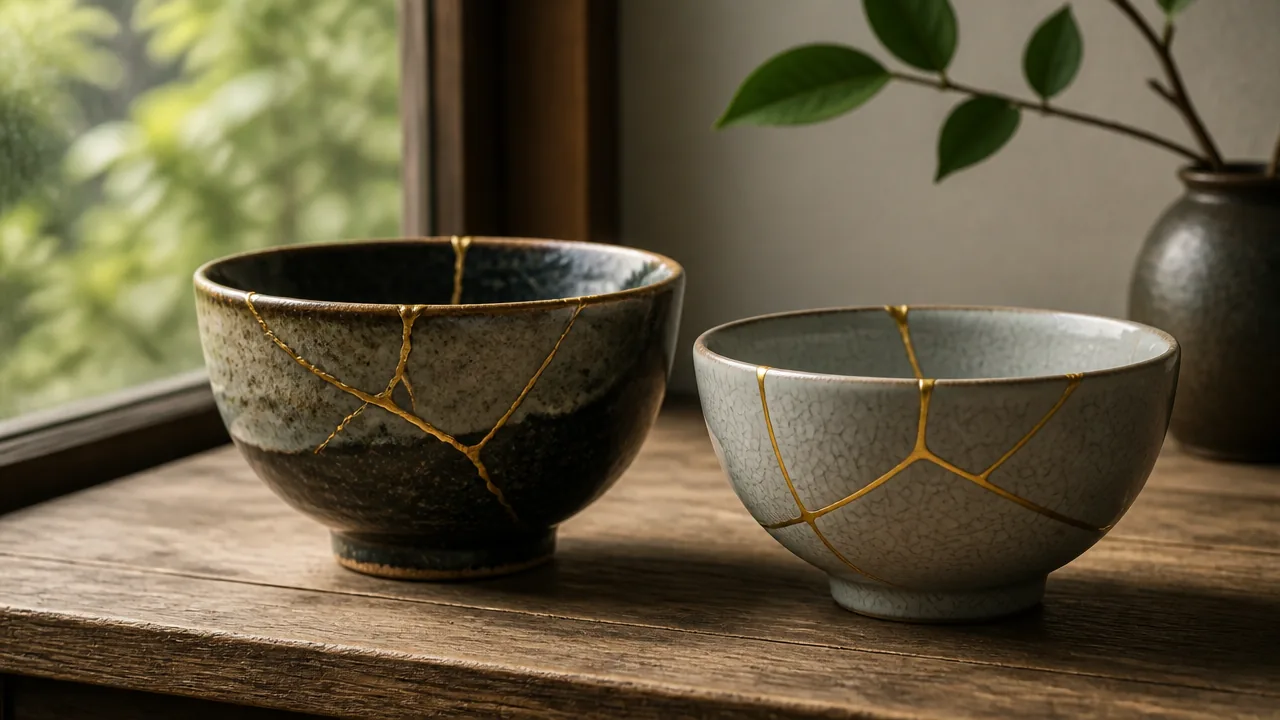
Ready to commit to the real thing? Explore authentic Japanese urushi lacquer kits and hon-kinpun gold powder to start your kintsugi practice the traditional way — built to last, and made to be used.
Ready to see specific products? Our full kit roundup by skill level and budget covers beginner, intermediate, and advanced-authentic options.