How this article was made: Research-based comparison. It draws on published information from makers, retailers, and reference sources, not on hands-on testing.
- Is Kintsugi Expensive? The Costs at a Glance
- The Short Answer: Kintsugi Costs More — and Often Earns It
- What Are the Standard Ceramic Repair Options?
- Cost Comparison: Kintsugi vs Other Repair Methods
- Why People Choose Kintsugi Despite the Higher Cost
- When a Basic Repair Is Genuinely the Better Choice
- Frequently Asked Questions
- Final Thoughts: Repair as a Choice, Not Just a Fix
Is Kintsugi Expensive? The Costs at a Glance
It depends on the method: a DIY kintsugi repair costs roughly $15–$50 in materials with synthetic resin, and roughly $150–$250 or more with traditional urushi. A plain glue repair costs a few dollars, and a professional restoration service has no single figure, because prices vary by provider and by the damage.
- Synthetic resin kintsugi (DIY): roughly $15–$50 in materials; hours to a day or two
- Traditional urushi kintsugi (DIY): roughly $150–$250 or more in materials; about a month by Chimahaga’s figures, and two to three months is common according to Tsugu Tsugu
- Super glue or epoxy (DIY): a few dollars; a few hours
The Short Answer: Kintsugi Costs More — and Often Earns It
Kintsugi is not simply a repair method — it is a deliberate choice to transform a broken object into something more meaningful than it was before. If you are weighing it against cheaper alternatives, the honest answer is this: for pieces that carry emotional, aesthetic, or cultural weight, kintsugi is worth the additional cost. For everyday utility ware you simply need functional again, it may not be. The rest of this article breaks down exactly why, with a clear-eyed look at what each approach actually costs and delivers.
What Are the Standard Ceramic Repair Options?
Before comparing costs, it helps to understand what the alternatives to kintsugi actually look like in practice.
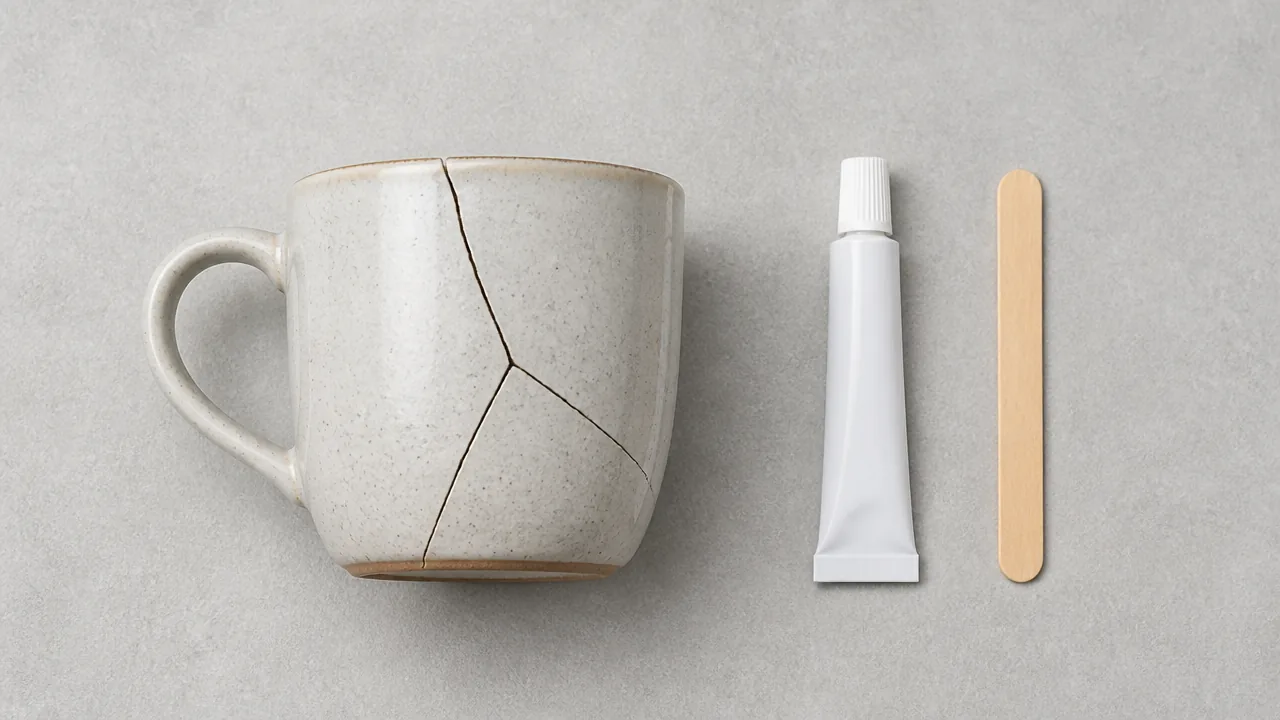
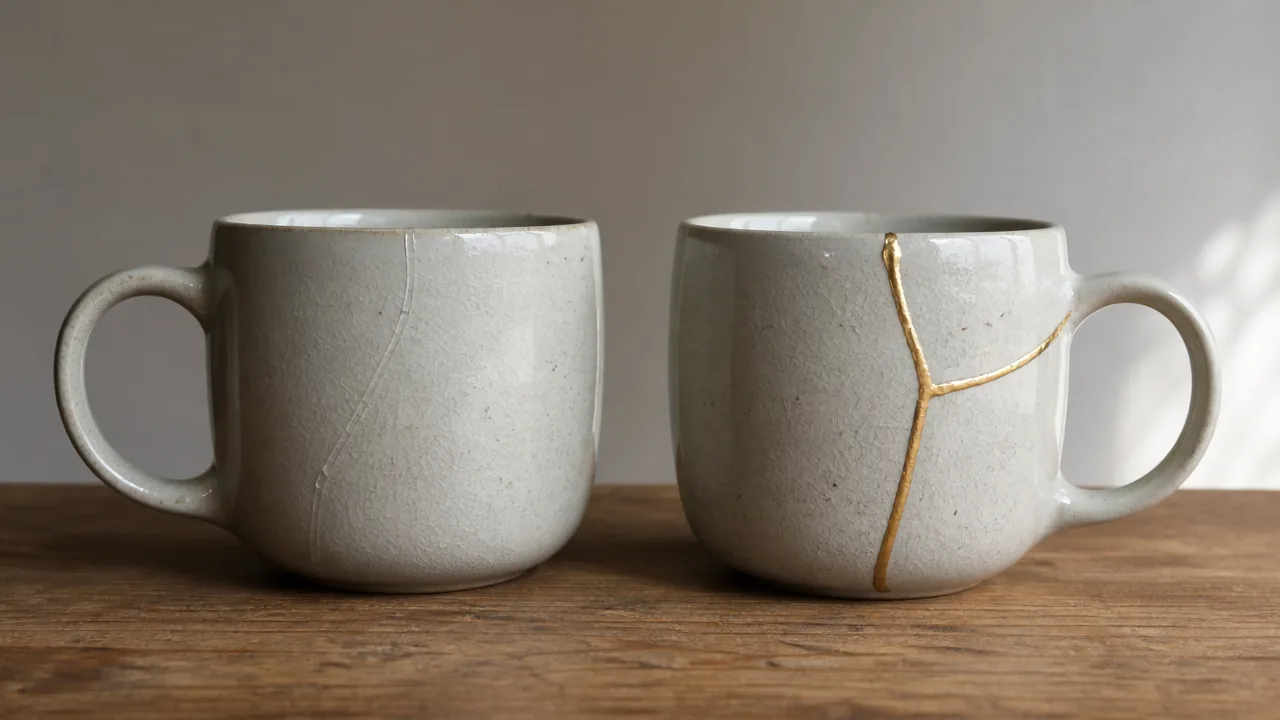
A common approach is a quick fix using a commercial adhesive — typically a cyanoacrylate (super glue) or a two-part epoxy. Materials cost only a few dollars, and the adhesive cures within hours. The result is functional: the piece holds together. But the repair is almost always visible on close inspection, and the goal is to hide the break rather than acknowledge it. These fixes are also rarely food-safe once the piece is used with liquids or heat over time, which is worth keeping in mind for anything used at the table.
The second option is hiring a professional ceramic restoration service. Costs vary considerably depending on the provider, the extent of damage, and whether the piece has historical or sentimental value — there is no reliable single figure to quote. Professional restorers can achieve near-invisible results using fillers, pigments, and glazing techniques that closely match the original surface. For antique or high-value pieces, this invisibility is often exactly what is needed. However, the aesthetic outcome is still one of concealment: the break is erased rather than honored.
Both of these options prioritize making the damage disappear. Kintsugi takes the opposite approach entirely.
Cost Comparison: Kintsugi vs Other Repair Methods
The table below gives a realistic overview of what each repair path typically involves in terms of materials, time, and outcome. Note that professional service costs are not quoted as fixed figures because they vary widely by region, provider, and the complexity of each piece.
| Method | Typical Material Cost | Time to Complete | Aesthetic Result |
|---|---|---|---|
| Super glue / epoxy (DIY) | A few dollars | A few hours | Break concealed; visible on close inspection |
| Professional restoration service | Varies considerably by provider and damage | Days to weeks depending on service | Near-invisible; break erased |
| Synthetic resin kintsugi (DIY) | Roughly $15–$50 in materials | Hours to a day or two (epoxy cures in hours) | Break highlighted with gold; intentional aesthetic |
| Traditional urushi kintsugi (DIY) | Roughly $150–$250 or more in materials | About a month (Chimahaga); two to three months is common (Tsugu Tsugu) | Break highlighted with gold; deepest traditional result |
To see what those materials cost as complete kits, Best Japanese Kintsugi Repair Kits 2026 compares one epoxy kit and two urushi kits with the prices on the day they were checked. For pieces sold already repaired, Real Kintsugi vs Kintsugi-Style Pottery: How to Tell Before You Buy lists what to check before you buy.
The price gap between a basic adhesive fix and traditional urushi kintsugi is substantial. That gap is not arbitrary — it reflects the materials involved (genuine lacquer and gold powder are expensive), the curing process, and the skill required. For a deeper breakdown of what separates the two kintsugi approaches, see Authentic Kintsugi Kit vs Synthetic Resin Kit: What Really Differs?.
For those interested in the specific adhesives and gold powders used in both approaches, our guide to choosing the right kintsugi glue and gold powder covers the individual components and what to look for when sourcing them.
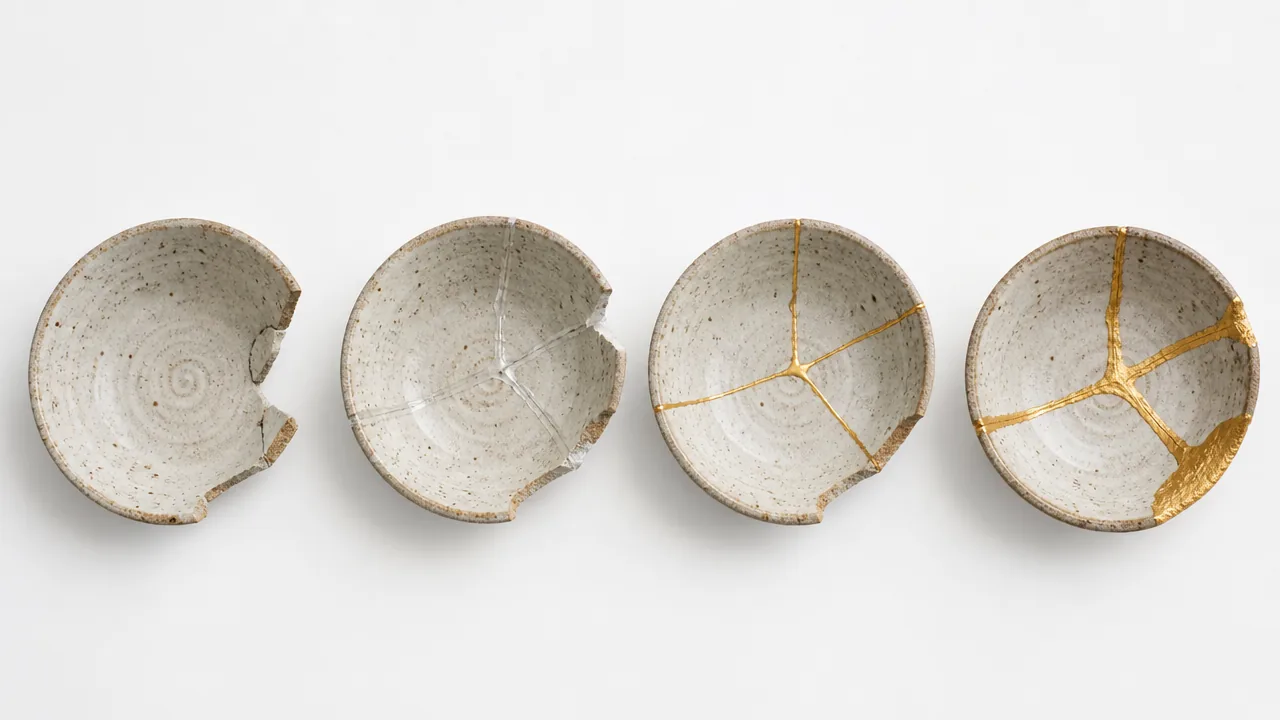
Why People Choose Kintsugi Despite the Higher Cost
The practical case for kintsugi is not really about repair efficiency — it is about what you want the finished object to mean.
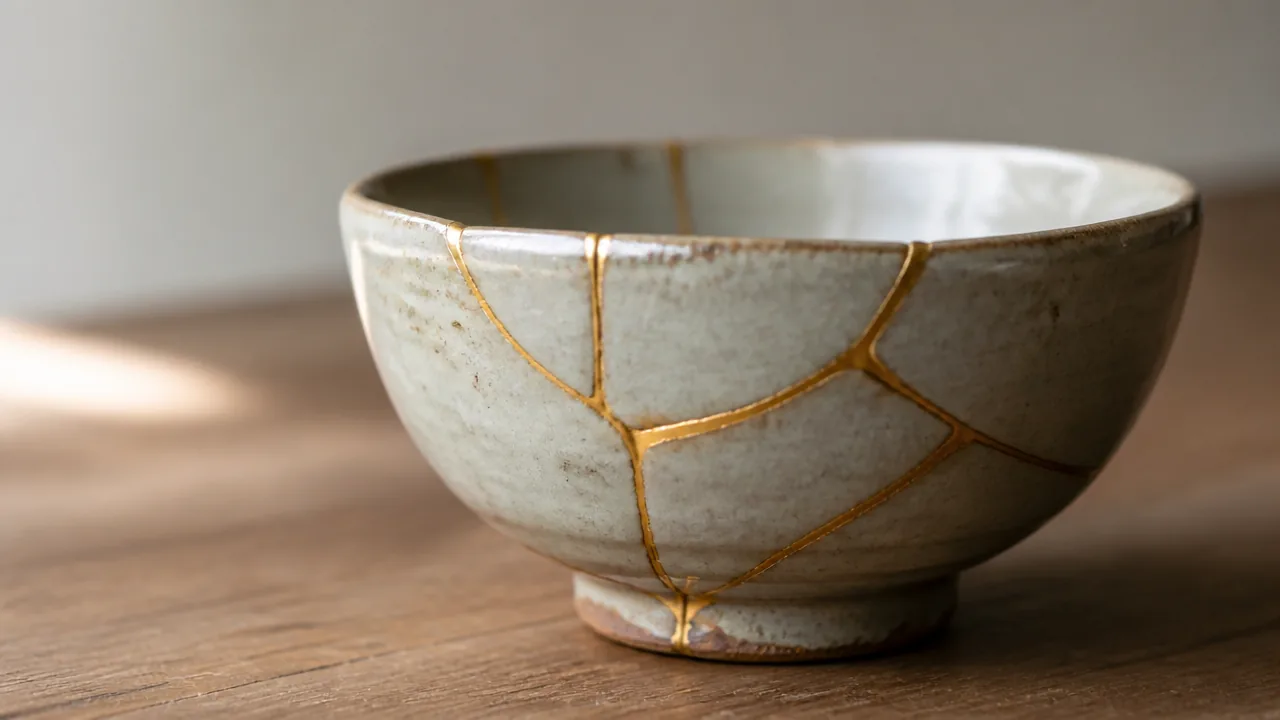
The philosophy behind kintsugi holds that breakage is part of an object’s history, not something to be ashamed of or hidden. By tracing the cracks with gold, the repaired piece becomes a record of what it has been through. This is closely tied to the Japanese aesthetic sensibility of wabi-sabi, which finds value in impermanence, imperfection, and the passage of time. If that framing resonates with you, the article Wabi-Sabi and Kintsugi: Why the Japanese Embrace Imperfection goes into considerably more depth on the cultural thinking behind it.
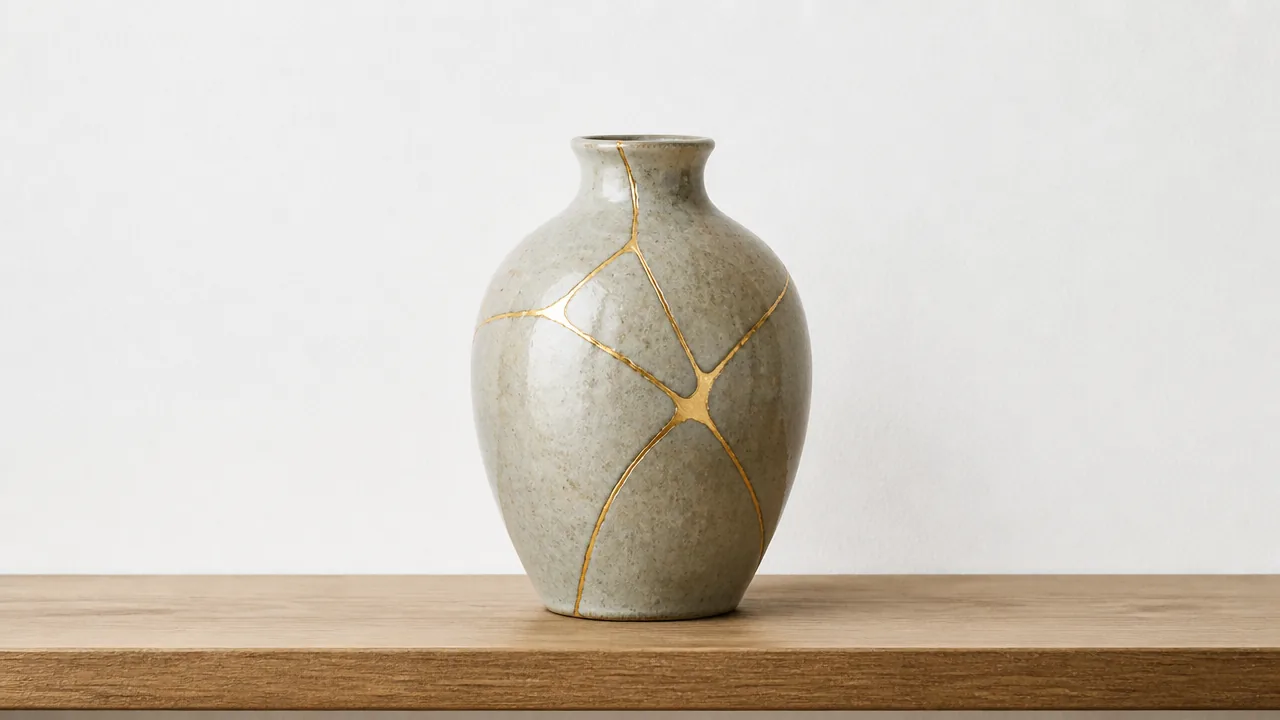
From a purely visual standpoint, a well-executed kintsugi repair is striking in a way that no other method produces. The gold lines do not look like damage — they look like the object was always meant to be this way.
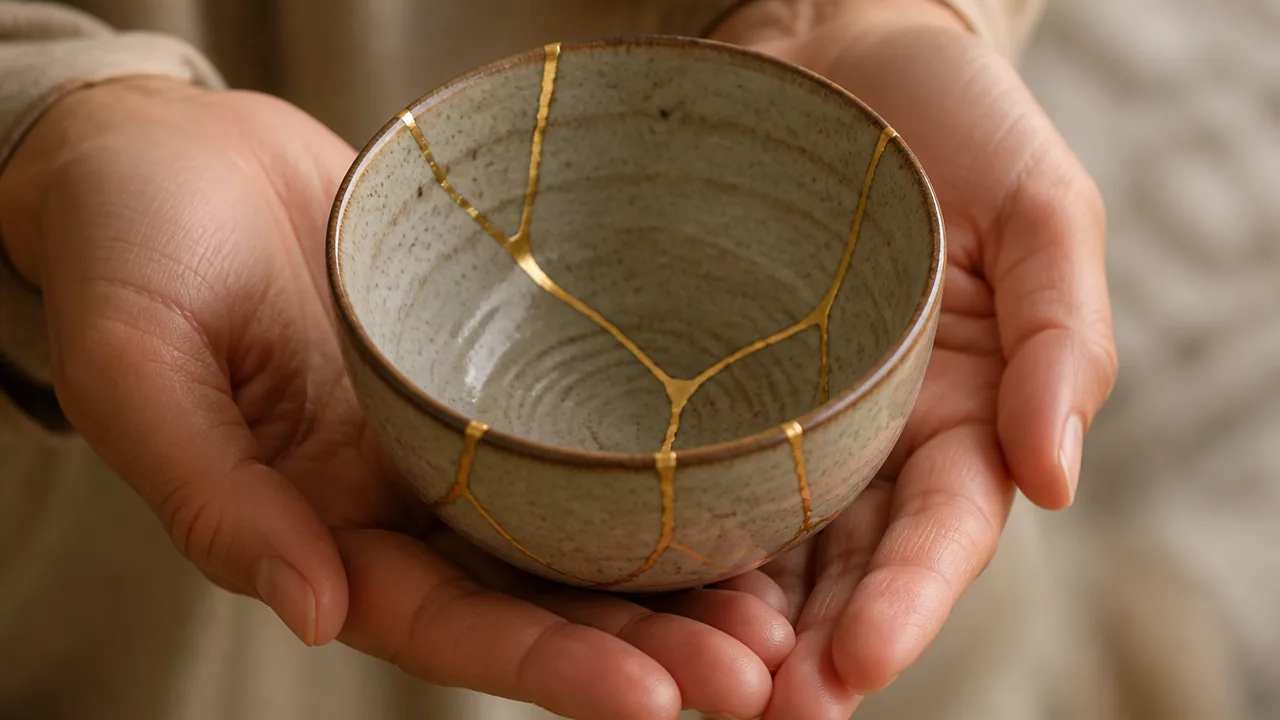
There is also a mindfulness dimension. The process of kintsugi — particularly with urushi — is slow, tactile, and requires patience. For some, that slowness is the point. The act of repair becomes a form of attention paid to something worth keeping.
These are not the reasons you would choose kintsugi for a chipped utility bowl from a discount shop. But for a mug a loved one gave you, a piece inherited from a grandparent, or a ceramic you made yourself, they carry real weight.
When a Basic Repair Is Genuinely the Better Choice
Honest advice means acknowledging that kintsugi is not the right answer for every broken ceramic.
Consider a straightforward adhesive fix or professional restoration if any of the following apply:
- The piece is purely functional and holds no particular sentimental or aesthetic importance to you
- You need it repaired quickly and back in use within hours
- The original design is highly detailed or decorative in a way that gold seam lines would visually disrupt rather than enhance
- The piece is part of a matched set and visual consistency matters
- Budget is a genuine constraint and the item does not justify a $15–$250+ materials investment
There is nothing wrong with reaching for a basic epoxy when that is the practical answer. Not every broken plate needs to become an object of contemplation. The key question is simply whether the piece has enough meaning — personal, aesthetic, or cultural — to justify the time and cost that kintsugi requires.
If you are unsure whether kintsugi is right for your specific piece, thinking through the material and process differences between synthetic resin and traditional urushi can help clarify what level of investment makes sense. The Kintsugi Kit for Beginners: Authentic Urushi vs Synthetic Resin guide is a useful starting point for that assessment.
This comparison focuses on ceramic repairs specifically. If the piece you are working on is glass rather than ceramic, see Can You Use Kintsugi on Glass? Materials That Work and What to Expect, since the material differences change which repair methods actually hold up.
Frequently Asked Questions
Is kintsugi more expensive than regular ceramic repair?
In almost every case, yes. A basic adhesive repair costs only a few dollars in materials and takes hours. Synthetic resin kintsugi typically runs roughly $15–$50 in materials, while traditional urushi kintsugi can require $150–$250 or more in materials alone, plus considerably more time. Professional ceramic restoration services vary too widely to quote a single figure, but for pieces with significant historical or monetary value, they can also represent a substantial investment. The key distinction is that kintsugi is not trying to compete with other repair methods on cost — it is offering something different in return for that cost.
Can any broken ceramic be repaired with kintsugi?
Most broken ceramics can be repaired using kintsugi techniques, but a few factors affect suitability. Pieces with many very small fragments are harder to work with and may not produce a clean result. Ceramics that will be used regularly with food or liquids require careful attention to the materials used — traditional urushi, once fully cured, has a long history of use with food, while synthetic resin options vary in their food-safety properties. Structural integrity is also a consideration: if a piece has lost material rather than simply cracked, filling and shaping are required before the gold work begins.
How long does kintsugi take compared to a regular repair?
This depends heavily on which approach you use. A commercial adhesive repair is done in hours. Synthetic resin kintsugi is also relatively fast — epoxy adhesives cure in hours rather than days, so the full process can often be completed in a day or two. Traditional urushi kintsugi is a different commitment entirely: because urushi lacquer requires humidity and time to cure properly at each stage, the full process takes about a month according to Chimahaga, and Tsugu Tsugu says two to three months is common. That timeline is not a flaw — it is intrinsic to the material and the method.
Is kintsugi just a trend, or does it have lasting cultural significance?
While kintsugi has gained considerable international attention in recent years, its roots are understood to run much deeper in Japanese craft tradition. Its exact historical origins are not precisely documented, but it is generally considered to reflect long-standing Japanese values around impermanence, repair, and the beauty of things that have been used and aged. Whether it qualifies as a ‘trend’ likely depends on how you are engaging with it — as a surface aesthetic, or as a genuine philosophy about how we relate to broken things.
Final Thoughts: Repair as a Choice, Not Just a Fix
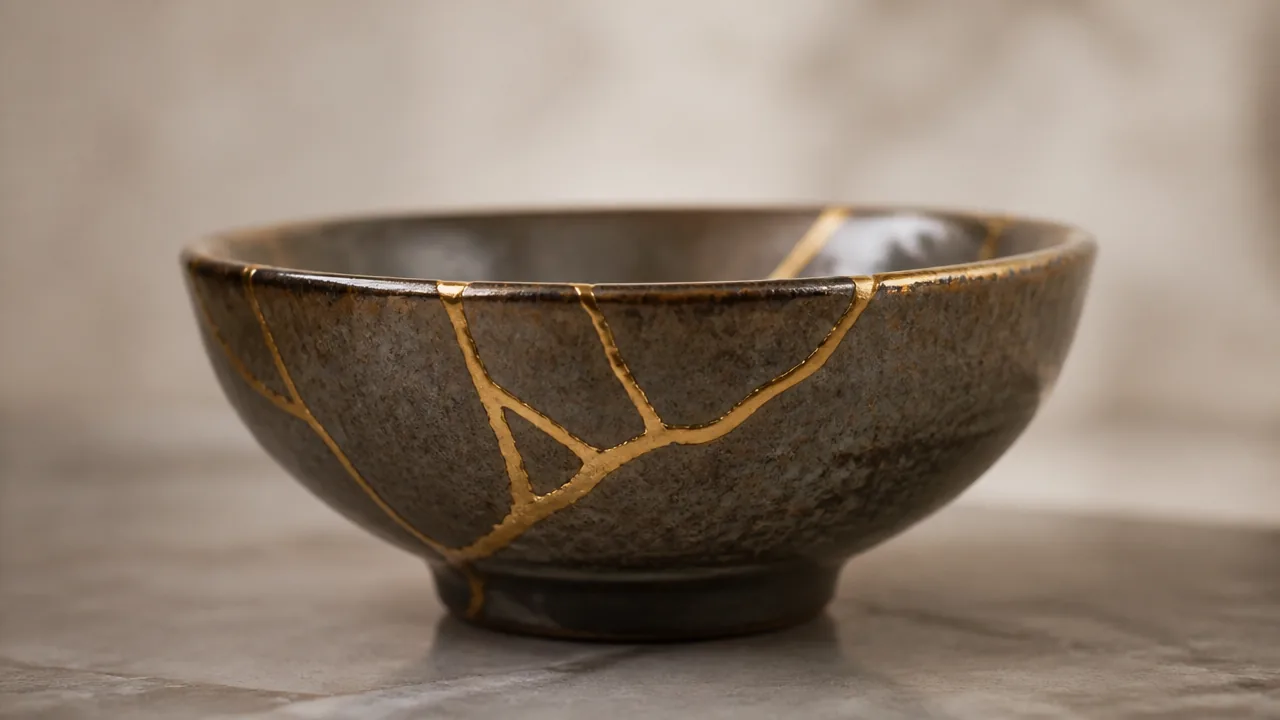
The cost difference between kintsugi and a basic adhesive repair is real and not trivial. But the two methods are not actually competing for the same outcome. One aims to make a break disappear; the other makes it the most striking thing about the piece.
If the object matters to you — if it carries a story worth preserving — then the additional cost of kintsugi is not an overhead. It is the point. The gold lines are evidence of care, of the decision to keep something rather than replace it.
For purely functional pieces with no particular meaning attached, a basic fix is perfectly reasonable and there is no need to complicate it. But for the pieces that do matter, kintsugi offers something no other repair method does: the chance to end up with an object that is more interesting, more honest, and more yours than it was before it broke.
Thinking about trying kintsugi yourself? Browse our beginner-friendly guides on materials and methods to find the right starting point for your first repair.