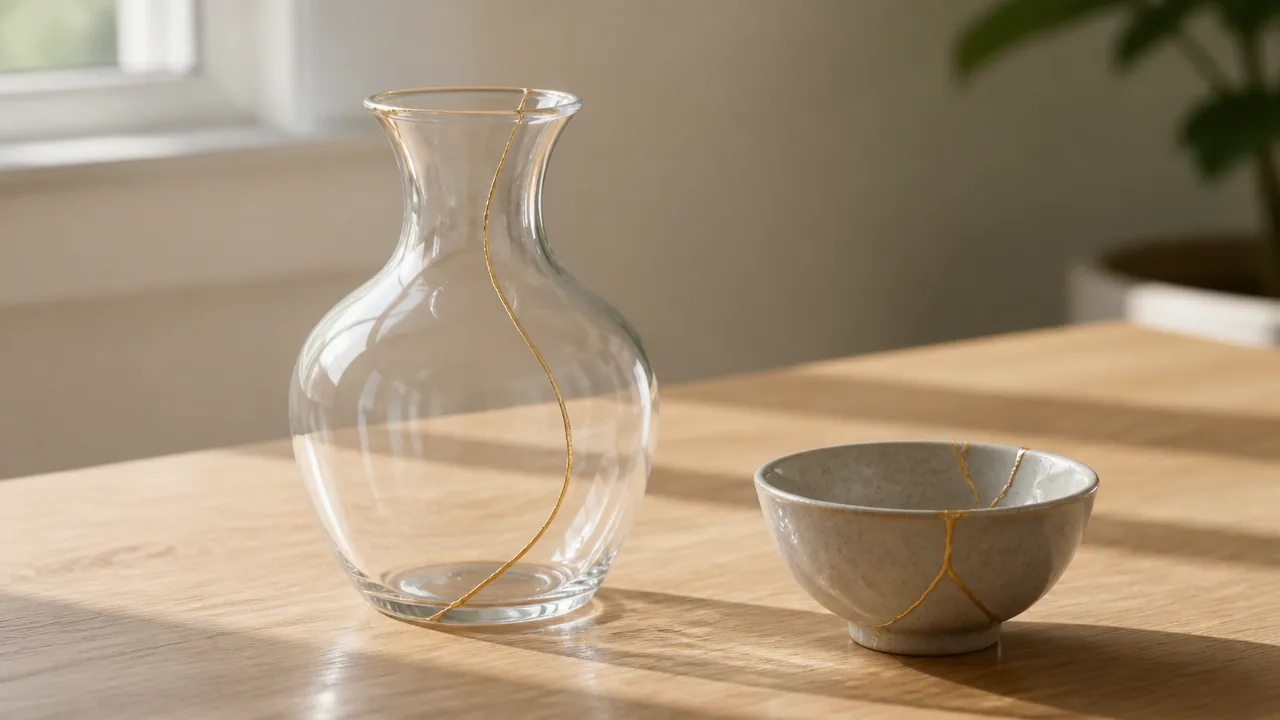
How this article was made: Research-based comparison. It draws on published information from makers, retailers, and reference sources, not on hands-on testing.
The Short Answer: Not with a Standard Kit
A standard kintsugi kit is not made for glass. Tsugu Tsugu, a Japanese kintsugi kit maker, writes that its kits and other kintsugi kits cannot restore glass, because urushi lacquer has weak adhesive strength to smooth surfaces such as glass.
There are two routes. One is urushi made for glass, which the same maker sells and describes as needing additional materials, a different process and advanced technique. The other is a synthetic adhesive, which is simpler and suits decorative pieces. This article goes through what the maker says about each.
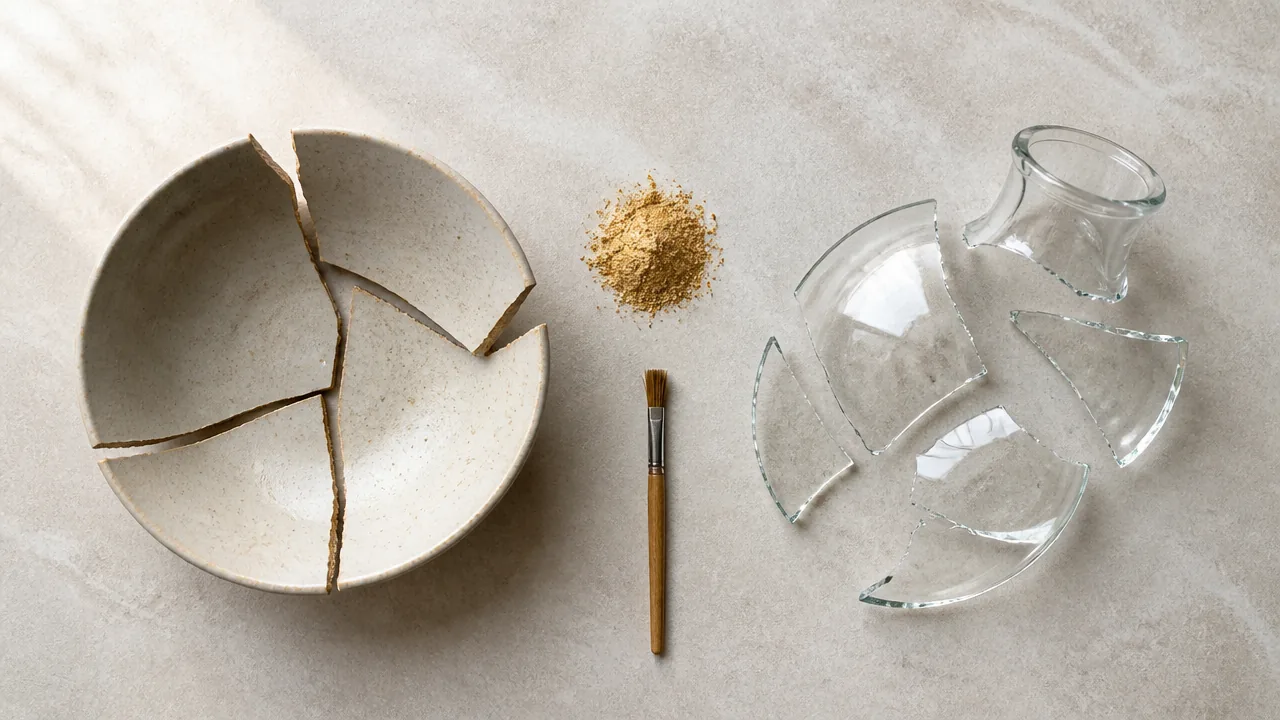
The three routes side by side, as Tsugu Tsugu and Chimahaga describe them:
| Standard urushi kit | Urushi made for glass | Synthetic adhesive | |
|---|---|---|---|
| Works on glass | No: urushi has weak adhesion to smooth surfaces such as glass | Yes, but not every kind of glass breakage | Use one whose maker states it is suitable for glass |
| Drying time | Several days to a week per layer | Two to three weeks | As the adhesive’s maker states |
| Sessions and skill | — | 10 sessions or more; a high level of skill | Apply, stick and done |
| Food use | — | Tsugu Tsugu says its lacquer for glass is tested and proven food-safe | Keep decorative unless the adhesive’s maker says otherwise |
Why Urushi Struggles on Glass
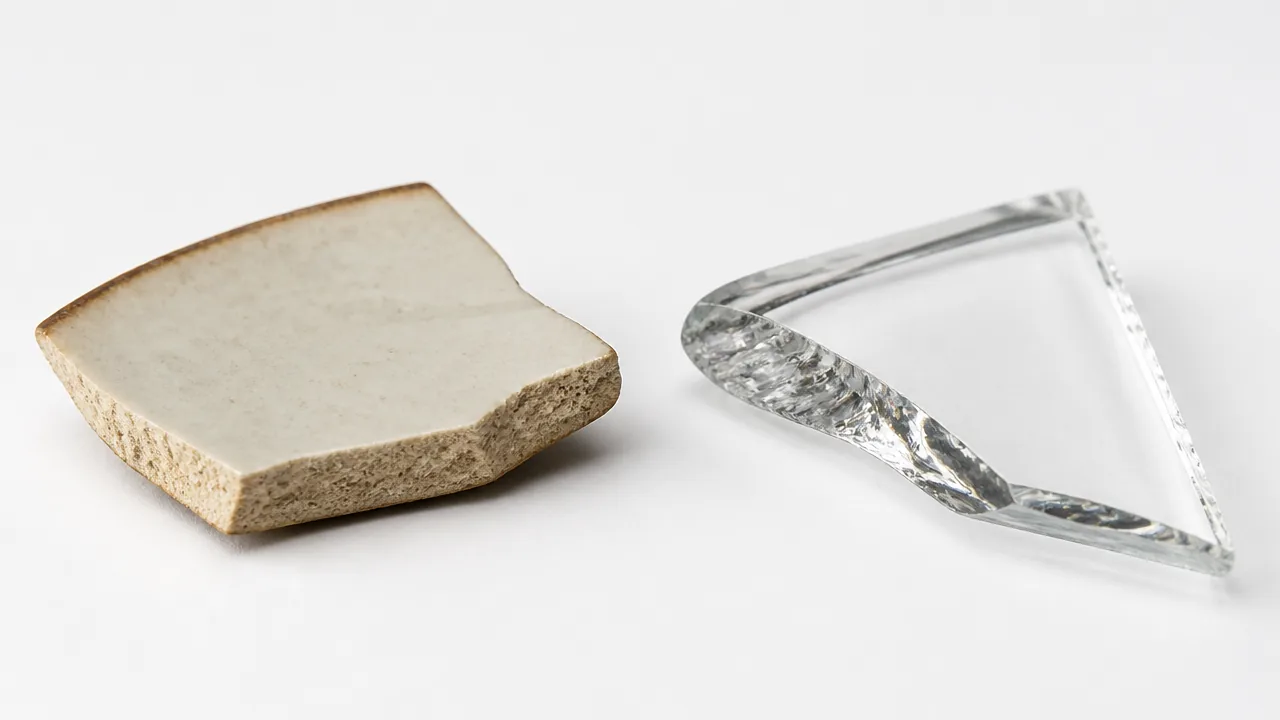
In regular kintsugi, broken ceramic pieces are glued with mugi-urushi, a paste of raw urushi lacquer, wheat flour and water. Tsugu Tsugu’s FAQ on glass gives the reason glass is different in one sentence: urushi lacquer has weak adhesive strength to smooth surfaces such as glass.
The process changes as well. The maker says the wheat flour is left out for glass, because in many cases there are no gaps between two broken glass pieces.
Urushi itself needs care on any material: Tsugu Tsugu notes that both regular urushi and the urushi for glass cause a rash when they get on the skin, so wear gloves. If you are new to the craft, this breakdown of authentic versus synthetic kintsugi options covers the two families of materials.
Urushi Made for Glass: What the Maker Says
Urushi for glass is regular urushi with a small amount of synthetic resin added. According to Tsugu Tsugu, the resin strengthens the adhesion to smooth surfaces like glass. The maker lists these points:
- Drying time: two to three weeks, against several days to a week for ordinary urushi.
- Drying conditions: a urushi drying chamber at 20–30°C and 70–85% humidity, the same as for regular urushi.
- Sessions: a repair is not finished in one sitting and may take 10 sessions or more, depending on the damage.
- Limits: it is not possible to repair all kinds of glass breakage with it.
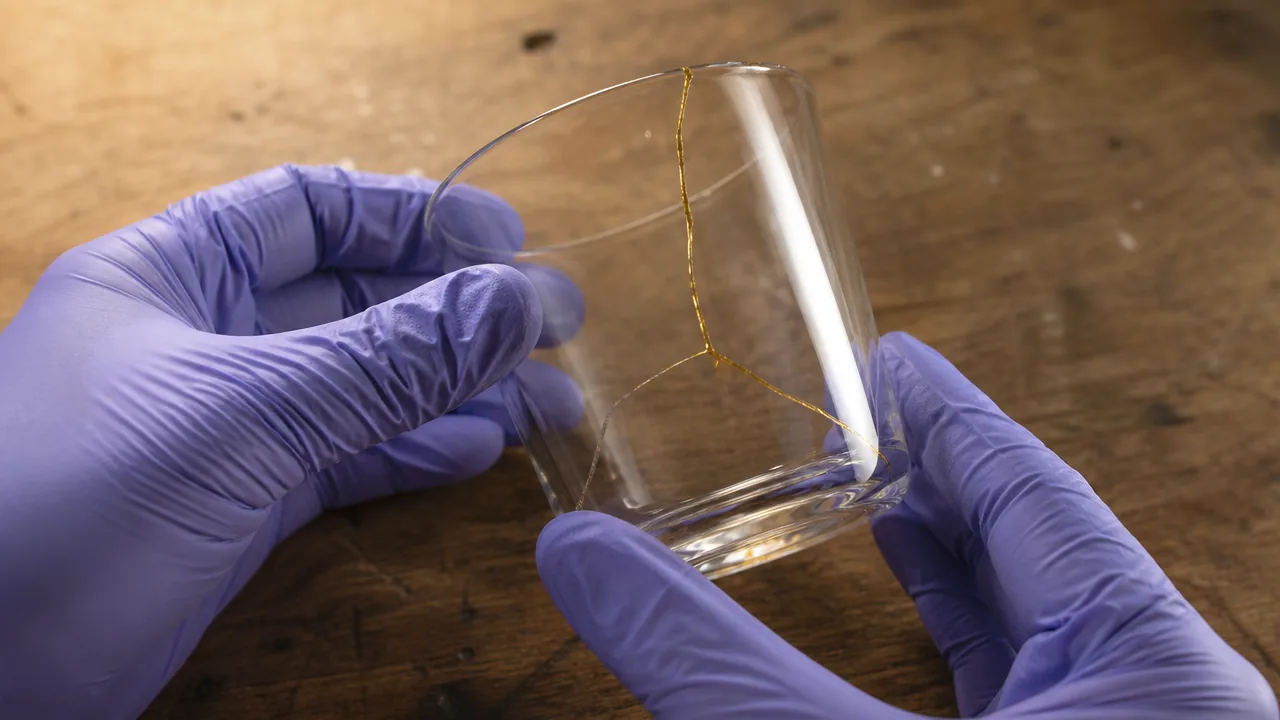
- Color: the lacquer is brown, so on transparent glass the glued cross-section shows through in a brownish color even when the seam is finished with gold.
- Food safety: Tsugu Tsugu says its lacquer for glass is tested and proven food-safe, and that some lacquer for glass sold by other companies does not pass food safety laws or has not been tested.
The maker also says glass kintsugi requires a high level of skill, and recommends learning the regular ceramic process well before trying glass. How Long Does Kintsugi Take? covers the timeline of a regular urushi repair.
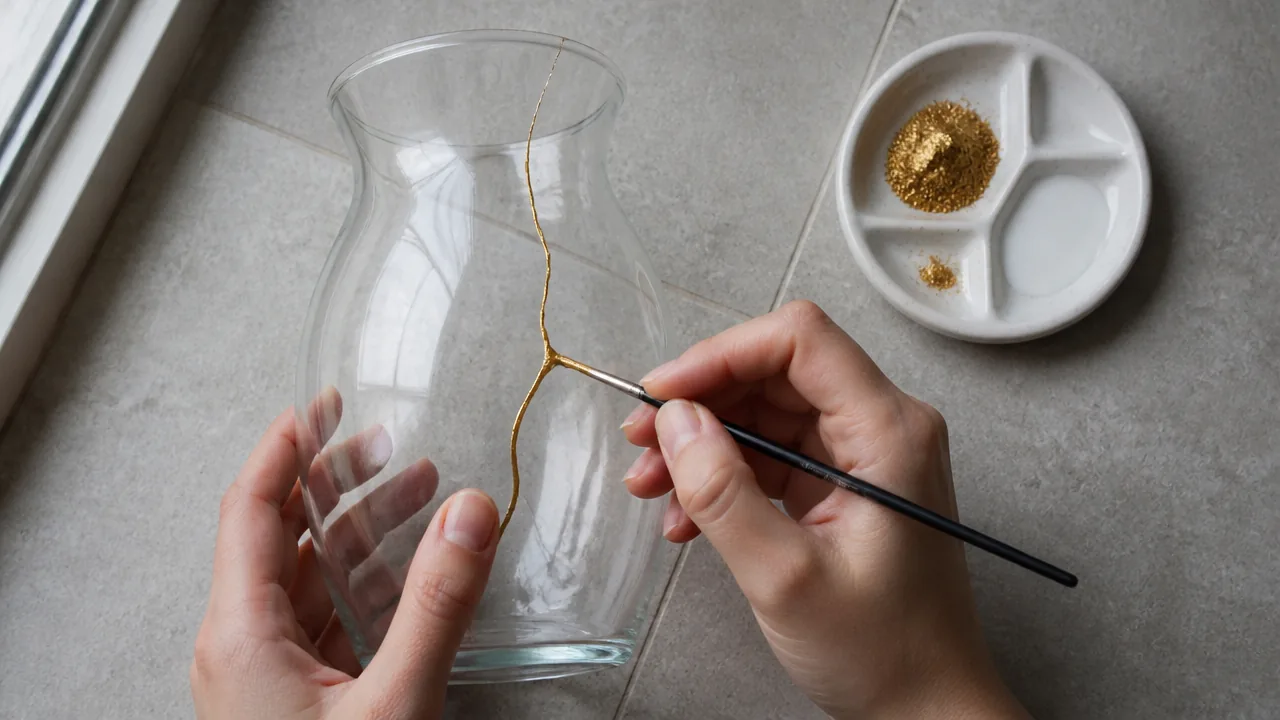
The Synthetic Adhesive Route, for Decorative Pieces
A synthetic adhesive is the simpler route. Tsugu Tsugu contrasts its urushi for glass with synthetic adhesives, “which you just apply, stick and done”. If you go this way, use an adhesive whose maker states that it is suitable for glass, and follow that maker’s instructions.
Keep a glass repaired this way decorative unless the adhesive’s maker says otherwise. Chimahaga, another Japanese kit maker, says most commercially available adhesives are not suitable for use on tableware. Is Kintsugi Food Safe? sets out what the makers of urushi and epoxy kits say, and the guide to kintsugi adhesive and gold powder covers how to read food-safe claims.
Frequently Asked Questions About Kintsugi and Glass
Can I use a standard kintsugi kit on glass?
No. Tsugu Tsugu, a Japanese kintsugi kit maker, says its kits and other kintsugi kits cannot restore glass, because urushi lacquer has weak adhesive strength to smooth surfaces such as glass. Glass needs additional materials, a different process and advanced technique.
What is urushi for glass?
Tsugu Tsugu describes it as urushi lacquer with a small amount of synthetic resin added, which strengthens its adhesion to smooth surfaces like glass. The maker says it takes two to three weeks to dry, against several days to a week for ordinary urushi, and that it cannot repair every kind of glass breakage.
Is a kintsugi repair on glass safe to drink from?
It depends on the material. Tsugu Tsugu says its own lacquer for glass is tested and proven food-safe, and warns that some lacquer for glass sold by other companies does not pass food safety laws or has not been tested. For synthetic adhesives, Chimahaga, another Japanese kit maker, says most commercially available adhesives are not suitable for use on tableware. When the maker gives no statement, keep the piece decorative.
It depends on the material. Tsugu Tsugu says its own lacquer for glass is tested and proven food-safe, and warns that some lacquer for glass sold by other companies does not pass food safety laws or has not been tested. For synthetic adhesives, Chimahaga, another Japanese kit maker, says most commercially available adhesives are not suitable for use on tableware. When the maker gives no statement, keep the piece decorative.
Will the repair be visible through the glass?
Yes. Tsugu Tsugu notes that lacquer for glass is brown, so on transparent glass the glued cross-section shows through in a brownish color, even when the surface of the seam is finished with gold.
Bringing It Together: Glass, Ceramics, and Choosing the Right Approach
Glass can be repaired in the kintsugi way, but not with a standard kit. Urushi made for glass exists, takes weeks to dry, cannot fix every break and asks for skill; a synthetic adhesive is quicker and is the route for decorative pieces. For how kintsugi compares with conventional ceramic repair in effort and outcome, see this comparison of kintsugi and traditional ceramic repair methods.