How this article was made: Research-based comparison. It draws on published information from makers, retailers, and reference sources, not on hands-on testing.
Boro vs Sashiko: The Short Answer
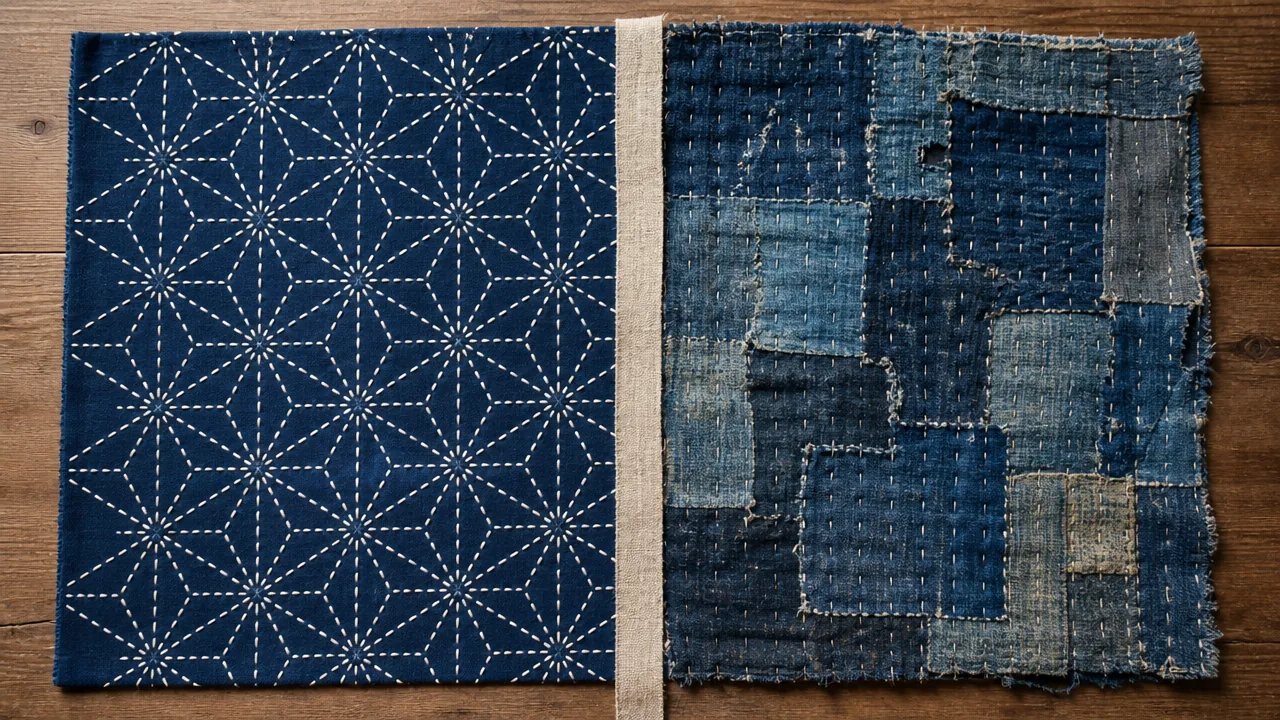
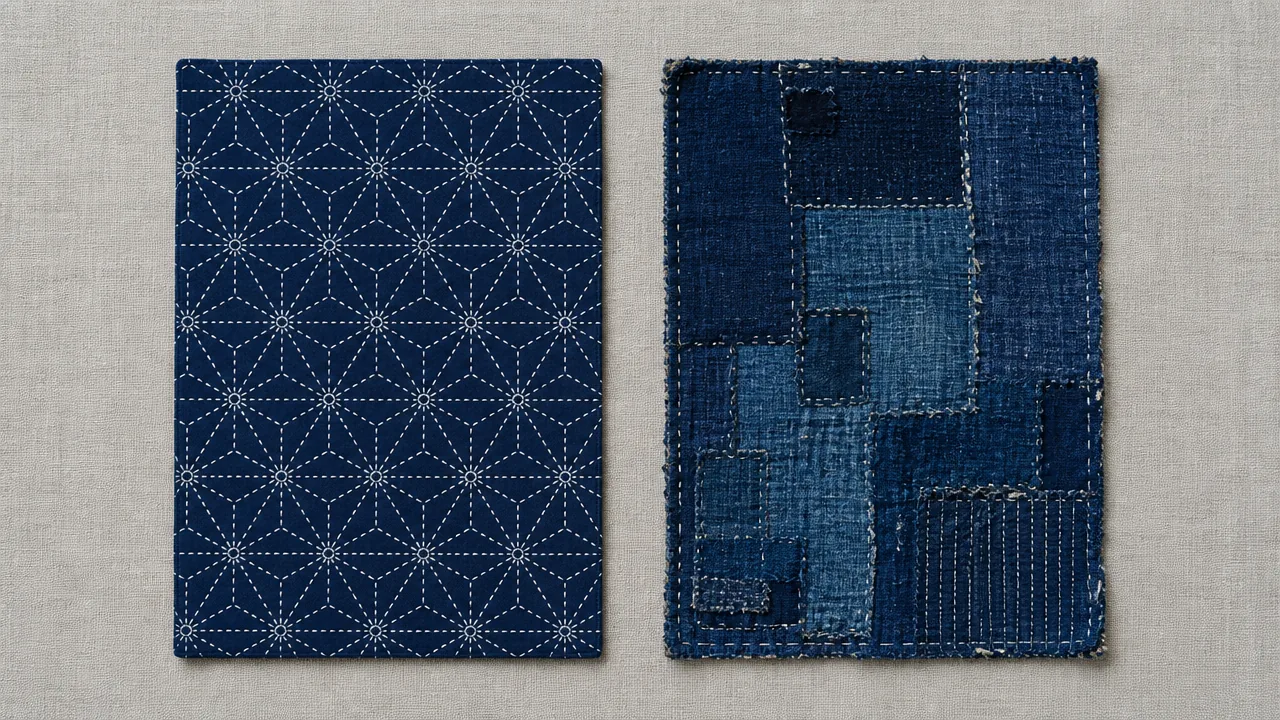
Sashiko is a stitching technique; boro is a kind of textile. Sashiko is hand-stitching with a repeated running stitch, used to reinforce cloth or to join pieces of it. Boro is the layered, patched cloth itself: clothes or bedding reworked by piecing, patching and stitching to extend their use, as the Victoria and Albert Museum describes it.
- Sashiko is a method. It can be worked on a single new piece of cloth, with no patching at all
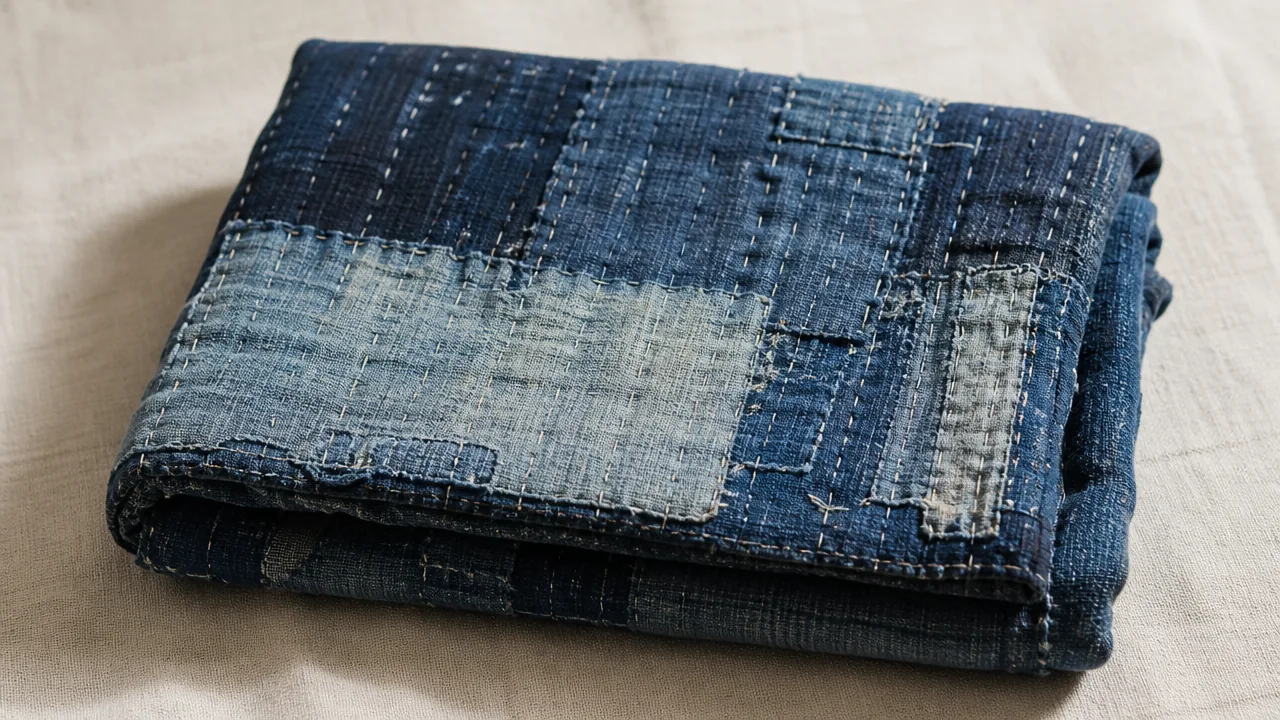
- Boro is an object. A garment or cover mended and re-mended over many years; sashiko was one of the ways its layers were held together, but not the only one
- How they connect: in boro, sashiko stitching was mainly structural, holding the patches in place. Decorative sashiko developed from that practical function, as the Metropolitan Museum of Art puts it
The phrase boro stitching is used today for mending in that spirit: patching worn cloth and holding the patches with rows of running stitch. The V&A describes the historical version in the same terms, with running stitches or areas of sashiko used to reinforce the patches and quilt the layers together.
They Are Related — But They Are Not the Same Thing
Sashiko is a technique. Boro is a style — a category of textile object — that was often constructed using that technique. Mixing them up is completely understandable, because the two concepts grew from the same historical moment and the same rural necessity. But treating them as synonyms leads to a fuzzy picture of both.
This article exists to draw that line clearly. If you arrived here already knowing a little about each concept, the sections below should help the relationship click into place.
What Is Sashiko? A Quick Definition
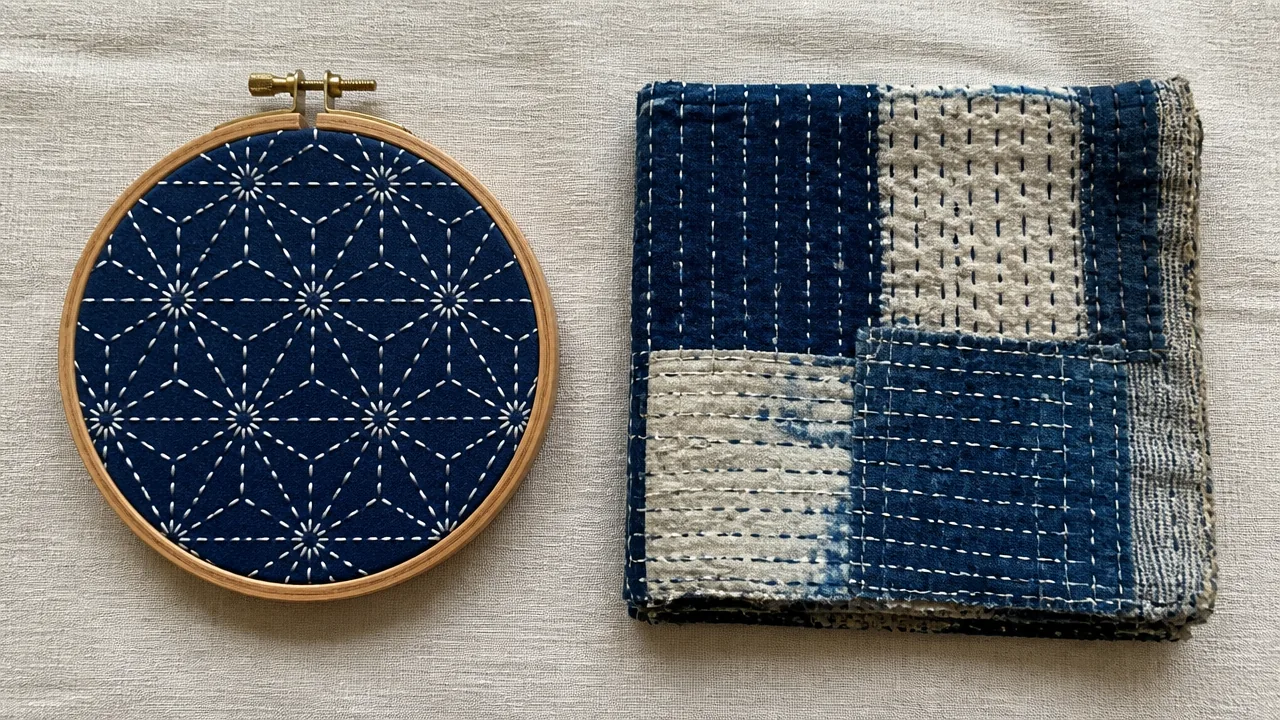
Sashiko is a form of Japanese hand-stitching built around a single, repeated movement: the running stitch. A needle passes in and out of fabric in a consistent rhythm, forming lines that — when arranged into geometric patterns — produce the distinctive grids, waves, and interlocking shapes that most people now associate with the craft.
The Metropolitan Museum of Art, describing a sashiko jacket from the second half of the 19th century in its collection, calls sashiko a quilting technique that uses a running stitch to reinforce and prolong the life of a textile, or to join recycled pieces of cloth into a new garment. Japanese farmers, the museum says, used it to make warmer and more durable fabrics, and decorative sashiko stitching developed from this practical function.
Regional styles grew up in northern Japan. Aomori Prefecture, in the Tohoku region, lists two of them among its traditional crafts: Tsugaru kogin-zashi and Nanbu hishizashi. The functional roots remained, and the craft came to carry decorative intention alongside them.
For a fuller introduction to the technique — including how to read sashiko patterns and choose thread — see What Is Sashiko? Meaning, History and Patterns of Japanese Stitching.
What Is Boro? A Quick Definition
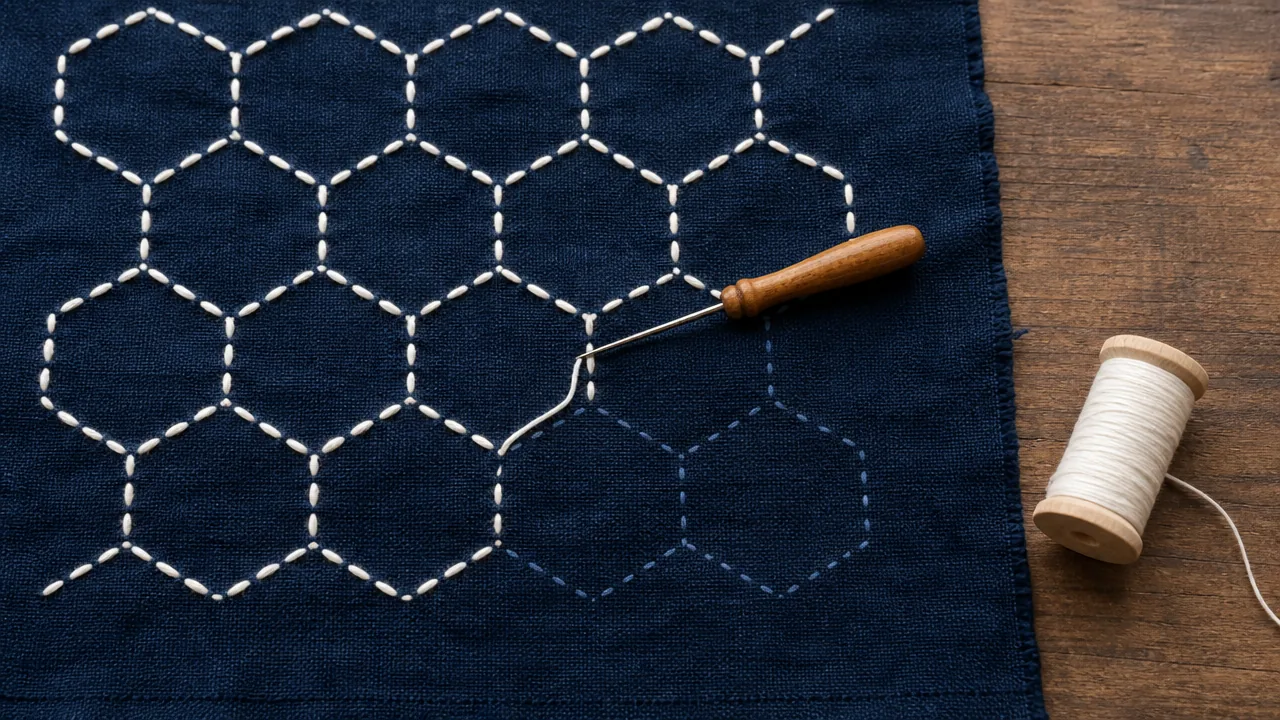
The word boro derives from the Japanese boroboro, which the Victoria and Albert Museum glosses as something tattered or repaired — and that etymology matters. The museum describes boro as the practice of reworking and repairing textiles, often clothes or bedding, through piecing, patching and stitching in order to extend their use. A boro textile is not a technique. It is an object: a garment, a futon cover, a working cloth that has been mended, patched, and re-mended over many years, sometimes across multiple generations.
The V&A places the boro garments it describes in the 19th and early 20th centuries. Families who could not afford to discard worn cloth would add new patches as old sections failed, layering fragment upon fragment until the original base fabric was barely distinguishable beneath decades of repair.
These were utilitarian objects. The V&A notes that in the 19th and early 20th centuries boro garments might be handed down through many generations of impoverished rural families, and that making them was an expression of mottainai, a sense of regret concerning waste. The museum also associates boro with the indigo-dyed hemp clothing that was traditional in Japan before cotton was introduced. Today such pieces are held in museum collections.
Boro is not a single process. It encompasses the accumulated decisions of layering, patching with salvaged and often indigo-dyed cloth, and stitching — of which sashiko was one method, but not the only one. To explore the cultural and historical background of boro in depth, What Is Boro? The Poverty-Born Aesthetic Behind Sashiko covers the full story.
How Sashiko and Boro Fit Together
The relationship between these two concepts is one of tool and outcome — but even that framing is slightly too clean, because boro was never designed. It accumulated.
When a family stitched a new patch of cloth onto a worn futon cover, they needed something to hold the layers in place. Sashiko running stitches — evenly spaced, worked through multiple layers of fabric — did exactly that. The stitch distributed tension across the cloth, prevented the patch edges from peeling away, and added structural integrity to material that had already been stressed by years of use. This is important to understand clearly: in the context of boro, sashiko stitching was primarily structural, not decorative. The Met puts the order the same way: decorative sashiko stitching developed from the practical function.
That said, sashiko is not the whole of boro. A piece of boro textile might involve:
- Patches cut from different cloths: the V&A associates boro with indigo-dyed hemp clothing, and the late-19th-century robe it describes is patched with recycled indigo-dyed cotton
- Indigo-dyed fabrics of different shades, added as older sections wore out
- Plain running stitches as well as areas of sashiko, both of which the V&A describes
- Areas where no decorative patterning was applied at all — just rough, functional stitching to close a gap
Sashiko, conversely, does not require boro to exist. A modern practitioner stitching a geometric pattern onto a single, new piece of fabric is doing sashiko. There is no patching, no layering, no history of repair — and yet the technique is exactly the same one that once held a farmer’s work jacket together through another winter.
That is also the easiest place to start: one new piece of cloth, one needle, one thread. Best Sashiko Fabric and Best Sashiko Thread for Beginners cover what to buy for a first piece.
Related: to mend a worn garment with patches and running stitch, Sashiko for Clothing Repair: A Practical Guide walks through it step by step.
Sashiko vs Boro: Side-by-Side Comparison
The table below summarizes the core distinctions across several practical and conceptual axes.
| Sashiko | Boro | |
|---|---|---|
| What it is | A stitching technique | A textile object / cultural style |
| Core element | Running stitch worked in geometric patterns | Layered, patched, and mended cloth |
| Original purpose | Structural reinforcement of layered fabric | Extending the usable life of worn textiles |
| Decorative intent (historically) | Secondary — decoration emerged gradually over time | Not the main aim, though the V&A notes more care went into arranging fabrics on the side that would be seen |
| Can exist without the other? | Yes — sashiko can be worked on new, single-layer fabric | Yes — the V&A describes patches joined with running stitches or with areas of sashiko |
| Modern usage | Practiced as a standalone craft and embroidery art | Collected and studied as textile art; also a contemporary aesthetic influence |
| Key associated values | Craft skill, pattern knowledge, meditative repetition | Mottainai (regret over waste), resourcefulness, repair culture |
The most useful mental model: think of boro as the noun and sashiko as one of the verbs that helped create it.
Frequently Asked Questions
Is all boro made with sashiko stitching?
Not necessarily. The V&A describes worn areas being patched over, or older garments cut up and joined, with running stitches or areas of sashiko used for reinforcement and to quilt the layers together. The essential characteristic of boro is the accumulated layering and patching of cloth over time, not the specific stitch type used to hold it together. Sashiko was simply well-suited to the task: it is fast to work, distributes stress evenly across layers, and requires no complex knotting.
Can sashiko exist without boro?
Absolutely. Sashiko is a technique that stands entirely on its own. Whenever a stitcher works a running stitch through fabric — whether on a new piece of indigo cotton, a denim jacket, or a linen table runner — they are doing sashiko, regardless of any connection to patching or repair. Sashiko worked on a single layer of new fabric as a decorative craft has no boro context at all. If you want to try it, How to Sashiko Stitch: A Beginner’s Step-by-Step Guide starts from the first stitch.
Are the two terms interchangeable in casual conversation?
They are often used loosely together, but treating them as synonyms obscures something important. Saying that a piece of boro textile is sashiko is a bit like saying a building is a hammer — one is the object, the other is one of the tools that shaped it. For anyone moving beyond a surface familiarity with Japanese textile culture, keeping the distinction clear makes both concepts easier to understand and appreciate.
Why do so many sources mix them up?
Two reasons stand out. First, the two share historical origins and geography, and historical boro was often held together with sashiko, which makes them easy to bundle together. Second, the word boro is now also used for a look, not only for old patched textiles: the V&A notes that the historical spirit of boro informs the contemporary trend for distressed or repaired-looking clothes, and the word is also used for visible mending in general.
What is boro stitching?
Boro stitching is the name used today for mending in the boro way: patching worn cloth, often in more than one layer, and holding the patches in place with running stitches. The V&A describes historical boro the same way, with worn areas patched over or older garments cut up and joined, and running stitches or areas of sashiko used for reinforcement and to quilt the layers together. Sashiko is one of the stitches used, so boro stitching and sashiko overlap, but they are not the same thing.
How do you do boro stitching on clothes?
Place a patch behind or over the worn area so that it reaches well past the damage into sound fabric, pin or baste it in place, then stitch rows of running stitch through all the layers, starting and ending in sound fabric. On historical boro, the V&A notes, the most heavily patched side was often the back or inside, because more care was taken to arrange fabrics on the side that would be seen.

Bringing It Together
Sashiko is a technique. Boro is what that technique — alongside patching, layering, and decades of careful repair — helped create. The two concepts are genuinely inseparable in their historical context, but they are not the same thing, and recognizing the difference makes each one richer rather than smaller.
If the history of boro draws you in — the way poverty-born objects became recognized as art, the philosophy of mottainai embedded in every stitch, the tonal complexity of layered indigo — the dedicated article on boro covers all of that in detail: What Is Boro? The Poverty-Born Aesthetic Behind Sashiko.
If what interests you is the technique itself — how to hold the needle, how geometric patterns are structured, how to choose your first fabric and thread — the beginner’s guide to sashiko is the right place to go next: What Is Sashiko? Meaning, History and Patterns of Japanese Stitching.
And if reading about these two concepts has made you want to pick up a needle yourself, the Best Sashiko Starter Kit 2026: Top Picks by Skill Level breaks down what you actually need to get started — without overcomplicating it.
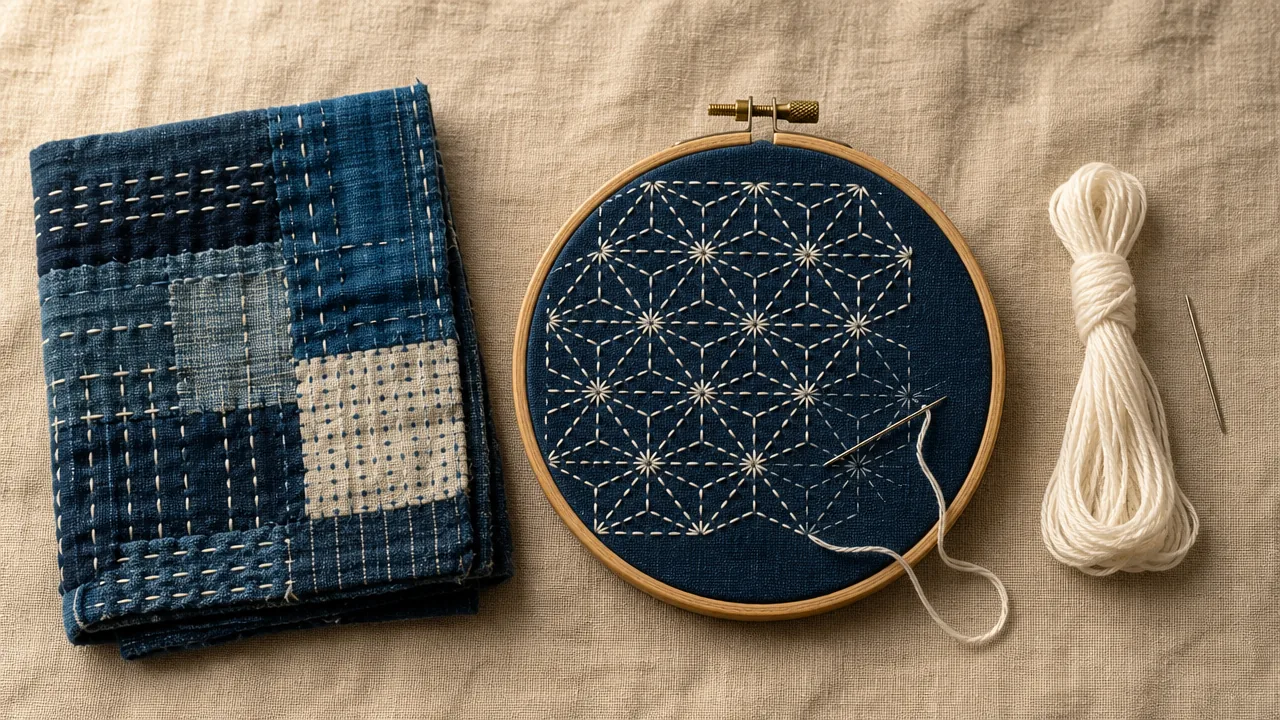
Which concept drew you here first — the technique of sashiko or the patched history of boro? Either way, both guides above will take you further into the story.