How this article was made: Research-based comparison. It draws on published information from makers, retailers, and reference sources, not on hands-on testing.
- The Short Answer: What Boro Is
- Rags With a Story: An Introduction to Boro
- Cotton Was a Luxury: The Tohoku Origins of Boro
- Why Sashiko Stitching Was Never Just Decorative
- From Shame to Archive: How Boro Was Almost Lost
- Repair Culture Meets the Runway: Boro in Contemporary Fashion
- Frequently Asked Questions
- What Boro Actually Asks of Us
The Short Answer: What Boro Is
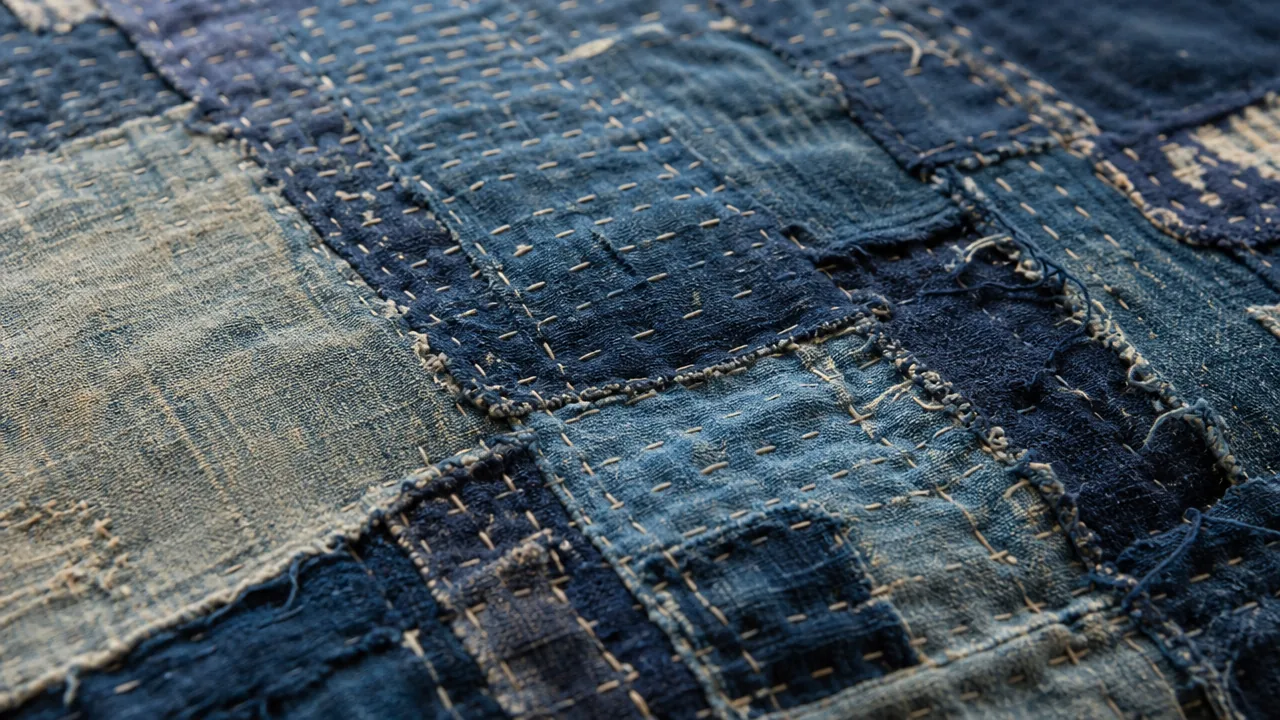
Boro is patched and re-patched Japanese cloth: clothes and bedding mended again and again, layer on layer, until the repairs become the fabric. The Victoria and Albert Museum describes boro as the practice of reworking and repairing textiles, often clothes or bedding, through piecing, patching and stitching in order to extend their use. The word itself translates as ‘tattered’ or ‘ragged’.
- What it is made of: layers of worn cotton, often indigo-dyed, with new patches added wherever the cloth failed
- Where it comes from: the farmhouses and fishing villages of northern Japan, where winters were long and cotton was scarce
- How it relates to sashiko: sashiko’s running stitch held the layers together; boro is the cloth, and sashiko one of the stitches used on it. Boro vs Sashiko sets the two side by side
- Where it was preserved: the folklorist Chuzaburo Tanaka collected thousands of pieces, shown at the Amuse Museum in Tokyo until it closed in 2019 and since in touring exhibitions
To mend in the same spirit today, Sashiko for Clothing Repair goes through a patch repair step by step.
Rags With a Story: An Introduction to Boro
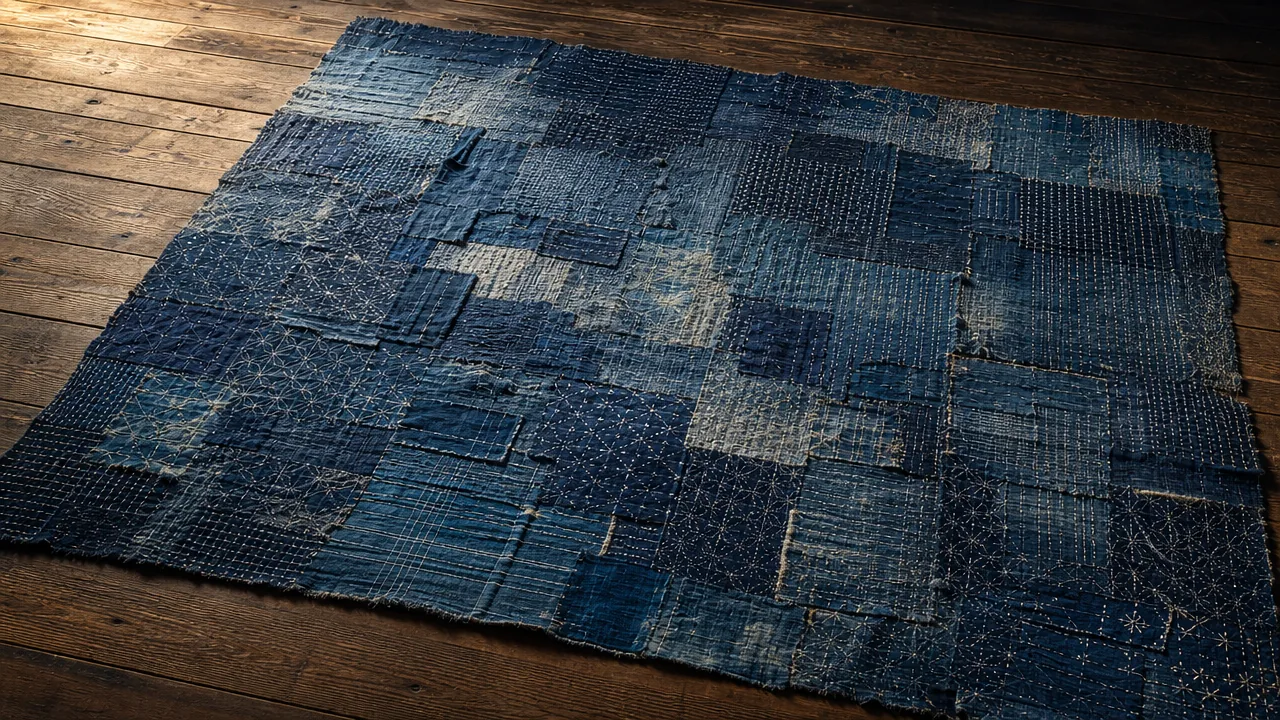
Walk into almost any exhibition of Japanese folk textiles and you will eventually encounter something that looks, at first glance, like a heap of worn-out rags. Layers of indigo cotton, faded and fraying at the edges, stitched together in running lines so dense they have begun to look almost decorative. This is boro — a word that translates simply as ‘tattered’ or ‘ragged’ — and it carries within its threads a history of survival that most museum labels struggle to contain.
The boro textile tradition did not begin as an art form. It was not born in a studio or conceived by a designer. It grew, slowly and out of necessity, in the farmhouses and fishing villages of northern Japan, where winters were long, cotton was scarce, and throwing anything away was simply not an option. Understanding boro means understanding the specific conditions of poverty that produced it, and the quiet ingenuity of the people who refused to let cloth go to waste.
Cotton Was a Luxury: The Tohoku Origins of Boro
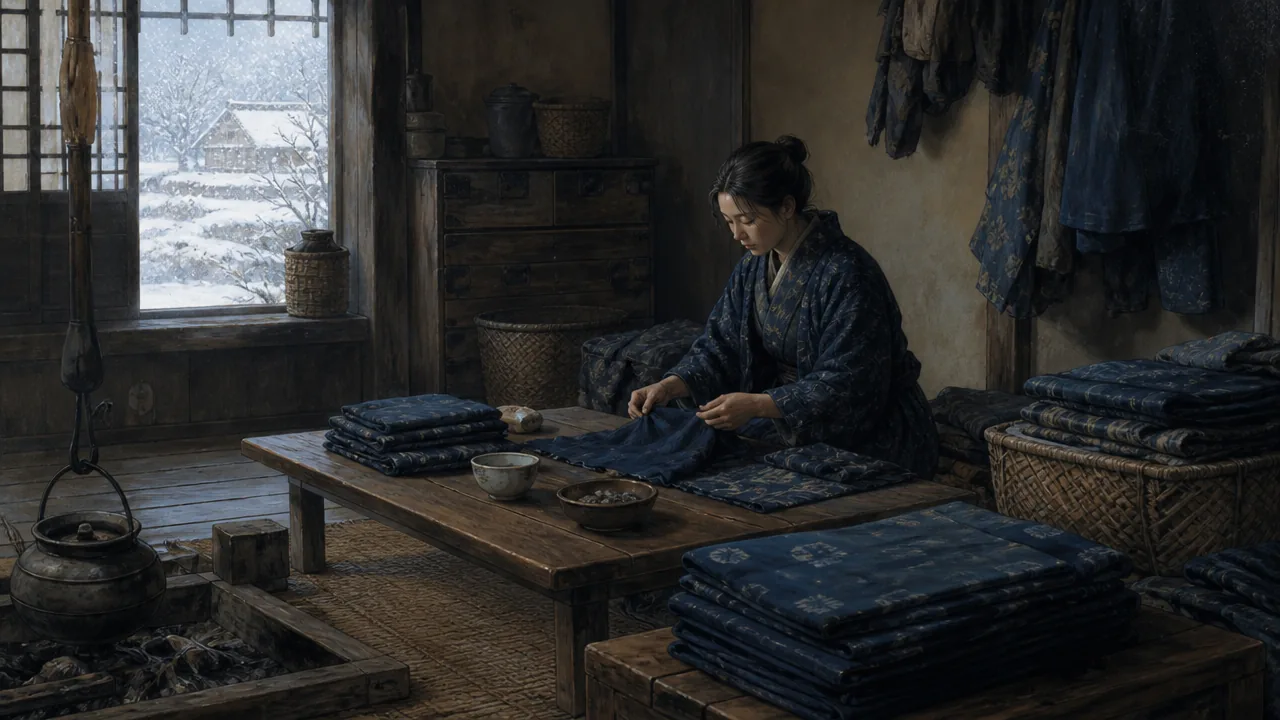
To understand why boro exists, you have to understand what cotton meant in Edo-period Tohoku. The northeastern region of Japan — cold, mountainous, and geographically isolated — was never ideal territory for cotton cultivation. While merchants in Osaka and Kyoto traded fine fabrics, farming families in places like what is now Aomori Prefecture were wearing clothes woven from bast fibers like hemp or ramie, materials that offered little warmth in the region’s long winters.
When cotton cloth did make its way north, it arrived as trade goods, often second-hand, and it was treated accordingly. A single piece of cotton fabric might be worn by one family member, then passed to another, then cut down for a child, then used as a patch on something else entirely. As the Meiji era brought new economic pressures and textile imports fluctuated, the hoarding and layering of cloth only intensified.
The result was a distinct material culture built around three principles:
- Nothing wearable is ever discarded
- Every tear or weakness is an opportunity to add another layer
- A garment’s useful life is measured in generations, not years
This is the context in which the mottainai ethic — the Japanese sense of regret over waste — became not a philosophy but a daily practice. The wabi-sabi aesthetic that contemporary design culture finds so appealing was, in Tohoku, simply the look of not being able to afford anything better.
Why Sashiko Stitching Was Never Just Decorative
There is a persistent misconception in Western craft media that sashiko began as a decorative embroidery tradition. The geometric patterns — waves, interlocking hexagons, diamond grids — look intentional, even ornamental. But in the Tohoku context where boro was born, the primary function of sashiko stitching was structural. When you are layering three or four pieces of thin, worn fabric to make something thick enough to insulate against a Tohoku winter, you need a way to hold those layers together so they do not shift, bunch, or separate. That is what sashiko did.
The running stitch — pulled through multiple layers of indigo cotton in long, rhythmic lines — compressed the fabric, distributed stress across a wider area, and extended the life of each individual piece. The more layers a garment accumulated over the years, the more stitching it required, and the denser those patterns became. What looks to a modern eye like careful artistic composition was often the record of decades of repair.
This is also why boro pieces and sashiko stitching are inseparable when you study them closely. For a fuller picture of how the technique itself developed — its tools, its thread, and its regional variations — What Is Sashiko? Meaning, History and Patterns of Japanese Stitching covers the craft in more practical detail. If you want to compare specific thread brands and weights before starting your own repair work, Best Sashiko Thread for Beginners: Top Picks and Buying Guide breaks down the options, and Best Sashiko Starter Kit 2026 compares kits by what each one includes. But the cultural roots of that craft run directly through the poverty of Tohoku’s farming communities, and through the patchwork logic of boro. Sashiko vs Boro sets the two side by side.
From Shame to Archive: How Boro Was Almost Lost
For most of the twentieth century, boro was not celebrated. It was hidden. Families who had survived on patched and re-patched clothing associated those garments with hunger, hardship, and a poverty they were desperate to leave behind. As Japan industrialized and new factory-made textiles became affordable even in rural Tohoku, the old layered pieces were burned, buried, or simply thrown away. The shame attached to them was real and deep.
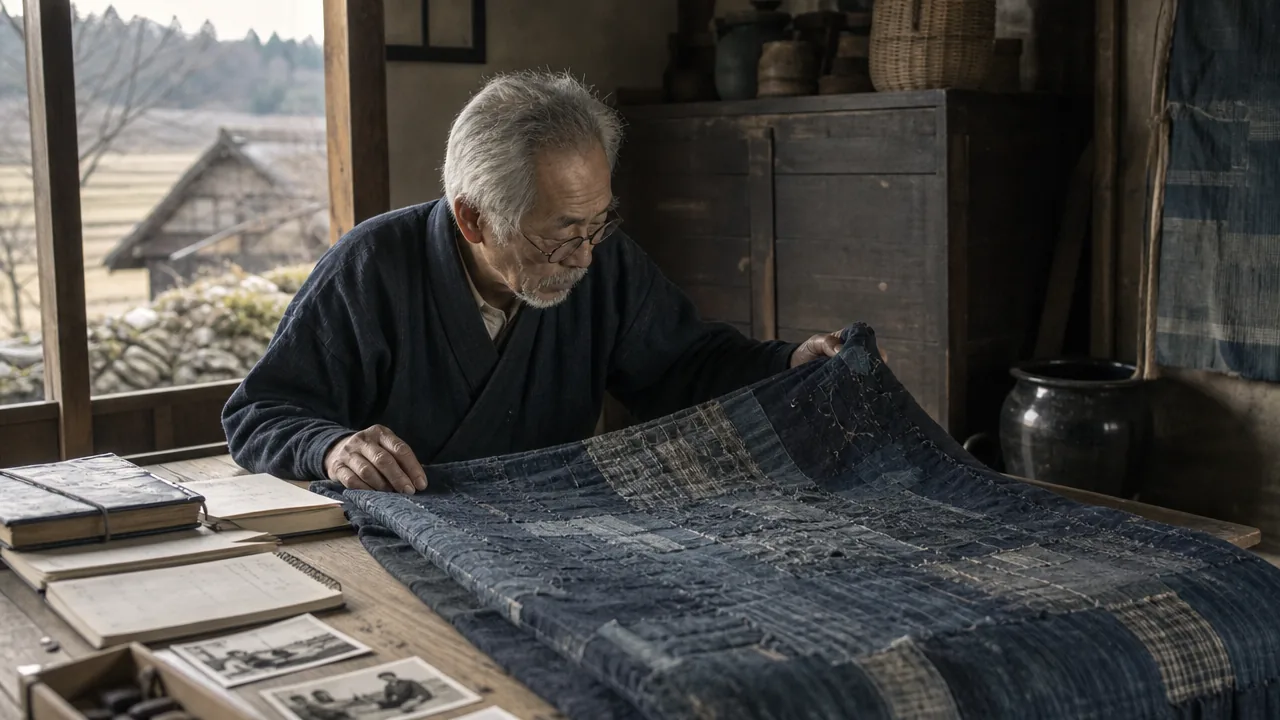
This is why the work of Chuzaburo Tanaka (1933–2013) matters so much to the survival of what we now call the boro textile record. A folklorist, Tanaka spent more than forty years traveling to farmhouses across the region and asking families if they had old cloth they were planning to discard. He accepted pieces that their owners considered worthless. Over those years he assembled a collection of more than 20,000 folk tools and garments, along with more than 10,000 old books and documents, according to his profile on the Amuse Museum’s site (archived in 2015), which also gives his dates and the length of his collecting.
The photographic record of that collection became the basis for the book *Boro: Rags and Tatters from the Far North of Japan*, edited by Yukiko Koide and Kyoichi Tsuzuki, with photography by Tsuzuki, published by Aspect Corp.
Tanaka’s collection eventually found a public home at the Amuse Museum in Asakusa, Tokyo, which opened in November 2009, according to Time Out Tokyo, and displayed rotating selections of the boro pieces. The museum closed on March 31, 2019, according to Japan Travel, but the collection has since traveled internationally through touring exhibitions, continuing to reach audiences far beyond Japan.
Repair Culture Meets the Runway: Boro in Contemporary Fashion
The distance between a patched farmhouse jacket from Meiji-era Aomori and a fashion-week lookbook is considerable, and it is worth being honest about the tension that exists when poverty aesthetics get reframed as luxury design. That tension is real, and thoughtful critics of the sustainable fashion movement have raised it directly. But the contemporary reappraisal of boro has also done something genuinely useful: it has made the underlying logic of repair culture visible to audiences who would never have encountered Tanaka’s collection otherwise.
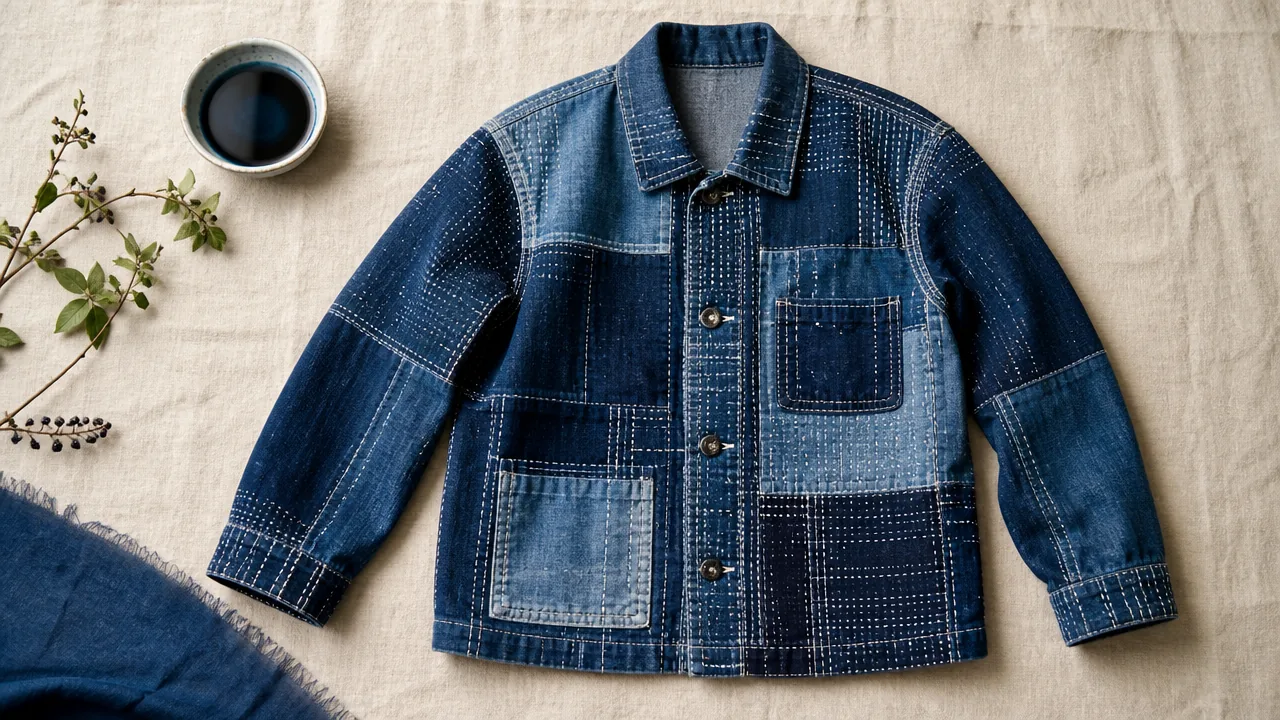
Among Japanese brands, Kapital stands out as a serious and sustained engagement with the boro tradition rather than a superficial borrowing of its look. Established in March 1985, according to Kapital’s company profile, by Toshikiyo Hirata, whom Heddels names as the founder, in Kojima, Kurashiki — a district in Okayama Prefecture historically associated with Japanese denim production — Kapital built its identity around the intersection of American workwear, Japanese craft techniques, and the visual language of boro patchwork. Their denim pieces incorporate actual sashiko stitching, joining fabric panels in ways that reference the layered, mended logic of the original folk textiles rather than simply printing a pattern that resembles it.
Beyond that specific example, several contemporary fashion houses internationally have incorporated visible mending principles into collections in recent years, and the broader repair culture movement — with its emphasis on extending garment life rather than replacing worn items — draws explicitly on the mottainai ethic that boro embodies.
It is worth noting that boro’s philosophy connects to a wider Japanese tradition of honoring repaired objects. The same culture that produced boro also produced kintsugi, the practice of repairing broken ceramics with gold-dusted lacquer in a way that highlights rather than conceals the repair. If that parallel interests you, Kintsugi Kit for Beginners: Authentic Urushi vs Synthetic Resin explores that tradition in depth.
Frequently Asked Questions
Who collected the boro textiles shown in Tokyo?
Chuzaburo Tanaka (1933–2013), a folklorist who spent more than forty years collecting. His profile on the Amuse Museum’s site, archived in 2015, lists more than 20,000 folk tools and garments in his collection, along with more than 10,000 old books and documents.
Where was the Tanaka collection displayed?
At the Amuse Museum in Asakusa, Tokyo, which opened in November 2009, according to Time Out Tokyo. The museum closed on March 31, 2019, according to Japan Travel.
When was Kapital established?
In March 1985, according to Kapital’s company profile. Heddels names Toshikiyo Hirata as the founder.
What does boro mean in Japanese?
It translates as ‘tattered’ or ‘ragged’. The Victoria and Albert Museum glosses the related word boroboro as something tattered or repaired, and describes boro as the practice of reworking and repairing textiles through piecing, patching and stitching.
What is the difference between boro and sashiko?
Boro is the patched, layered cloth itself; sashiko is a running-stitch technique that was often used to hold boro’s layers together. Sashiko can also be worked on a single new piece of cloth, with no patching at all.
What Boro Actually Asks of Us
There is a risk, when writing about boro for a contemporary audience, of making it sound more resolved than it is. The garments themselves are not resolved — they are interrupted, added to, changed by whoever held them next. That incompleteness is part of what they document.
What boro asks, if we take it seriously rather than aesthetically, is a specific set of questions about our relationship to material things:
- At what point does a worn object become worthless, and who decides?
- What skills disappear when we stop repairing things by hand?
- Is there a meaningful difference between poverty-enforced thrift and chosen sustainability?
These are not comfortable questions, and boro does not answer them. It just holds them, stitched into indigo cotton, layer after layer, generation after generation. The fact that pieces Tanaka rescued from burning in the 1960s are now traveling in international exhibitions is itself a kind of answer — incomplete, contested, but genuinely interesting.
The patchwork logic of boro and the structural discipline of sashiko stitching emerged together from the same material scarcity. Separating them, as decorative trends sometimes do, loses something important about where both came from and what they were for.
For readers ready to start their own mending practice, Best Sashiko Starter Kit 2026: Top Picks by Skill Level is a practical next step.
Boro and sashiko grew from the same roots — if you want to understand the stitch itself as a practice, not just a history, the guide to sashiko as a living craft is a natural next step.