This article contains affiliate links. If you buy through them, we may earn a commission at no extra cost to you.
How this article was made: Research-based comparison. It draws on published information from makers, retailers, and reference sources, not on hands-on testing.
Quick picks
- Traditional Kintsugi Repair Kit – Basic by Chimahaga — $169.00: natural urushi and 0.1 g of genuine gold, 19 items
- Chimahaga Kintsugi Repair Kit for Beginners -Standard- — $195.00: the Basic set plus brass powder, black urushi and extra brushes, 23 items
- iienjoy Kintsugi Repair Kit Gold — $22.99: synthetic resin (epoxy), for a quick repair of decorative pieces; its seller describes it as food-safe but cites no test standard, and the powder is gold-colored mica, not genuine gold
Prices on Amazon.com, checked October 17, 2026.
- The Short Answer: Which Kintsugi Repair Kit to Buy
- Why Kintsugi Is Capturing the World’s Attention Right Now
- How to Choose the Right Kintsugi Kit for You
- Top Kintsugi Kits: Two Urushi Kits and One Epoxy Kit
- What Kind of Damage Can a Kit Fix?
- How Long a Repair Takes and How Urushi Cures
- Using a Repaired Piece: Dishwasher, Microwave and Hot Drinks
- Mistakes That Ruin a Kintsugi Repair (and How to Avoid Them)
- Frequently Asked Questions
- Is a kintsugi repair food safe?
- Can a kintsugi-repaired piece go in the dishwasher or microwave?
- How long does a repair with an urushi kit take?
- How many pieces can one kit repair?
- What is the best kintsugi repair kit?
- What is the difference between an urushi kintsugi kit and an epoxy kit?
- Which kintsugi repair kit is food safe?
- Do kintsugi repair kits use real gold?
- Final Thoughts: Matching the Kit to the Commitment
- Sources
The Short Answer: Which Kintsugi Repair Kit to Buy
For tableware, this guide recommends an urushi kit; for a quick repair of a decorative piece, an epoxy kit. The three kits below differ mainly in the adhesive, the powder and the number of pieces they cover.
- One piece, with genuine gold: Traditional Kintsugi Repair Kit – Basic by Chimahaga ($169.00). Natural urushi and 0.1 g of genuine gold; Chimahaga’s comparison chart puts it at approximately one piece. It is the pick in this guide, because it offers real urushi and real gold powder at the lower price
- About three pieces, or practice before using the gold: Chimahaga Kintsugi Repair Kit for Beginners -Standard- ($195.00). The same set plus 1 g of brass powder, 5 g of black urushi and extra brushes
- A decorative piece, within a day: iienjoy Kintsugi Repair Kit Gold ($22.99). Epoxy with gold-colored mica powder, not genuine gold; the listing says the repair is fully cured in 24 hours. Its seller describes it as food-safe but cites no test standard
An urushi repair takes about a month by Chimahaga’s figures, and Tsugu Tsugu says two to three months is very common. Natural urushi can cause a skin reaction, so wear gloves whenever you handle it.
Why Kintsugi Is Capturing the World’s Attention Right Now
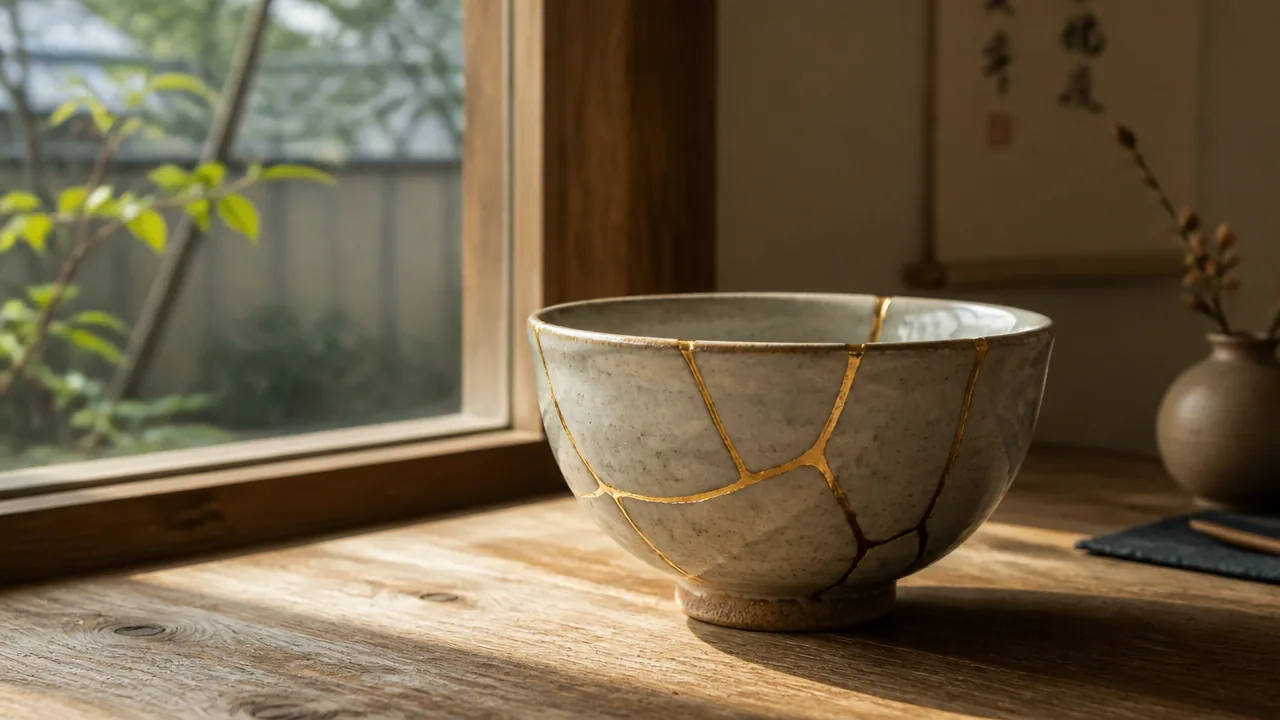
Kintsugi is the Japanese art of repairing broken ceramics with urushi lacquer and gold. It traces its roots to the Muromachi period (1336–1573), when, according to the Smithsonian Center for Folklife and Cultural Heritage, tea masters began to prize repaired vessels rather than discard them. For the history and the wabi-sabi idea behind it, see What Is Kintsugi?; this guide is about choosing a kit.
How to Choose the Right Kintsugi Kit for You
Before settling on a kit, it helps to be honest about a few things: how much time you can dedicate to curing, whether the repaired piece will come into contact with food, and whether you are drawn to kintsugi as an occasional hobby or a serious long-term practice.
The single biggest decision is the adhesive and finish material. Authentic kits use urushi lacquer — the sap of the Toxicodendron vernicifluum tree — which has been used in Japanese craft for thousands of years. Synthetic resin kits replace urushi with epoxy or UV-cure compounds. Both can produce visually striking results, but they differ in durability, curing behavior, food safety status, and the overall experience of working with them. If you want a deeper breakdown of that distinction before committing, this side-by-side comparison of authentic kintsugi vs synthetic resin kits is worth reading first.
Beyond the adhesive, consider these factors:
- Gold powder type: hon-kinpun (pure gold powder) produces the warmest, most traditional appearance; mica-based powders are more affordable and easier to handle for beginners
- Piece size: larger items, like platters or vases, require more material and longer drying stages than small cups or bowls
- Allergy sensitivity: natural urushi can cause skin reactions during application; some kits now offer low-allergenic urushi formulations
- Food contact: verify that any kit you use on tableware is explicitly food-safe once fully cured — not just during the process Is Kintsugi Food Safe? sets out what the makers of urushi and epoxy kits say.
If you are brand new to the craft and still weighing whether urushi is right for you at all, starting with a synthetic kit for practice is a legitimate strategy. But if you already know you want the real thing, there is a compelling case for going straight to an authentic Japanese-made kit rather than working backward from a synthetic one.
Top Kintsugi Kits: Two Urushi Kits and One Epoxy Kit
The three kits below are two urushi kits from Chimahaga, a Japanese maker, followed by one epoxy kit for a quicker, lower-cost repair.
| Kit | Price | Type | Gold-colored powder | Repairs per kit | Food use |
|---|---|---|---|---|---|
| Traditional Kintsugi Repair Kit – Basic by Chimahaga | $169.00 | Urushi | Genuine gold, 0.1 g | About 1 piece | Maker states food-safe once the urushi has completely hardened |
| Chimahaga Standard Kintsugi Kit | $195.00 | Urushi | Genuine gold, 0.1 g, plus brass, 1 g | About 3 pieces | Maker states food-safe once the urushi has completely hardened |
| iienjoy Kintsugi Repair Kit Gold | $22.99 | Epoxy | Gold-colored mica, 5 g | Not stated | Seller describes it as food-safe; no test standard cited |
Prices on Amazon.com, checked October 17, 2026. “Repairs per kit” is the maker’s own estimate from the comparison chart on the Amazon listings and depends on the size of the damage.
Intermediate — Traditional Kintsugi Repair Kit – Basic by Chimahaga — $169.00
This is where the experience shifts meaningfully. Chimahaga’s kit uses natural urushi lacquer and pure genuine gold powder, and it is supervised by a working Japanese kintsugi repairer. The curing process takes longer and requires more patience, but Chimahaga states that the result is food-safe once the urushi has completely hardened, and it is far closer to what traditional kintsugi actually involves. For anyone who has outgrown synthetic kits or who wants to learn the craft properly from the start, this is a strong choice at a reasonable price for what it includes.
Step-up — Chimahaga Kintsugi Repair Kit for Beginners -Standard- — $195.00
This is the larger of Chimahaga’s two kits (in stock on October 3, 2026; sold by Chimahaga and shipped by Amazon). It uses the same natural urushi and genuine gold powder as the Basic kit above. According to the comparison chart on the Amazon listings, the Basic kit has 19 items with 0.1 g of genuine gold, while the Standard kit has 23 items: the same set plus 1 g of brass powder, 5 g of black urushi, a flat brush, an ashirai brush and a bamboo spatula, which Chimahaga describes as the tools used in its kintsugi classes in Japan. Choose the Basic kit if you want to repair one piece with real gold at the lower price; choose the Standard kit, about $26 more, if you want those extra brushes, black urushi, and brass powder to practice with before using the gold. Note that the Standard kit has only 15 ratings so far (4.3 stars; the Basic kit has 4.1 stars from 54), so there is less buyer feedback to go on. Like any real urushi kit, it can cause a skin reaction: both kits include nitrile gloves, and you should wear gloves whenever you handle urushi.
Synthetic resin option — iienjoy Kintsugi Repair Kit Gold — $22.99
This is an epoxy-based kit. Its seller describes the adhesive and powder as food-safe and the repaired piece as dishwasher-compatible after a 24-hour cure, but the listing cites no test standard, certification or regulation, so treat that as the seller’s own claim. The Amazon.com listing (checked October 3, 2026: in stock, sold by Yigao-us and shipped by Amazon, 4.7 stars from 17 ratings) includes 50 ml of two-part epoxy, gold-colored powder that the listing does not describe as genuine gold, ceramic powder, gloves, silicone tools and a wooden chisel. At $22.99 it is by far the most accessible entry point price-wise, and the epoxy adhesive cures relatively quickly without requiring a humidity-controlled environment. Results are visually appealing. For tableware, keep in mind that Chimahaga, a maker of urushi kits, says most commercially available adhesives are not suitable for use on tableware; if that matters to you, keep this kit for decorative pieces or choose an urushi kit. It is not a traditional kintsugi experience — there is no urushi involved — but it is a reasonable way to learn the basic process of filling cracks and applying gold before investing more. If you want other colors as well, the same brand sells a 4-color version ($29.99).
What Kind of Damage Can a Kit Fix?
Kits are sized for a small number of pieces, and the makers say so. On its own site, Chimahaga describes the Basic kit as enough to repair about three chipped items or one broken item, depending on the size of the damage; the comparison chart on its Amazon listings puts the Basic kit at approximately one piece and the Standard kit at approximately three.
- Chips: both Chimahaga kits include kokuso powder and tonoko powder along with the raw urushi. The iienjoy listing says small chips are filled with its ceramic powder mixed into the adhesive.
- Clean breaks and cracks: all three kits are sold for rejoining broken ceramics; the urushi kits take much longer, as the next section explains.
- Glass: Tsugu Tsugu, another maker of urushi kits, says kintsugi can be used on ceramic and glass but that glass requires advanced skills. The iienjoy listing says its epoxy also works on glass. Our guide to kintsugi on glass covers what to expect.
How Long a Repair Takes and How Urushi Cures
An urushi repair is measured in weeks and months, not days. Chimahaga says a traditional repair takes about a month, because each step needs several days of waiting and the urushi glue alone takes about one week to harden. Tsugu Tsugu says one layer usually takes a few days to a week to dry completely and that two to three months for a whole project is very common.
- Conditions: urushi hardens with humidity, not dry air. Chimahaga gives 25°C and around 75% humidity as the conditions in which curing proceeds best; Tsugu Tsugu gives 20 to 25°C (68–77°F) and around 70 to 80% humidity.
- Before you use the piece: Chimahaga explains that urushi is safe to touch within a few days but takes another 20 days to several months to harden to the core, and says not to use the piece for a month after the repair is complete. Tsugu Tsugu likewise recommends waiting at least one month.
- Epoxy kits: the iienjoy listing gives a working time of about 30 minutes and says the repair is fully cured in 24 hours.
For the stage-by-stage timeline, see How Long Does Kintsugi Take?, and How to Do Kintsugi at Home walks through each stage of an urushi repair.
Using a Repaired Piece: Dishwasher, Microwave and Hot Drinks
A repaired piece needs gentler handling than it did before it broke. The makers of urushi kits are consistent on the main points:
- Dishwasher: no. Chimahaga says a dishwasher may cause damage and gold to peel off; Tsugu Tsugu says repaired items cannot be used in a dishwasher.
- Microwave, oven and open flame: no. Chimahaga warns of sparks from the seams in a microwave, and both makers rule out ovens and direct fire.
- Hot food and drinks: acceptable for a finished urushi repair. Chimahaga says pouring boiling water over it is acceptable but continuous exposure to boiling steam should be avoided; Tsugu Tsugu says hot food and hot drinks are fine but to avoid sudden changes in temperature.
- Washing: by hand with a soft sponge, without rubbing the seams hard, because the gold layer is very thin (Chimahaga).
The epoxy kit is a different case. Its seller describes the repair as safe for hot meals and dishwasher-compatible, but the listing cites no test standard, and Chimahaga’s general advice is that most commercially available adhesives are not suitable for tableware. If you plan to eat or drink from the piece, an urushi kit is the option whose makers state that it is food-safe.
Mistakes That Ruin a Kintsugi Repair (and How to Avoid Them)
Even with a quality kit in hand, there are several ways a repair can go wrong — most of them entirely preventable.
One issue is rushing the cure. Urushi lacquer does not dry in the conventional sense; it polymerizes through a humidity-driven process that takes from a few days to a week per layer in a muro (a small humid chamber), according to Tsugu Tsugu’s guide; Chimahaga says a traditional repair takes about a month. Applying a second coat before the first has fully hardened, or skipping the muro entirely, results in a finish that looks dull, peels, or never fully bonds. Do not attempt to speed up curing with heat or low humidity — it will backfire.
Other mistakes worth flagging:
- Using a repaired piece in the microwave: urushi-based repairs are not microwave-safe, and even some epoxy repairs can degrade under microwave heat. Always check the manufacturer’s guidance before microwaving any kintsugi-repaired item
- Soaking the repaired piece in water: prolonged submersion, especially while the repair is still relatively new, can weaken the bond. Hand-wash briefly and dry thoroughly
- Applying gold powder too early: if the lacquer is not at the right stage of tack, the kinpun will not adhere evenly and the gold line will look patchy
- Using food-contact items before full cure: even kits described as food-safe are meant to be used only after complete curing, and both Chimahaga and Tsugu Tsugu say to wait about a month after an urushi repair is finished. Using a bowl too soon — especially for acidic foods — can introduce problems
- Skipping surface preparation: the ceramic edges need to be clean, dry, and free of old adhesive before any new repair material is applied. Grease or moisture on the break surface is a common reason repairs fail to hold
Also Needed: Disposable Nitrile Gloves
Raw urushi lacquer contains urushiol, the same compound behind poison ivy rashes, so it can cause an itchy skin reaction; wear disposable nitrile gloves whenever you handle it — this applies to every urushi kit in this guide, and wash any skin contact with soap and water straight away. A 100-glove box such as MedPride Powder-Free Nitrile Exam Gloves (about $9.99 on Amazon.com, October 2026; choose your size) lasts for many repairs. Chimahaga also warns that people who easily get rashes from poison ivy or mango may be irritated even when wearing gloves, because urushi vaporizes in very small amounts.
Frequently Asked Questions
Is a kintsugi repair food safe?
It depends on the materials. Chimahaga states that urushi is food safe once it has completely hardened, and Tsugu Tsugu describes urushi as the material used in Japan for centuries to repair tableware. For epoxy kits, check what the seller actually cites: the iienjoy listing describes its adhesive as food-safe but names no test standard, and Chimahaga says most commercially available adhesives are not suitable for tableware.
Can a kintsugi-repaired piece go in the dishwasher or microwave?
No. Chimahaga and Tsugu Tsugu both say not to use a dishwasher or a microwave, and to keep repaired pieces away from ovens and open flames. Wash by hand with a soft sponge.
How long does a repair with an urushi kit take?
Chimahaga says about a month, and Tsugu Tsugu says two to three months is very common, because each layer takes from a few days to a week to dry. Both makers say to wait about a month after the repair is finished before using the piece.
How many pieces can one kit repair?
According to Chimahaga, its Basic kit covers approximately one piece and its Standard kit approximately three, depending on the size of the damage. The iienjoy listing does not give a number.
What is the best kintsugi repair kit?
It depends on the piece. For tableware, this guide recommends the Traditional Kintsugi Repair Kit – Basic by Chimahaga, because it uses natural urushi and 0.1 g of genuine gold and Chimahaga states the repair is food-safe once the urushi has completely hardened. For a decorative piece, an epoxy kit such as the iienjoy Kintsugi Repair Kit Gold costs far less and its listing says the repair is fully cured in 24 hours.
What is the difference between an urushi kintsugi kit and an epoxy kit?
An urushi kit uses natural lacquer, which hardens slowly: Chimahaga says a repair takes about a month. An epoxy kit uses a two-part synthetic adhesive that cures in about a day. The powder differs too: both Chimahaga kits include genuine gold, while the iienjoy kit uses gold-colored mica.
Which kintsugi repair kit is food safe?
Go by what each maker states. Chimahaga says urushi is food safe once it has completely hardened, and both Chimahaga kits in this guide use natural urushi; it says not to use a repaired piece for a month after the repair is finished. The iienjoy kit is epoxy: its seller describes it as food-safe but cites no test standard, and Chimahaga says most commercially available adhesives are not suitable for tableware. Is Kintsugi Food Safe? sets out what the makers of urushi and epoxy kits say.
Do kintsugi repair kits use real gold?
Some do. Both Chimahaga kits in this guide include 0.1 g of genuine gold powder, and the Standard kit adds 1 g of brass powder for practice. The iienjoy Kintsugi Repair Kit Gold uses gold-colored mica powder, not genuine gold.
Final Thoughts: Matching the Kit to the Commitment
Kintsugi is one of those crafts where the materials you use genuinely shape the experience, not just the outcome. A synthetic resin kit and an authentic urushi kit both produce a gold-lined repair, but the process, the tactile engagement, and the longevity of the result are quite different.
For most readers arriving at this article having already done their research, the Chimahaga intermediate kit is the one this guide recommends, because it offers real urushi, real gold powder, and guidance from a practicing repairer, at a price point that does not require professional-level commitment upfront. If you want the extra brushes, black urushi, and brass powder for practice, the Chimahaga Standard kit adds them for about $26 more.
If you are still on the fence about whether to go the authentic route or start with a synthetic kit, revisiting our beginner’s guide to kintsugi kits may help clarify the decision. The craft also connects naturally to other Japanese traditions around intentional making and visible mending — the wabi-sabi sensibility that underlies kintsugi shows up in other practices too, if you find yourself drawn further into Japanese craft culture.
Whichever tier you choose, the goal is the same: treating a broken object as the beginning of something rather than the end of it.
Sources
This article draws on the following sources:
- Web Japan, “Kintsugi — Creating New Value From Broken Items”: https://web-japan.org/trends/11_fashion/fas202301_kintsugi.html
- Smithsonian Center for Folklife and Cultural Heritage, “Japanese Kintsugi and the Art of Repair with Yuko Gunji”: https://folklife.si.edu/magazine/japanese-kintsugi-yuko-gunji
- Chimahaga, “Choosing the Kintsugi Kit that Suits Your Needs”: https://chimahaga.com/blogs/journal/choosing-the-kintsugi-kit-that-suits-your-needs
- Chimahaga, “Is Kintsugi ware dishwasher safe?”: https://chimahaga.com/blogs/journal/is-kintsugi-ware-dishwasher-safe
- Chimahaga, “What is urushi?”: https://chimahaga.com/blogs/journal/what-is-urushi
- Chimahaga, Basic kit product page: https://chimahaga.com/products/new-basic-kintsugi-repair-kit
- Tsugu Tsugu, “Kintsugi Beginner’s Guide”: https://kintsugi-kit.com/pages/3-steps-to-start-kintsugi-at-home
- Tsugu Tsugu, “TSUGUKIT – A Traditional Kintsugi Kit”: https://kintsugi-kit.com/blogs/tsugu-tsugu-columns/kintsugi-kit
- Amazon.com listings for the three kits (seller and maker descriptions), read on October 4, 2026
Ready to invest in a kit that honors the real tradition? Explore authentic Japanese kintsugi kits made with genuine urushi and hon-kinpun — because some repairs deserve to last a lifetime.