How this article was made: Research-based comparison. It draws on published information from makers, retailers, and reference sources, not on hands-on testing.
What Is Kintsugi? The Short Answer
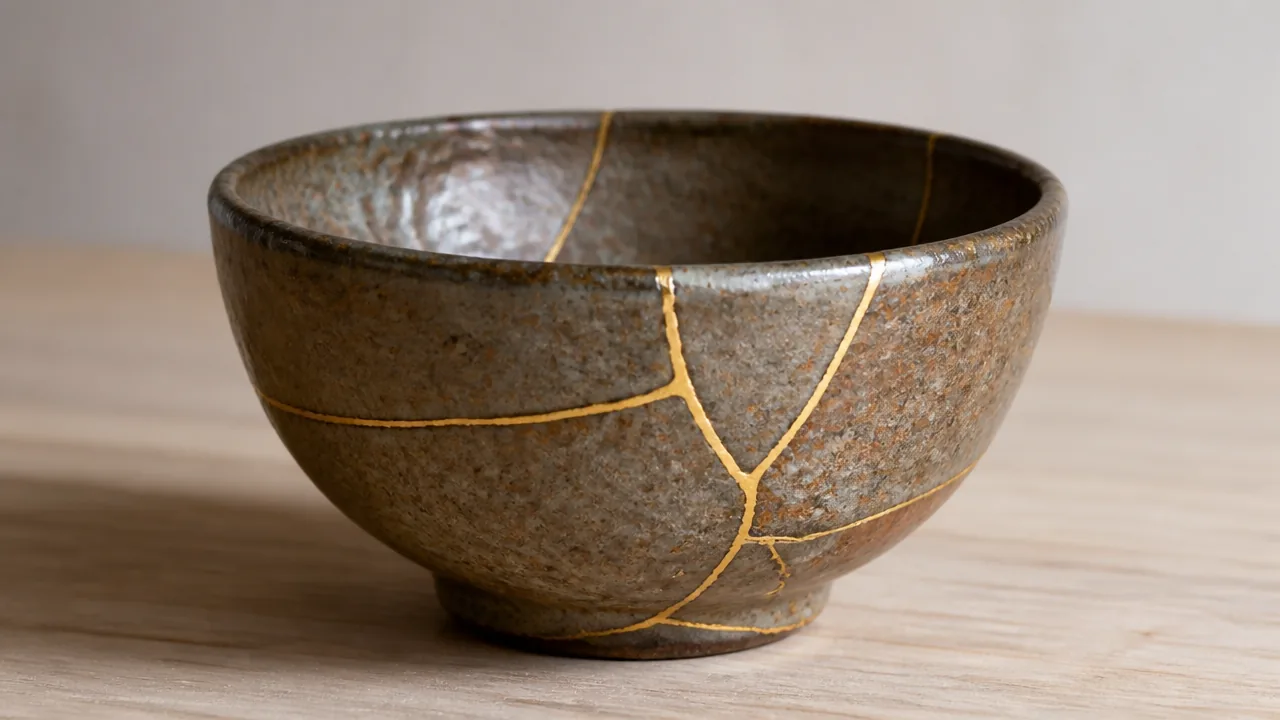
Kintsugi is a Japanese technique for repairing broken or chipped ceramics with urushi lacquer, then finishing the repaired lines with gold powder so the damage stays visible instead of being hidden. The finished piece carries a thin line of gold wherever it once cracked.
The word itself is simple. According to Japan House London, kintsugi roughly translates as “joining with gold”: *kin* means gold and *tsugi* means join. Japan’s National Crafts Museum renders it as “golden repair.” You may also see the word *kintsukuroi*, which is generally used for the same craft, with *tsukuroi* meaning mending.
This guide is a starting point. It explains what kintsugi is, where it is generally understood to come from, what it is made of, and how a repair works, then points you to our more detailed guides when you are ready to go deeper.
Where Kintsugi Comes From
Kintsugi is generally understood to have developed in Japan several centuries ago, with historians commonly dating the start of the practice to the Muromachi period (1336 to 1573). Japan House London notes that its popularity is associated with the tea ceremony tradition, which was flourishing at the same time, and Japan’s National Crafts Museum describes the technique as having been in constant use since the Middle Ages.
You will often read a specific origin story involving the shogun Ashikaga Yoshimasa and a damaged tea bowl. Japan House London presents this as a legend rather than a documented event, and it is best read that way. If you are curious about the story and the ideas that grew up around it, Wabi-Sabi and Kintsugi looks at both in detail.
What is clearer is the attitude behind the craft. The National Crafts Museum describes kintsugi as rooted in the Japanese ideas of preserving and passing things down, and of finding beauty in imperfection. A kintsugi repair does not try to make a bowl look new. It keeps using the bowl, and it lets the repair become part of its history.
What Kintsugi Is Made Of
Traditional kintsugi relies on urushi, a natural lacquer made from the sap of the urushi tree (Toxicodendron vernicifluum), with gold powder applied only at the very end. The urushi does the structural work; the gold is the finishing layer.
Based on Japan House London’s description, the core materials are:
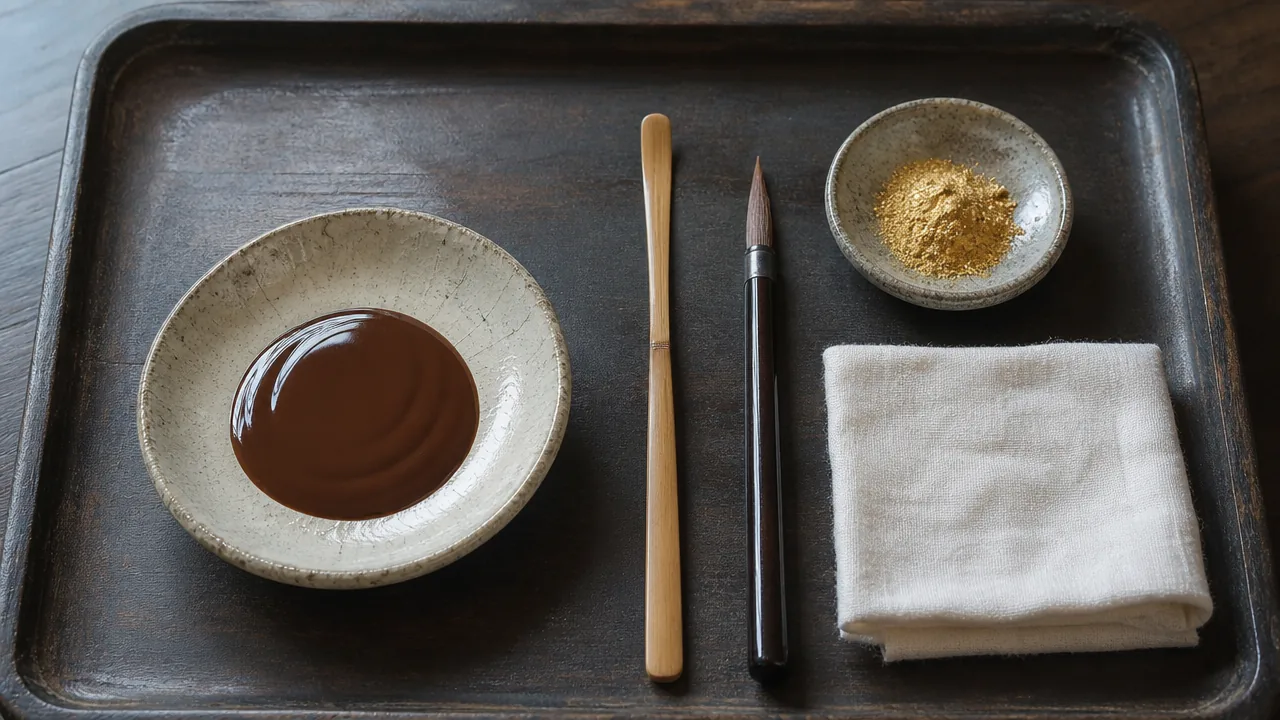
- Urushi adhesive: filtered raw lacquer mixed with wheat flour or rice paste, used to glue the broken pieces back together
- Urushi putty: lacquer mixed with fine sawdust or clay powder, used to fill chips and missing areas
- Finishing lacquer and metal powder: a thin coat of urushi along the seam, with gold powder sprinkled on top
Urushi does not dry like glue. It hardens by absorbing moisture and oxygen from the air, which is why it needs warmth, humidity, and time. Raw urushi is also well known for irritating the skin, so traditional work calls for gloves and care.
Many beginner kits sold today replace urushi with a synthetic resin, which cures much faster and is easier to handle. The finished look can be similar, but the materials and how you can use the repaired piece are not the same. Our guide to authentic versus synthetic kintsugi kits explains the differences, and Best Kintsugi Glue and Gold Powder covers the finishing materials.
How a Kintsugi Repair Works, Step by Step
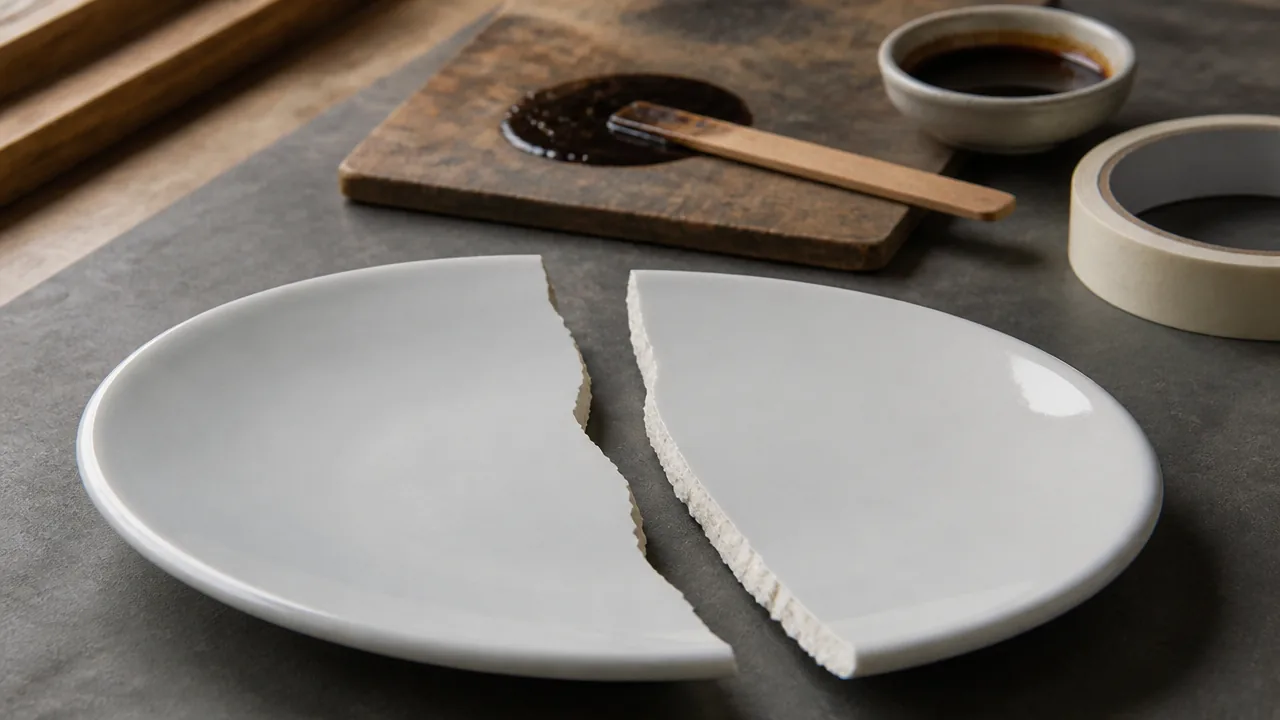
A traditional kintsugi repair moves through a few basic stages: rejoining the pieces, filling gaps, smoothing, and finishing the seam with gold, with long curing periods in between. Here is the sequence in simple terms, following Japan House London’s outline:
- Clean and prepare the edges. The broken edges are cleaned and filed so the pieces fit together.
- Glue with urushi. The pieces are joined with the urushi adhesive and left to harden in a warm, humid cabinet called a *muro*. Japan House London gives one to three weeks for this stage.
- Fill chips and gaps. Missing areas are filled with urushi putty, then scraped and sanded smooth once set.
- Finish with gold. A thin coat of urushi is brushed along the seam and gold powder is sprinkled over it.
Because each layer has to cure before the next one goes on, a traditional repair takes weeks rather than hours. For a realistic picture of how long each stage can take at home, see How Long Does Kintsugi Take?
Common Types of Kintsugi Repair
Not every kintsugi repair uses gold, and not every repair uses only the original pieces. Japan House London describes several variations you will come across:
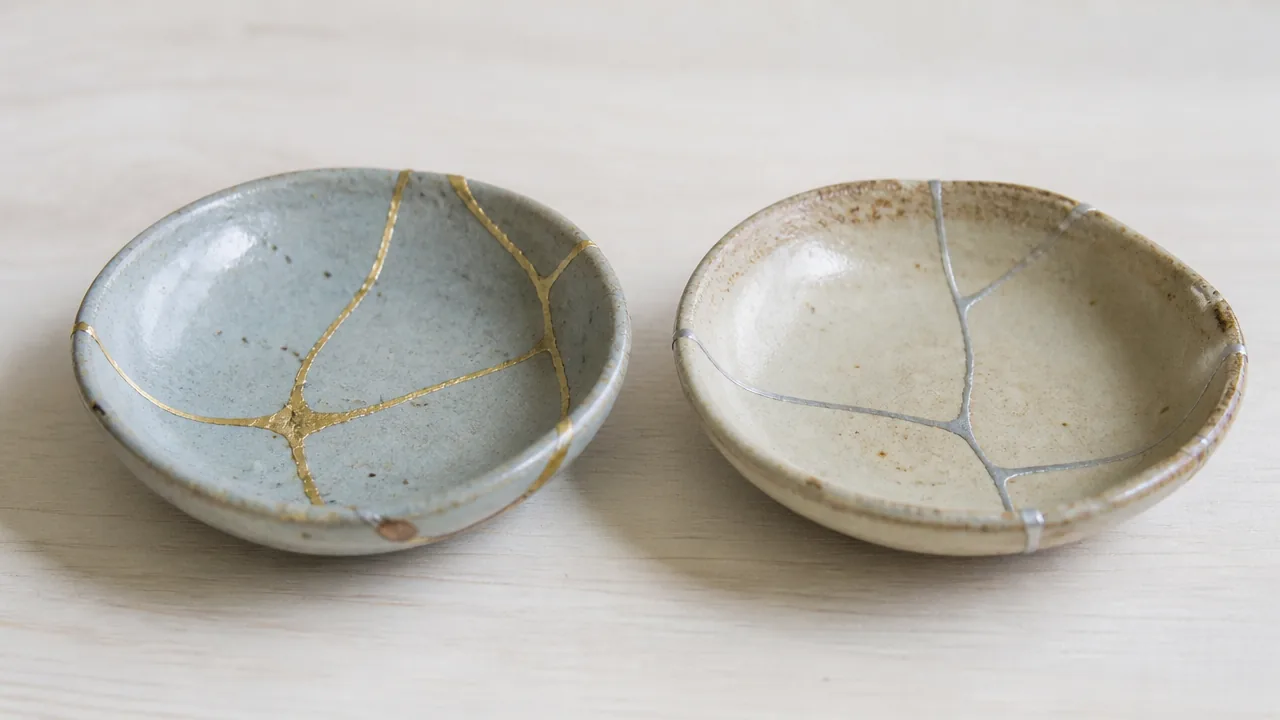
- Kintsugi: the classic finish, with gold powder over the urushi seam
- Gintsugi: the same approach finished with silver powder instead of gold
- Urushitsugi: a repair completed with urushi alone, with no metal powder
- Yobitsugi: missing fragments replaced with pieces from a different ceramic, so the repair combines two objects
- Mokuhen: missing areas replaced with pieces of wood
The type of damage also shapes the repair. A clean break is mostly a matter of rejoining pieces, while a chipped rim or a missing fragment needs building up with putty before it can be finished. Kintsugi is most closely tied to ceramics; if you are wondering about glassware, Can You Use Kintsugi on Glass? explains what works and what does not.
Why Kintsugi Appeals to So Many People
Kintsugi is often described as a way of treating damage as part of an object’s story rather than something to erase. A conventional repair usually aims to make a break disappear. Kintsugi does the opposite and draws attention to it, which is why the finished piece can feel more personal than it did before it broke.
That idea has traveled well beyond ceramics, and you will see kintsugi used as a metaphor for resilience and recovery. The philosophy is covered more closely in Wabi-Sabi and Kintsugi, and the practical trade-offs against an invisible repair in Kintsugi vs Traditional Ceramic Repair.
Can You Try Kintsugi Yourself?
Yes. Beginner kits make kintsugi accessible at home, but the first decision is whether to use traditional urushi or a synthetic resin kit. Urushi gives you the traditional process and takes weeks; resin is faster and simpler but is a different material.
If you are ready to start, this reading order works well:
- Kintsugi Kit for Beginners: Authentic Urushi vs Synthetic Resin to choose your approach
- Best Japanese Kintsugi Repair Kits to compare kits by skill level and budget
- Best Japanese Kintsugi Tools for brushes, spatulas, and what you actually need
- How to Store Kintsugi Repair Supplies once you have your materials
Start with a piece that does not matter too much, such as a simple chipped mug or a small plate, rather than a family heirloom.
Where to See Kintsugi in Person
Museums and craft institutions are the best places to see kintsugi up close, because the fine lines and raised lacquer are hard to appreciate in photos. In Japan, the National Crafts Museum in Kanazawa, Ishikawa Prefecture, lists an exhibition titled *Kintsugi* scheduled for February 26 to June 6, 2027, which it says will trace the history of kintsugi. Exhibition dates can change, so check the museum’s website before planning a visit.
Final Thoughts
Kintsugi is, at heart, a repair method: urushi lacquer holds the pieces together, and gold marks where the break was. Everything else, from the tea ceremony connection to the modern idea of beauty in imperfection, grows out of that simple choice to show the repair rather than hide it.
If this is your first introduction, the best next step depends on what caught your interest: the story and philosophy, how long a real repair takes, or which kit to start with. Each of those has its own guide linked above.
Frequently Asked Questions
What does kintsugi mean?
Kintsugi roughly means “joining with gold,” from *kin* (gold) and *tsugi* (join). Japan’s National Crafts Museum translates it as “golden repair.”
Is kintsugi the same as kintsukuroi?
Generally, yes. Both words are used for the craft of repairing ceramics with lacquer and gold; *tsukuroi* means mending. Kintsugi is the term used by sources such as Japan House London and Japan’s National Crafts Museum.
Is kintsugi done with real gold?
Traditional kintsugi finishes the seam with gold powder over urushi lacquer, and silver is used in the variation called gintsugi. Some modern kits use gold-colored powders instead, so check the product description if real gold matters to you.
How long does a kintsugi repair take?
A traditional urushi repair takes weeks, because each layer has to cure in warm, humid conditions before the next step. Synthetic resin kits are much faster.
Can you eat or drink from a kintsugi-repaired piece?
It depends on the materials. Fully cured urushi has a long history of use on Japanese tableware, while many synthetic resin kits are not intended for food contact. Follow the instructions of the kit or the repairer, and treat a synthetic repair as decorative unless the product says otherwise.
Curious to try it? Start with our beginner’s guide to choosing between urushi and synthetic resin kits, then pick a small piece to practice on.