This article contains affiliate links. If you buy through them, we may earn a commission at no extra cost to you.
How this article was made: Research-based comparison. It draws on published information from makers, retailers, and reference sources, not on hands-on testing.
A Genuine Japanese Nakiri Is Possible Under $150
You can buy a properly Japanese-made nakiri for well under $150, and the difference between the cheapest and the priciest options in that range is more about steel and upkeep than about basic quality. All three knives below are made in Japan, were in stock on October 2, 2026, and are priced between about $68 and $147. Two are sold by SharpEdge, which prices in euros, so their dollar figures are approximate (converted at the ECB reference rate of 1 EUR = 1.1298 USD on October 1, 2026) and do not include shipping; the third is sold through Amazon.
This guide covers how they differ, what you give up compared with knives above the $150 mark, and which one suits which kind of cook. If you are still deciding whether a nakiri is the right knife at all, our Best Japanese Nakiri Knife 2026 guide covers the shape and the wider price range.
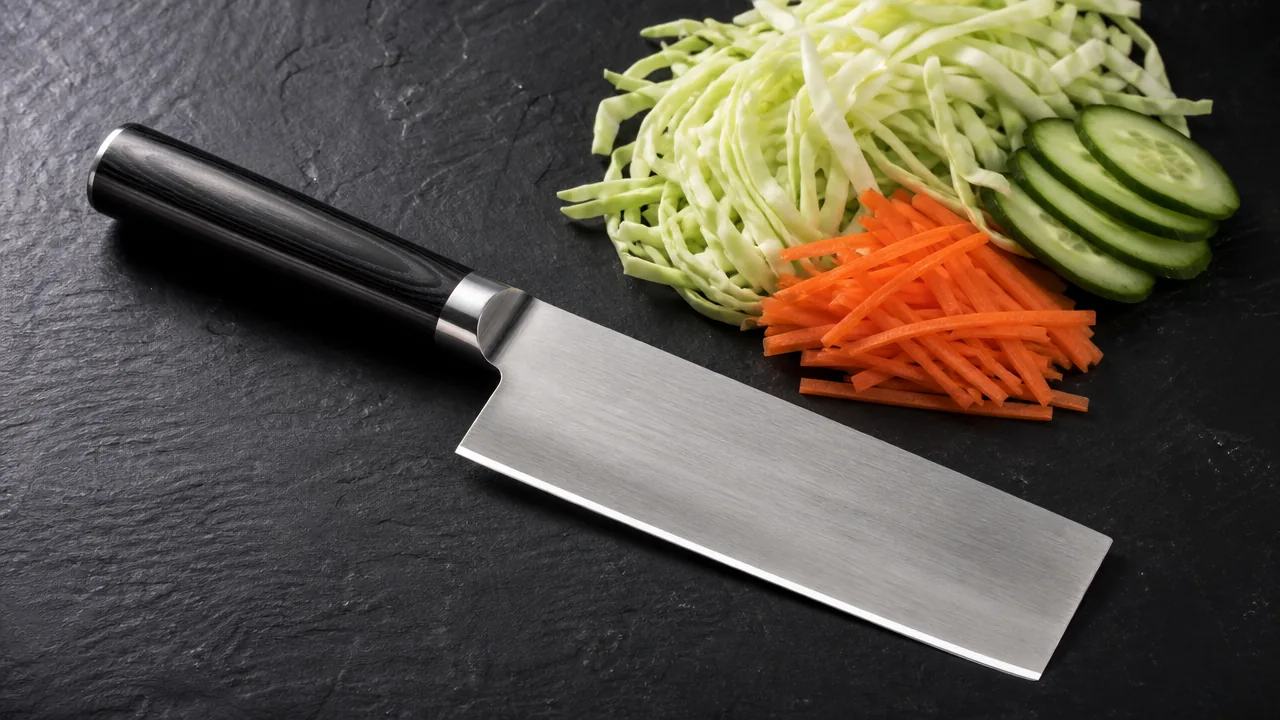
Nakiri Picks Under $150 at a Glance
Prices below were checked on the retailers’ product pages on October 2, 2026 and change from time to time.
| Knife | Price | US total (est.)* | Tier | Steel | HRC | Blade length | Handle |
|---|---|---|---|---|---|---|---|
| Tojiro Basic Nakiri VG-10 165mm | ~$68 (€60.00) | ~$99 | Entry | VG-10 stainless core, san-mai | not listed | 165mm | Pakkawood, Western-style, three rivets |
| Kanetsune KC-923 Aogami Nakiri | $125.17 | — | Mid (carbon core) | Aogami No.2 core, SUS-410 cladding | 61–62 | 165mm | Plywood, stainless bolster |
| Tojiro Zen Nakiri 165mm | ~$147 (€130.00) | ~$198 | Upper | VG-10 stainless core, three-layer | 60–61 | 165mm | Magnolia wa handle, round |
*US total (est.) is an estimate for a US buyer, including shipping and the 25% tariff, as of October 2026, based on SharpEdge’s shipping page: (price + €10 shipping) × 1.25 for orders under €300, or price × 1.25 for orders of €300 or more, which ship free. Example: a €51 knife came to €76.10 at checkout for a New York address on October 3, 2026. Tariff rates can change.
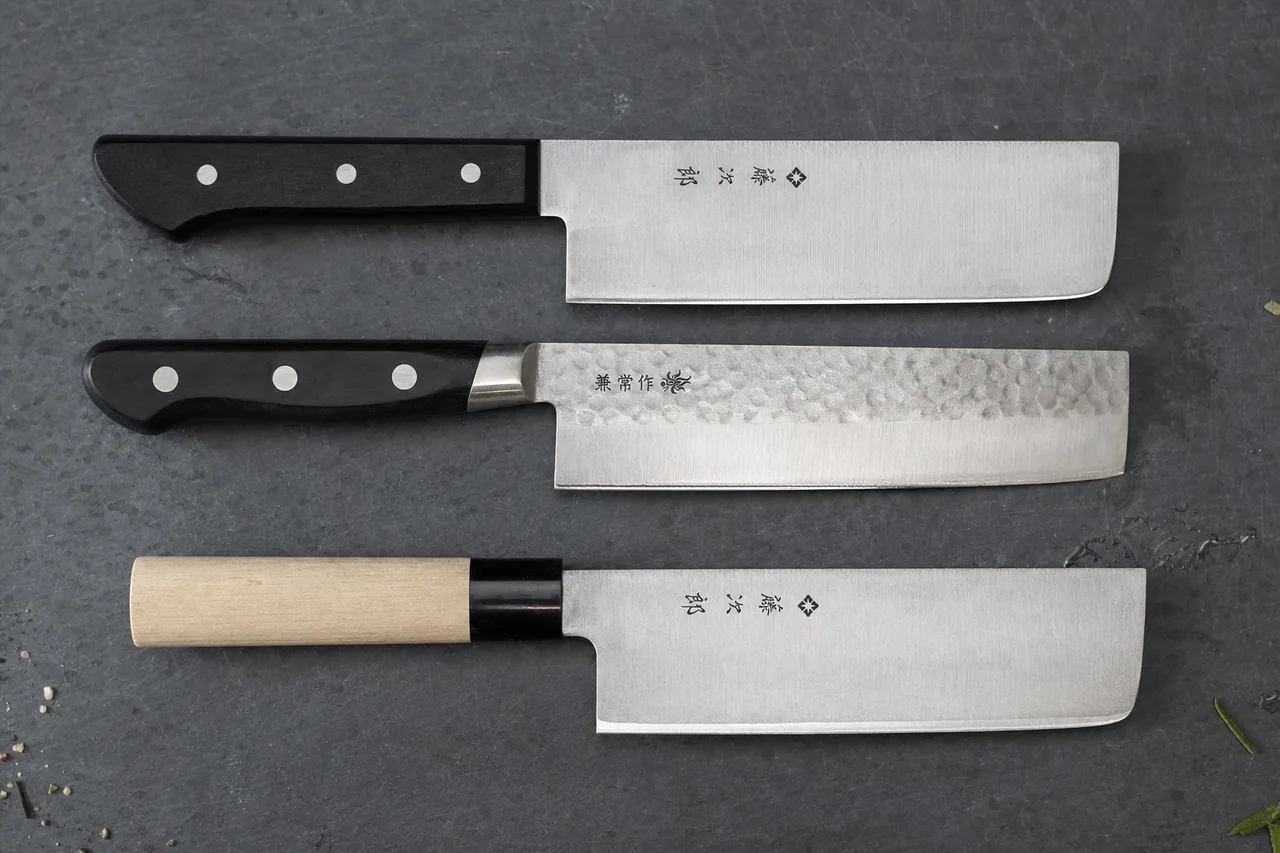
Each Nakiri in Detail
Entry: under $70
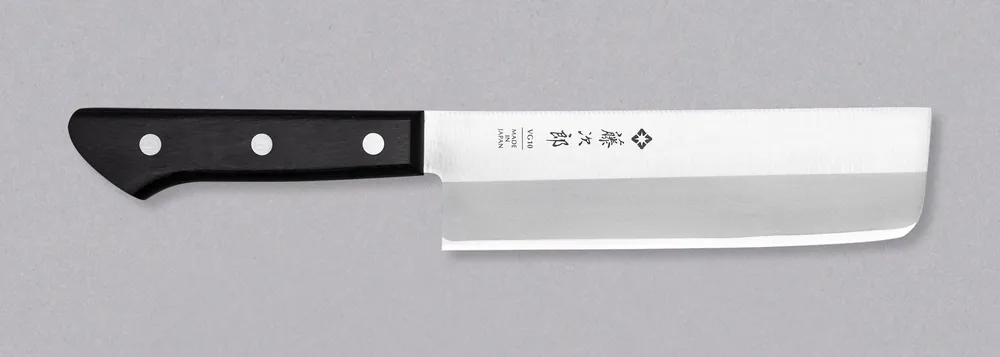
The Tojiro Basic Nakiri VG-10 165mm — €60.00 (approximately $68) — is the value pick. US buyers: about $99 in total with shipping and the 25% tariff. Tojiro’s Basic series is designed for home use: a VG-10 stainless core clad in softer steel, a plain polished finish, and a pakkawood handle fixed with three rivets. It is easy to look after and feels familiar to anyone used to Western-style knives. The trade-off is that it is a plain, no-frills knife, and the retailer does not publish a hardness rating for it.
Japan Check
Made in: Japan (Tojiro, Tsubame-Sanjo, Niigata)
Steel: VG-10 stainless core, san-mai construction
HRC: not listed
Blade Length: 165mm
Checked Against: sharpedgeshop.com
Last Checked: 2026-10-02
Mid: around $125, carbon core
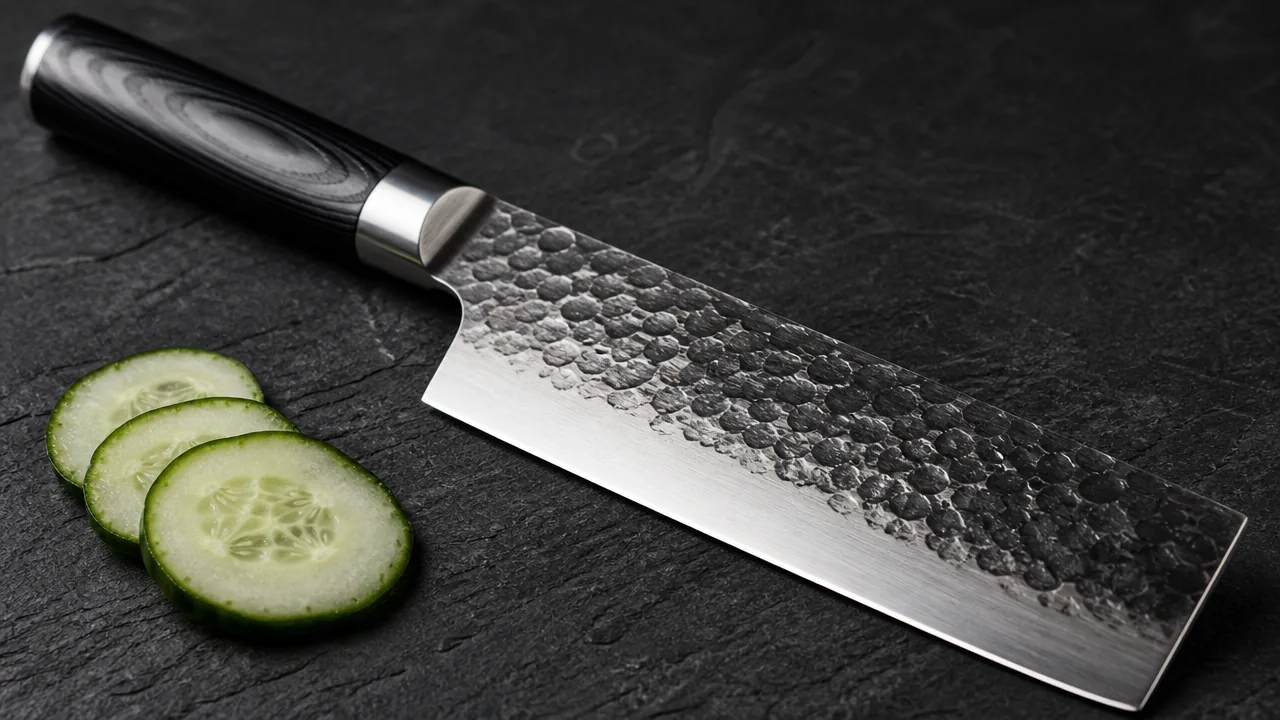
The Kanetsune KC-923 Aogami No.2 Hammered Nakiri 165mm — $125.17 — is the way to get a carbon-steel core without crossing $150. The Aogami (Blue Paper) No.2 core is rated at 61–62 HRC and is sandwiched between SUS-410 stainless layers that protect the sides of the blade from rust. Carbon-core knives generally take a keener edge and hold it longer, but the exposed cutting edge can still discolor or rust if left wet, so this knife rewards a habit of wiping and drying it right after use. The hammered (tsuchime) finish helps thin slices release from the blade, and the plywood handle with a stainless bolster feels familiar to anyone used to Western-style knives. It is sold by a marketplace seller on Amazon and stock was limited at the time of checking.
Japan Check
Made in: Japan (Kanetsune / Kitasho Co., Ltd., Seki)
Steel: Aogami No.2 (Blue Paper No.2) core, SUS-410 stainless cladding
HRC: 61–62
Blade Length: 165mm
Checked Against: amazon.com
Last Checked: 2026-10-02
Upper: just under $150
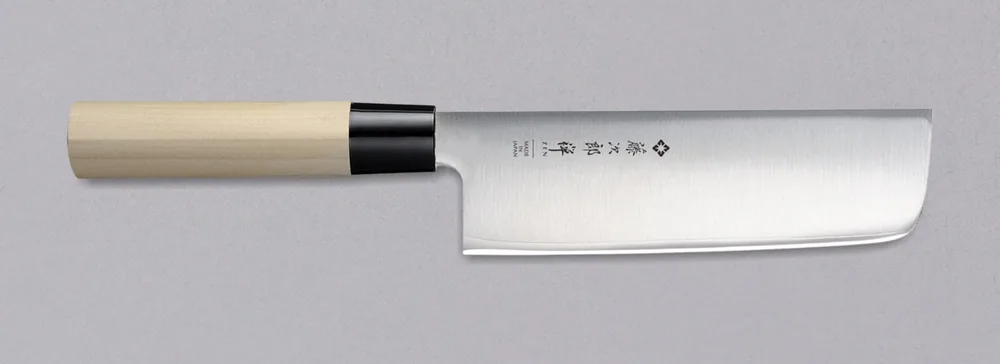
The Tojiro Zen Nakiri 165mm — €130.00 (approximately $147) — is the most refined of the three. US buyers: about $198 in total with shipping and the 25% tariff. Its VG-10 core is heat treated to 60–61 HRC and clad in softer stainless steel, the blade is cleanly polished, and it has a light, round magnolia wa handle, which is unusual at this price. It is the pick for someone who wants a traditional Japanese feel without carbon-steel upkeep. Note that it leaves little headroom: once shipping is added, the total is likely to pass $150.
Japan Check
Made in: Japan (Tojiro, Tsubame-Sanjo, Niigata)
Steel: VG-10 stainless core, three-layer construction
HRC: 60–61
Blade Length: 165mm
Checked Against: sharpedgeshop.com
Last Checked: 2026-10-02
What You Trade Off Under $150
Knives above about $150 tend to add hand-forged or layered Damascus construction, finer wa handles, and more careful hand finishing. Under $150 you are mostly choosing between three things.
- Steel: stainless steels are the easy option, while a carbon core such as Aogami No.2 gives a sharper, longer-lasting edge at the cost of more attention to drying and storage.
- Handle: plywood and pakkawood Western-style handles are durable and easy to care for, while a simple magnolia wa handle, as on the Tojiro Zen, is lighter in the hand.
- Finish: expect plain polished or hammered surfaces. Fit and finish are functional rather than artisanal, so slight variation from knife to knife is normal.
A nakiri in this range is still a better tool for vegetables than most all-purpose knives at the same price, because its shape does most of the work. If you later want a hand-finished step up, the picks in our full Nakiri buying guide start where this list ends.
Frequently Asked Questions
Is $150 enough for a good Japanese nakiri?
Yes. Several well-regarded Japanese nakiri sit between about $70 and $150, and the difference from a $250 knife is mostly in hand finishing, handle materials, and construction rather than everyday cutting ability. For most home cooks, the better upgrade is learning to keep the edge sharp.
Should I choose stainless or carbon steel under $150?
Choose stainless if you want a knife that asks little of you, and choose a carbon-core knife like the Aogami No.2 model if you are comfortable wiping and drying the blade after every use. Both can be excellent; the carbon core mainly offers a keener, longer-lasting edge in exchange for more upkeep.
Which blade length is best, 160mm or 165mm?
The 160mm and 165mm lengths are close enough that the difference is small in use. Pick based on your board size and hand size rather than the number, and note that longer nakiri around 180mm exist if you regularly cut large cabbages or squash.
Do I need a wa handle on a nakiri?
No. A wa handle is a matter of preference, not performance, and the knives in this price range mostly use Western-style handles. If you like the lighter, more traditional feel, look at the higher price tiers in our full Nakiri guide.
Related Reading
If you want the whole picture of the shape, sizes, and price tiers, start with our Best Japanese Nakiri Knife 2026 guide. If this is your first Japanese knife and you are not sure a nakiri is the right one, Best Japanese Knife for Beginners walks through the first-knife decision, and Santoku vs Gyuto vs Nakiri compares the three most common shapes side by side.
Use the product links above to check current prices and availability at each retailer before you decide.
Product images are illustrative renderings based on retailer product photos.