How this article was made: Research-based comparison. It draws on published information from makers, retailers, and reference sources, not on hands-on testing.
Wa-Handle and Western Handle Are Fundamentally Different Grips
A Wa-handle and a Western handle change how a knife feels in your hand in ways that go beyond looks: the two grips are built differently, weighted differently, and sit in the palm differently. Choosing between them is really a question of how much handle weight you want behind the blade and how your hand naturally wraps around a knife.
This is not a full comparison of Japanese and Western knives — steel, blade geometry, and edge angle are covered in our Japanese Knife vs Western Knife guide. This article looks only at the handle itself: how each style is built, how it shifts a knife’s balance, and which one is likely to suit the way you actually cook.
What Is a Wa-Handle?
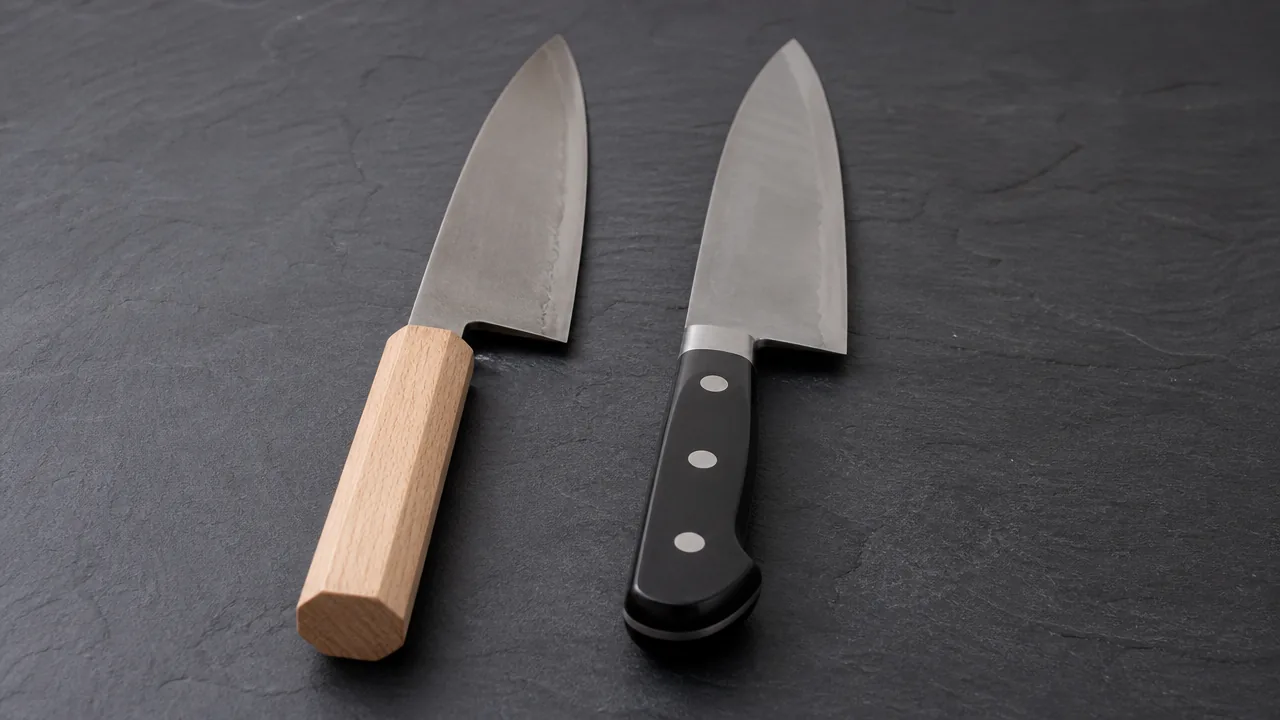
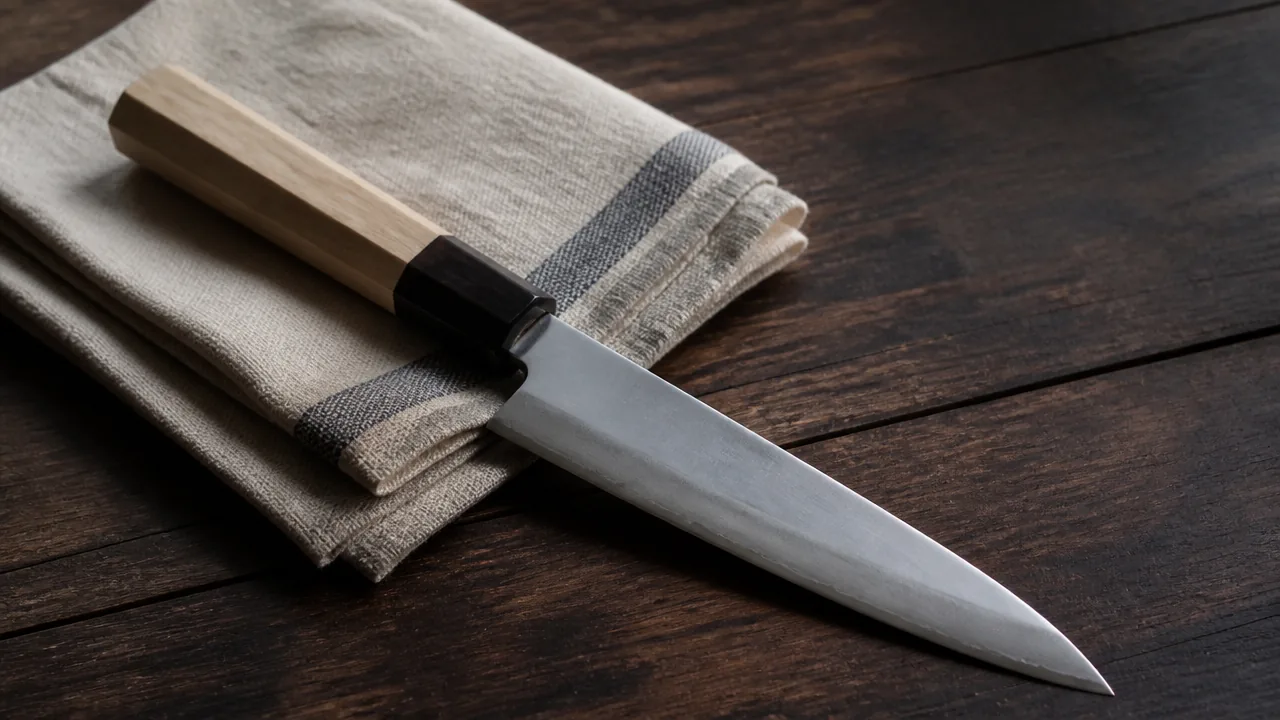
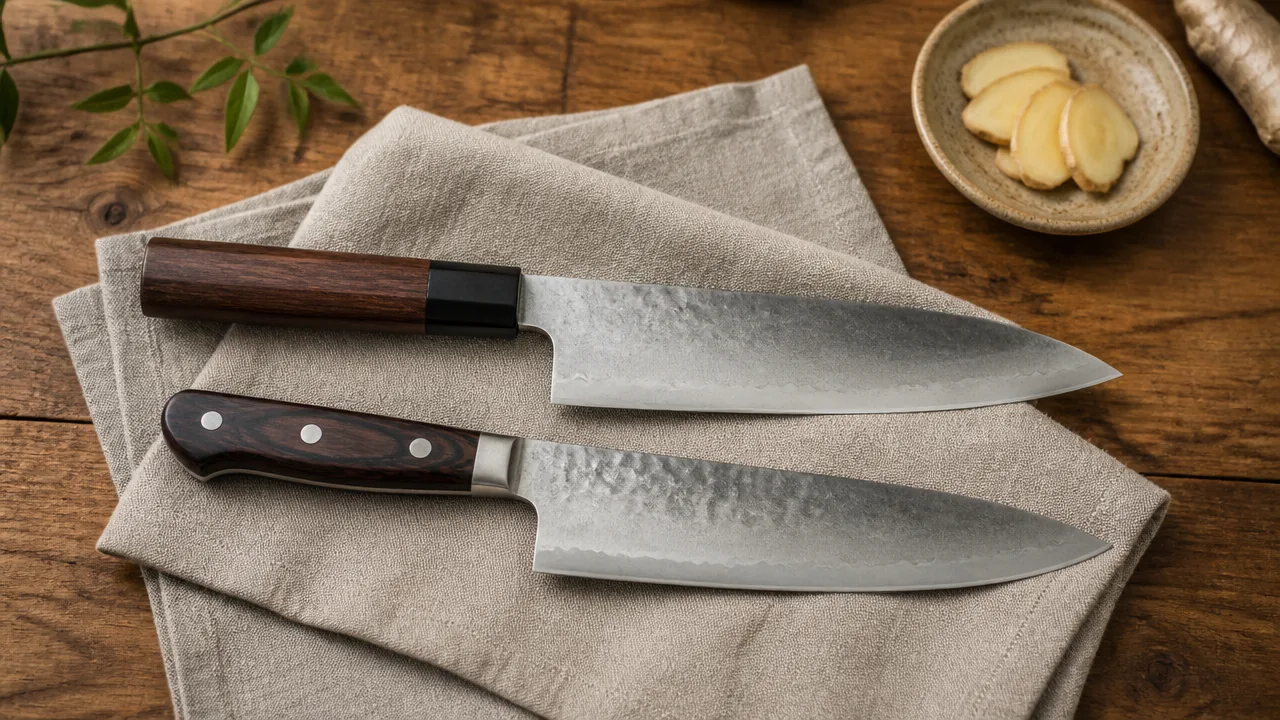
A Wa-handle (和柄) is the traditional Japanese knife handle: a light, round or octagonal piece of wood, usually magnolia (honoki) or a similarly lightweight species, fitted onto the blade’s tang rather than bolted around it.
The construction is simple by design. The tang is inserted into a hole drilled through the wood and held in place mainly by friction, sometimes reinforced with a small amount of adhesive. There is no bolster — no metal collar between the handle and the blade — and no visible rivets running through the wood.
That simplicity has a practical upside: a Wa-handle that cracks, shrinks, or just wears out can often be removed and replaced by a knife shop, or by an experienced owner with the right tools, without replacing the blade itself. Octagonal is the most common cross-section, though oval and D-shaped (which give your fingers a reference point for the edge’s orientation without looking) versions are also widely made.
What Is a Western Handle?
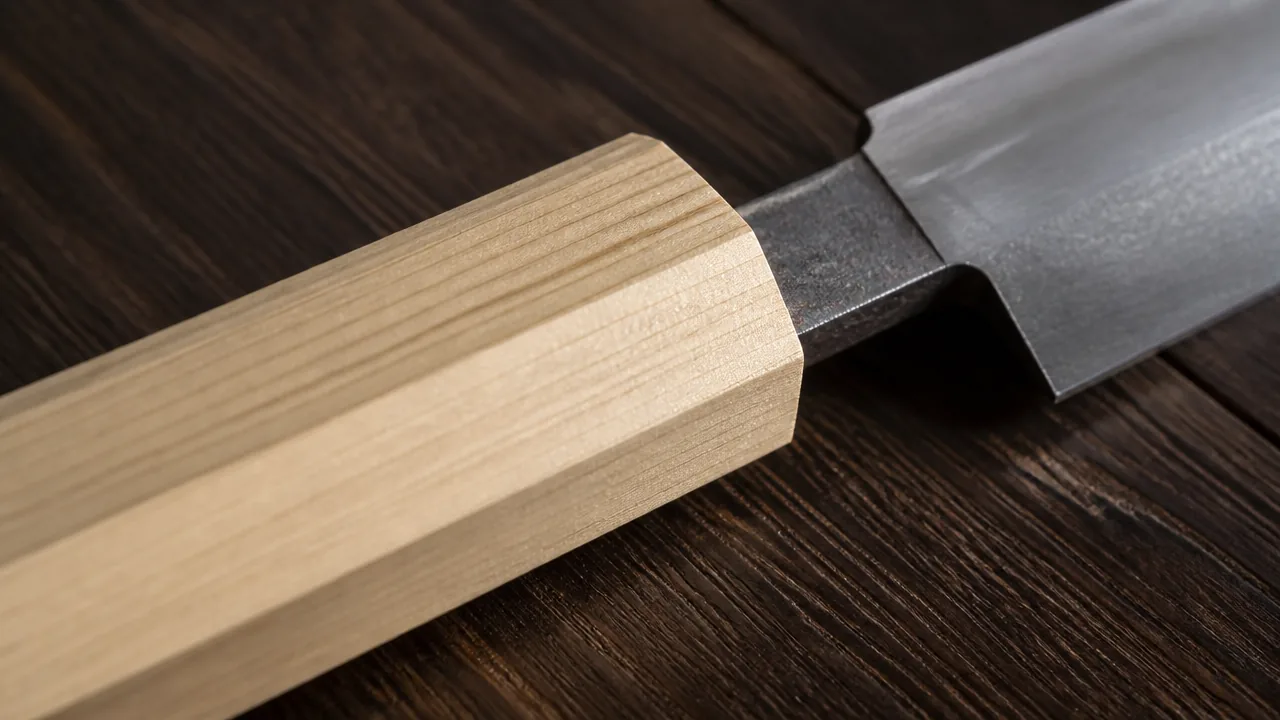
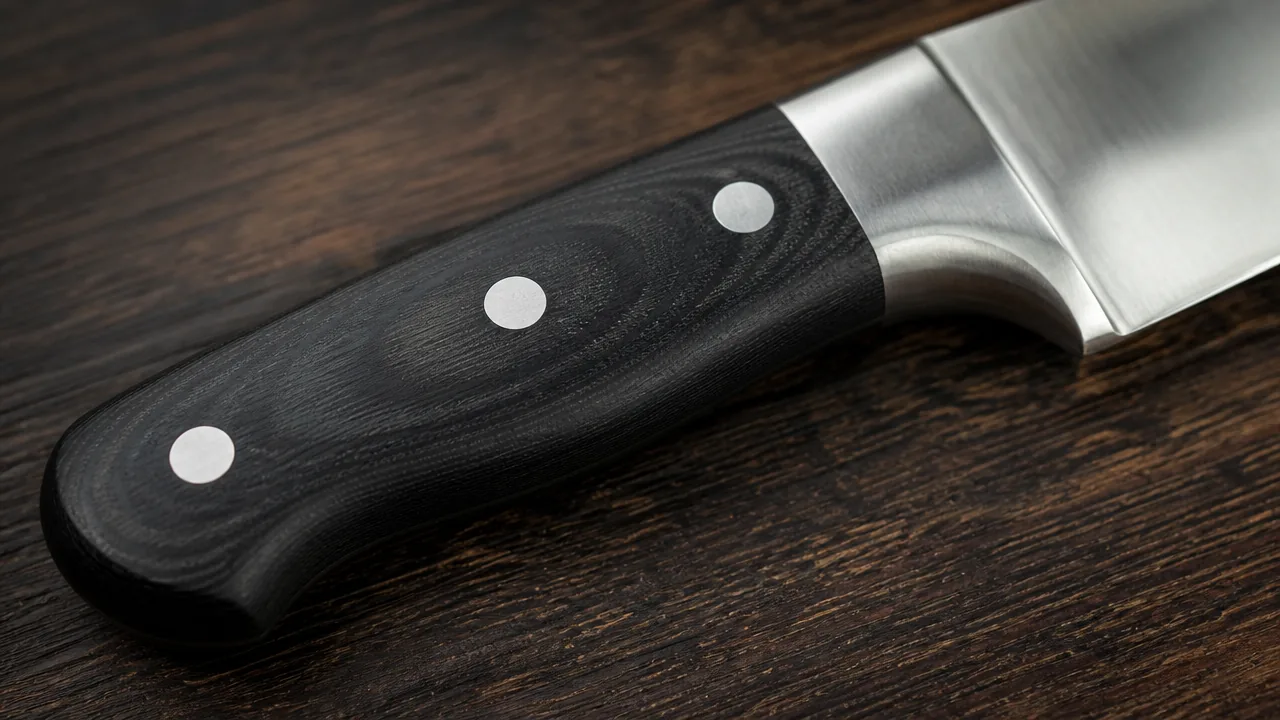
A Western handle follows the construction used on most European and American kitchen knives: two handle scales, usually a dense composite, resin, or hardwood, sandwiched around a full or partial tang and fastened through with metal rivets.
Most Western-handled knives also have a bolster — a thick metal collar at the point where the blade meets the handle. The bolster adds weight near the front of the grip, protects the fingers from sliding forward onto the edge, and gives the knife a distinct forward-heavy presence compared with a bolster-free Wa-handle.
The shape itself is usually more contoured than a Wa-handle, curved and sometimes finger-grooved to sit into a specific grip. That ergonomic shaping is a deliberate trade-off: it can feel more secure to a hand used to Western-style knives, but it also locks you into roughly one grip position rather than the more neutral cylinder shape of a Wa-handle.
How the Weight Balance Actually Differs
Handle construction changes more than grip comfort — it shifts where a knife’s weight sits, and that has real consequences for how the blade moves.
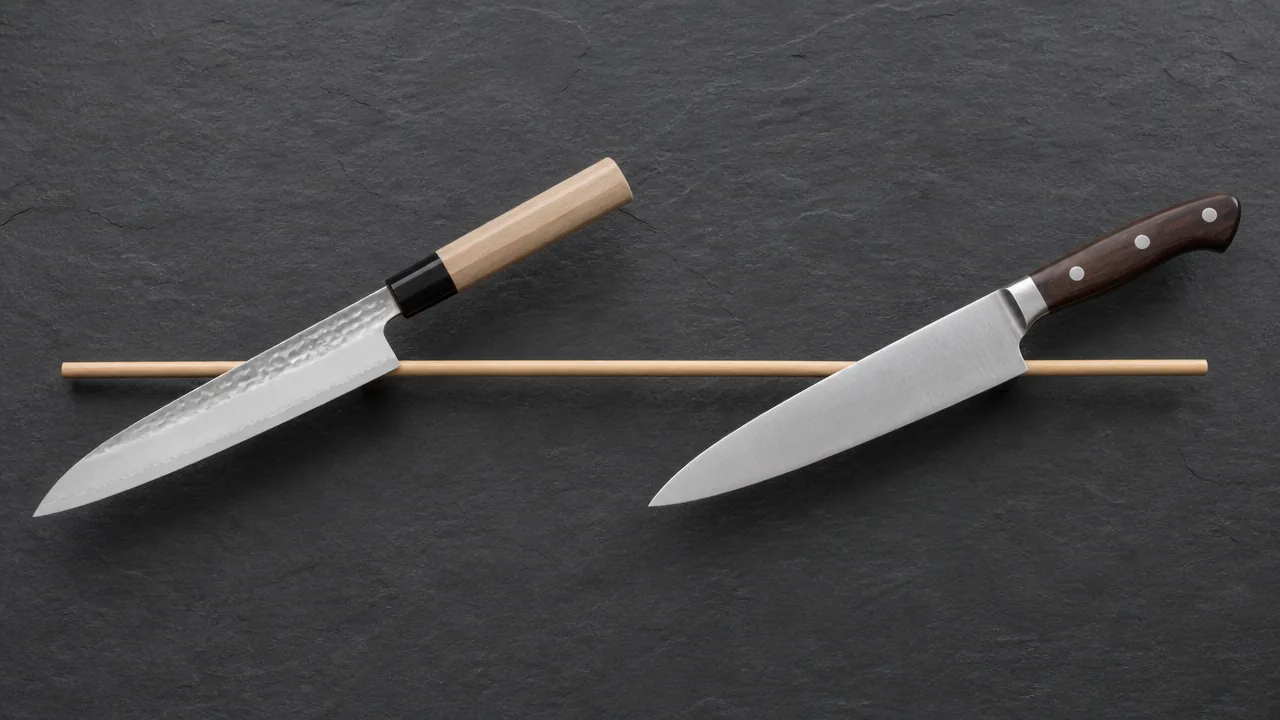
A Wa-handle is light and usually paired with a partial tang, so a Wa-handled knife’s balance point tends to sit close to the blade, sometimes just ahead of where the handle begins. That blade-forward balance is a big part of why these knives feel nimble for precise push-cuts and fine slicing work.
A Western handle’s added weight — the composite scales, the rivets, and especially the metal bolster — pulls the balance point back toward the handle, generally landing closer to a neutral point at or just behind the bolster. Many cooks who grew up using Western knives find that back-weighted balance more reassuring, since the knife feels stable and controlled even during heavier tasks like breaking down a chicken.
Neither balance point is objectively better. It is a genuine trade-off between the light, forward-leaning feel that suits fast, repetitive vegetable prep and the heavier, more planted feel that suits knives asked to do a bit of everything.
Which Handle Is Right for You
A few honest signals for which side of this you’ll likely prefer:
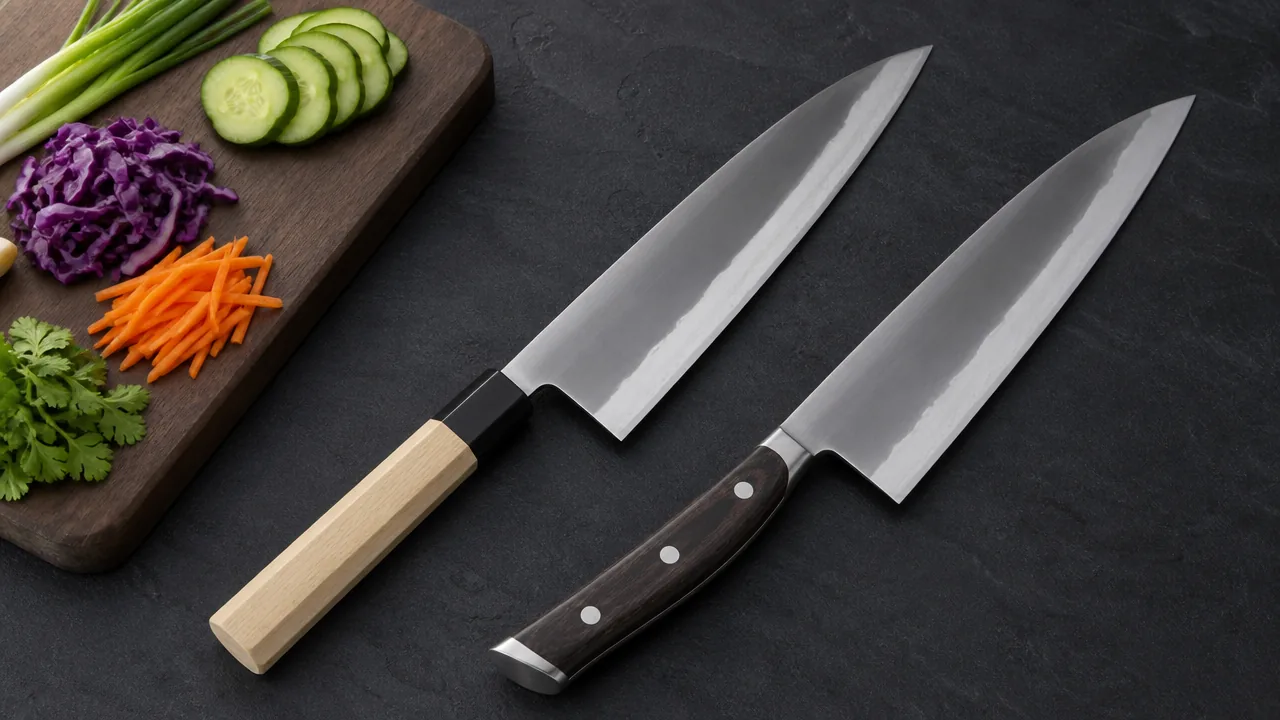
- Choose a Wa-handle if you want the lightest, most nimble feel possible, you do a lot of repetitive fine work like julienning or slicing fish, or you like the idea of a handle that can be refitted rather than replacing the whole knife when it wears out.
- Choose a Western handle if you’re used to European or American chef’s knives and want that same secure, contoured grip, if you do a wider mix of tasks including some heavier cutting, or if you’d rather not think about handle maintenance at all.
- If you’re not sure, a Japanese-profile blade fitted with a Western handle — common on many Gyuto models — is a reasonable middle ground: you get Japanese steel and geometry with a grip that feels immediately familiar.
Frequently Asked Questions
Can a Wa-handle be replaced easily?
Often, yes. Because the tang is friction-fit into the wood rather than riveted through it, a knife shop or an experienced owner can typically drift out a worn or cracked Wa-handle and fit a new one without touching the blade. This is harder to do with a riveted Western handle, where the scales are permanently fastened around the tang.
Is a Western handle more durable?
In terms of resisting cracking or wear over years of use, a dense composite Western handle generally holds up a little better than untreated wood, and the metal rivets and bolster add structural reinforcement a Wa-handle doesn’t have. That said, a well-cared-for Wa-handle, kept dry and out of the dishwasher, can also last for many years — the bigger risk to Wa-handles is moisture damage, not everyday wear.
Does the handle type affect how sharp the knife feels or how well it cuts?
Not directly — sharpness and cutting performance come from the blade’s steel, grind, and edge angle, not the handle. What the handle changes is how the weight and balance of the whole knife feels as you move it, which affects control and fatigue more than raw cutting ability.
Can I put a Wa-handled knife in the dishwasher?
It’s best avoided. The heat, moisture, and detergent in a dishwasher cycle can warp, crack, or loosen a traditional wood Wa-handle over time. Hand-washing and drying the handle promptly is the safer habit regardless of which handle style you own.
Related Reading
If you want the fuller picture beyond the handle — steel, blade geometry, edge angle, and overall maintenance — our Japanese Knife vs Western Knife guide covers the complete comparison. For background on the steels used in both Wa- and Western-handled Japanese knives, see our Japanese Knife Steel Types Explained guide. And if you’re shopping for a knife that comes in both handle styles, our Best Japanese Gyuto Knife 2026 guide includes picks across both.
There’s no universally correct handle — only the one that disappears in your hand while you’re actually cutting.