How this article was made: Field reported. The photos are my own, taken at Sakai Knife Museum CUT; the history draws on published information from the museum, the city of Sakai, and makers.
- Why Sakai Knives Are Famous: The Short Answer
- Before Knives: Iron Tools for the Great Burial Mounds
- Guns and Tobacco: The 16th Century Turning Point
- The Tobacco Knife and the “Sakai Kiwame” Seal
- Three Crafts, Three Workshops: Sakai’s Division of Labor
- From Tobacco Knives to Chefs’ Knives
- Sakai Today: A Designated Traditional Craft
- What This History Means When You Buy a Sakai Knife
- Frequently Asked Questions
Why Sakai Knives Are Famous: The Short Answer
Sakai knives are famous because the city has worked metal for centuries, and because a tobacco-cutting knife made there in the late 1500s earned an official seal from the Tokugawa shogunate, which carried the Sakai name across Japan. That reputation later passed to kitchen knives, which are still made by three separate crafts: forging, sharpening, and handle fitting.
This article follows that story in order. It is based on two official sources, the Sakai Traditional Crafts Museum and the federation of Sakai knife associations, and on the exhibits I photographed at Sakai Knife Museum CUT on September 24, 2026. For the museum itself, see my visit report; this piece is about the history behind what is on display.
Where a detail comes only from a panel in the museum, or is described by the sources as tradition rather than record, I say so.
My 97-second video walks through the museum where these photos were taken; the panels on the history of Sakai knife-making appear from 0:36.
Before Knives: Iron Tools for the Great Burial Mounds
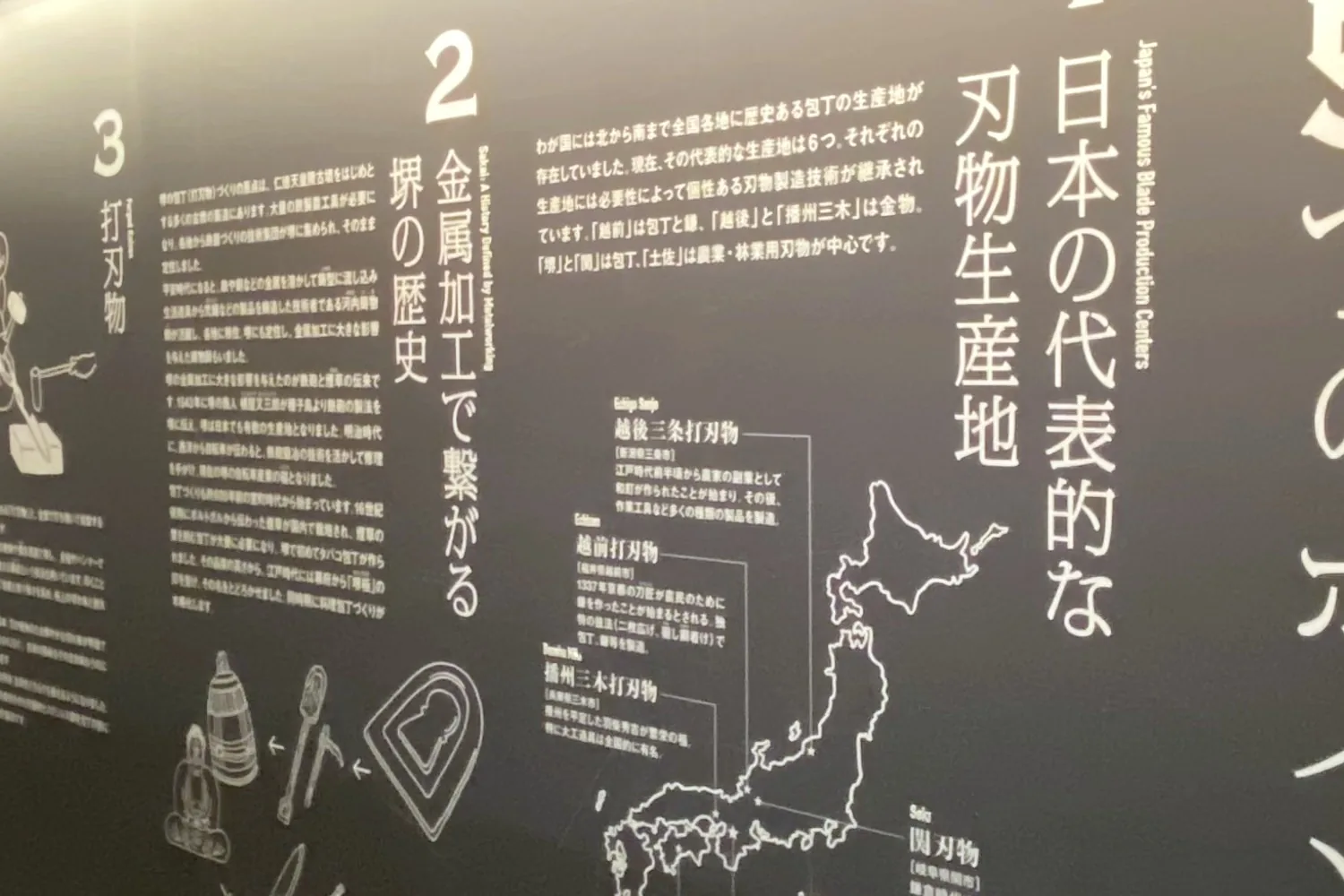
The story usually begins around the 5th century, when people with iron-working skills are said to have been gathered from across the country to build Sakai’s great burial mounds. The Sakai Traditional Crafts Museum words it carefully, as something that “is said” to have happened, and names the Nintoku-tenno-ryo Kofun as the best-known of those mounds. The federation adds that large numbers of digging tools such as spades and hoes were produced for the work, and that the craftsmen settled in the area.
This is tradition rather than a documented chain of workshops, so treat it as the origin story the city tells about itself.
Two later steps are on firmer ground:
- Medieval period: the museum says casters known as Kawachi imoji, who made temple bells and similar objects, were active in the area
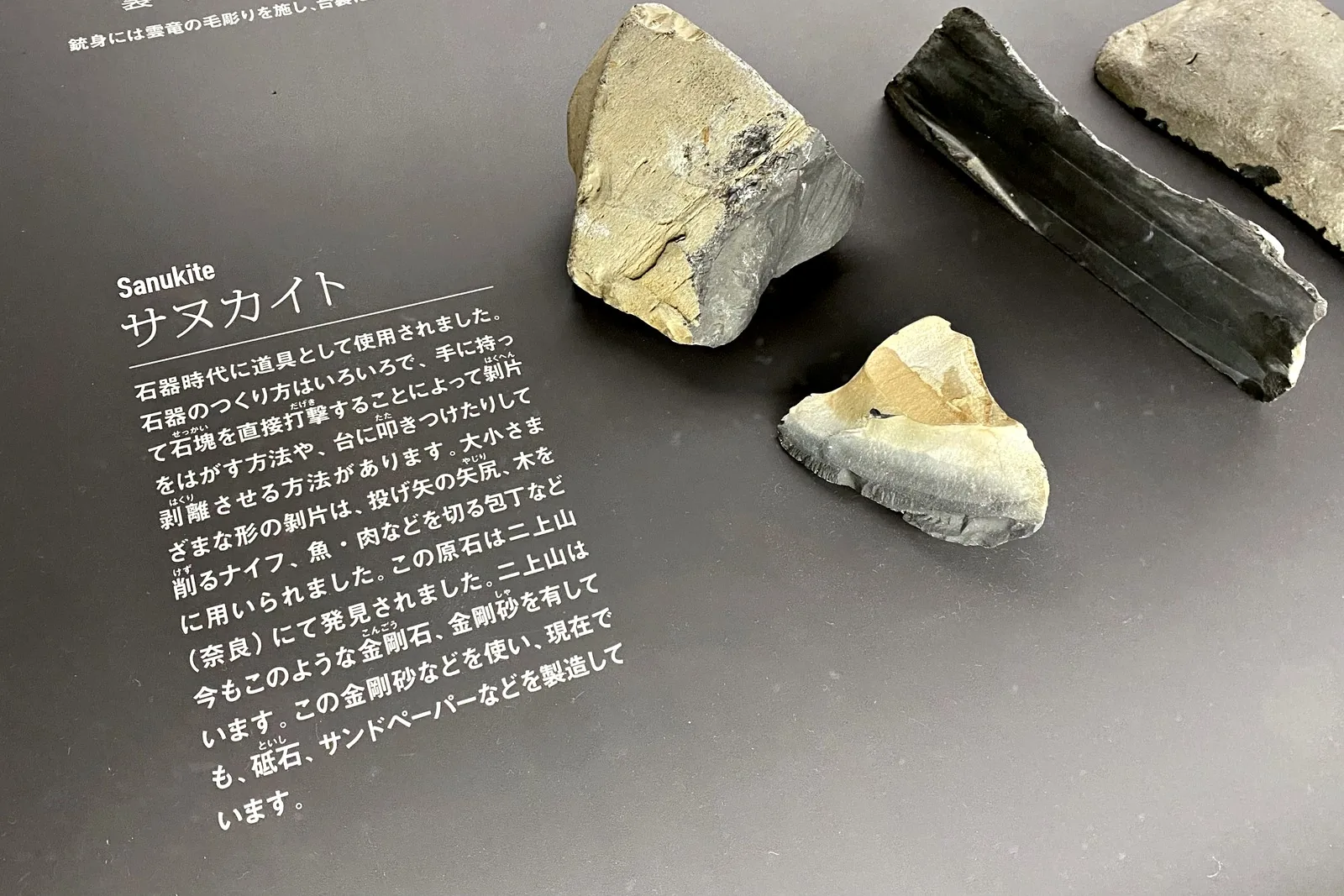
- Even earlier: a case in the museum shows sanukite, a stone its label says was flaked into knives and arrowheads in the Stone Age, a reminder that cutting tools here are older than iron
Guns and Tobacco: The 16th Century Turning Point
Firearms reached Japan in 1543, and Sakai’s metalworkers turned to making them; tobacco arrived from Portugal during the same century and created a second, longer-lasting demand. The federation’s history describes Sakai as an important gun-producing center during the Warring States period, built on the skills its blade makers already had.
A panel in the museum adds two details that I could not find on the official websites, so I pass them on as the panel’s account:
- Guns: according to the panel, a Sakai merchant brought the method of making firearms back from Tanegashima
- Bicycles: according to the panel, when bicycles arrived in the Meiji era, gunsmithing skills were used to repair them, which laid the ground for Sakai’s bicycle industry
Tobacco mattered more for knives. Once the plant was grown in Japan, the leaves had to be shredded finely, and that needed a wide, very sharp blade.
The Tobacco Knife and the “Sakai Kiwame” Seal
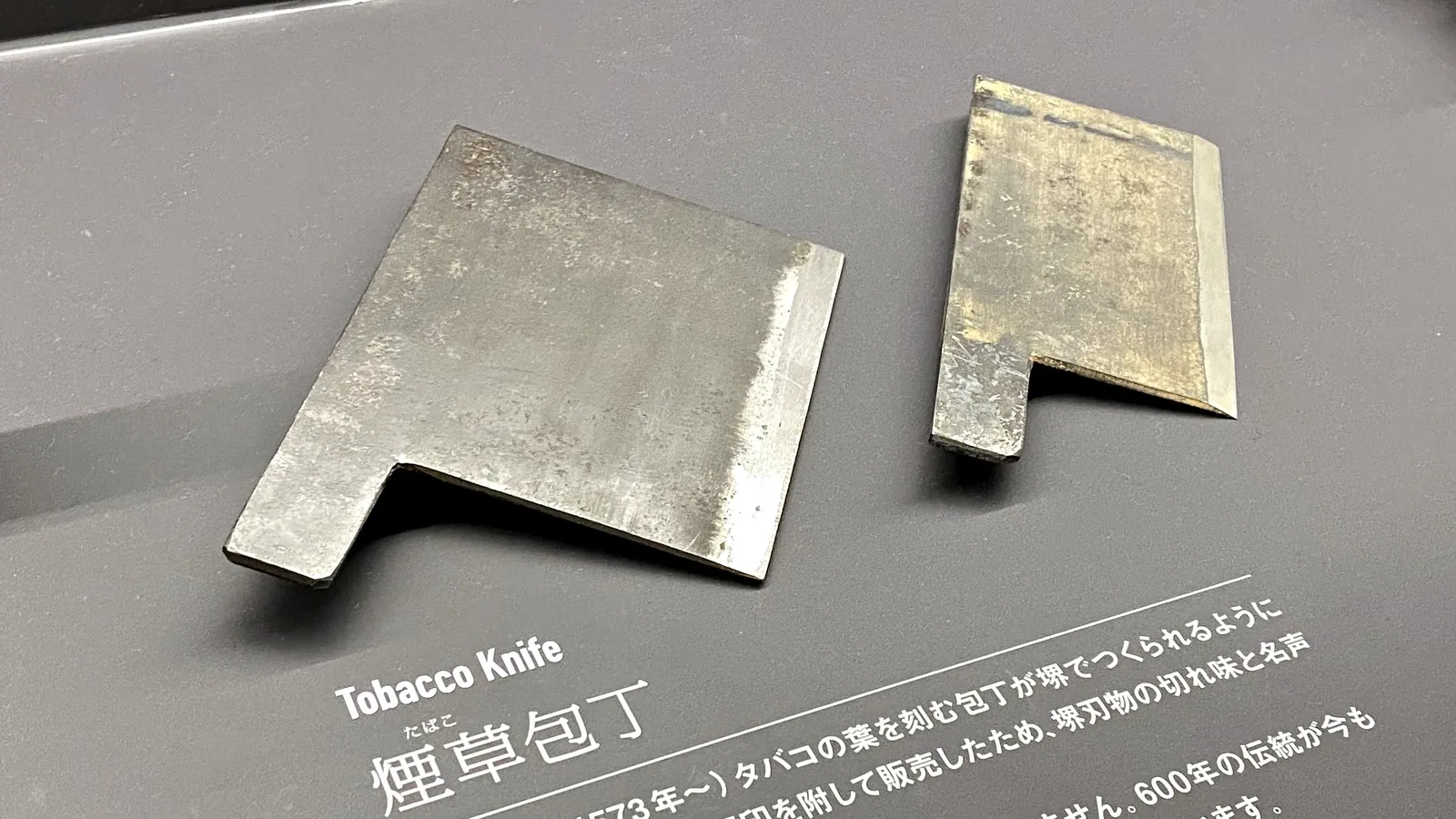
Tobacco knives began to be made in Sakai in the Tensho era, which started in 1573, and the Tokugawa shogunate later marked them with a quality seal known as Sakai kiwame. The federation says the shogunate stamped the knives with this seal and sold them under a monopoly, and that this is how the sharpness and name of Sakai blades spread throughout the country. The museum’s wording is that the knives cut so well that the shogunate recognized them with the seal.
The knives themselves look nothing like a kitchen knife. The two in the museum are wide, flat rectangles of steel with a short tang, made for pressing down through a stack of leaves.
Both official sources treat this as the foundation of the knife industry that followed. The federation sums up the whole span as “600 years of tradition”, which is its own phrase rather than a date you can pin to a single event.
Three Crafts, Three Workshops: Sakai’s Division of Labor
A Sakai forged knife passes through three separate crafts, each done by a different specialist: forging, sharpening, and handle fitting. The Sakai Traditional Crafts Museum calls this division of labor the defining feature of Sakai blades and says that it raises the level of specialization at each step.
The three crafts, as the museum describes them:
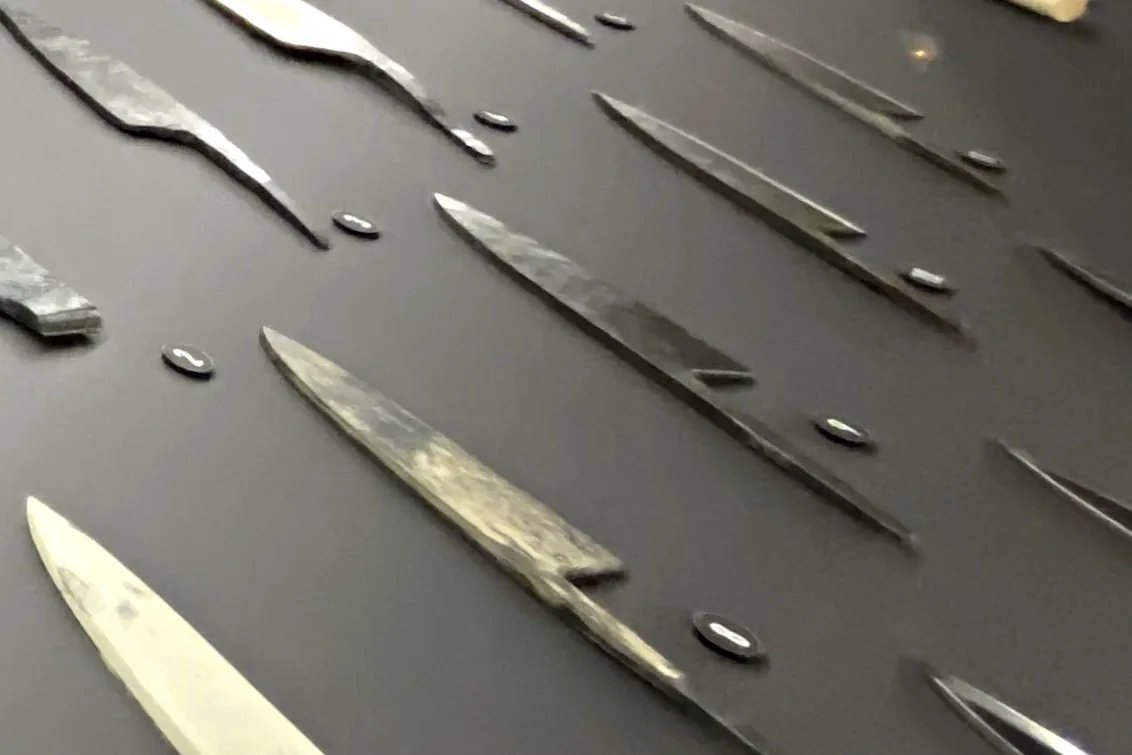
- Forging (kaji): hard steel is laid on heated soft iron and the two are hammered together
- Sharpening (togi, also called hazuke): the blade is ground on fine stones, straightened, and finished
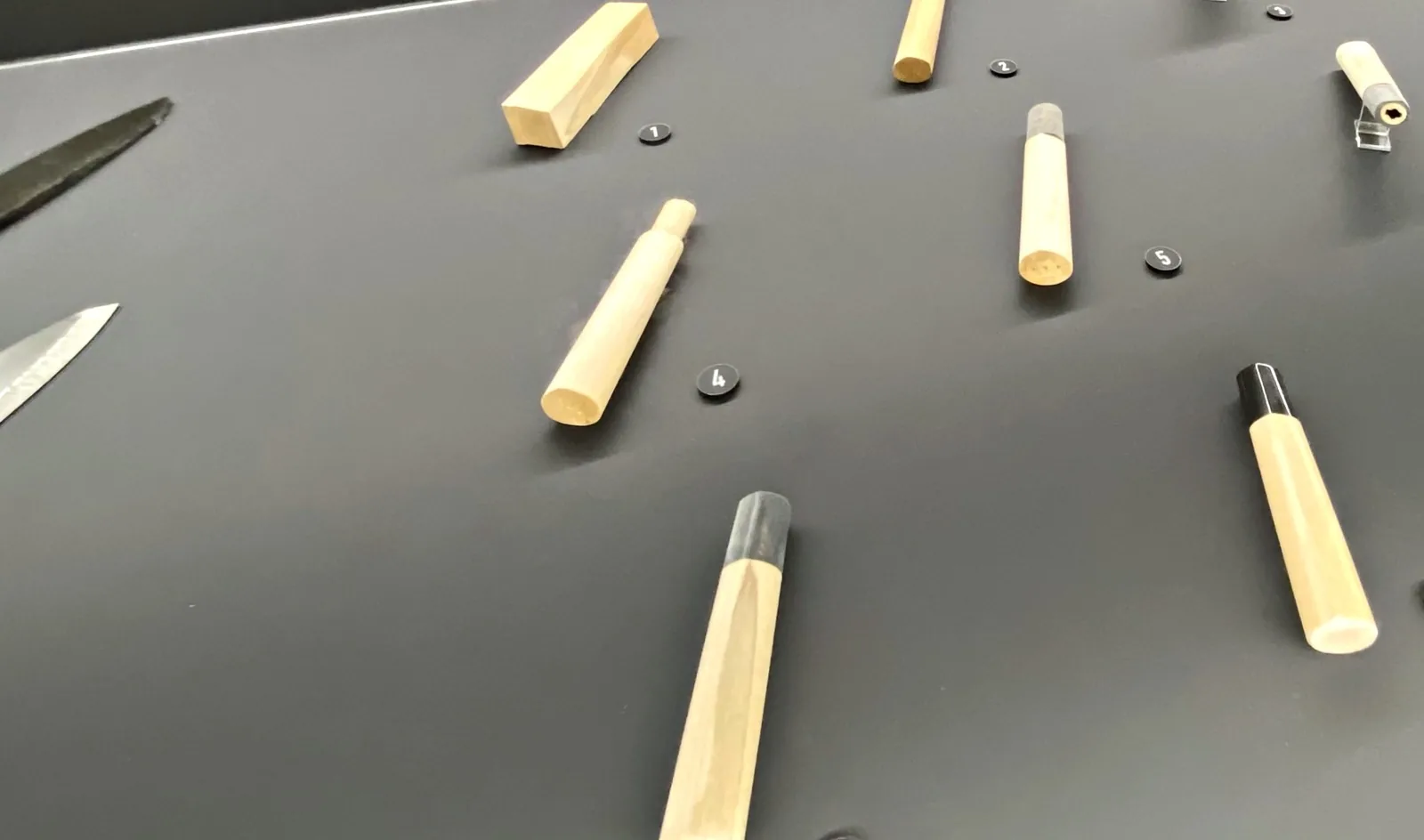
- Handle fitting (e-tsuke): the heated tang is driven into a wooden handle
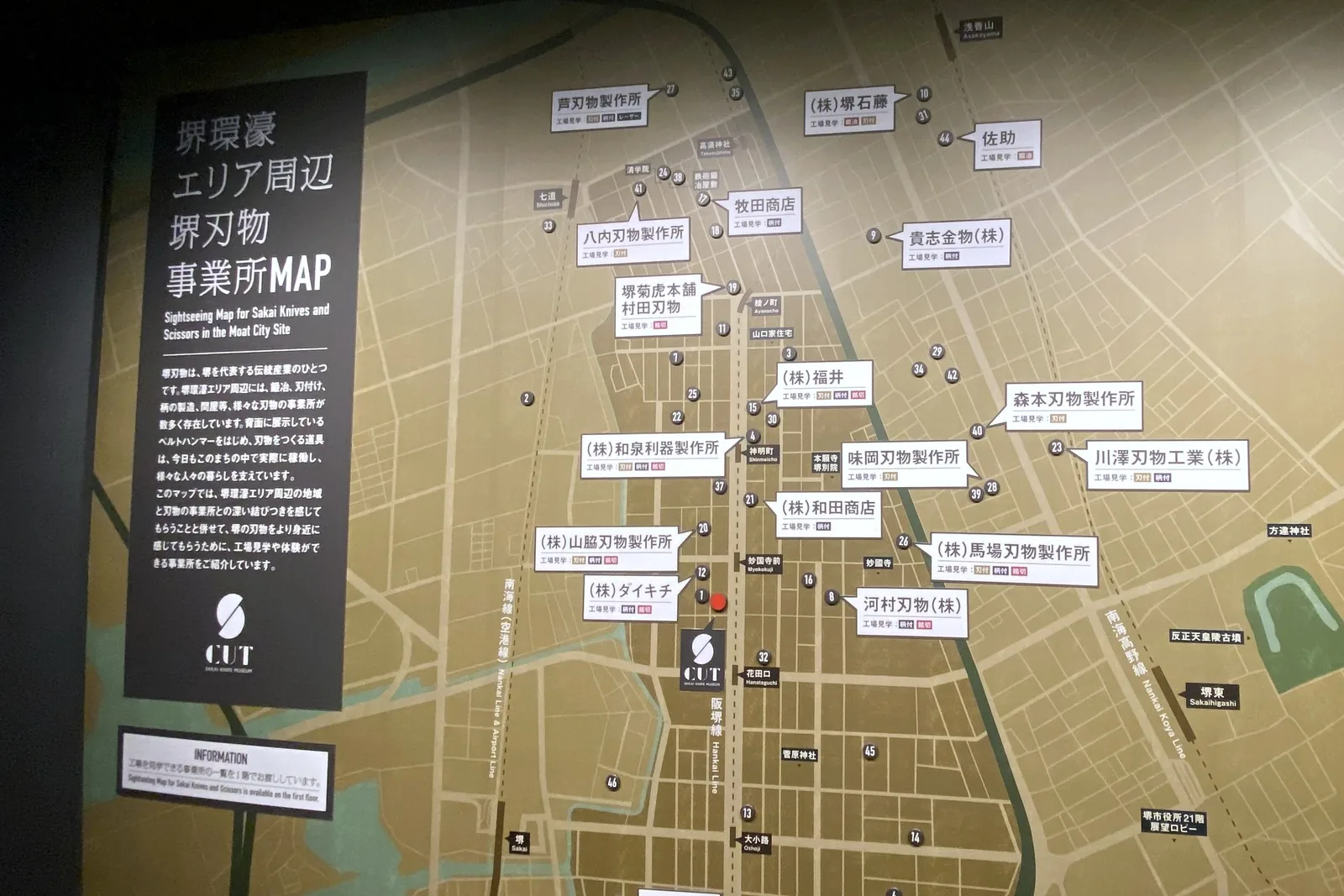
You can see the system on a wall map in the museum. It plots knife businesses around the old moat district and tags each one with the stage it handles, so a single knife may cross several streets before it is finished.
The steel-on-iron construction in the first step is the same one behind the kasumi finish; our guide to hongasumi vs kasumi explains it, and the museum’s HIBANA chandelier shows the stages as a sculpture.
From Tobacco Knives to Chefs’ Knives
The skills that made tobacco knives carried over to kitchen knives, and today Sakai is best known for the knives professional cooks use. The museum’s panel on Japan’s knife regions groups Sakai with Seki as a center for kitchen knives, while other regions are known for sickles, hardware, or farm and forestry blades.
The federation says many chefs support Sakai blades and that the knives are especially well regarded in the professional, high-end range. Neither official source gives a percentage, so I will not quote one.
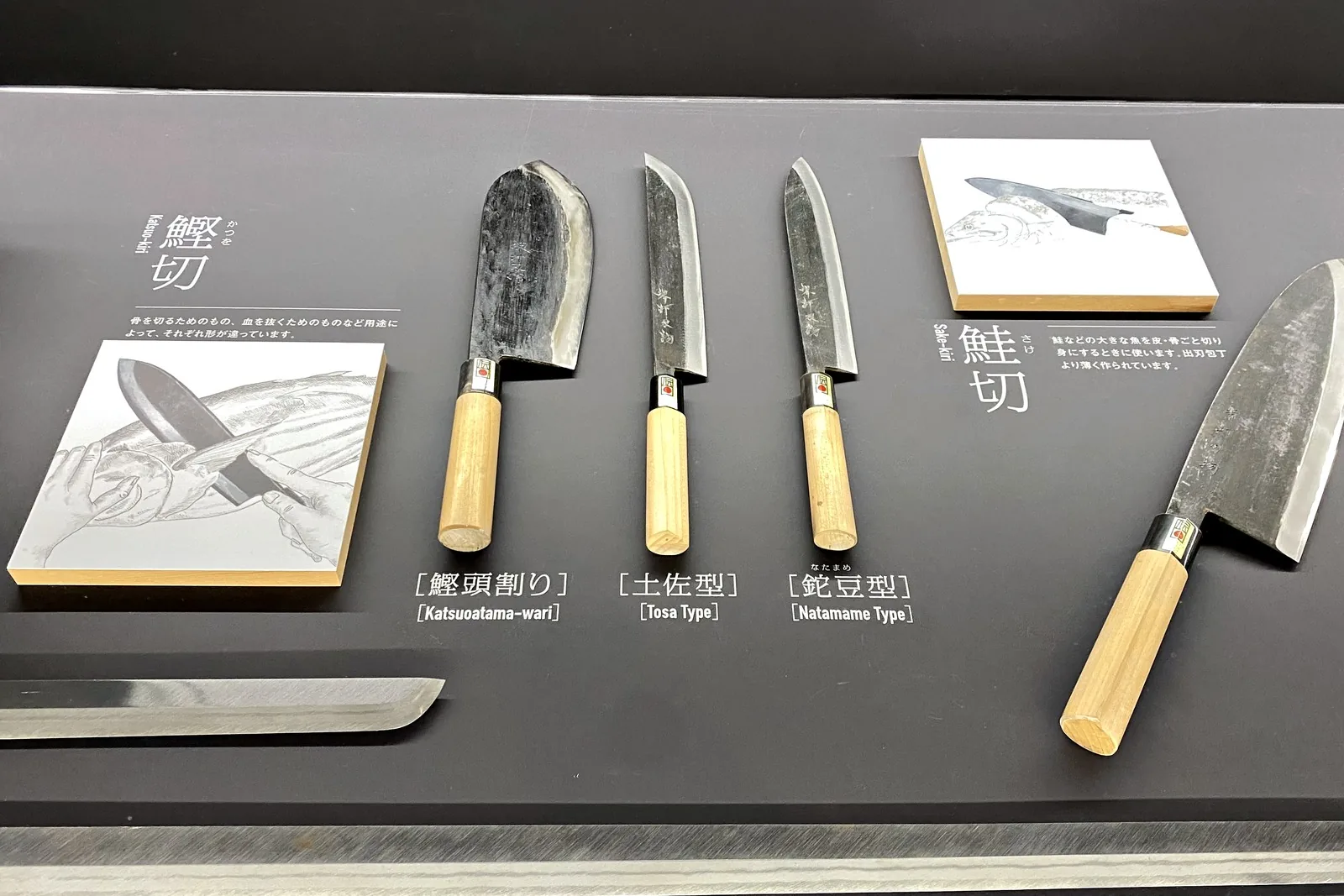
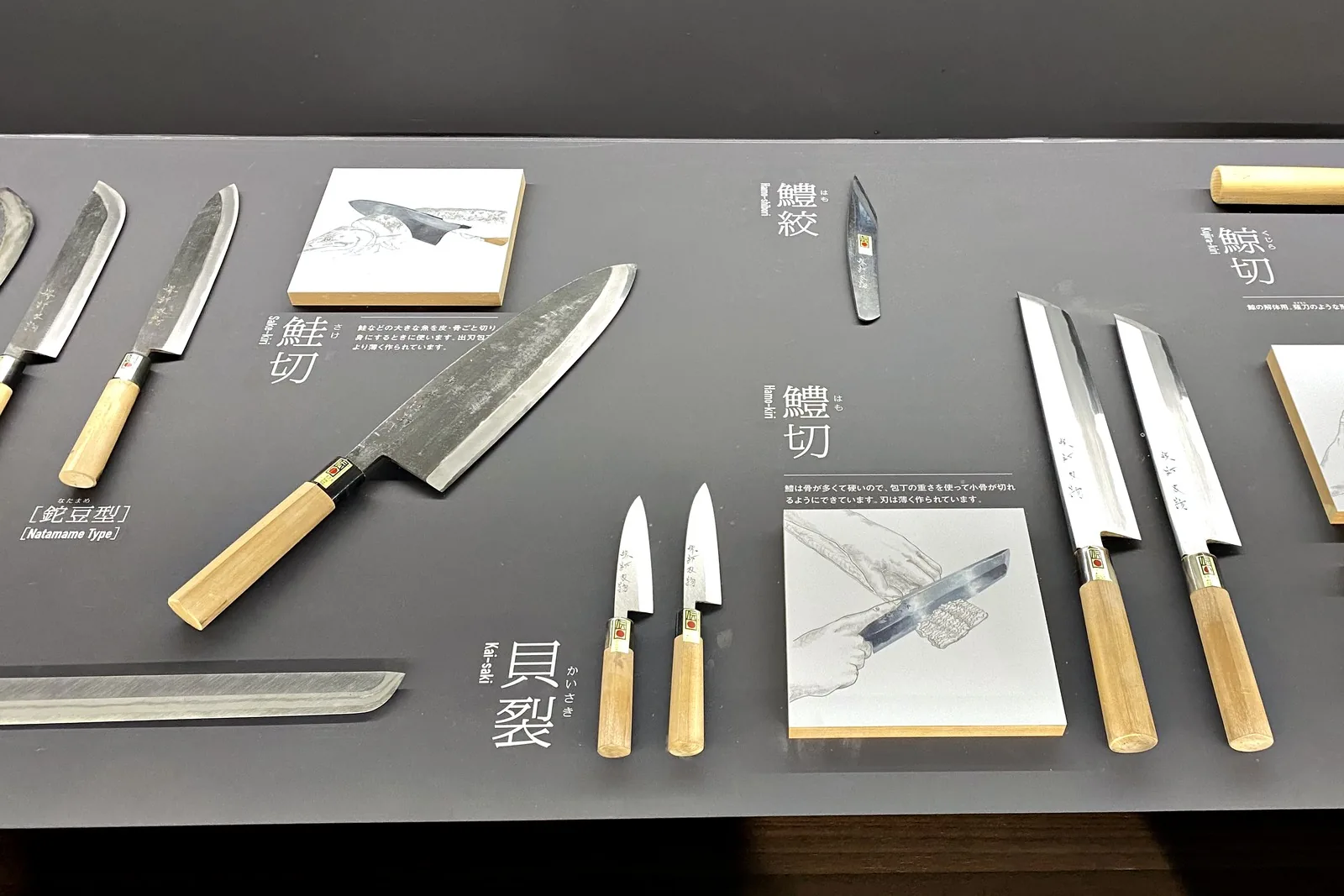
What the museum shows instead is range. One long case holds knives made for a single job each:
- Fish: separate knives for bonito, salmon, eel, tuna, and shellfish
- Regional shapes: the same task done with differently shaped blades, labeled by type
- Noodles and vegetables: covered in the visit report
Many of these are single-bevel knives. Our guides to single bevel vs double bevel and deba vs yanagiba explain how that edge works.
Sakai Today: A Designated Traditional Craft
Sakai forged blades were designated a national traditional craft in 1982, and the names Sakai Hamono and Sakai Uchihamono were registered as regional collective trademarks in 2007. Both dates come from the Sakai Traditional Crafts Museum, which adds that the knives are now exported around the world.
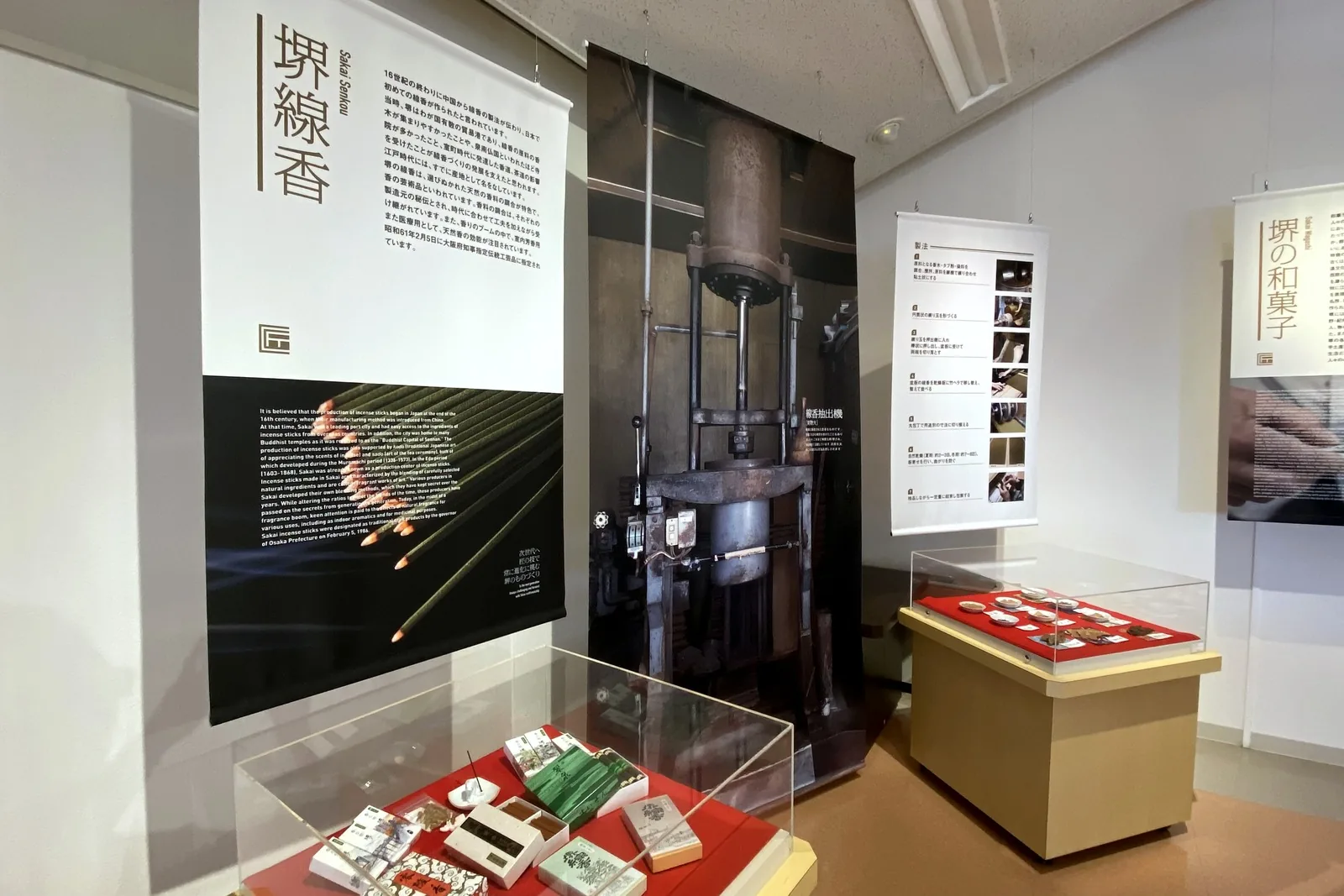
Knives are also only one of the city’s traditional industries. The same building has a room on the others, including incense, hand-shaved kelp, dyed cotton, and carp streamers. It is a useful reminder that Sakai’s reputation rests on a habit of specialized handwork, not on one product.
What This History Means When You Buy a Sakai Knife
The history explains two things you will notice when shopping: Sakai knives are usually the work of several specialists, and many of them are single-bevel knives built for one task.
- Division of labor: because the work is split between separate workshops, the name on a Sakai blade does not always tell you who forged it
- Specialized shapes: a tradition of making a different knife for each job is why Sakai is strong in yanagiba, deba, and usuba, the classic single-bevel knives of Japanese cooking
- Who they suit: these are professional tools that reward good sharpening habits. For a first knife, a double-bevel gyuto or santoku is easier to live with
If you are choosing a knife, start here:
- Best Japanese Knife for Beginners for a first all-purpose knife
- Best Japanese Knife for Sushi for yanagiba and other fish knives
- Single Bevel vs Double Bevel to decide which edge fits how you cook
Frequently Asked Questions
How old is the Sakai knife tradition?
The federation of Sakai knife associations describes it as 600 years of tradition. The documented turning point is later: tobacco knives began to be made in Sakai in the Tensho era, which started in 1573.
Why are Sakai knives so well known?
Tobacco knives made in Sakai were given a quality seal by the Tokugawa shogunate, which spread the name nationwide. The same skills were later applied to kitchen knives, which are well regarded by professional cooks.
What is the Sakai division of labor?
Forging, sharpening, and handle fitting are done by different specialists, often in separate workshops. The Sakai Traditional Crafts Museum describes this as the defining feature of Sakai forged blades.
Are Sakai knives an official traditional craft?
Yes. Sakai forged blades were designated a national traditional craft in 1982, and the names were registered as regional collective trademarks in 2007.
Where can I see this history in person?
At Sakai Knife Museum CUT, on the second floor of the Sakai Traditional Crafts Museum in Sakai, Osaka. Admission is free.
Sources
- Sakai Traditional Crafts Museum, Knives (刃物)
- Federation of Sakai Cutlery Commerce and Industry Associations, History of Sakai blades and About the production area
- Exhibit labels and wall panels at Sakai Knife Museum CUT, photographed on September 24, 2026
Planning a visit? My report on Sakai Knife Museum CUT covers what is on display, opening hours, and how to get there.