This article contains affiliate links. If you buy through them, we may earn a commission at no extra cost to you.
How this article was made: Research-based comparison. It draws on published information from makers, retailers, and reference sources, not on hands-on testing.
- You Don’t Need to Spend $200 to Get a Real Japanese Knife
- What Should You Prioritize When Shopping Under $100?
- The Three Best Japanese Knives Under $100 Right Now
- A Closer Look at Each Knife
- What to Compromise On — and What You Absolutely Should Not
- Frequently Asked Questions
- Final Verdict: Which One Is Right for You?
You Don’t Need to Spend $200 to Get a Real Japanese Knife
Spending under $100 on a Japanese kitchen knife does not mean settling for a cheap imitation. Genuine, Japan-made knives with proper knife steel are available well within this budget — and they perform meaningfully better than most Western knives at the same price point. The three picks in this guide come from two of Japan’s best-known knife makers: two from Kai’s Wasabi Black series and one from Tojiro’s Basic series. Kai lists the Wasabi Black series as made in Japan, and Tojiro makes its knives in Tsubame-Sanjo, Niigata. Whether you need a chef’s knife, a vegetable knife, or a small paring blade, there is a real option here for under $100 — and if you are still figuring out which knife type suits your cooking style, the guide on Best Japanese Knife for Beginners: How to Choose by Use and Budget is a good place to start before reading on. For small knives only, Best Japanese Paring Knife Under $80 compares three picks from 100mm to 110mm.
What Should You Prioritize When Shopping Under $100?
At this price range, it helps to think practically rather than chasing brand prestige or exotic steel grades. Here is what actually matters:
- Steel quality and hardness matter more than the name on the blade. Check the hardness the maker or retailer lists for the knife. Shun describes Japanese knives as made of harder steel than German knives, which it says get dull faster.
- Blade geometry matters for performance. A thin, well-ground edge cuts through food with less resistance, and this is something Japanese manufacturers tend to do well even at lower price points.
- Handle comfort and durability are worth checking. Polypropylene and laminated-wood handles are common in this range and are genuinely practical — they resist moisture better than raw wood and are generally described as stable in the hand.
- Brand heritage adds real value when it reflects actual manufacturing standards, not just marketing. Kai and Tojiro are both long-established Japanese manufacturers, and the knives in this guide are made in Japan.
What you should not expect under $100: ultra-premium single bevel grinds, hand-finished mirror polish, or highly reactive carbon steels like Aogami or Shirogami that require extra maintenance. The steels here are practical stainless types — 6A/1K6 in the Kai knives and a VG-10 core in the Tojiro — easier to care for than reactive carbons. To understand where they sit among Japanese steel types more broadly, Japanese Knife Steel Types Explained: VG-10 vs Damascus vs Aogami and Shirogami gives a useful reference point.
The Three Best Japanese Knives Under $100 Right Now
All three options below are made in Japan and are sold by SharpEdge, a specialist Japanese knife retailer. SharpEdge prices in euros, so the US dollar figures are approximate, converted at the ECB reference rate of 1 EUR = 1.1206 USD on October 9, 2026, and do not include shipping. Each knife fits under $100 on its own; two of them together do not, so on a strict $100 budget this is a choice of one.
| Product | Price | US total (est.)* | Made in | Best For |
|---|---|---|---|---|
| Kai Wasabi Black Paring Knife 100mm | ~$52 (€46.75, sale price) | ~$79 | Japan | Peeling, trimming, small precision work |
| Kai Seki Magoroku 10000CL Nakiri 165mm | $90.63 | — | Japan | Vegetable prep, push-cutting |
| Kai Wasabi Black Gyuto 200mm | ~$67 (€59.50, sale price); sold out Oct 26 | ~$97 | Japan | All-purpose chef’s knife, meat, fish, vegetables |
| Tojiro Basic Nakiri VG-10 165mm | ~$67 (€60.00); sold out Oct 26 | ~$98 | Japan | Vegetable prep, push-cutting, plant-based cooking |
*US total (est.) is an estimate for a US buyer, including shipping and the 25% tariff, as of October 2026, based on SharpEdge’s shipping page: (price + €10 shipping) × 1.25 for orders under €300, or price × 1.25 for orders of €300 or more, which ship free. Example: a €51 knife came to €76.10 at checkout for a New York address on October 3, 2026. Tariff rates can change.
Note: the two Kai knives were on sale as of October 2, 2026 (regular prices €70.00 and €55.00, about $78 and $62). Both stay under $100 at the regular price, but check the current figure before you order. As of October 26, 2026, SharpEdge listed the Kai Wasabi Black Gyuto 200mm and the Tojiro Basic Nakiri as sold out; the paring knife was in stock.
A Closer Look at Each Knife
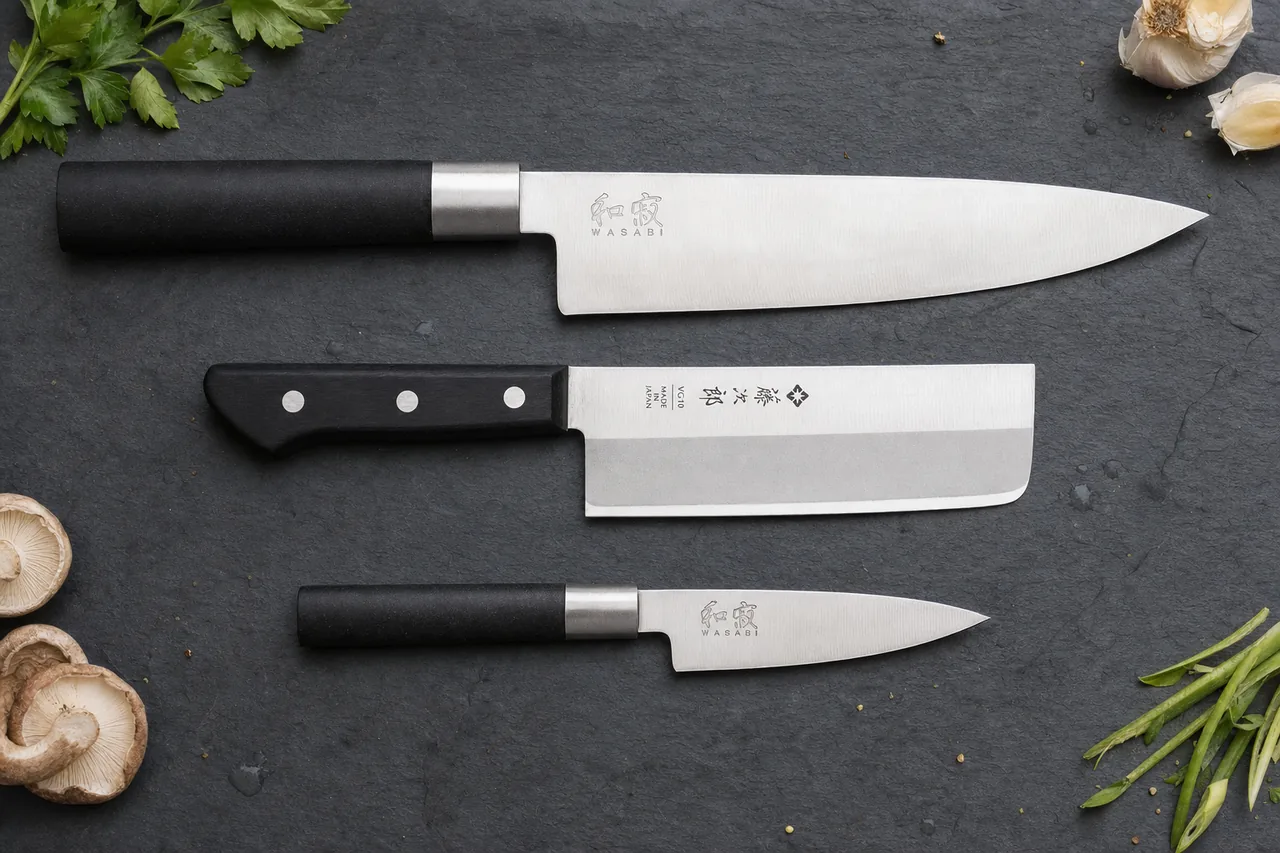
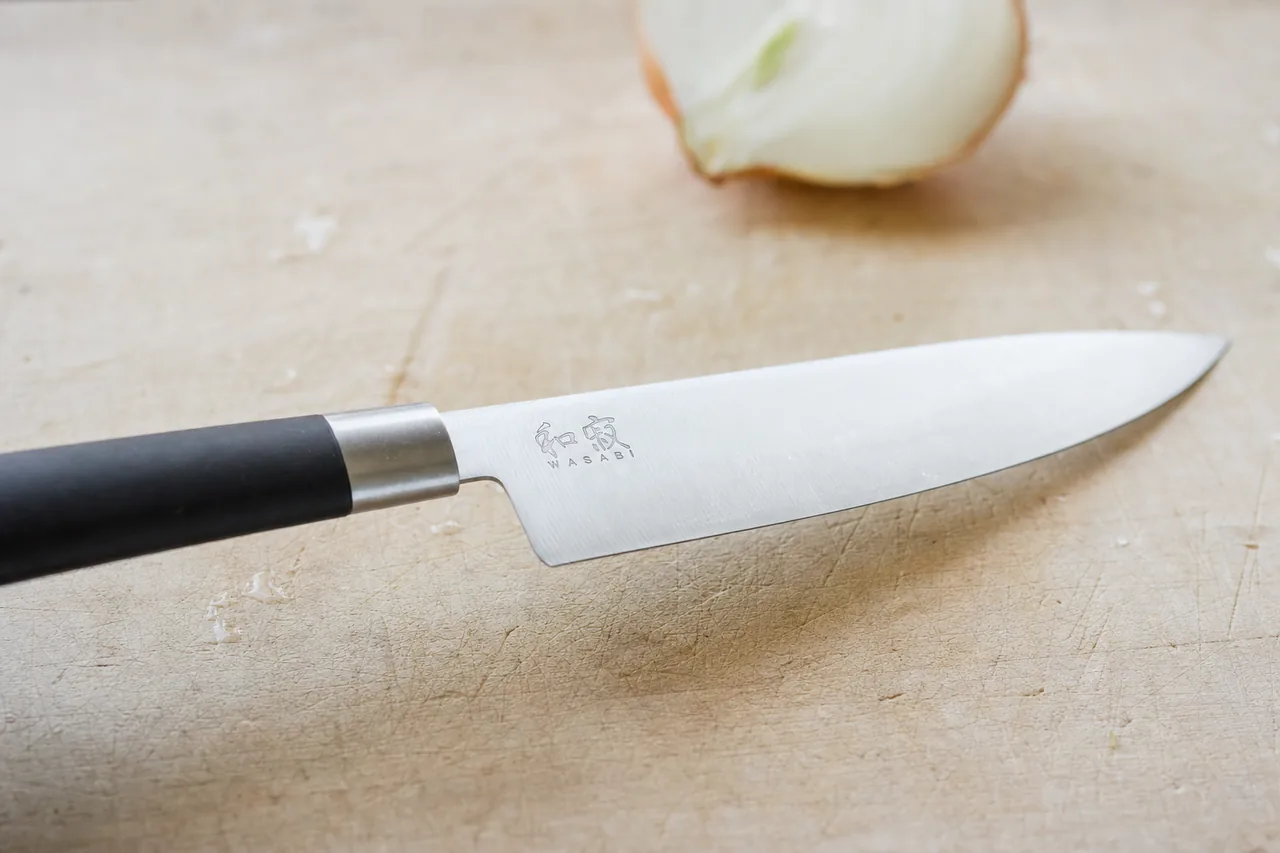
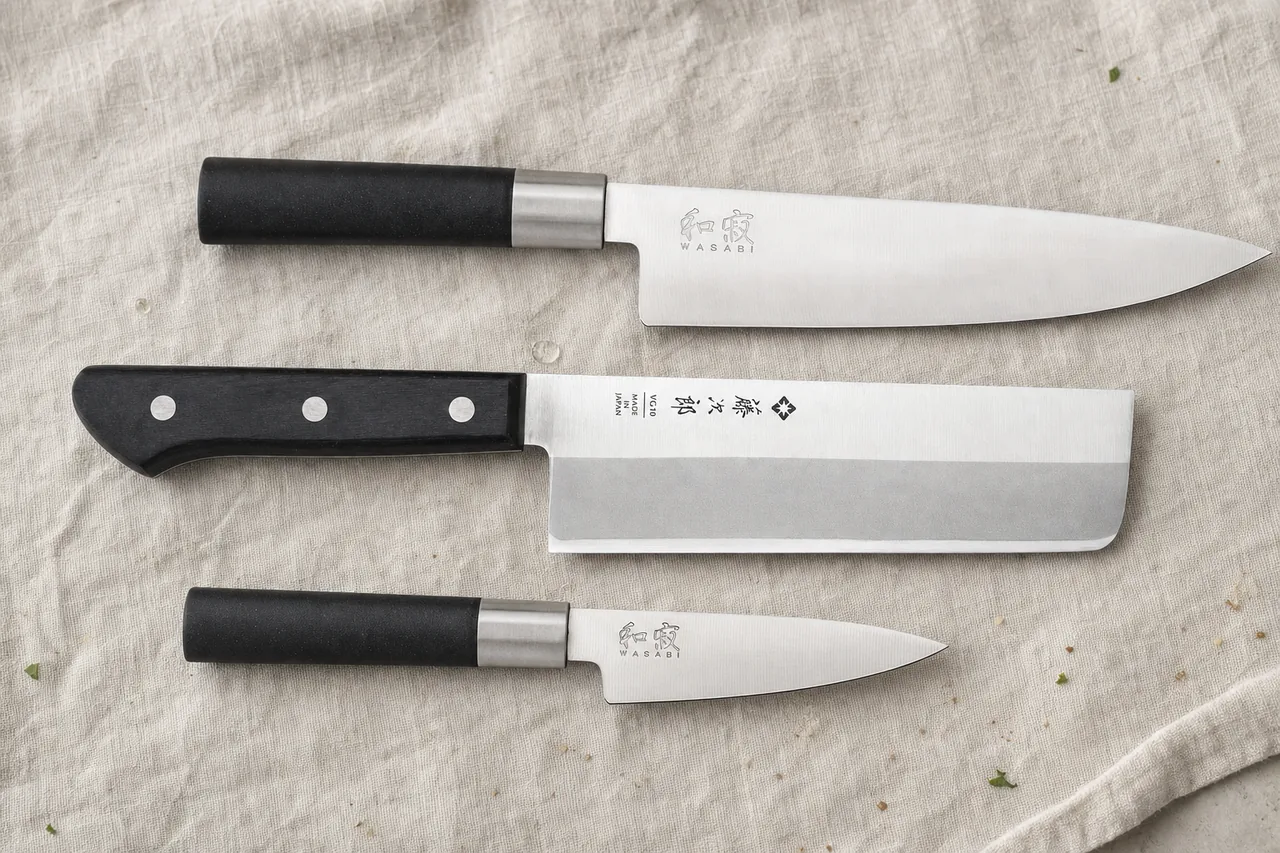
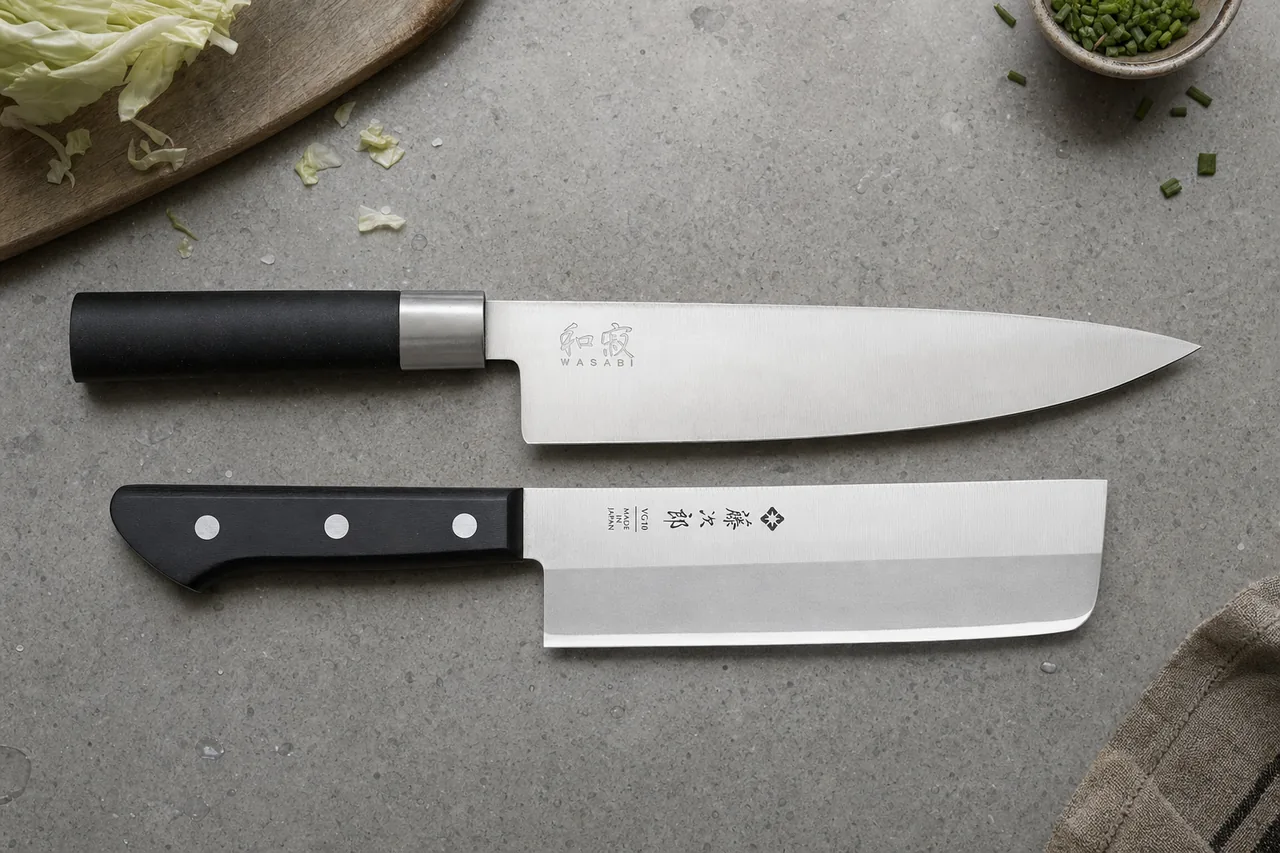
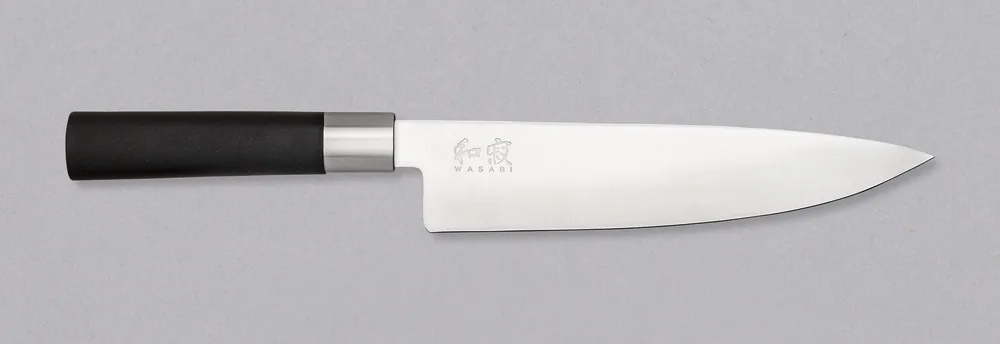
The Gyuto 200mm is the most versatile of the three (SharpEdge listed it as sold out on October 26, 2026). At 200mm it is slightly shorter than the standard 210mm chef’s knife, which many first-time buyers find easier to control, and it handles proteins, vegetables, and general prep work with equal ease. The blade is 6A/1K6 stainless steel hardened to HRC 58±1, and the oval handle is water-resistant polypropylene blended with bamboo powder. The double-bevel grind makes it suitable for both right- and left-handed cooks.
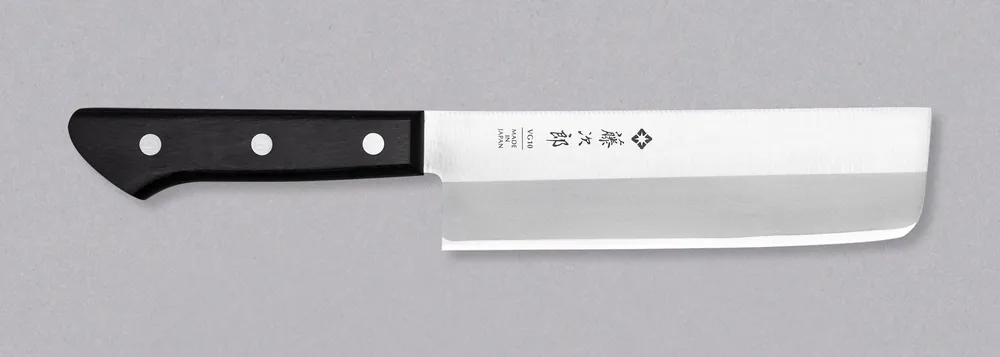
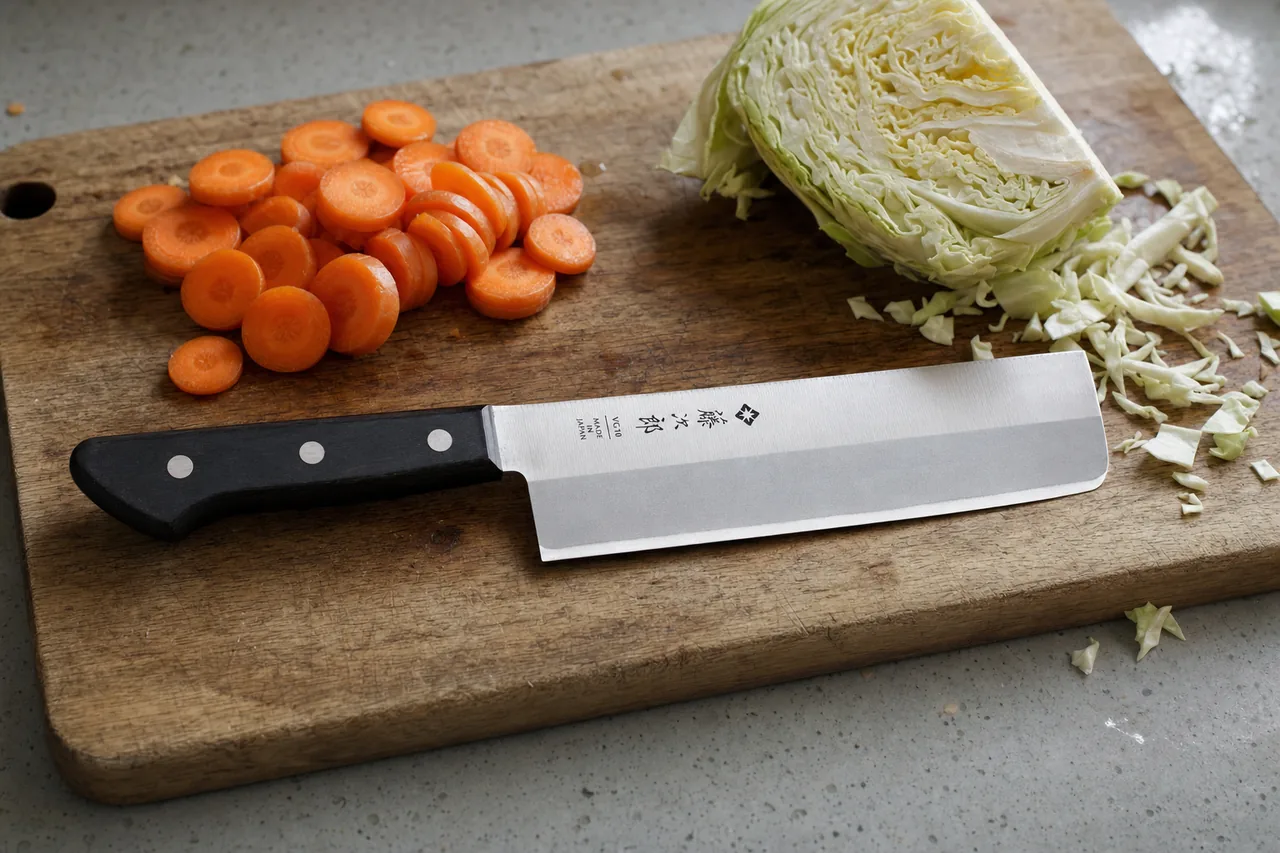
The Tojiro Basic Nakiri VG-10 165mm takes a different approach. (SharpEdge listed it as sold out on October 26, 2026; check the listing for current availability.) The nakiri’s flat, rectangular blade is designed specifically for push-cutting through vegetables cleanly and efficiently — the blunt tip and straight edge mean the entire blade makes contact with the board in a single downward motion. Tojiro’s Basic series pairs a VG-10 stainless core with softer stainless cladding and a riveted laminated-wood handle, and Tojiro lists it at about 140g. If you cook a lot of vegetables or follow a plant-forward diet, this is the one to prioritize. It is double-bevel and suitable for both hand orientations.
While the Tojiro Basic is sold out, a nakiri that stays under $100 is the Kai Seki Magoroku 10000CL Nakiri 165mm (AE5257): $90.63 on Amazon.com, sold and shipped by Amazon Japan; it was in stock (7 left) when checked on October 27, 2026. It is made in Japan by Kai, according to the maker’s site, which lists a 165mm blade 2mm thick, a cutting edge of high-carbon stainless steel clad in stainless steel, a laminated reinforced wood handle and a weight of 170g. Kai does not name the steel grade or publish a hardness figure for it.
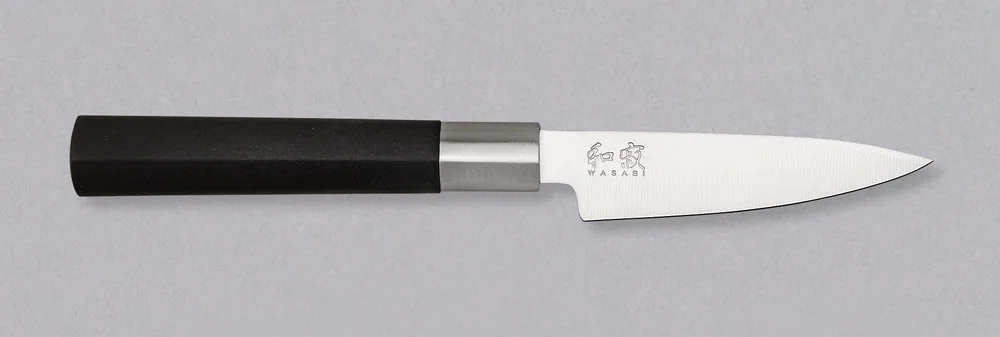
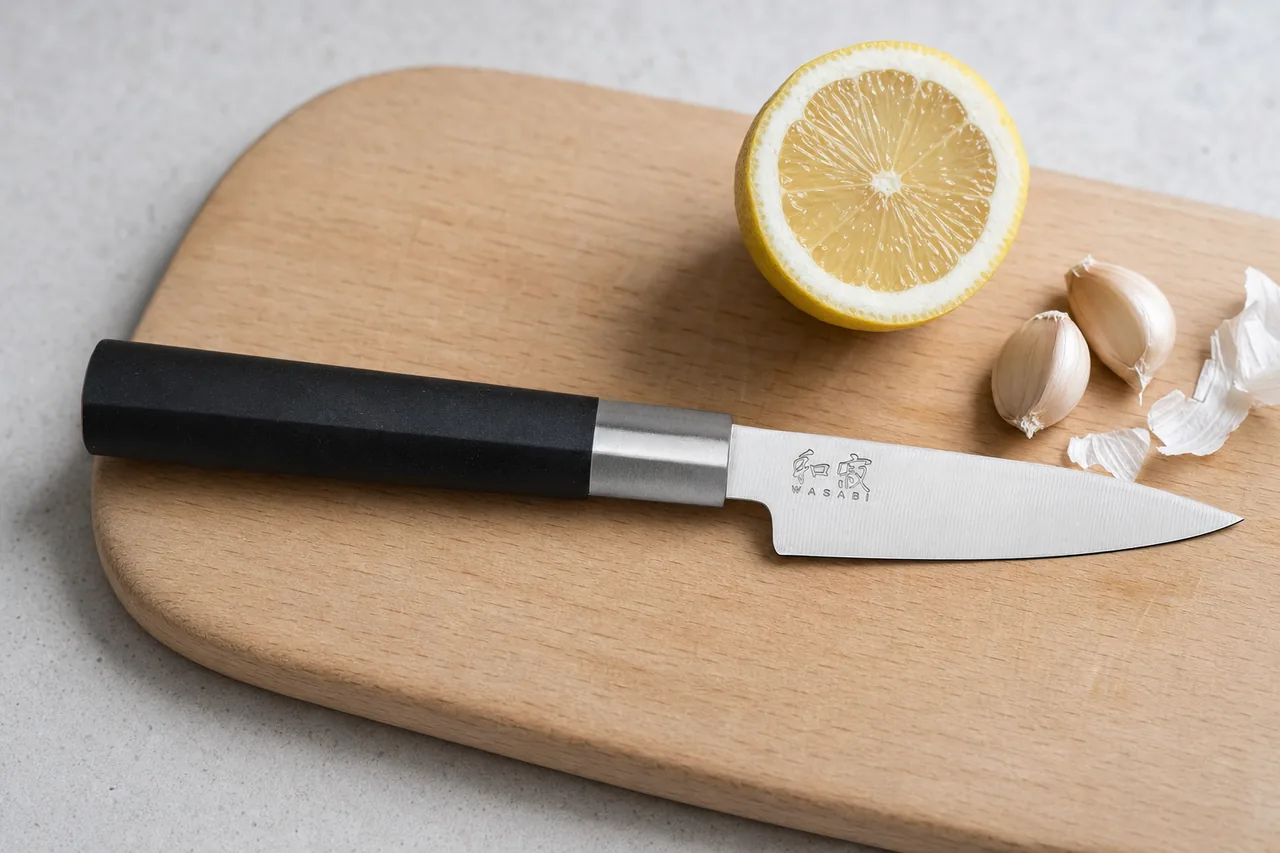
The Kai Wasabi Black Paring Knife 100mm is the smallest of the three at 100mm. It uses the same steel and handle material as the Gyuto, and it is built for tasks where a larger knife is simply too unwieldy: peeling fruit, trimming herbs, slicing garlic, or doing any close work that requires control over power. It pairs well with either of the larger knives rather than replacing them.
What to Compromise On — and What You Absolutely Should Not
Buying in the sub-$100 range means making some trade-offs, and knowing which ones matter is part of making a smart purchase.
Things you can reasonably accept at this price:
- A polypropylene or laminated-wood handle rather than stabilized natural wood or premium resin. These handles are durable, moisture-resistant, and entirely functional — they simply lack the visual character of higher-end materials.
- A factory edge that may benefit from a quick strop or light sharpen out of the box. Edges at this price level are usable, but taking ten minutes to refine them on a whetstone before first use is always worthwhile.
- A plain blade finish. These knives are simply polished, without the Damascus patterns or hand-hammered textures found on more expensive knives. That affects looks, not cutting.
Things you should not compromise on, even at this budget:
- Country of manufacture. All three of these are made in Japan: Kai lists the Wasabi Black series as made in Japan, and Tojiro makes its knives in Tsubame-Sanjo, Niigata. This matters because it reflects real quality standards and genuine knife-making heritage, not just a label.
- Steel hardness. Around HRC 58 is a meaningful threshold, and Kai lists the Wasabi Black blades at HRC 58±1. Tojiro does not publish a hardness figure for the Basic line, but it uses a VG-10 core. Knives well below this range will feel noticeably duller faster.
- Double-bevel geometry. All three knives are double-bevel, which means they are accessible for most home cooks and resharpenable on standard whetstones without specialist technique.
Frequently Asked Questions
Is a $100 Japanese knife actually good quality?
Yes, in practical terms. The knives in this guide are made in Japan by established makers from proper knife steels, and they outperform most budget Western-style knives. They will not match a $250 hand-finished blade in terms of refinement.
What is the difference between a $50 knife and a $200 knife?
Generally, the gap shows up in a few areas: the grade and purity of the steel, the precision of the grind and heat treatment, the quality of handle materials, and the amount of hand-finishing involved. A $200 knife might use a higher-tier steel, have a thinner and more precisely ground edge, and feature a handle made from premium natural wood or resin. It will likely hold its edge slightly longer and is generally described as more refined in the hand. That said, the practical cooking performance difference is smaller than the price gap suggests for most home cooks. The $50–$100 range delivers genuine utility, especially from established Japanese manufacturers.
Can I use these knives if I am left-handed?
Yes. All three knives are double-bevel, which means they are ground on both sides of the blade and can be used by right- and left-handed cooks. Single-bevel knives (common in traditional Japanese styles like yanagiba or deba) are where handedness becomes an issue, but that is not what these knives are.
Should I buy one knife or try to combine two within my budget?
If your budget is strictly $100, buy one. Each of these knives costs between about $52 and $67 on its own, but any two together come to roughly $120 to $135 before shipping. If you want a single all-rounder, the Gyuto is the most versatile starting point; if your cooking is vegetable-forward, start with the Nakiri and add the Paring knife later. Once you are ready to explore higher-end gyuto options, Best Japanese Gyuto Knife 2026: Top Picks by Skill Level and Budget covers the next tier in detail.
Final Verdict: Which One Is Right for You?
These three knives make a genuinely compelling case for the sub-$100 Japanese knife category. All three are made in Japan by established makers, use practical stainless steels, and are double-bevel — the only real choice is which blade shape fits your kitchen habits best.
If you cook a wide variety of foods and want one knife that handles most tasks, the Kai Wasabi Black Gyuto 200mm at about $67 is the straightforward answer, though it was sold out at SharpEdge on October 26, 2026. If vegetables dominate your prep work, the Tojiro Basic Nakiri at about $67 will change how efficiently you cook. And if you already have a larger knife and need something precise for detail work, the Kai Wasabi Black Paring Knife at about $52 fills that gap well.
All three are available through SharpEdge, a specialist retailer focused on Japanese cutlery. For anyone new to Japanese knives in general, revisiting Best Japanese Knife for Beginners: How to Choose by Use and Budget alongside this guide will help you feel confident in whichever direction you choose.
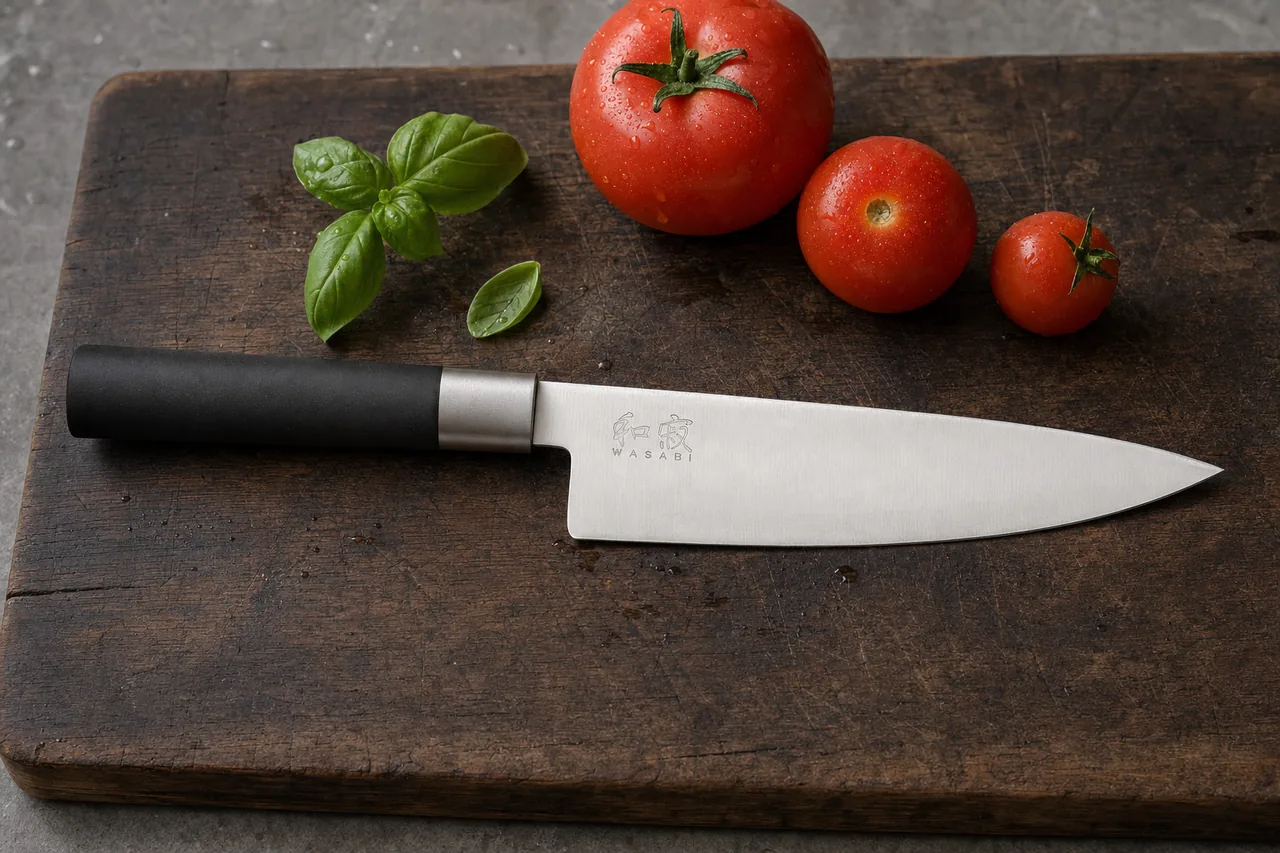
Which knife fits your kitchen best — the versatile Gyuto, the vegetable-focused Nakiri, or the nimble Paring knife? Share your pick, or explore more options to find the Japanese knife that will genuinely change how you cook.
Product images are illustrative renderings based on retailer product photos.