This article contains affiliate links. If you buy through them, we may earn a commission at no extra cost to you.
How this article was made: Research-based comparison. It draws on published information from makers, retailers, and reference sources, not on hands-on testing.
- Why This Choice Matters More Than Most Beginners Expect
- How the Blades Actually Differ: Steel, Angle, and Grind
- Use Case Breakdown: Which Knife Wins in the Kitchen?
- Price Guide: What You Actually Get at Each Budget Level
- Maintenance Reality Check: What Each Knife Demands from You
- Side-by-Side Comparison Table
- Frequently Asked Questions
- Recommendation by Buyer Type
Why This Choice Matters More Than Most Beginners Expect
Walk into any kitchen store and you will find Japanese and Western knives sitting side by side, often at similar price points. Yet they are built on completely different philosophies, and picking the wrong one for your cooking style can leave you frustrated within a week.
Western knives — think the classic German chef’s knife — are made from softer stainless steel. Shun’s FAQ says German-steel knives get dull faster because of that softer steel, and that many cooks hone them before each use. Japanese makers publish their own hardness figures: Shun hardens its VG10 and VG-MAX steel to 60–61 on the Rockwell scale, and MAC gives 57 to 61 Rockwell C for its knives. Shun describes fine Japanese knives as harder, thinner and sharper than comparable European-style knives, built for keenness and edge retention rather than toughness, which is why they should not be used on bones or frozen food.
The core trade-off is not simply about sharpness. It is about how much maintenance you are willing to do, what you tend to cut, and whether you find a Wa handle or a Western handle more comfortable in daily use. None of these questions have a universal answer, which is exactly why this guide exists.
How the Blades Actually Differ: Steel, Angle, and Grind
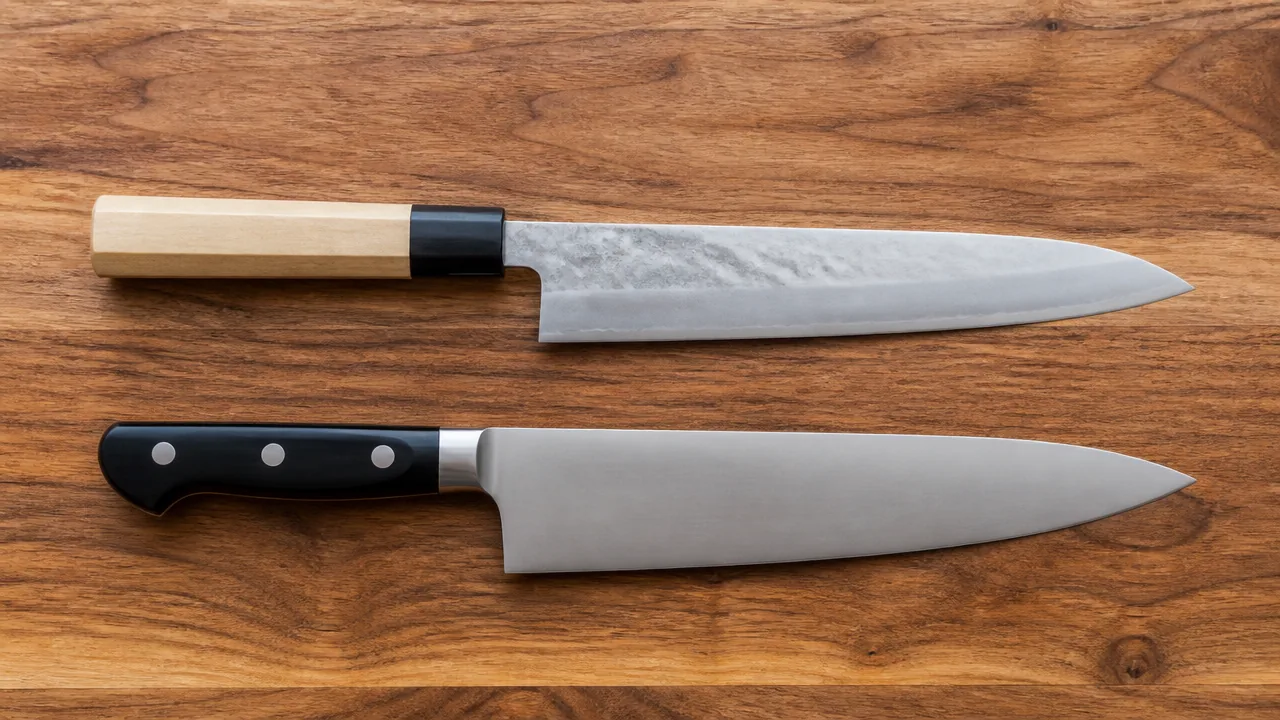
The most practical differences come down to three things: steel hardness, blade angle, and whether the grind is single or double bevel.
On steel: Japanese knives commonly use high-carbon steels such as VG-10, Blue Steel (Aogami), or White Steel (Shirogami). VG-10 is popular in mid-range Damascus knives because it balances hardness with decent corrosion resistance. German knives rely on softer stainless alloys that are easier to maintain but will not hold as acute an edge.
On blade angle: Shun describes Western knives as typically sharpened to 20–25 degrees on each side. Japanese makers publish narrower figures: Shun sharpens its knives to 16 degrees on each side and MAC describes about 15 degrees per side.
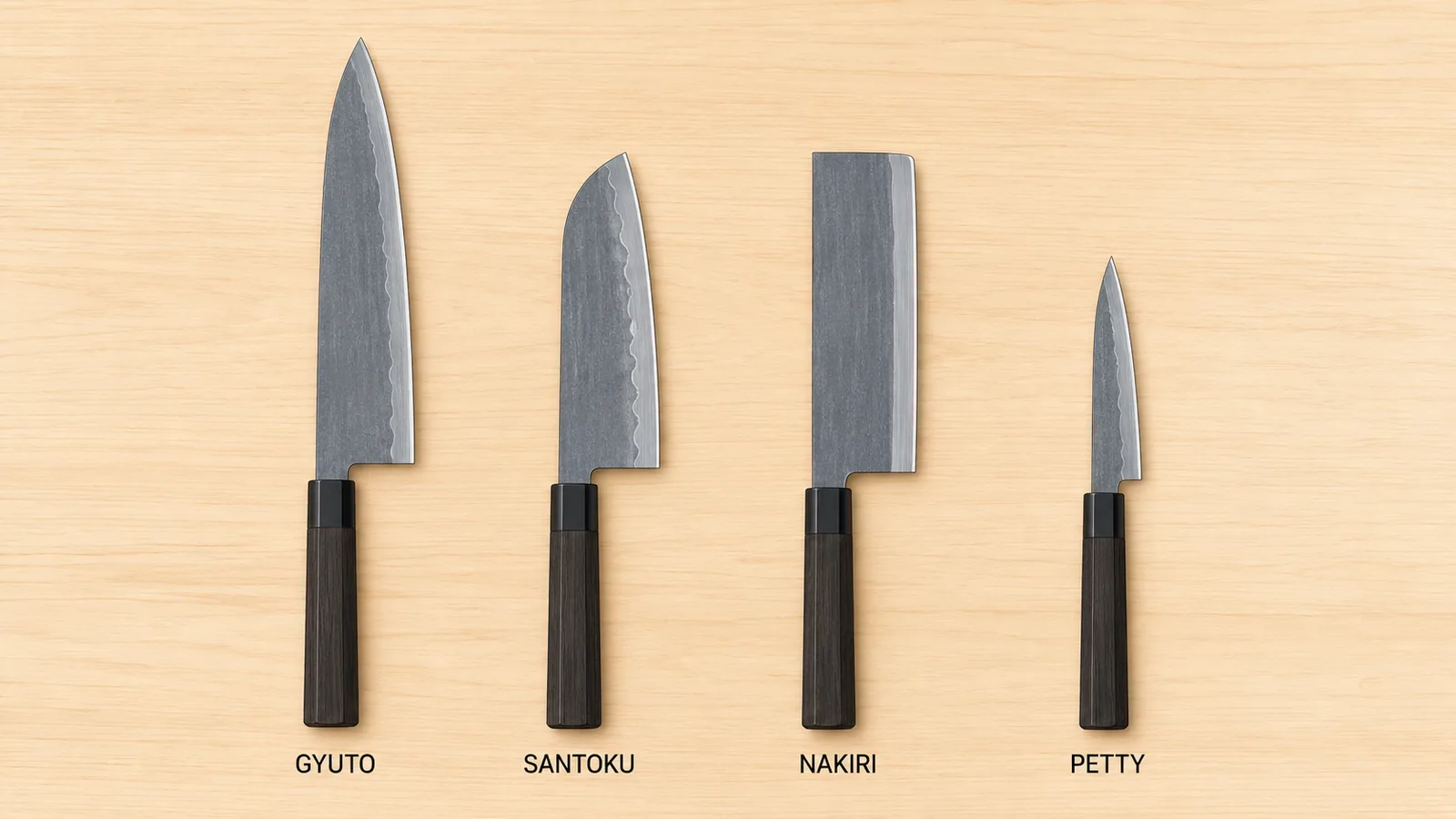
On bevel type: this is where many newcomers get confused. Western knives are almost always double bevel, ground on both sides. Traditional Japanese knives like a Yanagiba or Deba use a single bevel — one flat side and one hollow-ground side — which gives extraordinary precision but makes left-handed use complicated. Modern Japanese knives designed for Western markets, such as a Gyuto or Santoku, are typically double bevel and far easier to adapt to.
If you are buying your first Japanese knife, a double-bevel Gyuto or Santoku is the safest starting point. Single-bevel knives reward experience, not beginners.
Use Case Breakdown: Which Knife Wins in the Kitchen?
Neither style dominates across every task. The honest answer is that they excel in different situations, and many serious home cooks keep at least one of each.
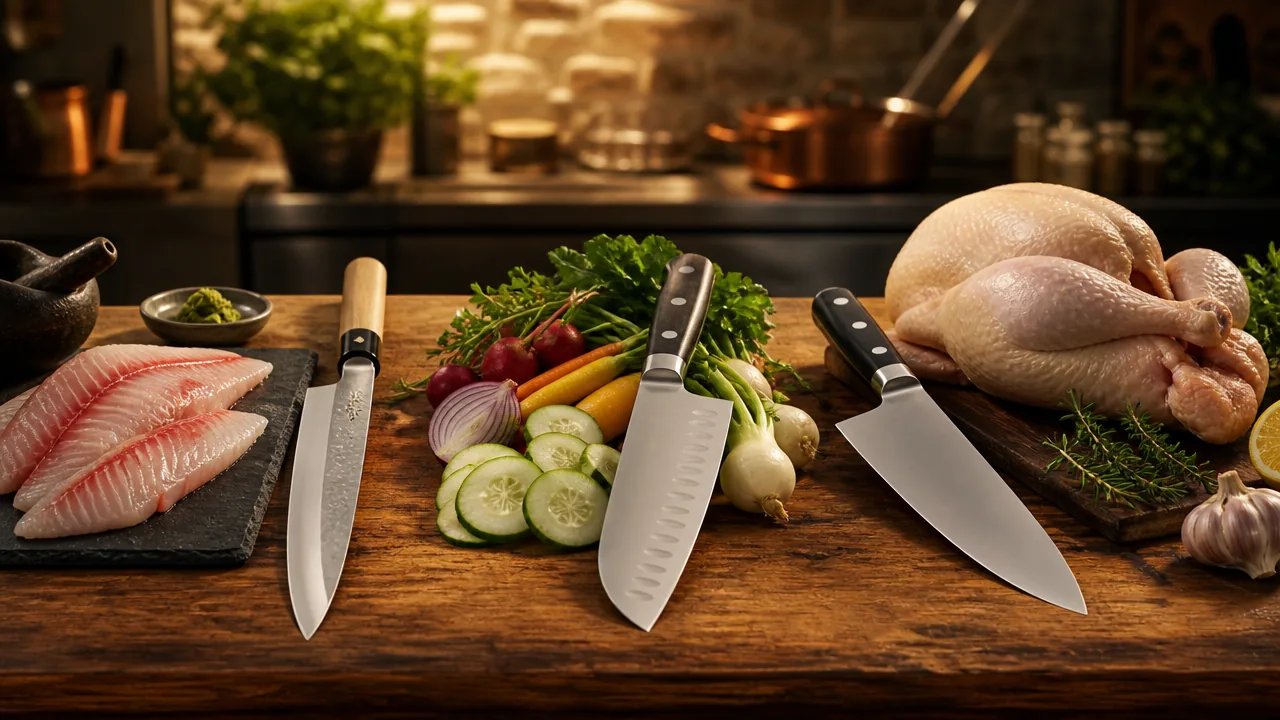
For vegetable prep and fish: Japanese knives have a clear edge. The harder steel lets the blade be thinner and the edge more acute than a comparable German knife (Shun), which suits clean slicing. A Santoku handles everyday vegetable work well, while a Nakiri is purpose-built for push-cutting through dense root vegetables.
For meat and general Western cooking: a heavy German-style chef’s knife handles tasks like breaking down a chicken or cutting through thick gristle without risk of chipping. The heft and the slightly curved belly suit the rocking chop motion most Western-trained cooks use naturally.
For sushi and sashimi: there is no substitute for a proper single-bevel Yanagiba. The long blade and flat underside allow a single drawing stroke that keeps fish slices intact and even.
For a one-knife household that does a bit of everything:
- A 210mm Gyuto covers most daily kitchen tasks
- A quality Western chef’s knife (8 inch / 200mm) offers durability and low maintenance
- A Santoku is the most approachable choice if you prefer shorter blades or do mostly vegetable-forward cooking
Your dominant cooking style should drive the decision more than brand loyalty or aesthetics.
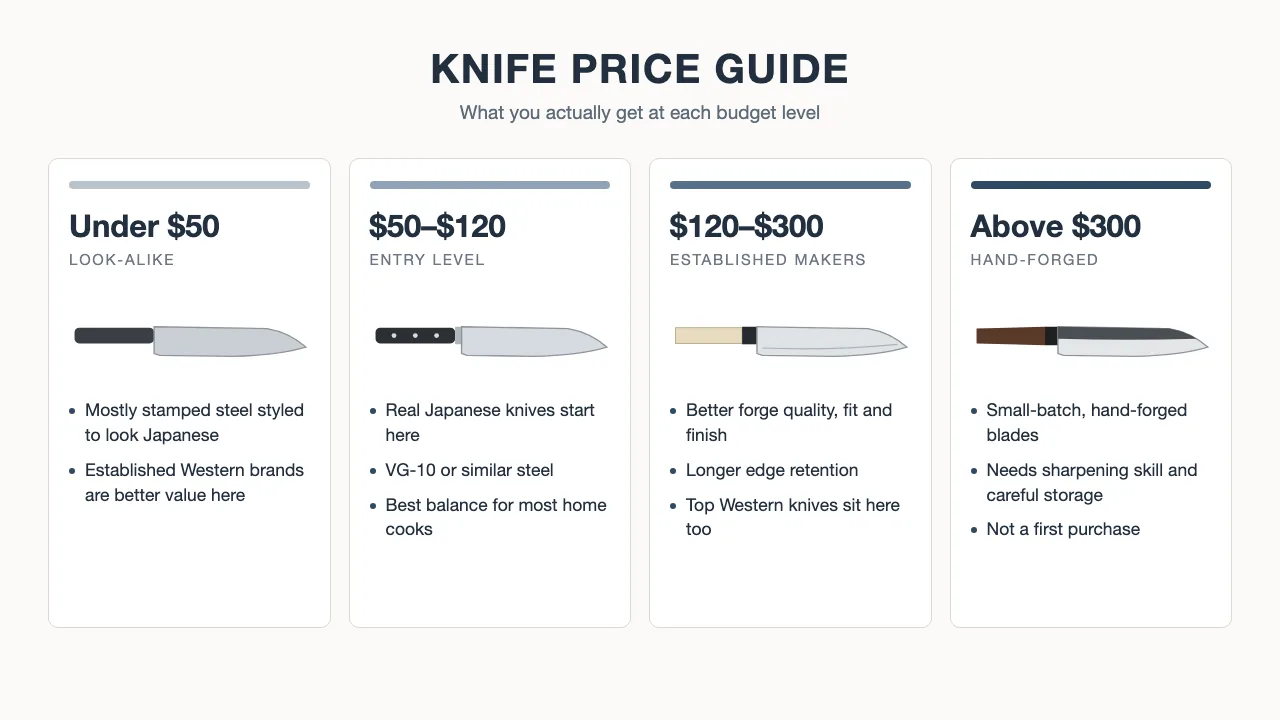
Price Guide: What You Actually Get at Each Budget Level
Price in the knife world does not scale linearly with quality. There are genuine jumps at certain thresholds, and knowing where those jumps are can save you from both overspending and buying something you will regret.
Under $50: At this range, most Japanese-style knives are made in China with stamped steel that mimics the look of a Damascus finish without delivering the performance. Western knives from established brands offer far better value around this level: the Victorinox Fibrox Pro 8-Inch Chef’s Knife sits just above it (around $53 on Amazon.com, checked on October 4, 2026) — reliable, dishwasher-safe, and genuinely sharp out of the box.
$50–$120: This is where entry-level Japanese knives become worth considering. Brands in this range often use VG-10 or similar steels, offer a real Wa handle option, and are hand-finished rather than factory-stamped. For most home cooks, this range hits the sweet spot of performance versus maintenance commitment.
$120–$300: This bracket is where you start seeing meaningful differences in forge quality, fit and finish, and long-term edge retention. Knives from established Japanese makers — Tojiro (Fujitora DP Gyuto 240mm), Yasuda Hamono (Kotetsu VG-10 Damascus Gyuto 210mm), the MAC Professional Mighty Chef’s Knife 230mm (available through specialist knife retailers) — fall here. Western knives from Wüsthof Classic 8″ Hollow Edge Chef’s Knife or Zwilling Pro 8″ Chef’s Knife also live in this range and are genuinely excellent.
![Kotetsu Gyuto VG-10 Damascus 210mm [pakka wood]](https://japan-craft-finds.com/wp-content/uploads/2026/10/kotetsu-gyuto-vg-10-damascus-210mm-pakka-wood-photo.webp)
Above $300: You are entering hand-forged, small-batch territory. These knives are rewarding, but they require proper sharpening skills, wet stone maintenance, and careful storage. Not recommended as a first purchase unless you already sharpen your own blades.
For most beginners, spending $80–$150 on a single well-chosen knife and learning to maintain it properly will outperform a $400 knife used carelessly.
Maintenance Reality Check: What Each Knife Demands from You
Owning a high-end Japanese knife without understanding its care requirements is one of the most common ways beginners waste money. This section is about setting realistic expectations.
Western knives are designed for convenience. A pull-through sharpener is not ideal, but it will keep a German steel knife functional. A honing rod used before each session maintains the edge between sharpening. Most Western knives tolerate occasional dishwasher use, though hand washing extends their life considerably.
Japanese knives ask more of you:
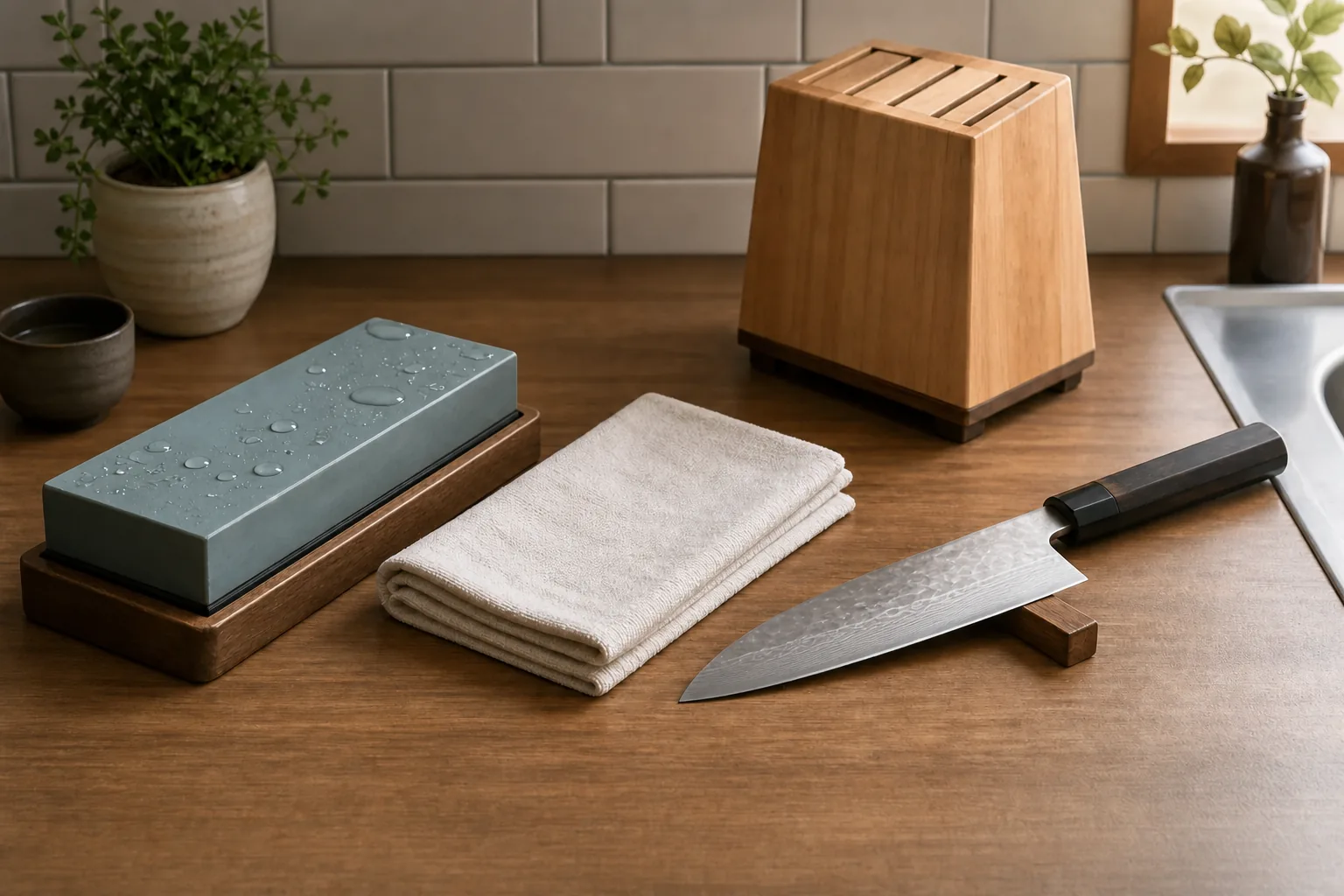
- They should never go in a dishwasher — Shun’s FAQ says knives get knocked around during the cycle and that many dishwashing detergents contain corrosive agents that can pit or corrode the blade
- Shun notes that micro-chipping can be the downside of very hard steel when a knife is chopped hard against the board, and worse on ceramic, glass or marble
- Wet stone sharpening (or sending to a professional) is the proper method
- Carbon steel varieties like Aogami will develop a patina and can rust if left wet
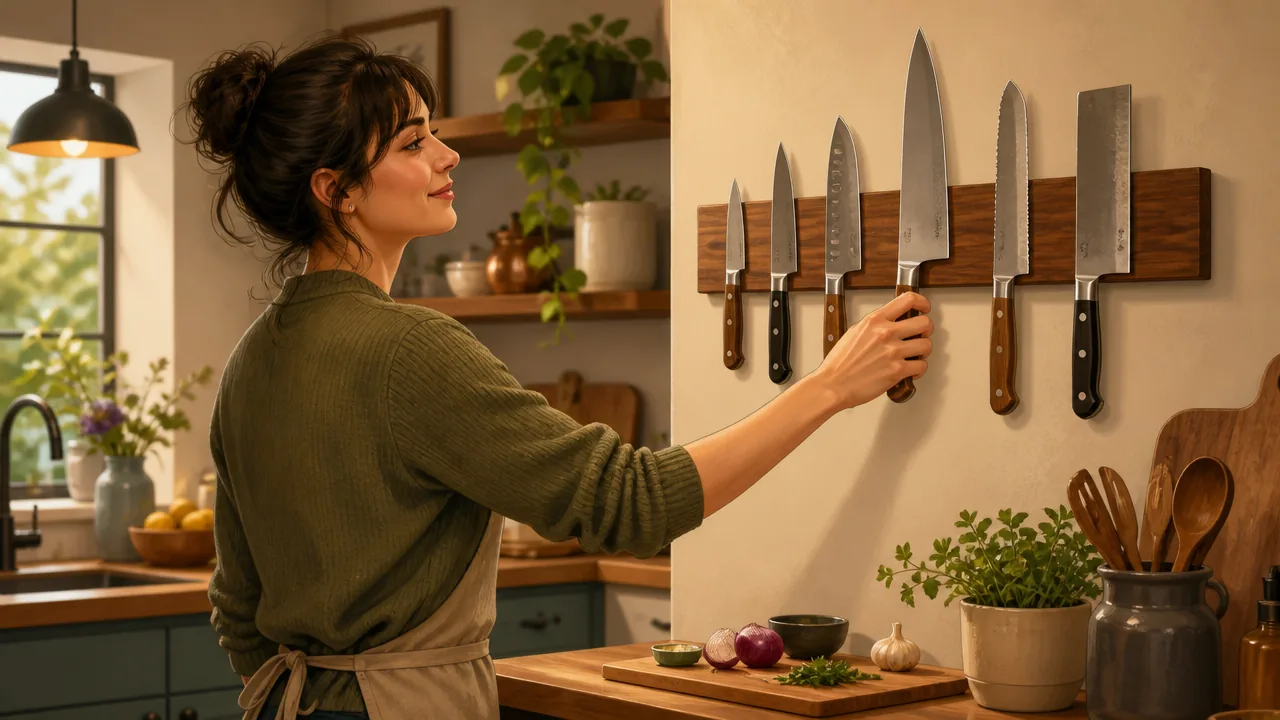
- They should be stored on a magnetic strip or in a knife block, not loose in a drawer
If you travel frequently, cook only a few times a week, or share your kitchen with housemates who may not treat equipment carefully, a lower-maintenance Western knife is the more practical choice regardless of what your taste in knives might be.
Side-by-Side Comparison Table
The table below summarizes the practical differences discussed throughout this article. Use it as a quick reference when weighing your options.
| Feature | Japanese Knife | Western Knife |
|---|---|---|
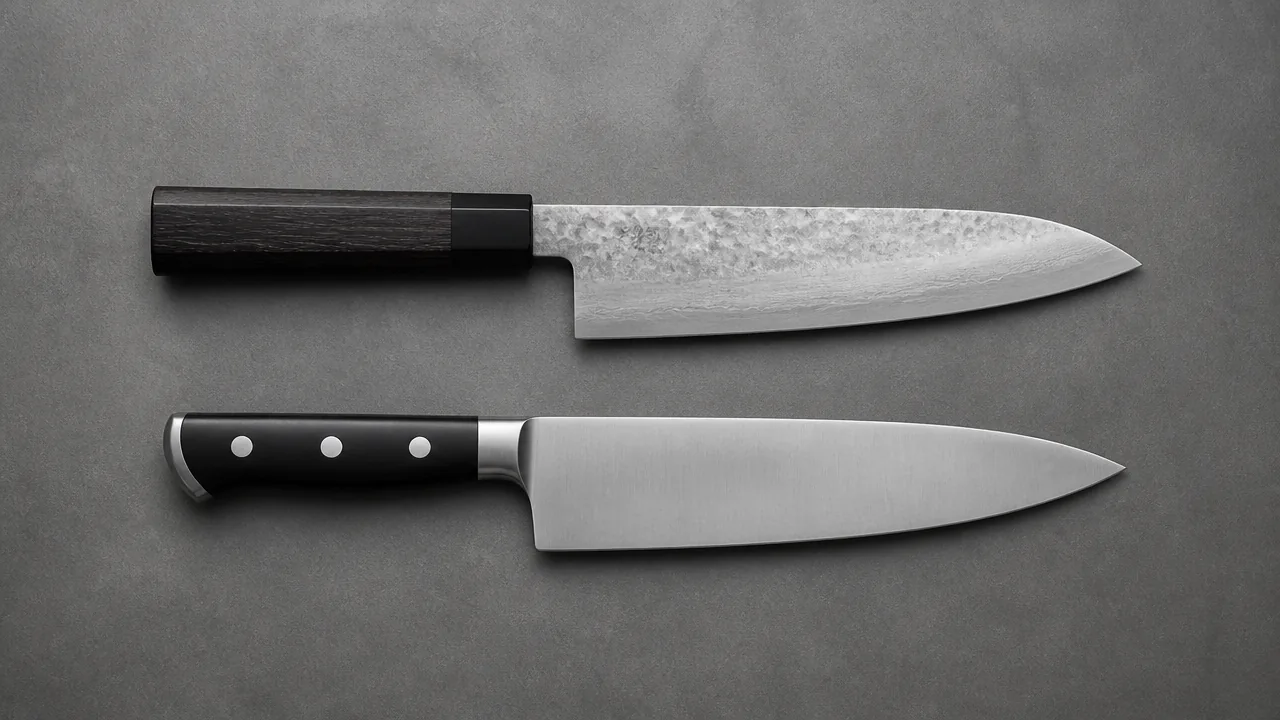
| Blade angle (per side) | 15–16° (MAC, Shun) | 20–25° (per Shun) |
| Bevel | Single or double | Double |
| Common steels | VG-10, Aogami, Shirogami | X50CrMoV15, 1.4116 |
| Handle style | Wa (octagonal) or Western | Western bolster |
| Edge retention | High | Moderate |
| Chip resistance | Lower | Higher |
| Maintenance level | High | Low–Moderate |
| Recommended for beginners | With guidance | Yes |
| Best use cases | Fish, vegetables, precision cuts | General purpose, meat, robust tasks |
| Price sweet spot | $80–$200 | $50–$150 |
No single row in that table is decisive on its own. The right call comes from reading the pattern across all factors against your own kitchen habits.
Frequently Asked Questions
Are Japanese knives harder than German knives?
The makers’ own figures point that way. Shun hardens its VG10 and VG-MAX steel to 60–61 on the Rockwell scale, and MAC gives 57 to 61 Rockwell C for its knives. Shun’s FAQ describes German-steel knives as made of softer steel that gets dull faster.
What edge angle do Japanese and Western knives have?
Shun sharpens its knives to 16 degrees on each side and MAC describes about 15 degrees per side, against the 20–25 degrees on each side that Shun’s FAQ gives for German-steel knives.
Can a Japanese knife go in the dishwasher?
No. Shun’s FAQ says knives get knocked around during the cycle and that many dishwashing detergents contain corrosive agents that can pit or corrode the blade.
Why do hard Japanese knives chip?
Shun notes that micro-chipping can be the downside of very hard steel when a knife is chopped hard against the board, and that it is worse on ceramic, glass or marble. Shun also says its knives should not be used on bones or frozen food.
Recommendation by Buyer Type
After working through all the variables, here is a plain summary of who should buy what.
For the busy home cook who wants minimal fuss: go with a quality Western chef’s knife in the $70–$130 range. It will handle almost everything without demanding careful storage or specialist sharpening skills.
For the home cook who enjoys food prep as part of the experience, does a lot of vegetable or fish work, and is willing to learn basic whetstone maintenance: a double-bevel Japanese Gyuto or Santoku in the $100–$180 range will reward you with noticeably cleaner cuts and a more enjoyable time at the board.
For someone specifically interested in Japanese cuisine at home — sushi, sashimi, washoku: consider pairing a workhorse Santoku with a longer Yanagiba once you are comfortable with single-bevel care.
For gift buyers: unless you know the recipient’s sharpening habits well, a mid-range Western knife or a beginner-friendly Japanese knife with a Western-style handle is the safer bet. A beautiful Damascus knife given to someone who does not know how to maintain it often ends up sitting unused.
The worst outcome is buying a knife that is technically impressive but practically incompatible with your life. Spend a little time with the comparison table and the use-case section before clicking buy.
Ready to choose your next knife? Use the product links in the sections above to check current prices at SharpEdge and Amazon, and match blade type and budget to how you actually cook.
Trying to decide between a Santoku, Gyuto, or Nakiri for your first Japanese knife? See our full comparison to find the right fit for how you actually cook.
New to Japanese knives? Our beginner’s guide can help you choose the right one to start with.