This article contains affiliate links. If you buy through them, we may earn a commission at no extra cost to you.
How this article was made: Research-based comparison. It draws on published information from makers, retailers, and reference sources, not on hands-on testing.
- The Short Answer: Which Japanese Knife Is Used for Sushi
- Why the Right Japanese Knife Changes Everything for Sushi
- Understanding the Key Knife Types Used in Sushi Preparation
- Budget Tiers: What You Actually Get at Each Price Point
- Top Picks by Use Case: A Practical Comparison
- What First-Time Buyers Get Wrong (And How to Avoid It)
- Maintenance Basics That Protect Your Investment
- Frequently Asked Questions
- Where to Buy: A Note on Retailers
The Short Answer: Which Japanese Knife Is Used for Sushi
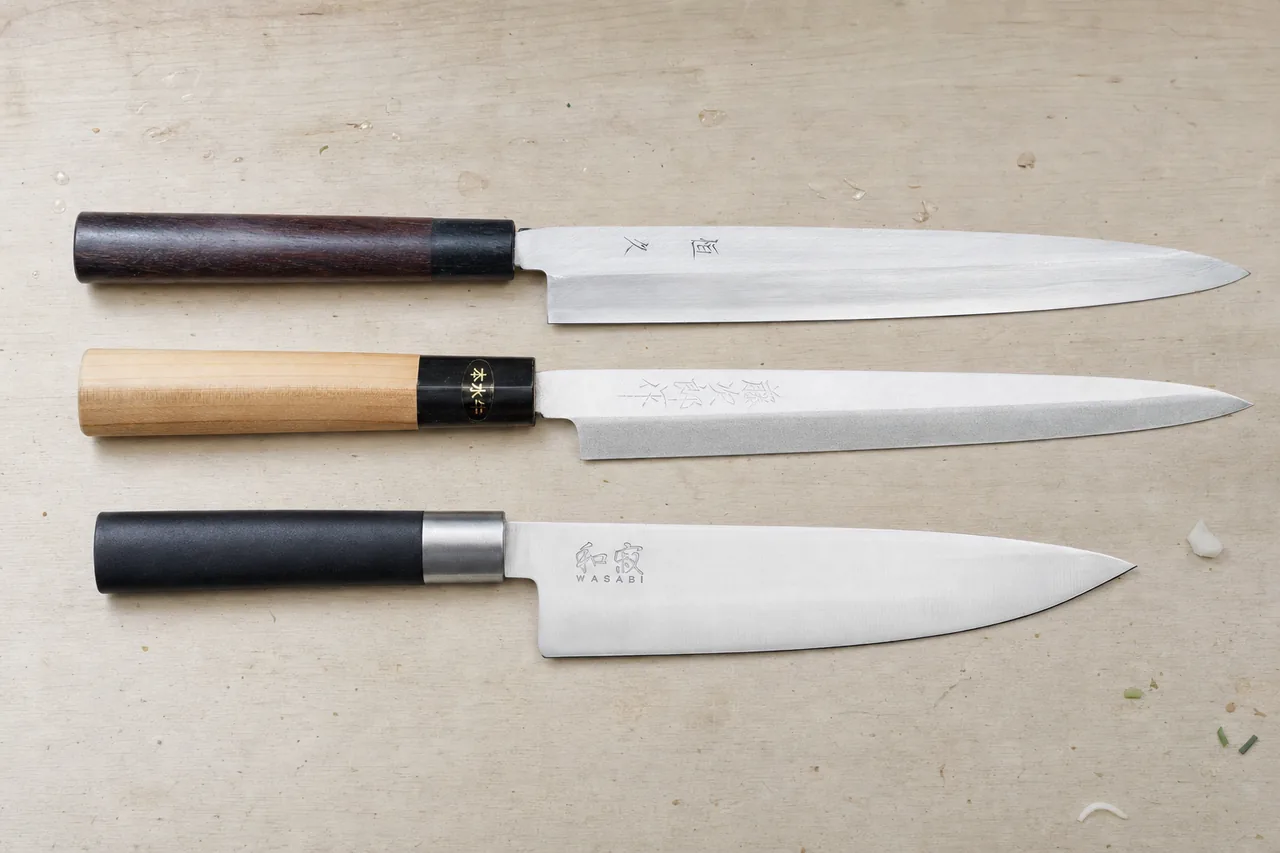
The Japanese sushi knife to look for is the yanagiba: a long, single-bevel slicer made for cutting raw fish into sashimi and nigiri toppings. A deba is for breaking down whole fish, not for slicing, and a gyuto is a double-bevel chef’s knife for cooks who want one knife for fish and everything else. The picks in this guide:
- Stainless yanagiba: Tsunehisa Yanagiba 240mm, €250.00 (about $280; US total, est. about $364), AUS-8 stainless, for cooks who do not want a rust-prevention routine
- Carbon-steel yanagiba: Tojiro Shirogami Yanagiba 240mm, €175.00 (about $196; US total, est. about $259), White Steel #1, which needs drying after every use
- One knife for fish and general cooking: Misono UX10 Gyuto 240mm, $314.00 on Amazon.com
Prices checked on October 23, 2026. SharpEdge prices are converted at the ECB reference rate of 1 EUR = 1.1206 USD (October 9, 2026); the US total adds shipping and the 25% tariff, as explained under the table below.
Why the Right Japanese Knife Changes Everything for Sushi
Sushi prep is less forgiving than most cooking tasks. A dull or poorly shaped blade drags through fish, tears delicate flesh, and ruins the clean cross-section that separates a good piece of nigiri from a great one. Japanese knives are engineered with this in mind — thinner spines, harder steel, and single-bevel grinds that let the blade glide rather than push.
The challenge for buyers outside Japan is that the category is enormous. You’ll find everything from a $40 stamped stainless blade to a $600 hand-forged yanagiba, and the marketing around all of them tends to sound identical. This guide cuts through that by organizing recommendations around two practical questions: what you’re actually cutting, and how much you’re realistically willing to spend.
One thing worth saying upfront: there is no single ‘best’ knife for sushi. A professional sashimi chef who breaks down whole tuna daily needs something completely different from a home cook who makes maki on weekends. Matching the knife to your actual workflow is the whole game.
Understanding the Key Knife Types Used in Sushi Preparation
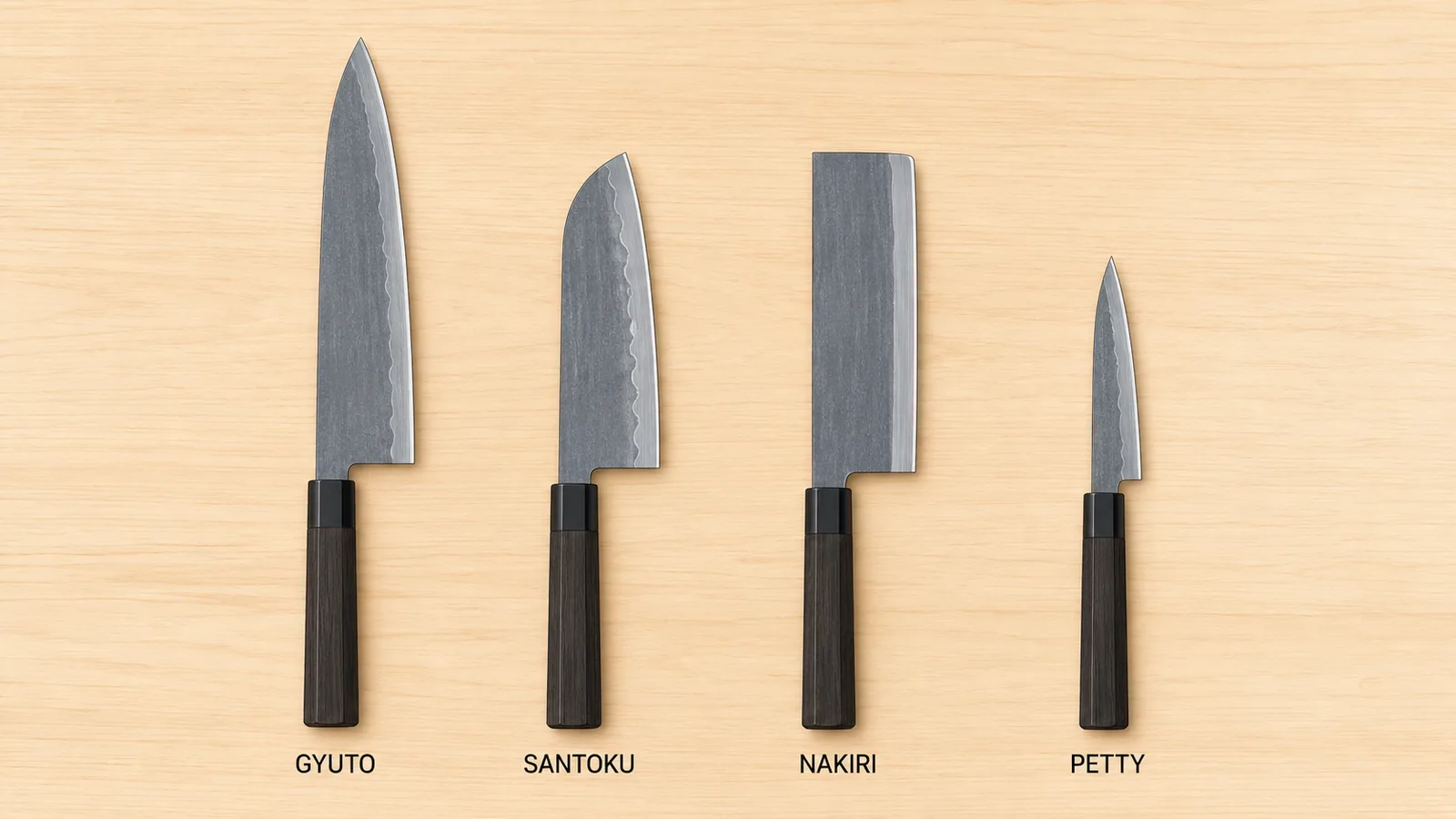
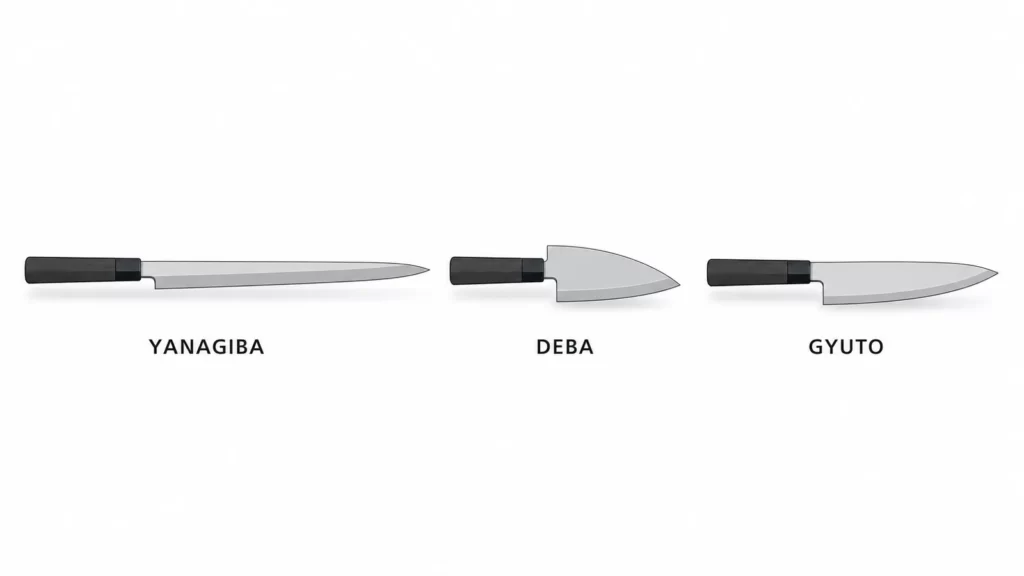
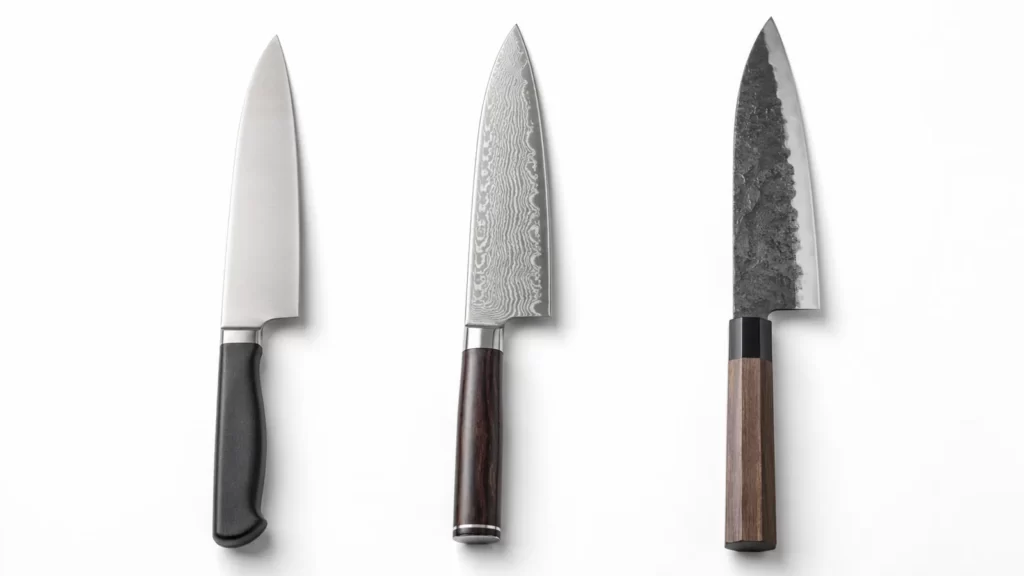
Before jumping to product picks, it helps to know the three knife styles that come up most often in sushi contexts. Confusing them is one of the most common — and most expensive — mistakes beginners make.
- Yanagiba: A long, single-bevel slicer designed specifically for cutting raw fish into sashimi and nigiri toppings. The single-bevel geometry creates a clean, one-directional cut that minimizes cell damage.
- Deba: A thick, heavy single-bevel knife used for breaking down whole fish — removing heads, filleting, and portioning. It is not a slicer. Using a deba to cut sashimi would produce a torn, uneven result.
- Gyuto: A double-bevel chef’s knife adapted from Western design but made with Japanese steel and geometry. It’s versatile enough to handle fish prep, vegetable work, and general tasks. A reasonable starting point for home cooks who don’t want a specialist knife.
For most people reading this, the yanagiba is the knife they’re actually after. The deba is only worth buying if you’re sourcing whole fish and breaking them down yourself. If that is you, see Best Japanese Deba Knife. The gyuto is the compromise pick for everyday cooking that sometimes includes sushi prep. For a long double-bevel slicer that works in either hand and is used mainly for meat, see Best Japanese Sujihiki Knife 2026.
Budget Tiers: What You Actually Get at Each Price Point
The knife market sorts into fairly distinct tiers, and knowing what changes at each price point prevents both overspending and false economy.
Under $80 — Entry-level stainless knives, usually from brands like Mercer or basic Tojiro lines. These hold an edge reasonably well for light use but won’t give the ultra-thin geometry of higher-end blades. Fine for someone testing the hobby.
$80–$200 — This is where the meaningful jump happens for home users. Brands like Tojiro DP, MAC, and Global offer knives with better steel (VG-10 is common here; Shun, for example, hardens its VG10 to 60–61 on the Rockwell scale), thinner grinds, and noticeably improved fit and finish. A yanagiba in this range is built for the single long slicing stroke that raw fish calls for, which a Western chef’s knife is not.
$200–$500 — Hand-finished blades, reactive carbon steel options, and knives from smaller Japanese makers start appearing here. Carbon steel in this tier — blue steel (Aogami) or white steel (Shirogami) — will take a sharper edge than stainless but requires drying after every use to prevent rust. This trade-off is worth understanding before buying.
Above $500 — Custom and semi-custom work from named craftsmen. Performance gains over the $200–$500 tier are real but incremental. Most of the premium is aesthetic and collectible. Not recommended for first-time buyers.
Top Picks by Use Case: A Practical Comparison
The table below reflects knives based on current product listings, including models available through SharpEdge and Amazon. Prices are approximate and subject to change; SharpEdge prices are converted from euros at the ECB reference rate of 1 EUR = 1.1206 USD on October 9, 2026 and exclude shipping.
| Knife | Approx. Price | US total (est.)* | Type | Steel | Length | Best For |
|---|---|---|---|---|---|---|
| Tsunehisa Yanagiba 240mm | ~$280 (€250.00) | ~$364 | Yanagiba | AUS-8 Stainless | 240mm | Intermediate home cooks |
| Tojiro (Fujitora) MV Stainless Yanagiba | Not checked | — | Yanagiba | Mo-V Stainless | 270mm | Home sushi prep, low-maintenance stainless |
| Tojiro Shirogami Yanagiba 240mm | ~$196 (€175.00) | ~$259 | Yanagiba | White Steel #1 | 240mm | Serious home cooks comfortable with carbon |
| Kai Wasabi Black Gyuto | ~$67 (€59.50) | ~$97 | Gyuto | 6A/1K6 Stainless | 200mm | Beginners wanting a versatile all-rounder |
| Misono UX10 Gyuto | $314.00 | — | Gyuto | Swedish Stainless | 240mm | Home cooks who prep more than just fish |
*US total (est.) is an estimate for a US buyer, including shipping and the 25% tariff, as of October 2026, based on SharpEdge’s shipping page: (price + €10 shipping) × 1.25 for orders under €300, or price × 1.25 for orders of €300 or more, which ship free. Example: a €51 knife came to €76.10 at checkout for a New York address on October 3, 2026. Tariff rates can change. The Misono price is the Amazon.com price checked on October 23, 2026.
Stock: as of October 23, 2026, SharpEdge listed the Kai Wasabi Black Gyuto 200mm as sold out. No retailer price could be confirmed for the Tojiro (Fujitora) MV Stainless Yanagiba, so it has no price or link here.
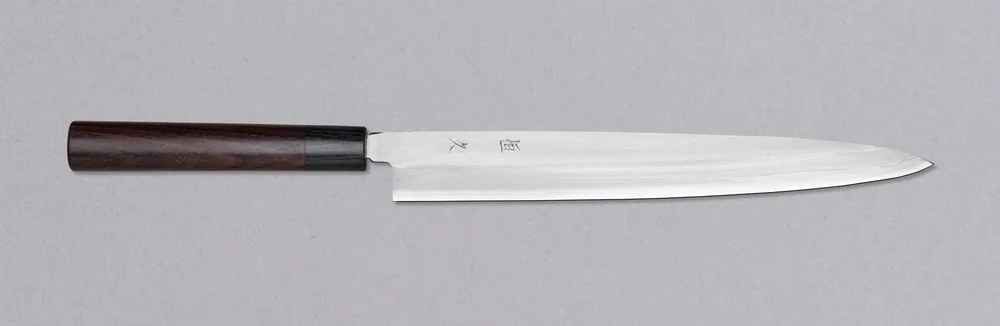
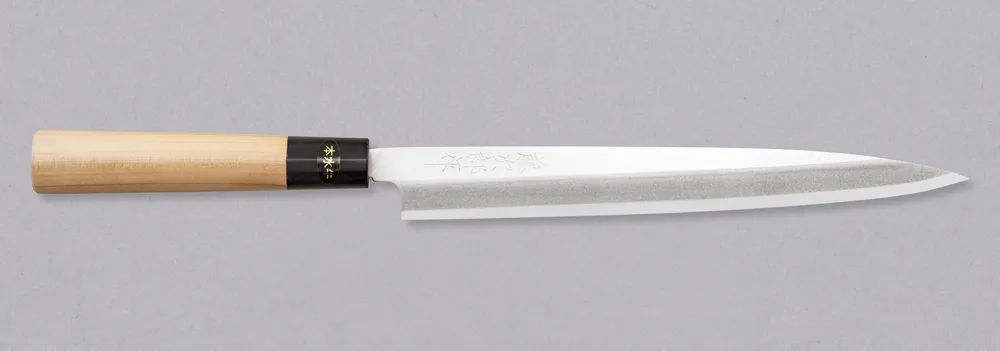
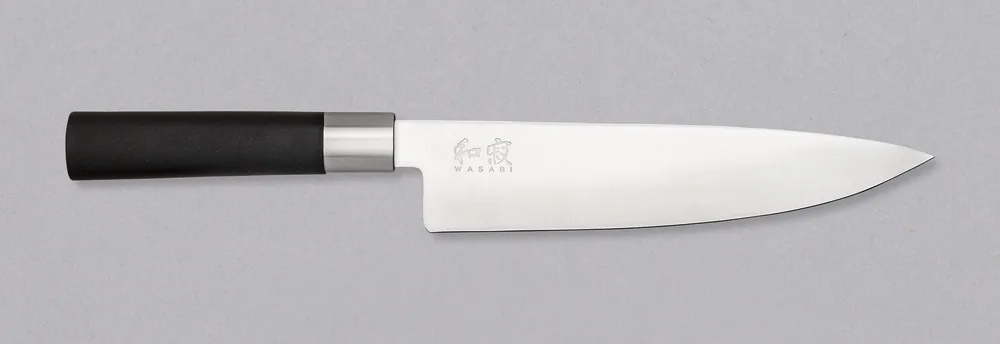
A few notes on the table: the Tojiro MV Stainless Yanagiba is a solid pick for someone easing into single-bevel knives without committing to carbon-steel maintenance. The combination of Mo-V stainless steel, a genuine single-bevel grind, and no rust-prevention routine to learn makes it a practical starting point, even if it isn’t the cheapest option on this list. The Tojiro Shirogami Yanagiba is the pick to upgrade to once you’re comfortable with maintenance routines.
What First-Time Buyers Get Wrong (And How to Avoid It)
A few patterns show up repeatedly when beginners buy Japanese knives and end up disappointed.
First, going too long on the yanagiba. A 330mm blade looks impressive but is genuinely difficult to maneuver in a home kitchen with limited counter space. The yanagiba in this guide are 240mm and 270mm.
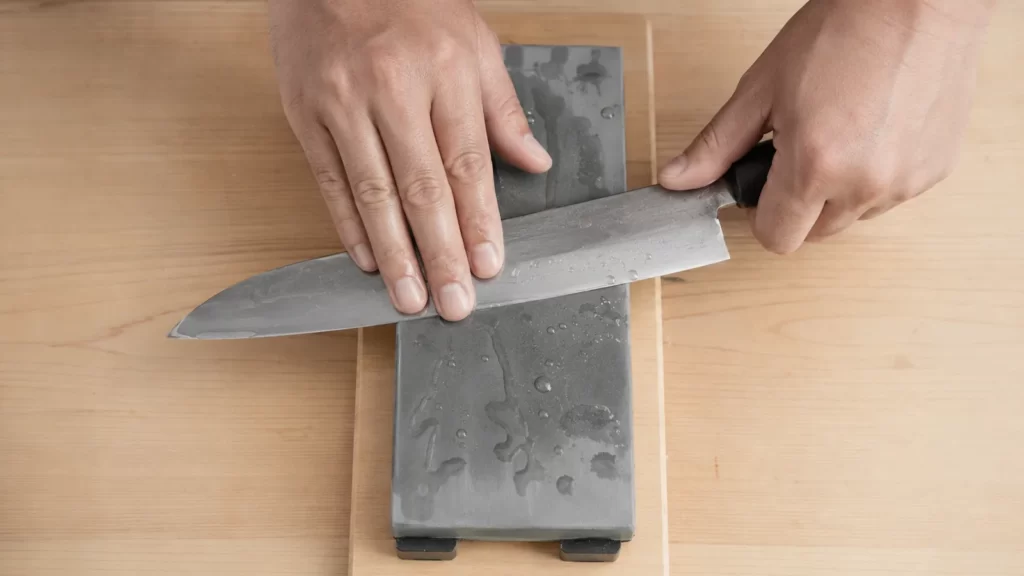
Second, ignoring sharpening from day one. Japanese knives arrive sharp, but that edge will degrade. A whetstone — specifically a combination 1000/3000 grit stone — is not optional equipment. Budget for it alongside the knife. Makers differ on honing rods: Shun, for example, sells a honing steel for its own knives and says honing about once a week may be enough, depending on use, so follow the guidance for your knife.
Third, buying a single-bevel yanagiba if you’re left-handed without checking availability. Most yanagiba are ground for right-handed use. Left-handed versions exist but need to be specifically requested.
Fourth, assuming higher price equals better fit. A $350 hand-forged blade with a narrow octagonal handle might be physically uncomfortable for someone with large hands who prefers a western-style grip. If possible, read detailed handle dimension specs before buying online.
Maintenance Basics That Protect Your Investment
Buying a quality Japanese knife and then washing it in the dishwasher or leaving it wet on a metal rack is a straightforward way to ruin it within months. The maintenance requirements are not complex, but they are non-negotiable.
- Always hand-wash with mild soap and dry immediately. Moisture sitting on the blade causes rust on carbon steel and discoloration on reactive stainless.
- Store on a magnetic knife strip or in a wooden knife block. Rattling around in a drawer damages the edge geometry and is a safety hazard.
- Sharpen on a whetstone rather than a pull-through sharpener. Pull-through devices remove more metal than necessary and can alter the single-bevel geometry of a yanagiba.
- For carbon steel knives, apply a very light coat of food-safe camellia oil if the knife will be stored for more than a few days without use.
- Re-handle as needed. Japanese knives often use replaceable wa (Japanese-style) handles secured with a simple friction fit. A worn handle doesn’t mean the blade is finished.
The time investment is small: a wash, a dry and proper storage after each session.
Frequently Asked Questions
Which Japanese knife is used to slice fish for sushi and sashimi?
The yanagiba, a long single-bevel slicer made for cutting raw fish into sashimi and nigiri toppings. A deba is a thick, heavy single-bevel knife for breaking down whole fish, not a slicer. A gyuto is a double-bevel chef’s knife that covers fish prep along with general kitchen work.
How long are the yanagiba in this guide?
240mm and 270mm: the Tsunehisa Yanagiba and the Tojiro Shirogami Yanagiba are 240mm, and the Tojiro (Fujitora) MV Stainless Yanagiba is 270mm.
Which yanagiba in this guide are stainless steel?
The Tsunehisa Yanagiba 240mm (AUS-8 stainless) and the Tojiro (Fujitora) MV Stainless Yanagiba (Mo-V stainless). The Tojiro Shirogami Yanagiba is White Steel #1, a carbon steel that needs drying after every use to prevent rust.
How often should a Japanese knife be honed?
Makers differ, so follow the guidance for your knife. Shun, for example, sells a honing steel for its own knives and says honing about once a week may be enough, depending on use.
What is the difference between a yanagiba and a sujihiki?
Both are long slicers. A yanagiba is single-bevel and made for cutting raw fish into sashimi and nigiri toppings. A sujihiki is double-bevel, works in either hand and is used mainly for meat. Best Japanese Sujihiki Knife 2026: 3 Slicing Knives for the US, UK and Europe covers the sujihiki.
Do I need a yanagiba to make sushi at home?
Not always. A yanagiba is made for slicing raw fish for sashimi and nigiri; if most of your sushi is rolls, a double-bevel gyuto, which covers fish prep along with general kitchen work, may be enough. This guide includes the Misono UX10 Gyuto for that case, alongside two yanagiba.
Where to Buy: A Note on Retailers
Buying Japanese knives from a specialist retailer rather than a general marketplace matters more than most people realize. The reasons are practical, not snobbish.
Specialist retailers often provide accurate steel specifications and customer support from people familiar with the products, and some carry left-hand variants.
No single retailer is universally ‘best.’ Check current inventory, shipping terms, and return policies for your region before deciding.
Ready to buy? Use the links in the picks above to check current prices and in-stock options at SharpEdge and Amazon before you decide.
If you’re just starting out, check out our guide on choosing the best Japanese knife for beginners. And if you’re curious about the differences between Japanese and Western knives, that comparison is here as well.
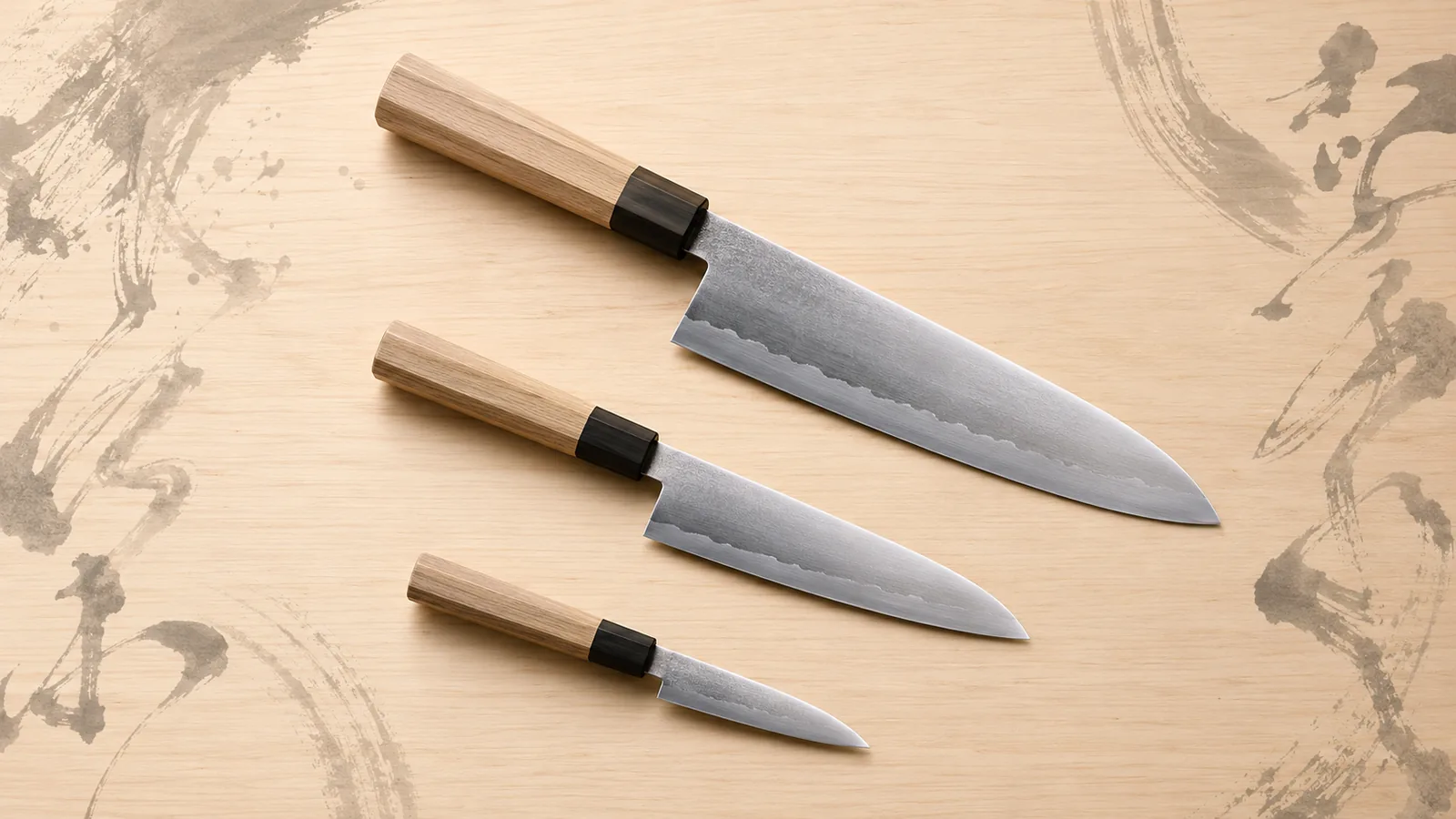
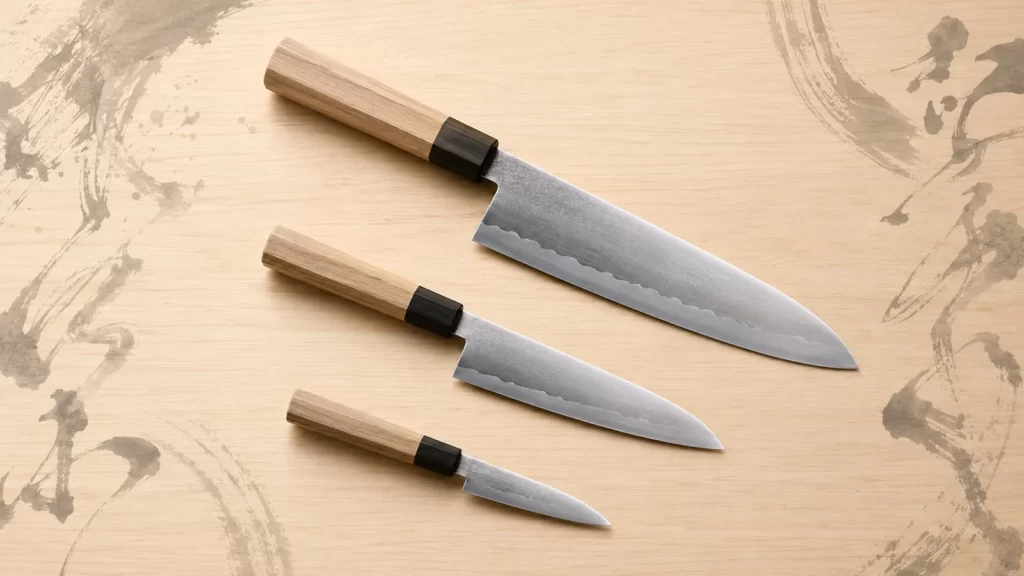
Product images are illustrative renderings based on retailer product photos.