This article contains affiliate links. If you buy through them, we may earn a commission at no extra cost to you.
How this article was made: Research-based comparison. It draws on published information from makers, retailers, and reference sources, not on hands-on testing.
Quick picks
- Shun Medium Hinoki Cutting Board — $54.95
- Shun Large Hinoki Cutting Board — $89.95
- Hasegawa Cutting Board 440 × 290 mm — ~$168 (€150.00); out of stock Oct 10
Prices checked on October 7, 2026.
The Short Answer
Shun, the knife maker, says to use a cutting board “made out of softer materials” that will give under the blade, such as its own hinoki (Japanese cypress) boards, and asks owners not to cut on “metal, tile, ceramic plates, marble, granite, plastic, or acrylic”. That advice is from Shun’s FAQ. Hasegawa, a Japanese maker of professional cutting boards, takes a different route: its boards have a wooden core with what the maker calls a very soft plastic on the surface. The two makers’ statements are reported separately below. The three boards below come from two makers, Shun (Kai) and Hasegawa. These are the two makers whose own pages state where the boards, or the factories that make them, are; this guide does not cover other brands.
| Board | Price | Material | Made in |
|---|---|---|---|
| Shun Medium Hinoki Cutting Board | $54.95 | Hinoki | Japan (per Shun) |
| Shun Large Hinoki Cutting Board | $89.95 | Hinoki | Japan (per Shun) |
| Hasegawa Board 440 × 290 mm | ~$168 (€150.00); out of stock Oct 10 | Soft synthetic surface, wood core | Not stated (see below) |
The two Shun boards are sold by Amazon.com; the Hasegawa board is sold by SharpEdge, which ships from Europe. Sizes are given with each board below. Amazon.com prices were checked on October 7, 2026 (not signed in, New York ZIP code). The SharpEdge price is in euros, converted at the ECB reference rate of 1 EUR = 1.1206 USD on October 9, 2026; shipping is not included.
Why the Board Matters More with a Japanese Knife
A hard, thin edge needs a surface that gives. Japanese knives are ground thin and hardened more than most Western knives, which is what lets them take a keen edge. The same hardness makes the edge less tolerant of hard surfaces.
Shun’s FAQ puts it plainly. It recommends a cutting board “made out of softer materials” that will give under the blade, and offers a simple test: if the knife can leave a slight cut line in the board, the board is soft enough. It asks owners to avoid cutting on “metal, tile, ceramic plates, marble, granite, plastic, or acrylic”, because these hard surfaces dull and chip the blade, and adds that titanium cutting boards fall into the same category. Elsewhere in the FAQ, Shun says never to use a hard surface such as marble or glass, and recommends “softer wood, like Hinoki Cutting Boards”.
Technique matters as well. Shun describes a gliding cut, rather than chopping straight down hard against the board, as part of what keeps chipping away. For the wider picture of how these knives differ, see Japanese Knife vs Western Knife.
Hinoki Boards: Shun’s Own Recommendation
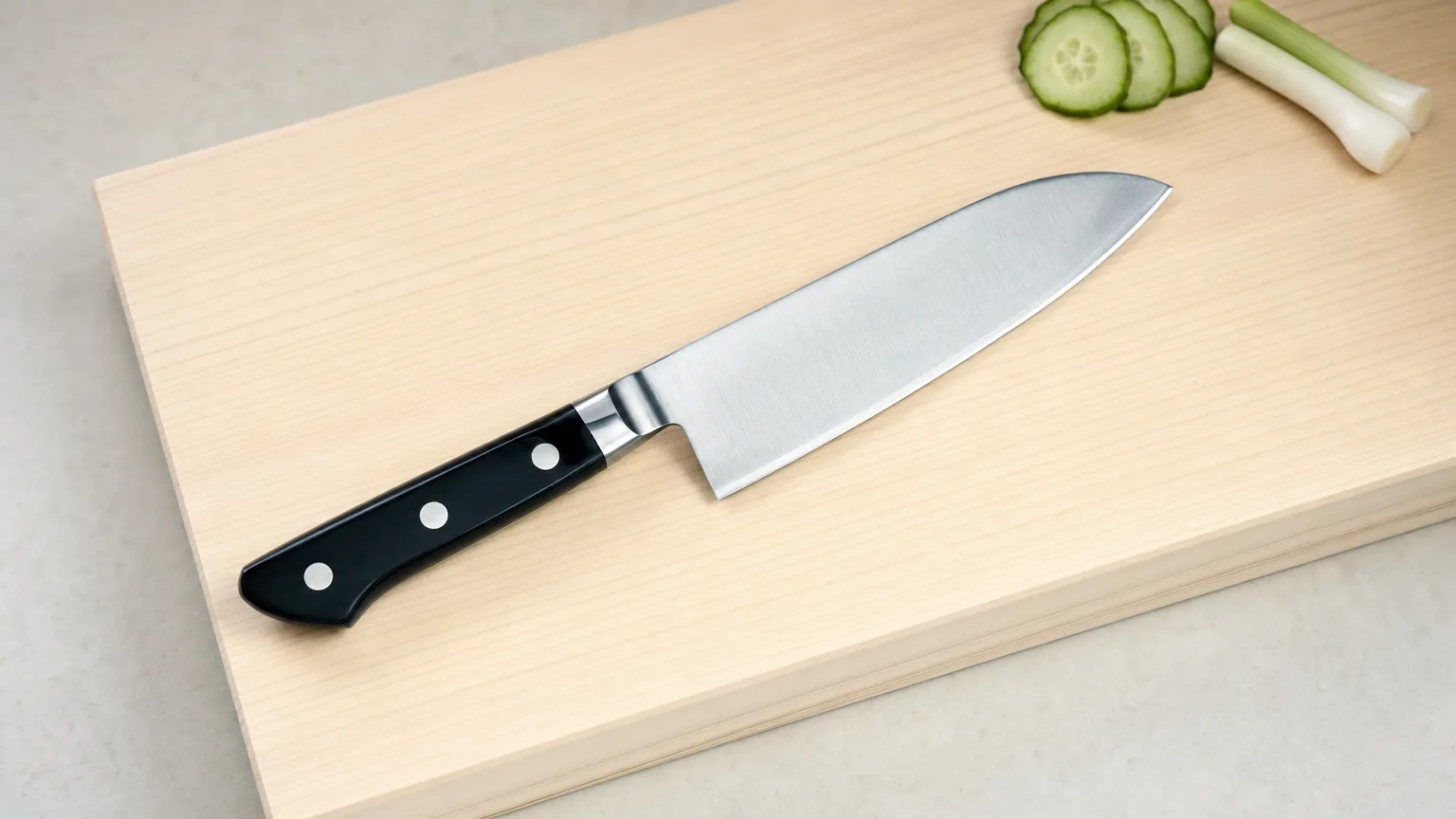
Hinoki is a medium-soft Japanese cypress, and Shun sells boards made from it for exactly this purpose. Shun describes the wood as one that “gives” as you cut, which helps preserve the edge, and says its boards use hinoki grown in Japan from forests certified by the Forest Stewardship Council. Each board’s product page lists Japan as the country of origin.
The Shun Medium Hinoki Cutting Board — $54.95 on Amazon.com — measures 15.75 × 10.75 × 0.5 inches and weighs 21 oz (595 g) by Shun’s figures. Shun describes it as a size for general cutting that is compact and easy to store.
Japan Check
Made in: Japan (per Shun’s product page: “Country of Origin Japan”)
Material: Hinoki grown in Japan, FSC certified (per Shun)
Size: 15.75 × 10.75 × 0.5 in, 21 oz (595 g)
Sold by: Amazon.com
Checked Against: shun.kaiusa.com, amazon.com
Last Checked: 2026-10-07
The Shun Large Hinoki Cutting Board — $89.95 on Amazon.com — is 17.75 × 11.75 × 0.75 inches and 46 oz (1,304 g). It is a quarter-inch thicker than the Medium, and Shun describes it as the size for all general-purpose cutting tasks.
Japan Check
Made in: Japan (per Shun’s product page: “Country of Origin Japan”)
Material: Hinoki grown in Japan, FSC certified (per Shun)
Size: 17.75 × 11.75 × 0.75 in, 46 oz (1,304 g)
Sold by: Amazon.com
Checked Against: shun.kaiusa.com, amazon.com
Last Checked: 2026-10-07
Shun’s care instructions for hinoki are short:
- Wet the board before each use to help resist staining
- Wash with mild detergent, towel dry, then let it air-dry away from direct sunlight
- Rub a cut lemon across a stain to clean it
- If the board starts to curve, turn it over and use the other side until it flattens again
- Do not put it in the dishwasher
A Soft Synthetic Board: Hasegawa
Hasegawa is a Japanese maker of professional kitchen equipment whose main product is the cutting board. The company, Hasegawa Kagaku, lists the manufacture and sale of professional cooking equipment as its business and has its head office and factory in Yachiyo and a second factory in Togane, both in Chiba Prefecture (company profile).
The Hasegawa Cutting Board 440 × 290 mm — €150.00 at SharpEdge, about $168 — is built differently from a wooden board. (It was out of stock at SharpEdge on October 10, 2026; check the listing for current availability.) Hasegawa says its cutting boards have a wood core, which makes them 30–50% lighter than other plastic boards and rigid enough that “very soft plastic” can be applied to the surface; it describes the soft surface as suitable for Japanese knives with delicate blades (Hasegawa, “Our Cutting Boards”). On the page for its soft cutting boards, the maker says the board cushions the knife, “unlike typical synthetic boards”, and is dishwasher safe. SharpEdge’s listing for this board describes the surface as a specialized rubber over a wooden core.
Note the difference from Shun’s advice. Shun’s list of surfaces to avoid includes plastic; Hasegawa’s board is a synthetic board that its maker describes as soft-surfaced. Each statement is the maker’s own, and this guide does not rank one above the other.
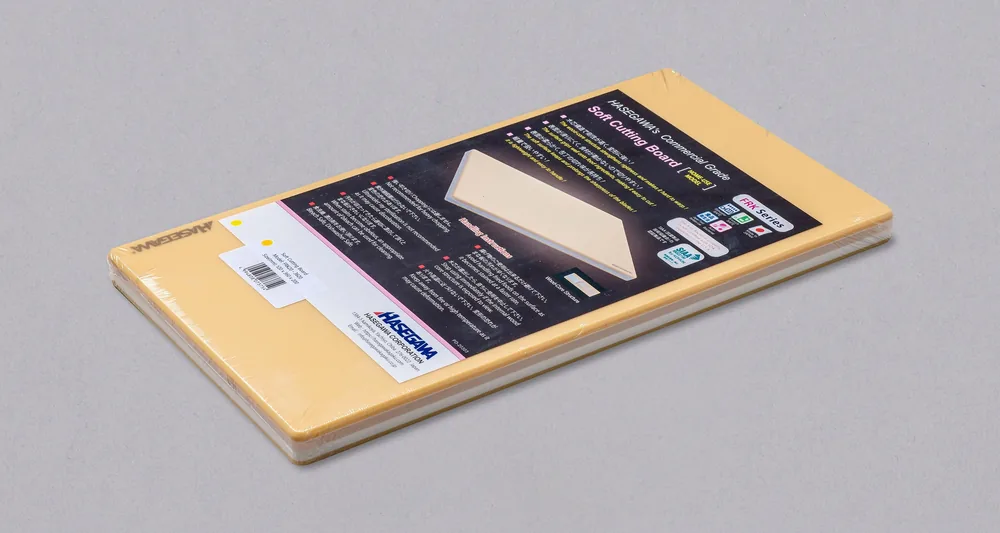
US buyers should add shipping (€10 on orders under €300) and a tariff that SharpEdge charges at checkout on non-knife items, 10–15% according to its shipping page.
Japan Check
Made in: Not stated for this item (maker: Hasegawa Kagaku, a Japanese company with factories in Chiba Prefecture)
Material: Wood core with a soft plastic surface (per Hasegawa); “specialized rubber” surface per the retailer
Size: 440 × 290 mm (17.3 × 11.4 in)
Checked Against: hasegawakagaku.co.jp, hasegawakagaku.com, sharpedgeshop.com
Last Checked: 2026-10-07
Which Board to Buy, by Where You Live
In the US, the Shun boards on Amazon.com are the simple choice: they are sold by Amazon itself and there is no import charge to work out. The Medium is the more compact of the two; the Large is thicker and gives a longer knife more room.
In the UK and Europe, SharpEdge is the nearer source. It sells the Hasegawa board above and a Kai Shun Hinoki Cutting Board in a large size at €80.00. SharpEdge’s listing does not give the same dimensions as Shun’s US page, so check the size on the listing before ordering.
Whichever board you choose, the knife still needs looking after. How to Store and Maintain a Japanese Knife covers drying and storage, and Best Japanese Sharpening Stones covers what to buy when the edge finally needs work. If you are still choosing the knife itself, start with Best Japanese Knife for Beginners.
Frequently Asked Questions
What is the best cutting board material for Japanese knives?
Shun, the knife maker, recommends a board made of softer materials that give under the blade, such as its hinoki boards, and says that if the knife can leave a slight cut line in the board, the board is soft enough. Hasegawa, a Japanese cutting board maker, describes its wood-core boards with a soft plastic surface as suitable for Japanese knives.
Which cutting surfaces should I avoid with a Japanese knife?
Shun asks owners to avoid cutting on metal, tile, ceramic plates, marble, granite, plastic or acrylic, because hard surfaces dull and chip the blade.
Are Shun hinoki cutting boards made in Japan?
Yes. Shun’s product pages for its hinoki boards list Japan as the country of origin and say the hinoki is grown in Japan in FSC-certified forests.
How do I care for a hinoki cutting board?
Shun’s instructions: wet the board before each use, wash with mild detergent, towel dry and let it air-dry away from direct sunlight, clean stains with a cut lemon, turn the board over if it starts to curve, and keep it out of the dishwasher.
Still choosing the knife? Start with Best Japanese Knife for Beginners.
Comments