How this article was made: Research-based comparison. It draws on published information from makers, retailers, and reference sources, not on hands-on testing.
Why Japanese Knives Demand More Careful Storage
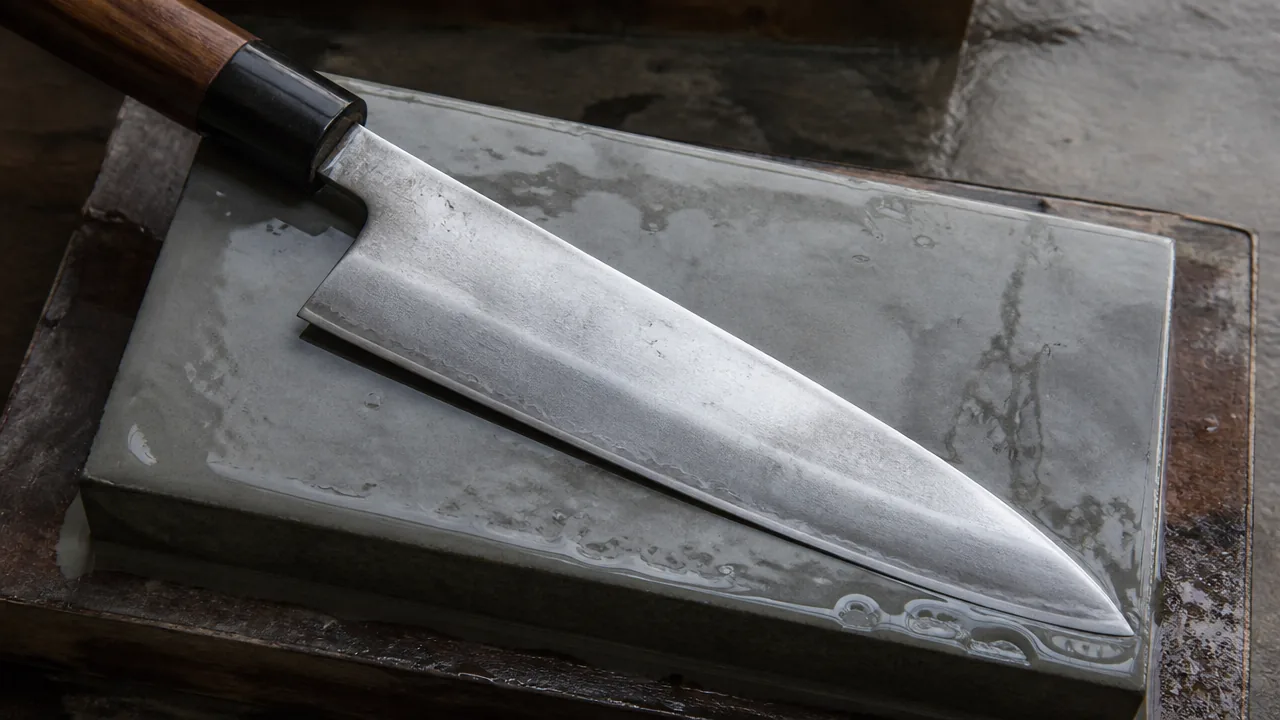
Japanese knives require more attentive storage than most Western knives for two straightforward reasons: many are made from carbon steel that reacts quickly to moisture and acidic food residue, and their edges are ground to a notably acute angle that makes them far more vulnerable to chipping when mishandled. If you have just worked through the process described in our How to Sharpen a Japanese Knife with a Whetstone: Step-by-Step Guide, the last thing you want is to undo that effort through careless storage. The good news is that the habits required are not complicated — they simply need to be consistent. This guide covers everything from the moment you finish cooking to what to do if rust has already appeared.
Daily Cleaning and Drying: The First Line of Defense Against Rust
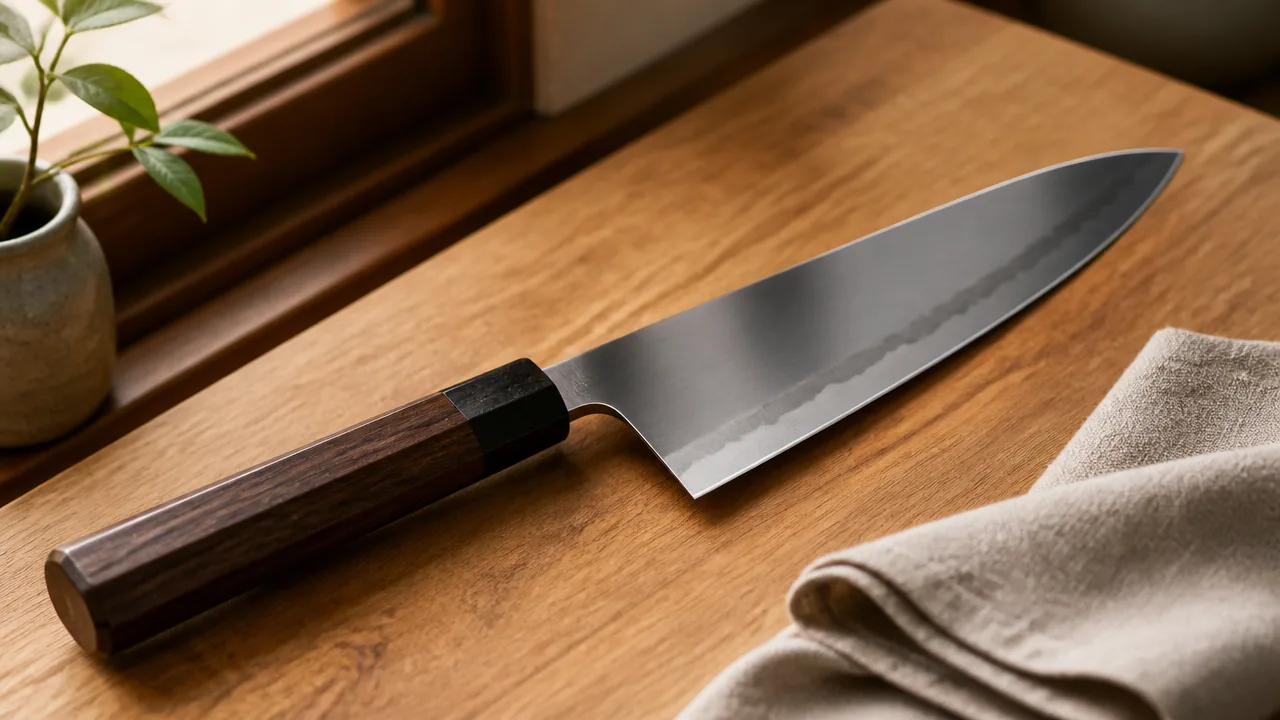
The single most effective thing you can do to prevent rust is to clean and dry your knife immediately after each use — not after dinner, not after the next course, but right away. Leaving acidic ingredients like citrus juice, tomato, or onion on a carbon steel blade even for a short time is enough to start surface oxidation.
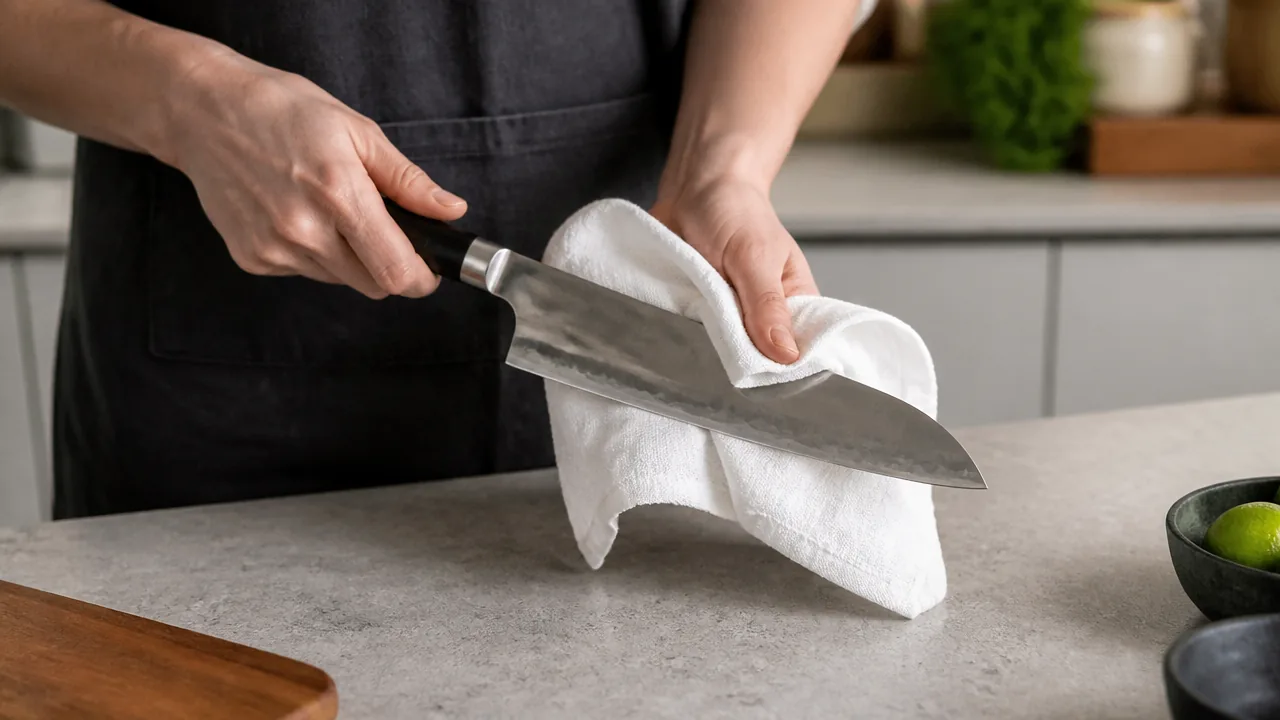
Here is a reliable routine to follow after every use:
- Rinse the blade under warm water while gently wiping both sides with a soft sponge or cloth. Avoid abrasive scrubbing pads, which can scratch the finish and remove any protective patina that has developed on carbon steel over time.
- Use a small amount of mild dish soap if needed, then rinse thoroughly.
- Dry the blade completely with a clean towel right away, paying attention to the area where the blade meets the handle, where moisture tends to collect.
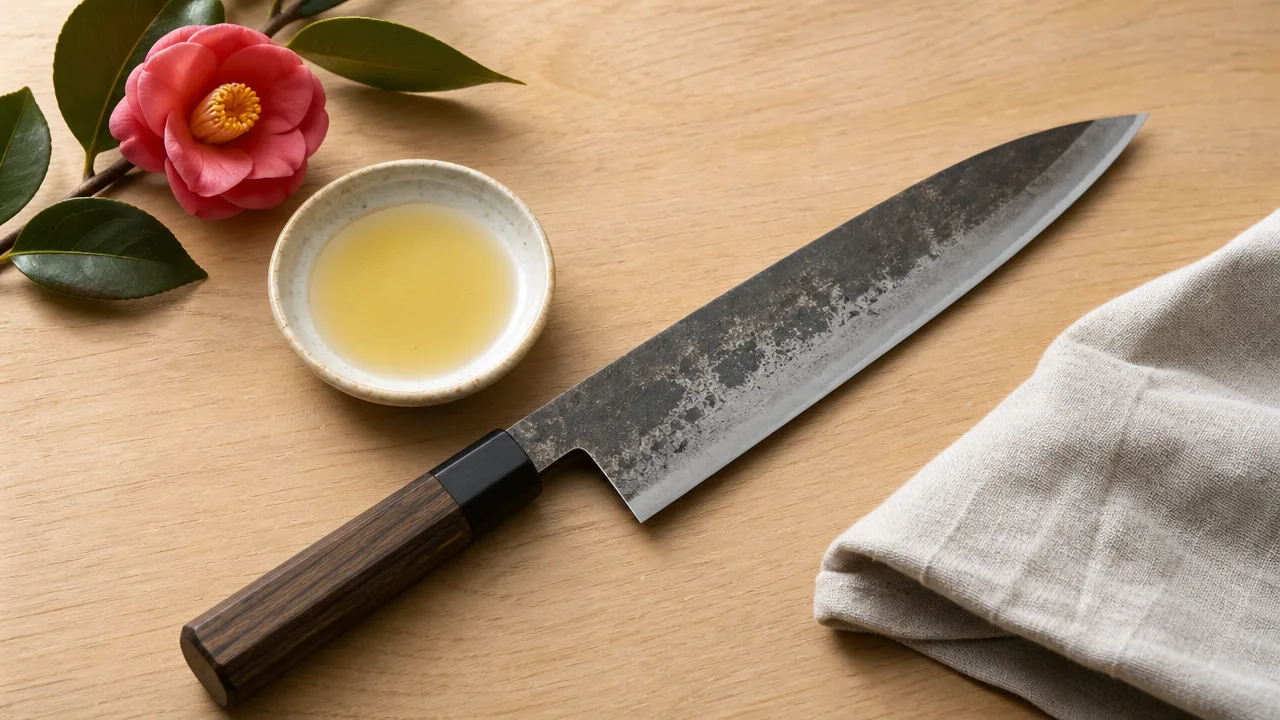
- For carbon steel knives — Shirogami, Aogami, and similar reactive steels — applying a very light coat of food-safe oil before storage adds a useful layer of protection, particularly if the knife will sit unused for a while. Camellia oil is a traditional choice, though any food-safe neutral oil works.
If you are unsure whether your knife is carbon steel or stainless, the Japanese Knife Steel Types Explained: VG-10 vs Damascus vs Aogami and Shirogami article covers the differences in detail. Stainless steel knives like those made with VG-10 are considerably more forgiving, but prompt drying is still a good habit regardless of steel type.
Storage Options: Comparing the Main Choices
How you store a knife between uses matters as much as how you clean it. There is no single best method — each option has genuine trade-offs depending on your kitchen layout, how many knives you own, and whether you need portability.
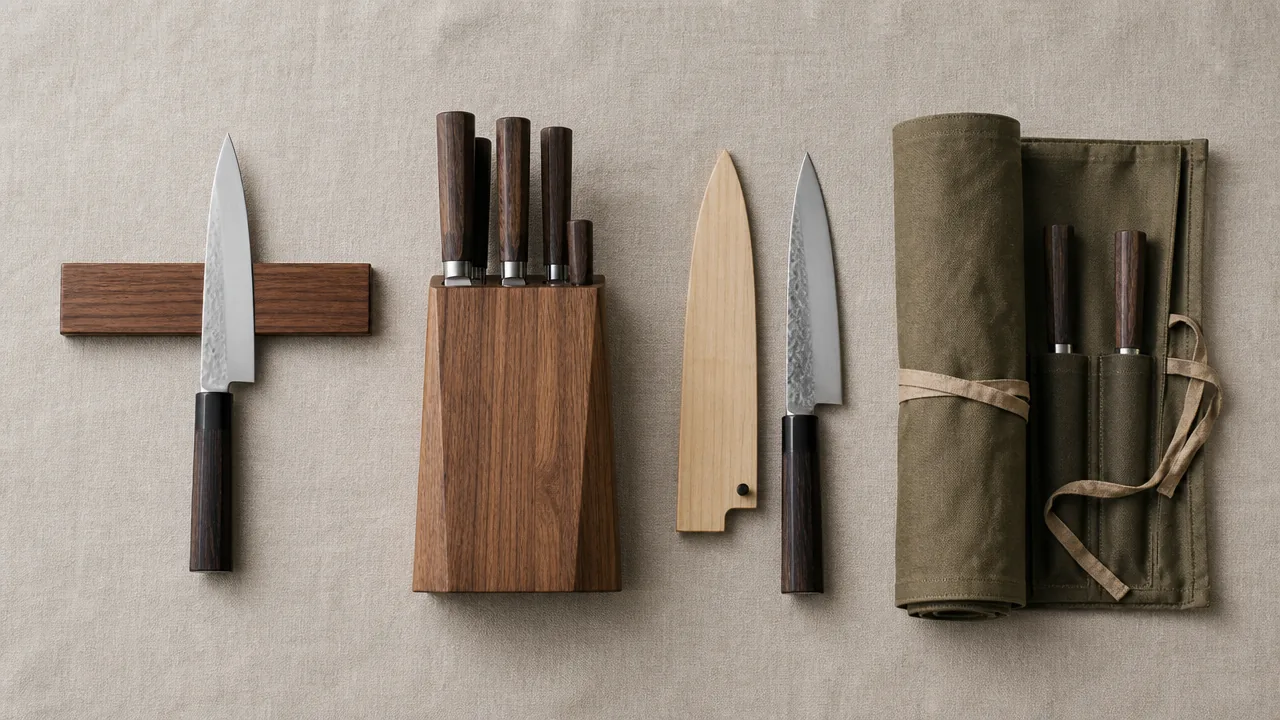
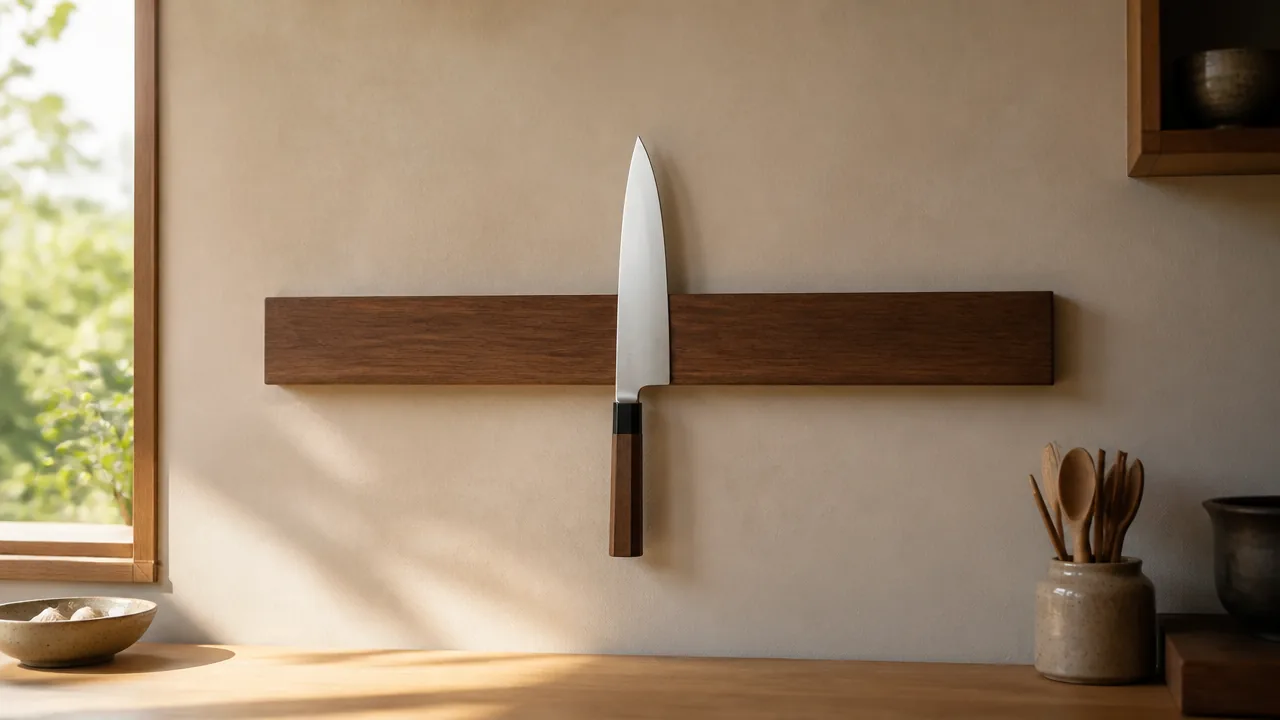
- Magnetic knife strip: Mounts on the wall and keeps blades fully exposed to air, which aids drying. Space-efficient and allows quick access. The main caution is placement: the magnet should be strong enough to hold the knife securely, and you should set the blade down flat against the strip rather than dragging it across. A strip that is too weak, or a careless snap-and-drag motion, can cause chips over time.
- Wood knife block: A classic option that protects blades from contact with other utensils. The important detail is how you insert and remove the knife — always orient the blade edge upward or at a safe angle when sliding it into a slot, rather than pressing the edge against the wood. Repeated friction along the edge is a common and underappreciated cause of minor chipping.
- Blade guard or saya (sheath): A fitted plastic or wooden guard that slips over the blade is ideal for knives stored in a drawer or for travel. It protects both the edge and anyone reaching into the drawer. One practical note: make sure the blade is completely dry before fitting the guard, as trapping moisture inside accelerates rust on carbon steel.
- Knife roll: A canvas or leather roll holds multiple knives in individual pockets and is the preferred option for professional cooks who transport their knives. It offers good edge protection but is less convenient for everyday kitchen storage where quick access matters.
Handling Practices That Prevent Chips
A Japanese knife’s edge is typically ground to a more acute angle than most Western knives, which is precisely what gives it exceptional cutting performance — and also what makes it more prone to chipping when used on the wrong materials or in the wrong way. The hardness that helps Japanese blades hold an edge also makes them somewhat more brittle, so understanding the limits of the tool is important.
The causes of chipping outside of storage are easy to avoid once you know them:
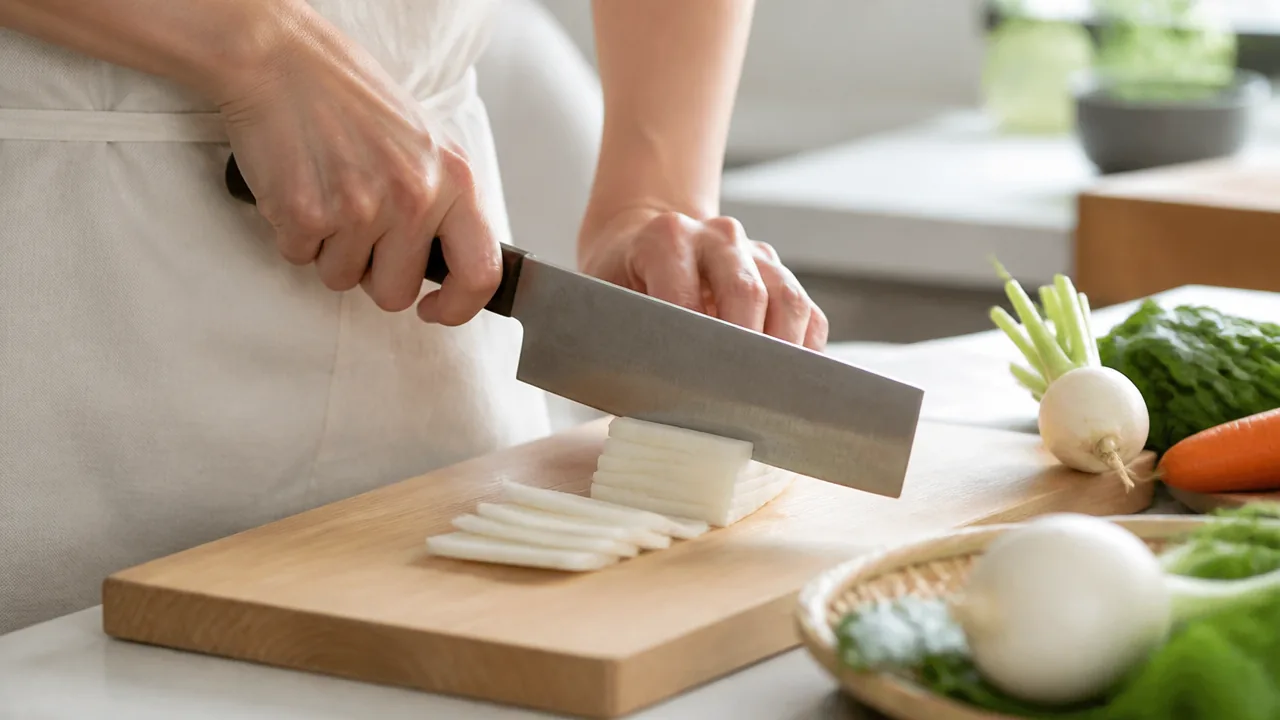
Choose your cutting surface carefully. Shun’s FAQ recommends a board made of softer material that gives under the blade, such as hinoki wood, and asks owners not to cut on metal, tile, ceramic plates, marble, granite, plastic or acrylic, because hard surfaces dull and chip the edge. Best Cutting Board for Japanese Knives covers two makers’ boards.
Do not use a Japanese knife on bones, frozen food, or hard-rind squash. These tasks are better suited to heavier, more robust knives. Even a single forceful contact with a frozen surface can cause a visible chip in an otherwise well-maintained edge.
Avoid any twisting or lateral force during a cut. Japanese knives are designed for clean, vertical slicing or push-cuts. Prying, twisting, or using the blade as a lever puts stress on the edge at angles it was not designed to handle.
Never store the knife loose in a drawer with other utensils. Random contact with other metal tools — ladles, peelers, other knives — is one of the most reliable ways to chip an edge without even realizing it happened.
What to Do When Rust Appears
Even with careful habits, surface rust can appear on carbon steel — particularly in humid kitchens or if a knife was put away slightly damp. The important distinction is between light surface oxidation, which is very common and relatively straightforward to address, and deeper corrosion or pitting, which requires a different approach.
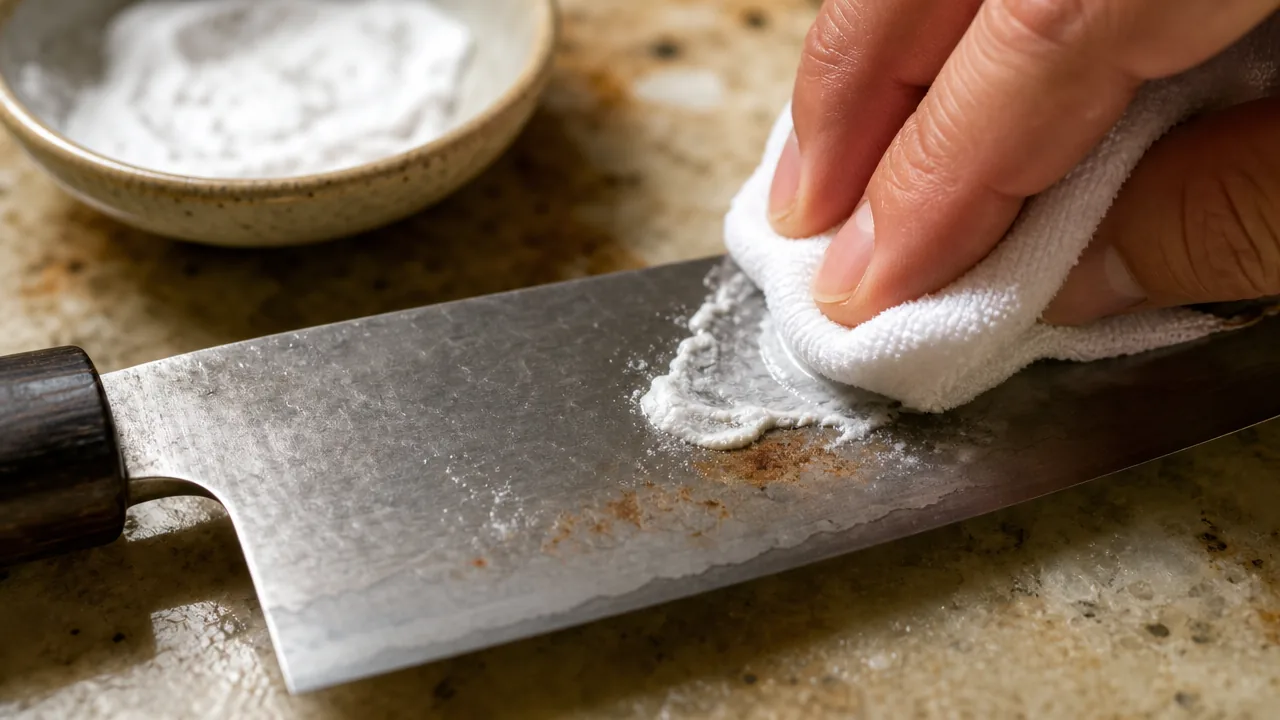
For light surface rust — the kind that appears as reddish-brown discoloration without any texture or depth — a simple home remedy works well. Make a paste from baking soda and a small amount of water, then use a soft cloth or non-abrasive sponge to gently work it over the affected area in circular motions. Rinse thoroughly and dry immediately and completely afterward. This approach is gentle enough not to damage the blade finish when used carefully.
If the rust has penetrated the surface and left small pits or craters in the steel — sometimes called pitting — baking soda paste will not be sufficient. At that stage, the metal itself has been compromised, and the only real solution is professional sharpening and polishing to remove the damaged layer. Attempting to aggressively abrade deep pitting at home risks scratching the blade unevenly or thinning the steel in an uncontrolled way. If your knife has reached that point, consulting a professional knife sharpener is the right call. For knives you want to bring back to peak condition, our Best Japanese Knife Sharpening Stones for Beginners (2026 Guide) is a useful next step if you want to understand the re-sharpening process yourself.
Frequently Asked Questions
Can I put a Japanese knife in the dishwasher?
No. Dishwashers are consistently harmful to Japanese knives for several reasons at once. The high heat and strongly alkaline detergents accelerate oxidation and discoloration on carbon steel, and even stainless steel blades can show signs of corrosion over time. The blade can make contact with other dishes and utensils during the wash cycle, which is a reliable way to chip a fine edge. If the knife has a wooden handle, repeated dishwasher cycles will cause the wood to absorb water, swell, crack, and eventually loosen the handle altogether. Handwashing takes only a few seconds and avoids all of these problems.
How often should I oil my carbon steel knife?
There is no fixed schedule that applies to every situation. The general guidance is to apply a very light coat of food-safe oil periodically, and particularly if the knife will sit unused for a while — a week or more, or during a trip away from home. In a kitchen where the knife is used and properly dried every day, oiling every single use is unnecessary. The goal is simply to ensure there is a thin protective layer present whenever the blade is going into storage rather than straight back into use.
Is it safe to store a Japanese knife on a magnetic strip?
Yes, when done correctly. The key is the motion of placing and removing the knife. Bring the spine of the knife to the strip first, then lay the flat of the blade against it — do not drag the edge across the magnetic surface. When removing it, lift straight away from the strip rather than sliding. A strip with adequate holding strength for the weight of your specific knife is also important; a knife that can shift or fall is a safety risk as well as a potential source of edge damage.
My carbon steel knife has developed a grayish or dark patina. Is that a problem?
Not at all — in most cases, it is a sign of normal and healthy use. Carbon steel naturally develops a patina as it is exposed to food acids and moisture over time. This darkening is a thin layer of iron oxide that is actually somewhat protective, reducing the rate of further oxidation compared to bare, unpatinated steel. A patina does not affect cutting performance. The distinction worth knowing is between this even, dark gray or dark blue-gray discoloration and the reddish-brown of active rust — the latter requires attention, while the former is simply the steel aging as expected.
Putting It All Together
Good knife maintenance is not complicated, but it does reward consistency. The habits that matter most — rinsing and drying immediately after use, choosing an appropriate storage method and using it correctly, avoiding hard surfaces and lateral stress during cutting — are all straightforward once they become routine. Carbon steel knives in particular ask for a little more daily attention than their stainless counterparts, but that attention is quick, and the reward is a blade that stays sharp, stays clean, and develops character over years of honest use.
If you are working to build a complete knife-care practice, proper storage and maintenance only make sense alongside regular sharpening. A knife that is carefully stored but never sharpened will still gradually lose its edge, while a freshly sharpened knife stored carelessly can lose that edge overnight. The two practices work together, and getting comfortable with both is what separates a knife that lasts decades from one that disappoints within a year.
If you are ready to take the next step, our sharpening and steel guides are there whenever you need them.