How this article was made: Research-based comparison. It draws on published information from makers, retailers, and reference sources, not on hands-on testing.
Kiritsuke vs Gyuto: The Short Answer
A Kiritsuke is generally a step up in difficulty from a Gyuto, not a straightforward substitute for one. It rewards an experienced hand with a distinctive shape and a genuinely precise tip, but its geometry punishes bad habits far more than a Gyuto’s does. If you’re choosing your first serious Japanese chef’s knife, a Gyuto is almost always the better starting point; the Kiritsuke is worth considering once you already know how you like to cut and sharpen.
This guide compares the two shapes directly: what actually makes a Kiritsuke different from a Gyuto, why the Kiritsuke has a reputation as an advanced knife, and how to decide which one belongs in your kitchen.
What Is a Kiritsuke?
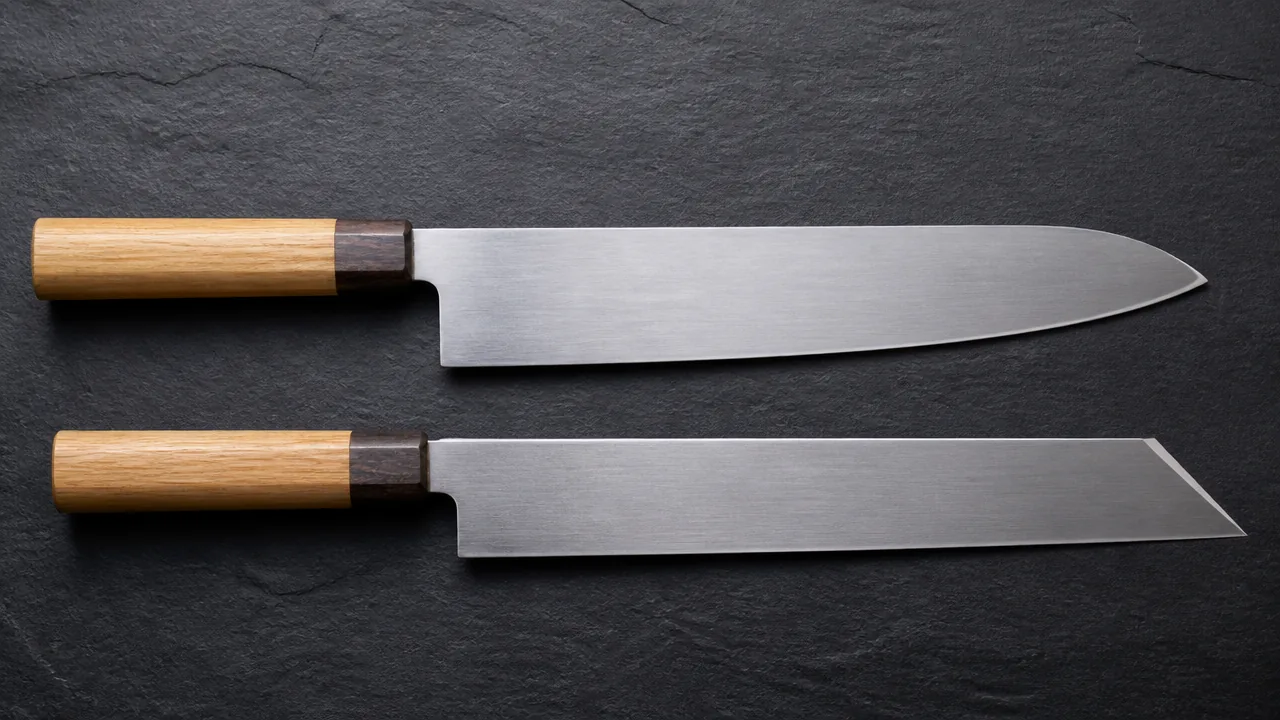
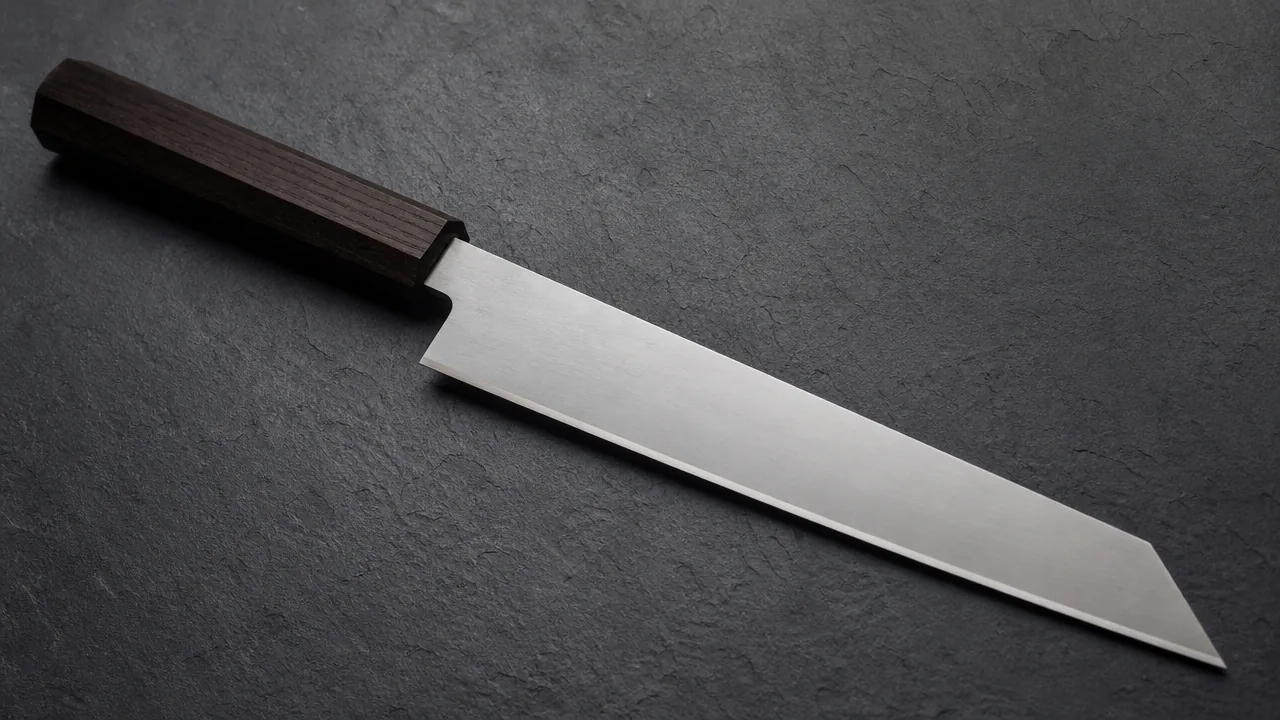
The Kiritsuke (切付) is a long, angular-tipped Japanese knife shape that occupies an unusual place in kitchen knife history. Its blade combines a straight cutting edge for most of its length with a distinctive sloped, angular tip — a profile sometimes described as a ‘reverse tanto’ point, since the spine slopes down to meet the edge rather than the edge curving up to meet the spine.
The knife is often described, in cutlery literature and by retailers, as having traditionally been reserved for head chefs (itamae) in professional Japanese kitchens, sometimes framed as a mark of seniority rather than a knife issued to every cook on staff. The precise origins of this custom, and how strictly it was ever actually followed, are difficult to verify and vary by source, so it’s worth treating that history as a commonly repeated account rather than settled fact. What’s better documented is the shape itself: the Kiritsuke was built to combine some of the vegetable-cutting range of an Usuba with some of the slicing capability of a Yanagiba, in a single blade for a cook skilled enough to use both functions well.
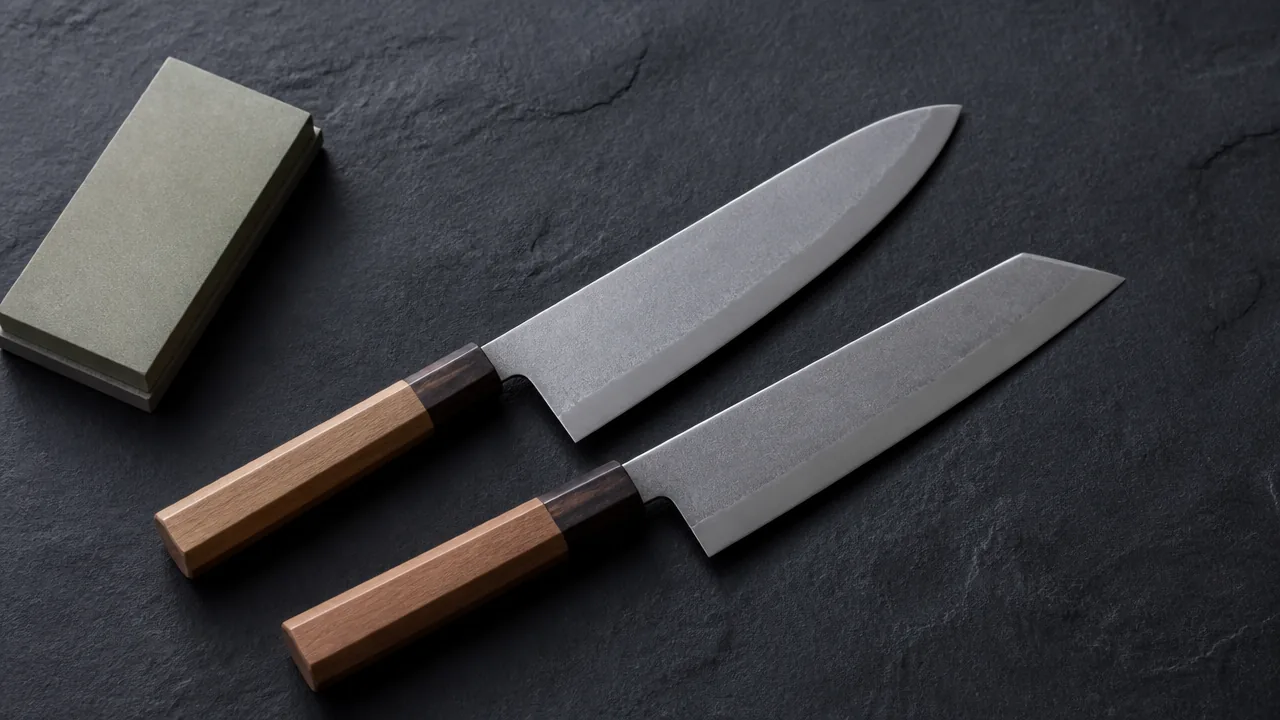
Traditionally, a Kiritsuke is ground as a single bevel knife, similar in that respect to a Yanagiba or Usuba — a construction covered in more depth in our guide to single bevel versus double bevel Japanese knives. Double bevel Kiritsuke versions, ground symmetrically like a Gyuto, have become common outside professional Japanese kitchens and are the more approachable entry point for home cooks curious about the shape.
Structural Differences Between a Kiritsuke and a Gyuto
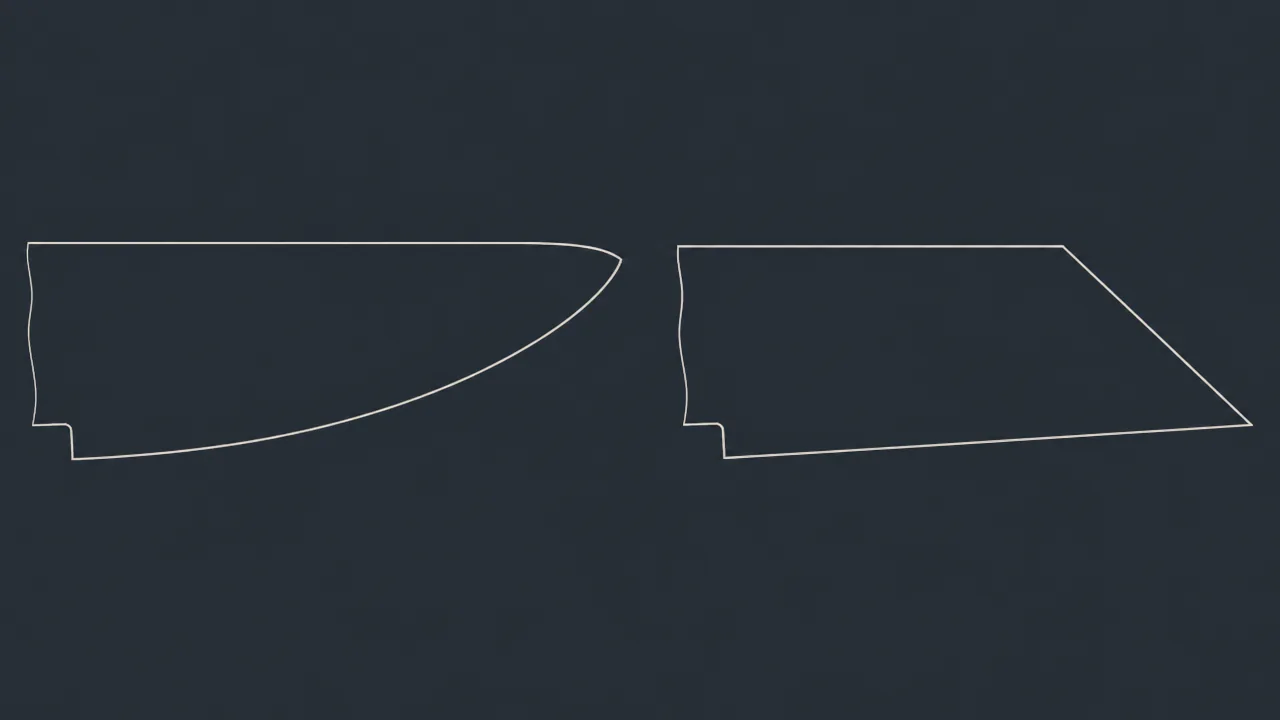
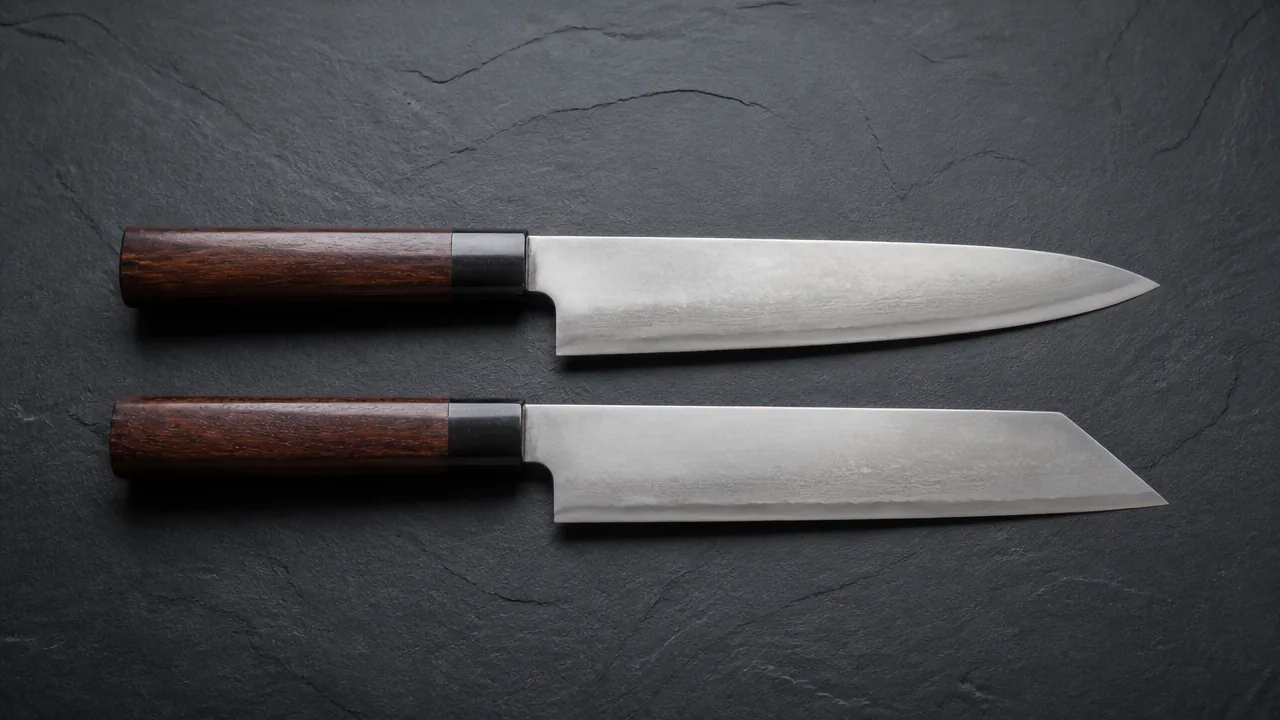
Set a Kiritsuke and a Gyuto side by side and the tip is the first thing that stands out. A Gyuto’s edge curves upward in one continuous belly to meet the spine at a rounded point, the shape that makes rocking cuts through meat and vegetables so natural. A Kiritsuke’s edge, by contrast, runs mostly straight and then meets an angled, sloped spine at a sharp, elongated point — there is no curved belly to rock through a cut the way a Gyuto allows.
Blade length between the two shapes is broadly comparable. Gyutos are typically found in the 210mm to 270mm range, and Kiritsuke are commonly made in similar lengths, often toward the longer end of that range, since the shape was originally built for longer slicing strokes rather than short chopping motions.
Bevel construction is where the two diverge most. The Gyuto is, with rare exception, ground as a double bevel knife at roughly 15 to 20 degrees per side. A traditional single bevel Kiritsuke is ground closer to the 10 to 15 degree range on its cutting face, the same acute-angle territory as a Yanagiba, while double bevel Kiritsuke versions sit closer to the Gyuto’s angle range. Weight and balance also shift: because the Kiritsuke’s tip tapers to such a fine point, the balance point often sits slightly further back toward the handle than on a comparably sized Gyuto, which changes how the knife feels through a full stroke.
Why the Kiritsuke Has a Reputation as an Advanced Knife
Three practical factors explain why the Kiritsuke is rarely recommended as a first knife.
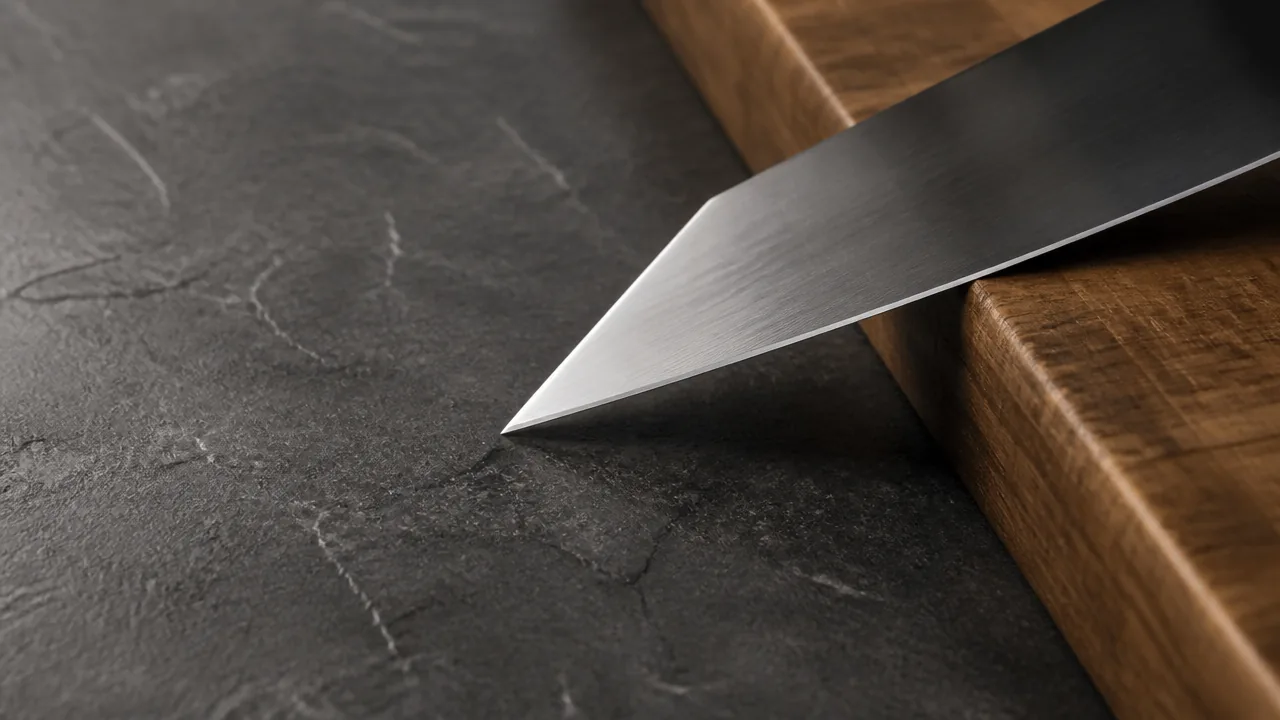
The tip is the most obvious one. That long, acute point is delicate by design — it excels at fine, precise work but is also the first part of the blade to chip if it catches a cutting board at the wrong angle, twists against bone, or takes a lateral knock. A Gyuto’s rounded tip tolerates the same mishandling far better.
Sharpening is the second factor, and it compounds with the bevel type. A double bevel Kiritsuke sharpens using the same basic technique as a Gyuto, at a similar or slightly finer angle. A traditional single bevel Kiritsuke requires the asymmetric sharpening technique used for a Yanagiba or Usuba — working the bevel face and lightly deburring the flat back — which is measurably harder to learn and easier to get wrong on a knife with an already thin, precise tip.
Handling technique is the third. Because the Kiritsuke lacks the Gyuto’s curved belly, it doesn’t rock through a cut the same way. Cooks accustomed to a Gyuto’s motion sometimes find the Kiritsuke’s straighter push-and-pull cutting style takes real re-adjustment before it feels natural, particularly near the tip, where the geometry changes most.
Which Should You Choose?
For most home cooks, especially anyone buying their first serious Japanese knife, a Gyuto remains the more sensible choice. It’s more forgiving of imperfect technique, easier to sharpen, and versatile enough to handle the overwhelming majority of everyday prep without asking you to relearn your cutting motion. Our Gyuto buying guide, linked above, covers picks across skill levels and budgets if you’re starting from scratch.
The Kiritsuke makes more sense once you already own and are comfortable with a Gyuto (or an equivalent double bevel chef’s knife), understand your own sharpening routine, and are specifically drawn to the Kiritsuke’s slicing precision or its place in Japanese kitchen tradition. If you’re curious about eventually working with a single bevel edge, learning on a double bevel Kiritsuke first is a reasonable middle step before committing to the more demanding single bevel version, as covered in the single bevel guide linked earlier.
Steel choice matters here as much as it does for a Gyuto. A softer, more forgiving stainless steel keeps a Kiritsuke’s fragile tip easier to live with while you adjust to the shape, while a harder carbon steel rewards the extra care with a longer-lasting edge. Our guide to Japanese knife steel types breaks down which steels suit which level of commitment.
Frequently Asked Questions
Is a Kiritsuke good for beginners?
Generally not as a first knife. Its angular tip is more fragile than a Gyuto’s rounded point, and if it’s ground as a traditional single bevel, it also requires a sharpening technique that takes longer to learn. A Gyuto or Santoku is the more forgiving starting point for most new cooks.
Can a Kiritsuke do everything a Gyuto can?
Mostly, for slicing and precision cutting, but not comfortably for every task. Because it lacks the Gyuto’s curved belly, it doesn’t rock through a cut the same way, which makes some chopping motions feel less natural. Its fine tip also isn’t well suited to heavier tasks like breaking down bone-in cuts.
Are all Kiritsuke knives single bevel?
No. Traditionally the Kiritsuke was ground as a single bevel knife, similar to a Yanagiba or Usuba, but double bevel versions ground symmetrically like a Gyuto are now common, especially outside professional Japanese kitchens. Double bevel Kiritsuke are generally the more approachable option for home cooks.
What blade length should I look for in a Kiritsuke?
Kiritsuke are commonly available in a similar range to Gyuto knives, roughly 210mm to 270mm, often toward the longer end of that range. The right length depends on the same factors that apply to a Gyuto: your cutting board size, hand size, and how much reach you want for longer slicing strokes.
Whichever shape you choose, the knife that fits your actual cooking habits and sharpening routine will always outperform the one that just looks impressive in a drawer.