This article contains affiliate links. If you buy through them, we may earn a commission at no extra cost to you.
How this article was made: Research-based comparison. It draws on published information from makers, retailers, and reference sources, not on hands-on testing.
- Why a Japanese Knife Set Makes a Thoughtful Gift for New Cooks
- Gyuto vs Santoku: Which Knife Type Should You Gift?
- Budget Guide: What You Can Realistically Expect at Each Price Point
- Top Picks Compared: Three Gift-Ready Options Side by Side
- What Beginners Actually Struggle With — and How to Choose Around It
- Where to Buy: Amazon.com and Chubo Knives
- Frequently Asked Questions
Why a Japanese Knife Set Makes a Thoughtful Gift for New Cooks
Giving someone their first serious kitchen knife is a meaningful gesture — but it only works if the knife actually fits how they cook. Japanese knives have a reputation for exceptional sharpness and craftsmanship, yet many gift-givers make the mistake of choosing something too advanced, too delicate, or simply too expensive to justify the learning curve. The good news is that the market has expanded enough that there are genuinely beginner-friendly options across a range of price points.
What sets Japanese knives apart from standard Western-style blades is the steel hardness and blade geometry. Makers publish hardness figures around 60 on the Rockwell scale (Shun’s FAQ gives 60–61 for its VG10 and VG-MAX steel, and MAC 57 to 61 for its knives), which allows for a thinner, more acute edge angle — MAC describes about 15° per side and Shun 16°, compared with the 20–25° per side Shun cites for Western knives. That translates to noticeably cleaner cuts when prepping vegetables, fish, or boneless proteins. For a deeper look at how the two styles compare, this breakdown of Japanese knife vs Western knife differences is worth reading before you buy.
For a beginner, the priority should be a knife that’s sharp out of the box, forgiving to maintain, and versatile enough to handle everyday cooking tasks without requiring special technique.
Gyuto vs Santoku: Which Knife Type Should You Gift?
The two most common choices in a beginner-oriented Japanese knife gift are the Gyuto and the Santoku. Understanding the difference helps you match the knife to the recipient’s cooking style.
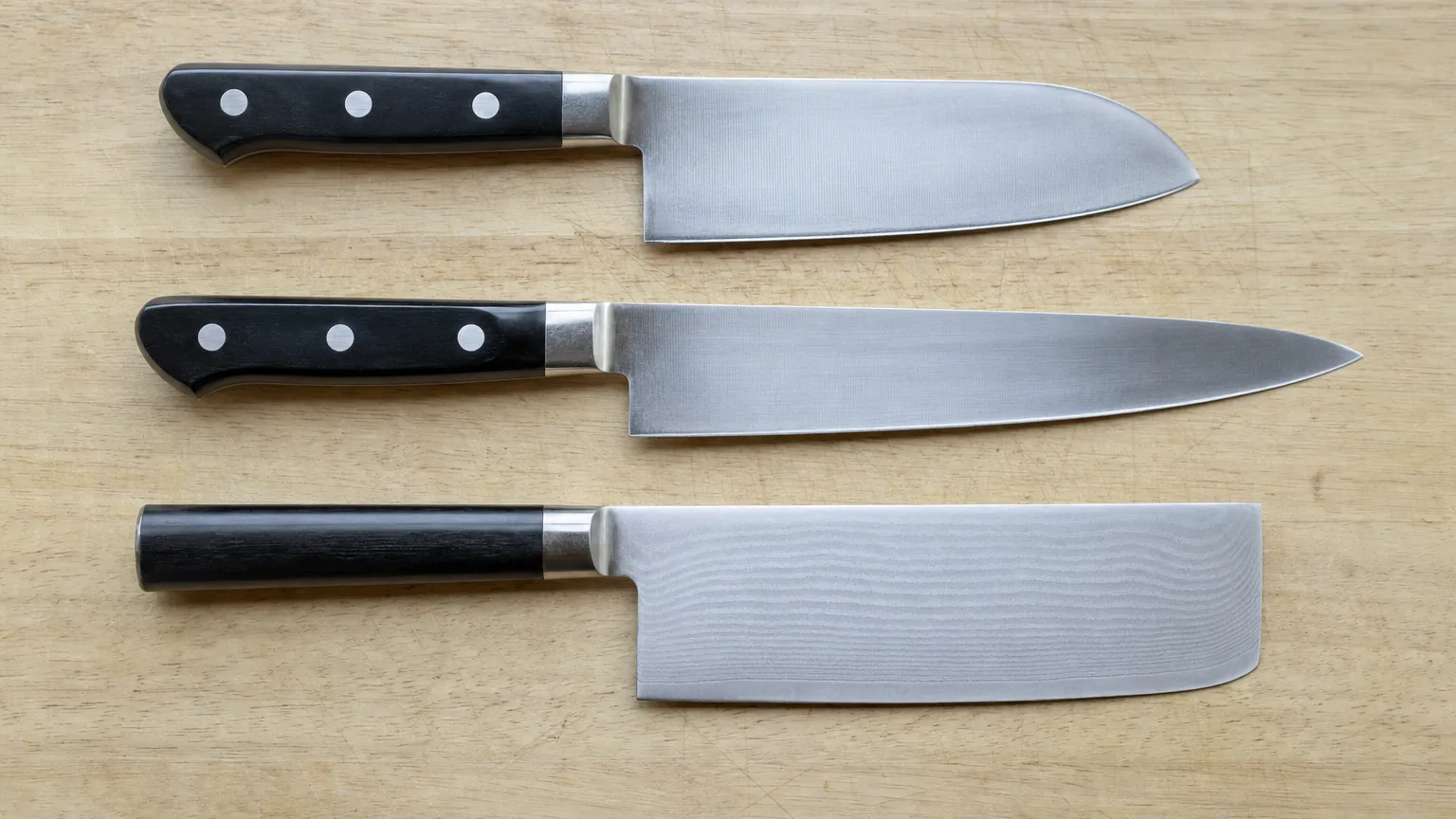
A Gyuto is Japan’s answer to the Western chef’s knife — typically 210mm to 240mm long, with a pointed tip and a slight belly curve that suits rocking cuts. It’s highly versatile and works well for people who are used to Western cooking techniques or who cook a lot of meat alongside vegetables. If you want to compare specific Gyuto picks by price and skill level, our Gyuto buying guide covers the full range.
A Santoku, by contrast, is shorter (usually 165mm to 180mm), flatter along the cutting edge, and better suited to a straight up-and-down chopping motion. The name loosely translates to “three virtues” — meat, fish, and vegetables — which reflects its all-purpose character.
A few other considerations when choosing:
- Handle style matters more than most buyers realize. A Wa handle (the traditional Japanese octagonal or D-shaped wood handle) is lighter but requires a pinch grip to use safely. A Western handle offers a more familiar feel for most beginners.
- Single bevel blades are designed for advanced techniques like filleting or precise Japanese cuts — avoid these for a beginner gift.
- Double bevel blades work for both right- and left-handed users, making them the safe default for gifts. Check the listing all the same: Chubo gives the edge of the TUS AUS8 set below as 70/30, an asymmetric double bevel.
Budget Guide: What You Can Realistically Expect at Each Price Point
Price is often the first filter when buying a gift knife, and it’s worth knowing what each tier actually delivers rather than going by brand name alone.
Around $80 — Entry-level stainless steel. These knives hold an edge well enough for everyday home cooking and are easy to resharpen. The Kai Wasabi Black Santoku 165mm — $80.57 at Amazon.com, shipped and sold by Amazon Germany — is a single knife rather than a set. Kai lists the Wasabi Black series as made in Japan; the blade is 6A/1K6 stainless steel hardened to HRC 58±1, and the handle is polypropylene blended with bamboo powder.
$150–$250 — This is where two-piece sets start to appear. The Sakai Takayuki TUS AUS8 Two Piece Set (Gyuto 210mm + Petty 150mm) — $195.30 at Chubo Knives — pairs a full-size Gyuto with a Petty knife, so the recipient gets both an everyday knife and a detail knife for trimming and small prep. Chubo lists the steel as AUS8 stainless at 59 on the Rockwell scale, with pressed-wood handles and a double-bevel (70/30) edge. Sakai Takayuki is a product of Aoki Hamono Seisakusho of Sakai, according to the maker’s site. The set does not come in a gift case: Chubo sells gift wrapping separately for $5. Chubo ships from Japan with US duties paid, per the retailer, and charges $15 shipping on orders under $200; this link is for readers in the US.
Above $250, you enter the territory of semi-professional tools. The Sakai Takayuki TUS Three Piece Set (Gyuto 210mm + Sujihiki 240mm + Petty 150mm) — $368.10 at Chubo Knives — adds a 240mm sujihiki, a slicing knife, to the gyuto and petty of the two-piece set above, in the same AUS8 stainless steel. Chubo prices the set at 10% off the $409 value of the three knives. It suits someone who is already enthusiastic about cooking; for a true beginner, it may be more knife than they need right away. Like the two-piece set, it ships from Japan, and this link is for readers in the US.
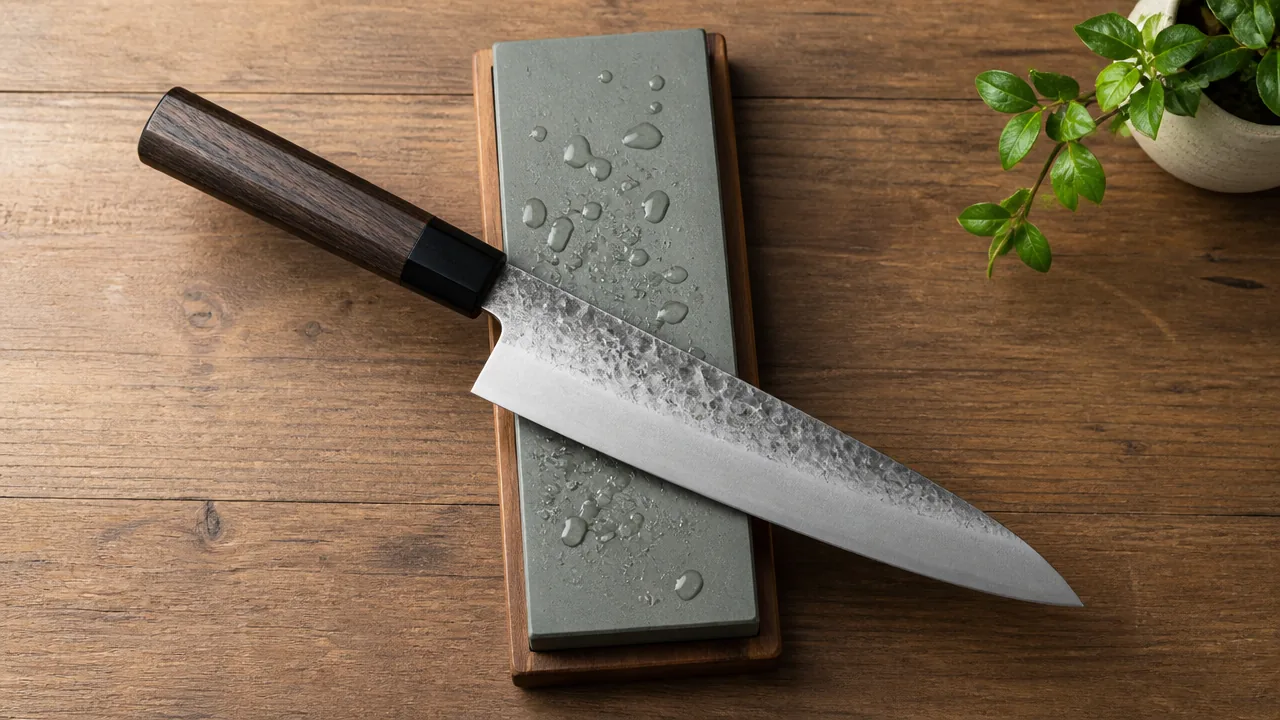
If you’re buying for someone who’s just starting out, pairing the knife with a basic whetstone goes a long way. This guide to Japanese knife sharpening stones for beginners covers the essential options without overwhelming a newcomer.
Top Picks Compared: Three Gift-Ready Options Side by Side
The table below covers three options across different budgets (Amazon.com and Chubo Knives prices checked on October 16, 2026). These are compared specifically for gift suitability — meaning sharpness out of the box, ease of first use, and visual presentation are weighted alongside raw performance.
| Kai Wasabi Black Santoku 165mm | Sakai Takayuki TUS AUS8 Set (Gyuto + Petty) | Sakai Takayuki TUS Three Piece Set (Gyuto + Sujihiki + Petty) | |
|---|---|---|---|
| Price | $80.57 | $195.30 | $368.10 |
| Steel | 6A/1K6 Stainless | AUS8 Stainless | AUS8 Stainless |
| HRC | 58 ±1 | 59 | 60 (per Chubo) |
| Handle | Polypropylene with bamboo powder | Western (Pressed wood) | Mahogany wood (per Chubo) |
| Best for | Budget-conscious first gift (one knife, not a set) | Two-piece everyday + detail knife gift | Three-knife gift for a keen cook |
| Gift presentation | Not stated on the listing | No gift case; gift wrap $5 at Chubo | No gift case stated; gift wrap $5 at Chubo |
For a tight budget, this guide suggests the Kai Wasabi Black Santoku, because it is the lowest-priced of the three; it is one knife rather than a set. The Sakai Takayuki TUS AUS8 set gives the recipient two knives: a Gyuto and a Petty knife cover most everyday tasks. It has no gift case, so add Chubo’s gift wrapping if presentation matters. The TUS three-piece set is for when you want to give more: it adds a slicing knife to the same pair.
What Beginners Actually Struggle With — and How to Choose Around It
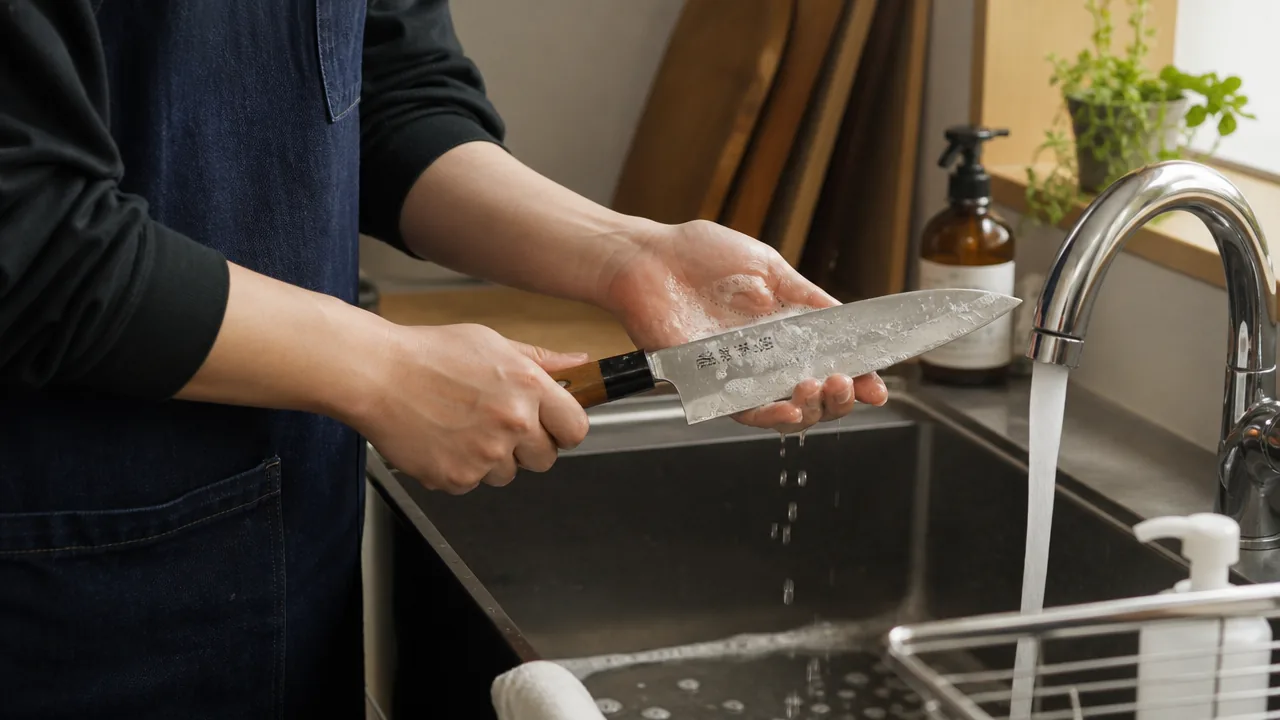
Most beginner cook mistakes with Japanese knives don’t happen during cooking — they happen during cleaning and storage. Japanese knives with high-carbon steel or hard stainless steel cores are more chip-prone than European knives if they’re tossed into a drawer with other utensils or run through a dishwasher. When buying a gift for a new cook, it’s worth factoring in whether the recipient is likely to treat the knife carefully.
A few practical points to consider before finalizing your choice:
- If the recipient doesn’t already own a knife block or magnetic strip, adding one to the gift significantly extends the knife’s lifespan.
- Gyuto knives are longer and may feel awkward in smaller kitchens or for people with smaller hands — a Santoku is usually a safer default.
- Knives with a Western handle are easier to transition into for cooks coming from standard household knives, compared to the lighter Wa handle style.
- Avoid gifting a single-bevel knife to a beginner — the asymmetric grind requires adjusted technique and is frustrating without prior experience.
For someone who will be using the knife primarily for Japanese-inspired cooking — sushi prep, for instance — the sharpness requirements and blade choice shift somewhat. This article on the best Japanese knife for sushi covers the specific considerations in more detail.
Prioritizing ease of upkeep over maximum performance is almost always the right call for a gift.
Where to Buy: Amazon.com and Chubo Knives
Once you’ve narrowed down the knife type and budget, where you buy matters — especially for a gift. Return policies, packaging quality, and whether the knife comes sharpened and ready to use all vary by retailer. And if you are shopping for your own kitchen rather than for someone else, our Best Japanese Knife Set for Home Cooks 2026 guide covers the same kind of picks from that angle.
The Kai Wasabi Black Santoku is on Amazon.com; on October 16, 2026 it was in stock, shipped and sold by Amazon Germany.
Chubo Knives sells Japanese kitchen knives online and ships from Japan. For US orders it states that duties are paid, with free shipping on orders over $200 and $15 below that.
For a beginner-focused gift, the combination of a Santoku or entry-level Gyuto with a written care card or small whetstone makes for a complete, thoughtful package.
Frequently Asked Questions
Does the Sakai Takayuki TUS set come in a gift box?
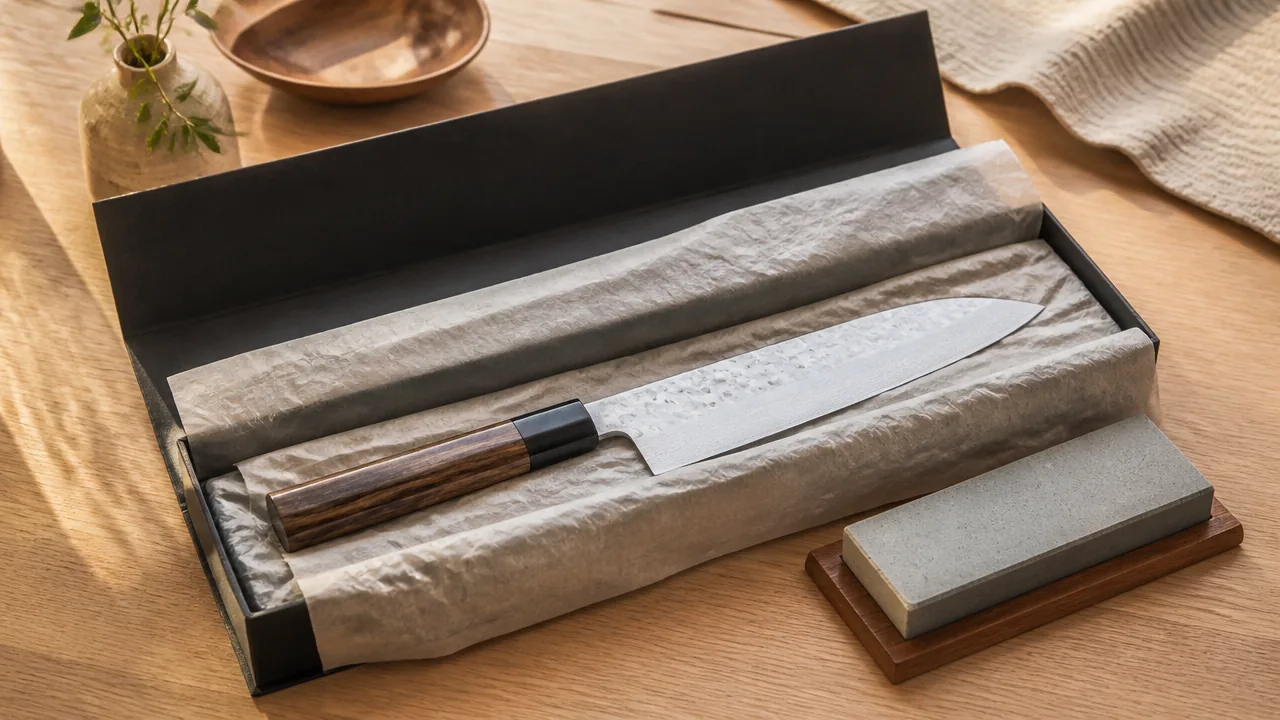
No. The TUS AUS8 two-piece set at Chubo Knives does not come in a gift case; Chubo sells gift wrapping separately for $5.
Can a left-handed cook use these knives?
Check the grind before you buy. Chubo lists the edge of the TUS AUS8 set as double bevel, 70/30, which is an asymmetric grind rather than an even one. For a left-handed recipient, ask the retailer which hand the edge is set up for.
Should a first Japanese knife gift be a santoku or a gyuto?
A santoku is shorter, usually 165mm to 180mm, with a flatter edge that suits an up-and-down chopping motion. A gyuto is usually 210mm to 240mm, with a pointed tip and a slight curve that suits rocking cuts. For a smaller kitchen or smaller hands, this guide suggests the santoku, because the shorter blade takes less room on the board.
How should the recipient care for the knife?
Chubo’s care notes for the TUS AUS8 set are to hand wash in warm water and towel dry, not to cut frozen foods, and to re-sharpen on a sharpening stone rather than a honing steel.
Ready to find the right knife? The options above are linked to Amazon.com and Chubo Knives, with picks suited to beginner cooks at every budget.