This article contains affiliate links. If you buy through them, we may earn a commission at no extra cost to you.
How this article was made: Research-based comparison. It draws on published information from makers, retailers, and reference sources, not on hands-on testing.
Quick picks
- Shun Classic 8″ Chef’s Knife — $140.15 at Amazon.com: all-purpose first knife with a curved belly for rock-chopping
- MAC Professional Series 8″ Chef’s Knife (MTH-80) — $159.95 at Amazon.com (sold by Cutlery and More): thin, light 8-inch all-rounder with dimples
- Kai Wasabi Black Santoku 165mm — $80.57 at Amazon.com (shipped and sold by Amazon Germany): budget-conscious first knife, no-fuss maintenance
Amazon.com prices checked October 4, 2026; the Kai Wasabi price and stock on October 16, 2026.
For readers in the US
- Shun Classic 8″ Chef’s Knife — $140.15 at Amazon.com: in stock
- MAC Professional Series 8″ Chef’s Knife (MTH-80) — $159.95 at Amazon.com: sold by Cutlery and More, a third-party seller
For readers in the UK and Europe
- Tojiro Zen Gyuto 210mm — €150.00 at SharpEdge
- Seki Kotetsu Santoku VG-10 Migaki 180mm — €155.00 at SharpEdge
The Shun Classic 8″ listed above is also on Amazon.de.
Prices and stock checked October 7, 2026. SharpEdge prices are in euros and exclude shipping; taxes are worked out at checkout.
- Why Beginners Often Buy the Wrong Japanese Knife
- The Three Knife Types Worth Considering First
- Steel Types Explained Simply
- Recommended Knives by Price Tier
- Comparison Table: Top Picks Across Use Cases
- Four Mistakes That Beginners Consistently Make
- Where to Buy and What to Watch Out For
- Frequently Asked Questions
Why Beginners Often Buy the Wrong Japanese Knife
Walk into any Japanese knife shop or browse an online retailer, and the sheer number of options is enough to make anyone freeze. Gyuto, santoku, nakiri, petty — the terminology alone feels like a barrier. Most beginners default to buying whatever looks premium or whatever a popular YouTube chef is using, and that’s usually where the trouble starts.
The reality is that the ‘right’ Japanese knife depends heavily on what you actually cook and how comfortable you are with knife maintenance. A razor-sharp single-bevel yanagiba is a joy for slicing sashimi, but it’s a frustrating daily driver for someone who mostly chops vegetables and breaks down chicken. Buying the wrong profile means the knife sits in a drawer.
There’s also the steel question. Japanese knives are typically made from harder steel than their German counterparts — often 60 HRC and above — which gives them a finer, longer-lasting edge. The trade-off is that harder steel is more brittle and chips more easily if you twist the blade or hit a bone at the wrong angle. Beginners who aren’t aware of this end up chipping a beautiful knife within the first week and assuming they bought a defective product.
This guide cuts through that confusion. It looks at the most practical knife types for beginners, matches them to common cooking scenarios, and recommends specific models across three price tiers so you know exactly what you’re getting before you spend anything.
The Three Knife Types Worth Considering First
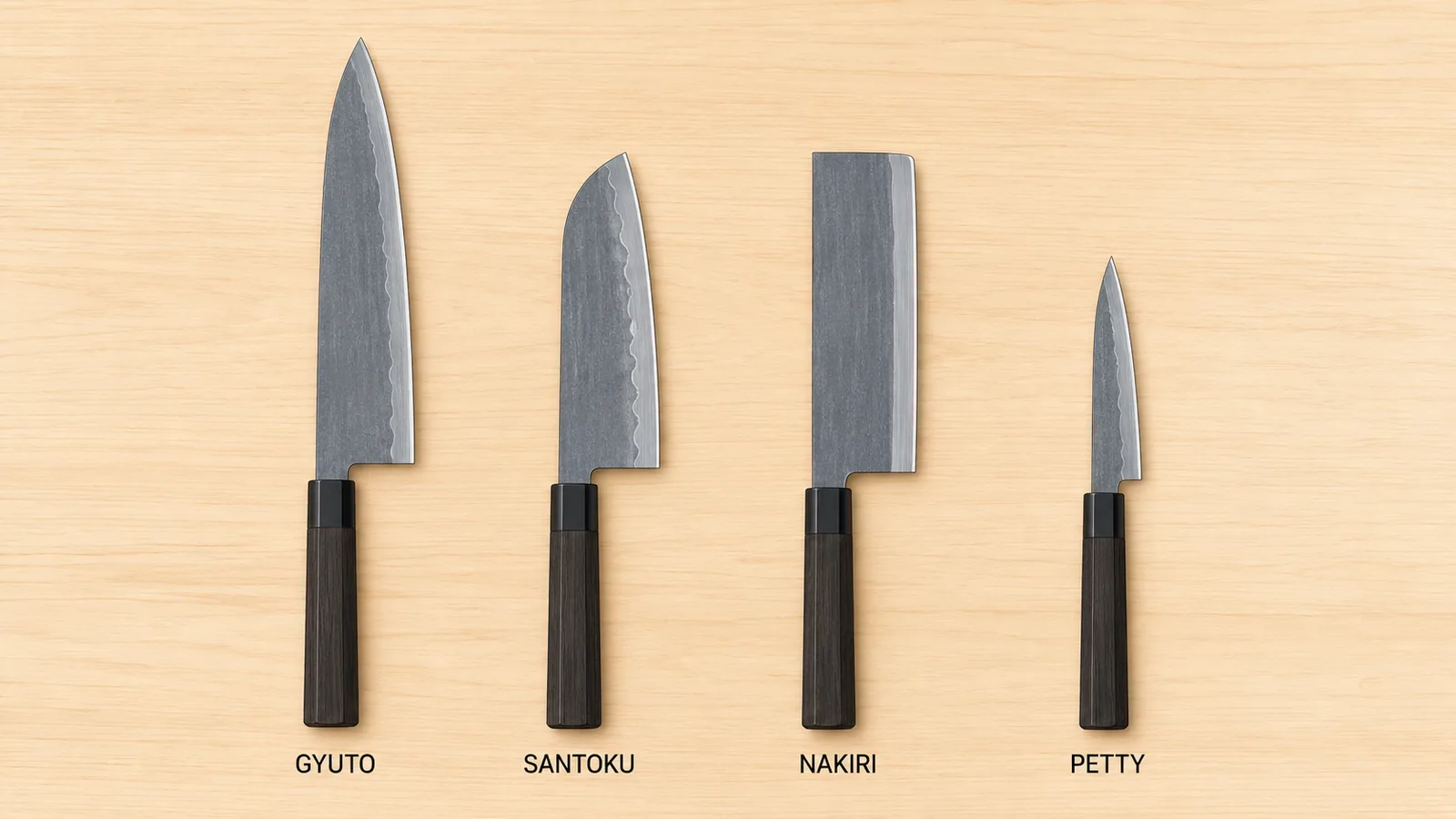
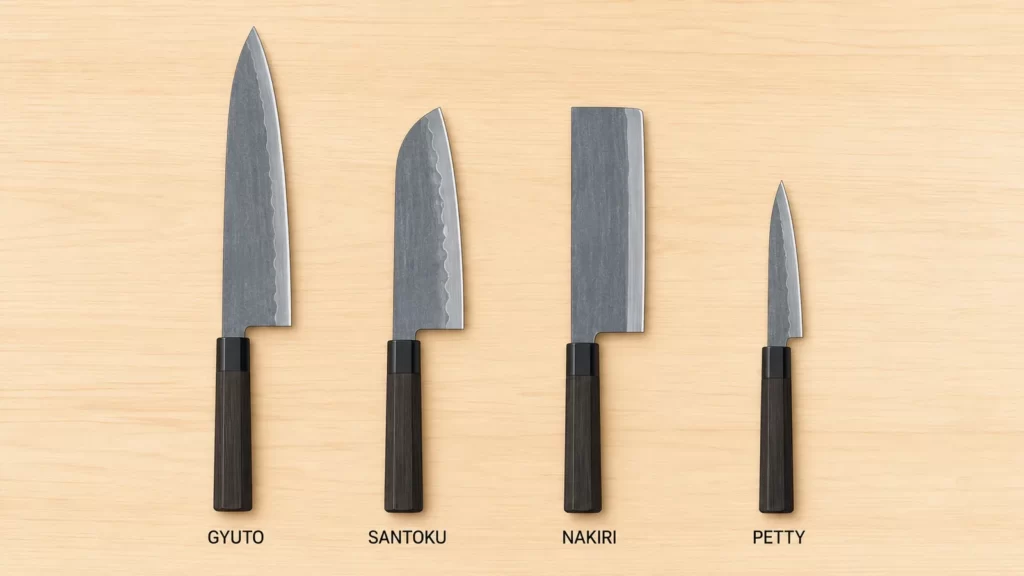
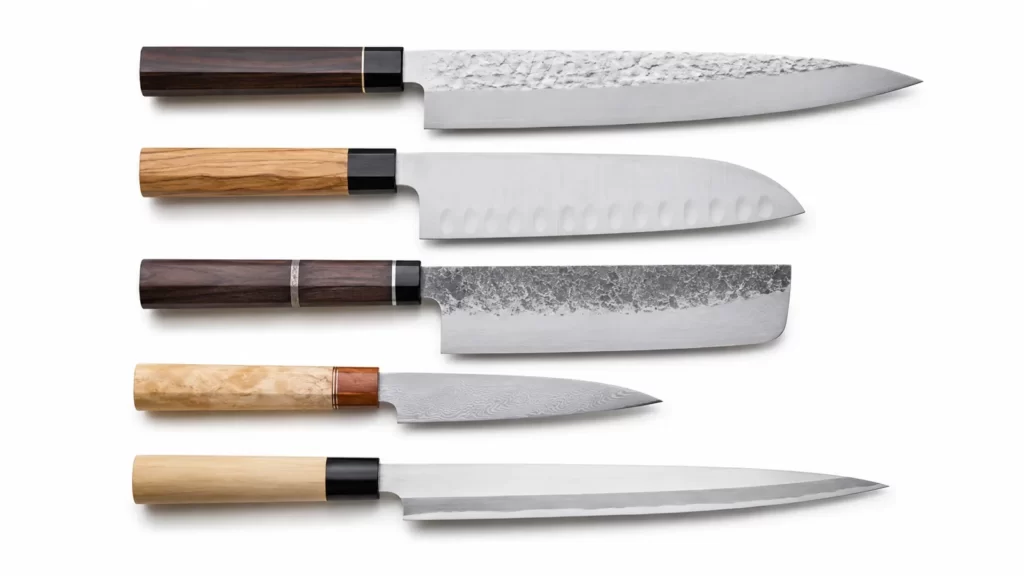
For most home cooks, the entire Japanese knife universe can be narrowed down to three shapes at the start. Here’s how they differ in practice:
- Santoku (三徳): Translates roughly as ‘three virtues’ — meat, fish, and vegetables. The blade is shorter (typically 165–180 mm) and has a flatter edge profile, which suits an up-and-down chopping motion rather than a rocking cut. It’s the most forgiving shape for beginners and fits smaller hands well. See our full Santoku buying guide for picks by budget, steel and handle.
- Gyuto (牛刀): The Japanese take on a Western chef’s knife. Longer (210–240 mm is standard), with a more pronounced belly curve that works well for rocking cuts. If you cook a lot of meat or do high-volume prep, this is the more versatile long-term choice. See our full Gyuto buying guide for picks by price and skill level.
- Nakiri (菜切り): A rectangular vegetable knife with a blunt tip. Both edges are flat, making it ideal for push-cutting through vegetables cleanly. It’s a specialist tool, but an excellent second knife if you cook plant-heavy meals frequently. See our full Nakiri buying guide for picks by price and skill level.
For a true first knife, the choice usually comes down to santoku versus gyuto. Santoku wins on ease of use and maintenance; gyuto wins on versatility as your skills grow. Neither is a wrong answer — it comes down to your cooking style and how much counter space you’re working with.
Steel Types Explained Simply
One of the most confusing parts of buying a Japanese knife is the steel specification. Retailers throw around terms like VG-10, Blue Steel No.2, and SLD without much context, and it’s easy to assume the most expensive steel is always best for a beginner. That assumption can cost you money and lead to unnecessary frustration. For a deeper breakdown of what each steel type actually means for performance and maintenance, see our complete guide to Japanese knife steel types.
A practical way to think about it: stainless steels are more forgiving and require less maintenance, while carbon steels develop a patina, react with acidic foods, and need to be dried immediately after use — but they can take a sharper edge and are often preferred by experienced cooks.
- VG-10 stainless: One of the most common steels in mid-range Japanese knives. Holds an edge well, resists rust, and is relatively easy to sharpen. A solid choice for beginners who don’t want to think about maintenance.
- AUS-8 stainless: Slightly softer than VG-10, which means it dulls a little faster but is even easier to resharpen. Found in many entry-level knives and a reasonable starting point.
- Blue Steel No.2 (Aogami #2): A high-carbon steel that takes an extremely sharp edge. Requires more care to avoid rust, and suits cooks who enjoy the sharpening process. Not ideal as a first knife unless you’re committed to the maintenance routine.
- SLD / semi-stainless steels: A middle ground — more rust-resistant than true carbon steels but capable of a finer edge than most stainless options.
For most beginners, a VG-10 or AUS-8 stainless knife will perform excellently without adding the stress of rust prevention. Save the carbon steel exploration for your second or third knife.
Recommended Knives by Price Tier
The market broadly divides into four price bands for beginner-appropriate Japanese knives. Here’s what each tier realistically offers:
Under $60 — Entry Level
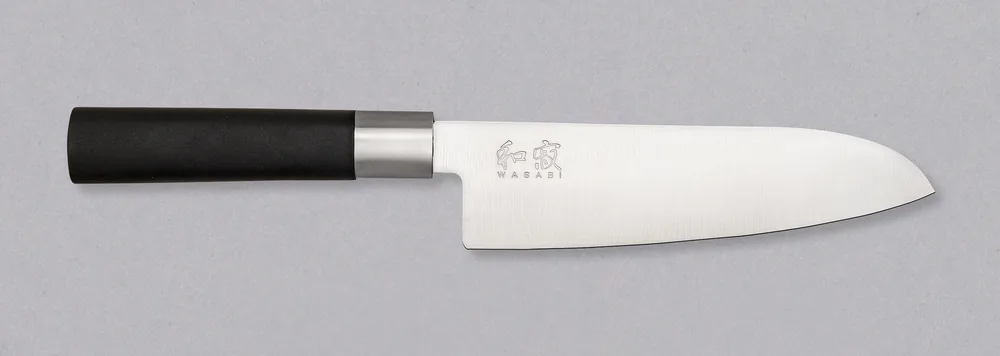
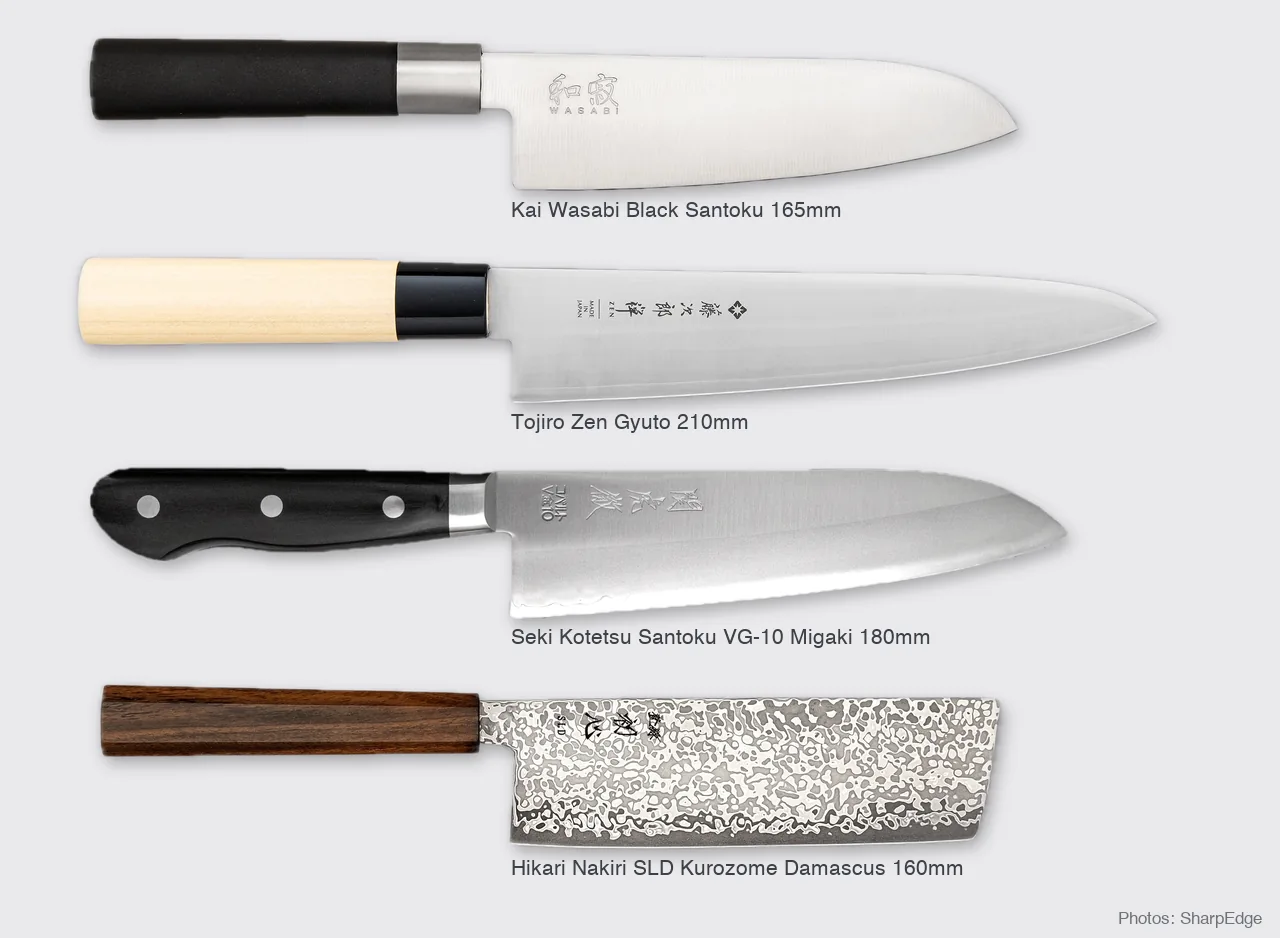
At this price, you’re looking at mass-produced knives from larger manufacturers. The steel is typically AUS-8 or a similar mid-grade stainless, and the handles are usually plastic or composite. These knives are genuinely sharp out of the box and will perform well for home cooks who sharpen regularly. The Kai Wasabi Black Santoku 165mm from SharpEdge — €51.00, approximately $57 at the ECB reference rate of 1 EUR = 1.1206 USD on October 9, 2026, shipping not included — is a genuinely solid pick at this tier: Kai lists the Wasabi Black series as made in Japan, the 6A/1K6 stainless steel, hardened to HRC 58±1, is easy to maintain, and the blade geometry is authentically Japanese even if the fit and finish are functional rather than artisanal. US buyers: about $85 in total with shipping and the 25% tariff. That is a sale price (regular €60.00, about $67), so check the current price before you decide. It was out of stock at SharpEdge on October 16, 2026; the same knife was in stock on Amazon.com at $80.57 that day, shipped and sold by Amazon Germany.
US totals are estimates as of October 2026, based on SharpEdge’s shipping page: (price + €10 shipping) × 1.25 for orders under €300, or price × 1.25 for orders of €300 or more, which ship free. Example: a €51 knife came to €76.10 at checkout for a New York address on October 3, 2026. Tariff rates can change.
$60–$150 — The Beginner Sweet Spot
This is where value-to-performance peaks for new buyers. VG-10 or AUS-8 steel becomes common, wa-handles (the traditional Japanese octagonal handles) appear more frequently, and some knives in this range are still hand-finished at the blade. The Shun Classic 8″ Chef’s Knife (model DM0706) — $140.15 on Amazon.com, sold and shipped by Amazon.com, checked on October 4, 2026 — sits near the top of this bracket. Kai, the maker, lists a VG-MAX cutting core with 34 layers of stainless Damascus cladding on each side and a 16° edge per side. Three points in the maker’s description matter for a first knife: the curved belly lets you rock the blade through herbs the way you would with a Western chef’s knife, the D-shaped Pakkawood handle was designed for a right-handed grip, though Shun says many left-handers find it works just as well for them, and the stainless cladding adds stain resistance.
Japan Check
Made in: Seki City, Japan (per Kai, the maker)
Steel: VG-MAX core, 68-layer stainless Damascus cladding
Blade Length: 8 inches
Edge Angle: 16° per side
Sold by: Amazon.com (ships from Amazon.com)
Checked Against: shun.kaiusa.com (specifications, origin), amazon.com (price, stock, seller)
Last Checked: 2026-10-04
$150–$225 — Step-Up Sweet Spot
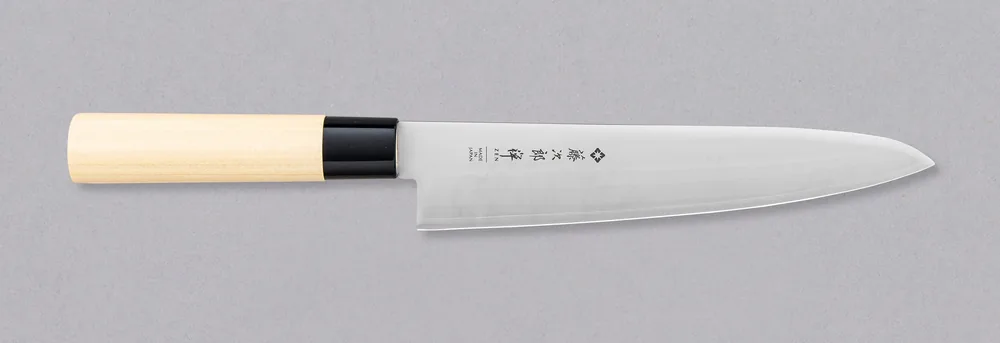
A little further up, the gap between mass-produced and workshop-level knives starts to close. The Tojiro Zen Gyuto 210mm from SharpEdge — €150.00, approximately $168 — sits solidly in this bracket, pairing a VG-10 core heat treated to 60–61 HRC with softer stainless cladding and a light, round magnolia wa handle. US buyers: about $224 in total with shipping and the 25% tariff. You get a knife that will genuinely last years with proper care and that feels like a real upgrade from a Western knife. If a Santoku shape suits your cooking better than a Gyuto, the Seki Kotetsu Santoku VG-10 Migaki 180mm from SharpEdge — €155.00, approximately $174 — is forged by Yasuda Hamono in Seki, Gifu Prefecture, and is marketed specifically as a first Japanese knife: VG-10 steel at 61 HRC with a san-mai migaki finish and a riveted Western-style black pakkawood handle with a stainless bolster. US buyers: about $231 in total with shipping and the 25% tariff. For US readers who would rather order within the United States, the MAC Professional Series 8″ Chef’s Knife (MTH-80) is $159.95 on Amazon.com, sold and shipped by Cutlery and More, a US kitchenware retailer (checked on October 4, 2026). MAC states that its knives are produced entirely in Seki City. The maker lists a thin 2.5mm blade, 7.88 inches long, and a weight of 6.5 oz, says the dimples along the blade help it glide through sticky foods such as potatoes and apples, and calls the 8-inch length the most commonly used size in home and professional kitchens.
![Seki Kotetsu Santoku VG-10 Migaki 180mm [black pakkawood]](https://japan-craft-finds.com/wp-content/uploads/2026/10/seki-kotetsu-santoku-vg-10-migaki-180mm-black-pakkawood.webp)
Japan Check
Made in: Seki, Gifu Prefecture, Japan (Yasuda Hamono)
Steel: VG-10
HRC: 61
Blade Length: 180mm (7.1″)
Construction: San-mai / migaki finish
Checked Against: sharpedgeshop.com
Last Checked: 2026-09-12
Japan Check (MAC MTH-80)
Made in: Seki City, Japan (per MAC, the maker)
Steel: Molybdenum vanadium stainless steel (per the Amazon.com listing)
Blade Length: 7.88 inches (200mm)
Blade Thickness: 2.5mm
Weight: 6.5 oz
Sold by: Cutlery and More (ships from Cutlery and More)
Checked Against: macknife.com (specifications, origin), amazon.com (price, stock, seller)
Last Checked: 2026-10-04
$225–$300 — Aspirational Entry
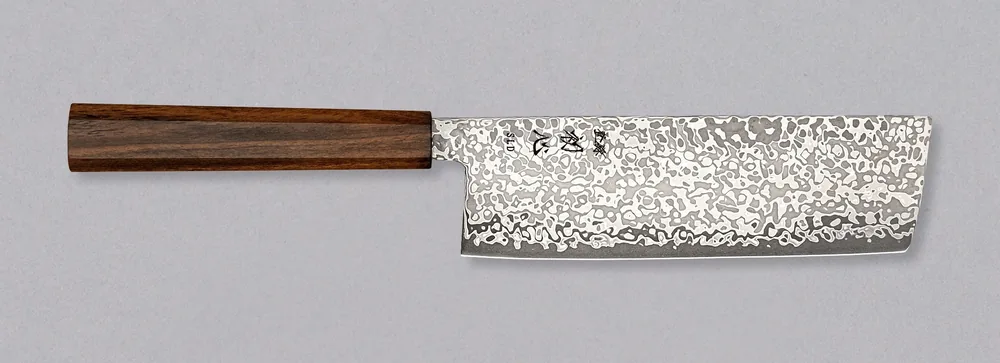
Knives here often feature hand-forged construction, Damascus cladding (mostly aesthetic, but beautiful), and premium handle materials like stabilized wood or buffalo horn. The Hikari Nakiri SLD Kurozome Damascus 160mm by Hatsukokoro, from SharpEdge — €230.00, approximately $258 — occupies this space: an SLD steel core, listed at 60–62 HRC, clad in layered Damascus with a dark etched finish and an octagonal bubinga wa handle that give it a distinctly artisan look. US buyers: about $336 in total with shipping and the 25% tariff. The jump in performance over the mid-tier is smaller than the jump in craftsmanship and feel. This is worth buying if the ownership experience matters to you, but it’s not necessary to cook well.
Comparison Table: Top Picks Across Use Cases
The table below summarizes the top beginner-friendly picks matched to common cooking scenarios. All prices are approximate as of early October 2026 and may vary by retailer; prices shown with a tilde are converted from euros and exclude shipping.
| Knife | Price | Type | Steel | Best For |
| Kai Wasabi Black Santoku 165mm | ~$57 | Santoku | 6A/1K6 Stainless | Budget-conscious first knife, no-fuss maintenance |
| Shun Classic 8″ Chef’s Knife | $140.15 | Gyuto (chef’s knife) | VG-MAX, Damascus clad | All-purpose first knife with a curved belly for rock-chopping |
| MAC Professional Series 8″ Chef’s Knife (MTH-80) | $159.95 | Gyuto (chef’s knife) | Molybdenum vanadium stainless | Thin, light 8-inch all-rounder with dimples |
| Tojiro Zen Gyuto 210mm | ~$168 | Gyuto | VG-10 | Meat-forward cooking, larger prep volume |
| SharpEdge Seki Kotetsu Santoku VG-10 180mm | ~$174 | Santoku | VG-10 | First Japanese knife, all-purpose Santoku shape |
| Hatsukokoro Hikari Nakiri 160mm | ~$258 | Nakiri | SLD, Damascus clad | Plant-based or vegetable-heavy meals, serious cooks |
A few notes on reading this table: the Kai Wasabi Black is a true starter — it won’t impress anyone aesthetically, but it cuts well and asks nothing of you in terms of care. The Shun Classic and the MAC MTH-80 are the two picks sold through Amazon.com and shipped within the US, so their prices are in dollars with no tariff added at checkout; the Shun has a curved belly and Damascus cladding, while the MAC is a thin 2.5mm blade with dimples. The Tojiro Zen Gyuto is a pick that holds up as your skills grow rather than becoming something you outgrow, and the SharpEdge Santoku is a close alternative if you’d rather rock-chop than rock a longer blade. The Hikari Nakiri is a serious step up in craftsmanship; it’s worth the jump only if the ownership experience and vegetable-forward cooking genuinely matter to you.
Four Mistakes That Beginners Consistently Make
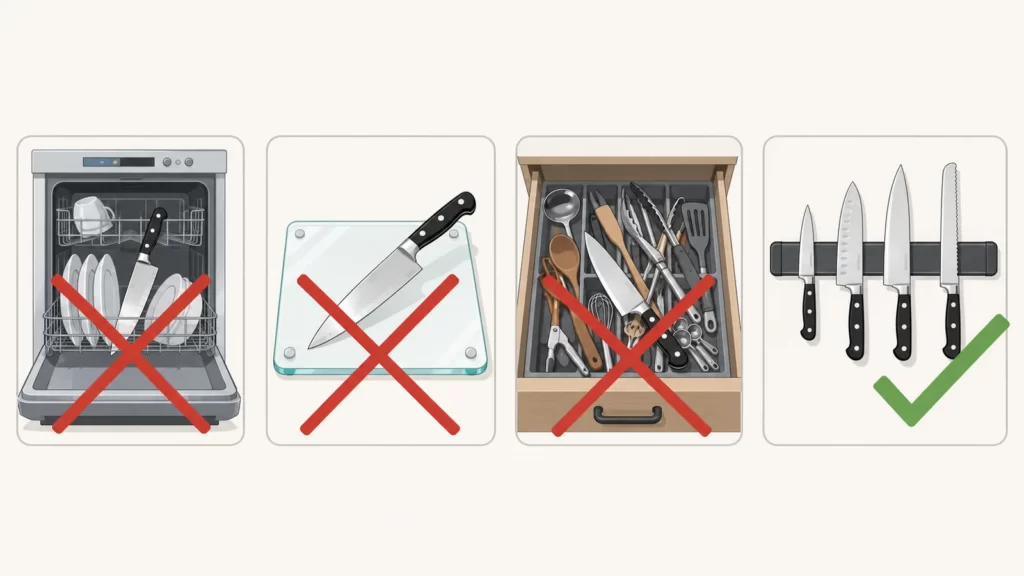
Even after choosing the right knife, the first few months of ownership are where most beginners run into problems. These are the mistakes that come up repeatedly:
- Putting the knife in the dishwasher: The combination of heat, detergent, and rattling against other items destroys both the edge and the handle. Hand-wash only, every time, no exceptions.
- Using a glass or ceramic cutting board: These surfaces are harder than most knife steels and will blunt or chip the edge quickly. Shun’s FAQ recommends a board of softer material that gives under the blade, such as its hinoki wood boards, and lists plastic and acrylic among the hard surfaces to avoid. See Best Cutting Board for Japanese Knives.
- Storing the knife loose in a drawer: Blades knocking against other utensils is one of the fastest ways to chip a fine edge. A magnetic knife strip or a wooden knife block solves this.
- Skipping honing and sharpening: A Japanese knife with a hard steel edge doesn’t need sharpening as often as a softer Western knife, but it still dulls. Honing keeps the edge in shape between full sharpenings: Shun, for example, says honing about once a week may be enough, depending on use.
None of these mistakes are hard to avoid once you know about them — but they’re almost universal among first-time Japanese knife owners. Taking ten minutes to set up proper storage and understand basic care will extend the life of any knife on this list significantly.
Where to Buy and What to Watch Out For
Japanese knives sold through general marketplaces can be hit or miss. Shun, for example, provides warranty and sharpening service only for knives bought in the USA, Canada, or Mexico through Kai USA or its authorized dealers, so check who the seller is. Buying directly through specialty retailers gives you better assurance of authenticity, pre-sale support from people who actually know the product, and more reliable return policies.
The retailers linked in this guide:
- SharpEdge: A specialist Japanese knife retailer that ships worldwide from Europe. Duties and import taxes are covered for many countries, but US orders are charged a tariff at checkout (see SharpEdge’s shipping page). A deep catalog of blacksmith-forged knives from regions like Seki and Sakai, including several models suited to first-time buyers.
- Amazon.com: The Shun Classic is sold and shipped by Amazon.com itself, and the MAC MTH-80 by Cutlery and More, a US kitchenware retailer selling through Amazon. Check the “Sold by” line on the listing before you buy, because other sellers can appear on the same page.
Before clicking through, it’s worth being clear on one thing: the knife you’ll actually use is better than the knife that looks most impressive in a product photo. If an entry-level pick fits your budget and cooking style, there’s no reason to stretch for a premium option right away. Start with a knife you can use daily without anxiety, build your sharpening skills, and upgrade when you have a clear reason to. If your ceiling is firm, Best Japanese Chef Knife Under $100 lists three knives under that price.
Frequently Asked Questions
What’s the single best first Japanese knife for a beginner?
There isn’t one universal answer, but a Santoku or Gyuto in VG-10 or AUS-8 stainless steel, priced somewhere between $45 and $150, covers the widest range of beginner cooking styles with the least maintenance risk. Pick the Santoku if you mostly chop vegetables and want a shorter, more forgiving blade; pick the Gyuto if you cook a lot of meat or want one knife that scales with your skills.
Is it worth paying more than $150 for a first Japanese knife?
Not necessarily. The jump from an entry-level knife to a $150–$225 knife buys you better steel, a nicer handle, and a knife that holds its edge longer. The jump from there to $225–$300 mostly buys craftsmanship and presentation rather than a dramatic difference in daily cutting performance. If budget is a concern, it’s reasonable to start lower and upgrade later.
Do I need different knives for meat and vegetables as a beginner?
No. A single well-chosen Gyuto or Santoku will comfortably handle both for the first year or two of cooking. A dedicated Nakiri for vegetables is a genuinely nice upgrade once you know you cook plant-heavy meals often, but it isn’t a requirement for a first knife.
How do I know if a retailer selling Japanese knives is legitimate?
Look for retailers that publish specific steel types and hardness (HRC) ratings rather than vague marketing language, offer a real return policy, and have a track record of customer reviews mentioning actual delivered products. Counterfeits tend to cluster around a handful of well-known brand names, so unusually steep discounts on a famous name are worth extra scrutiny.
Ready to buy? Use the links above to check current pricing on the top picks at SharpEdge and Amazon.com before you commit.
Trying to decide between a Santoku, Gyuto, or Nakiri for your first Japanese knife? See our full comparison to find the right fit for how you actually cook.