How this article was made: Research-based comparison. It draws on published information from makers, retailers, and reference sources, not on hands-on testing.
- The Short Answer: The Main Japanese Knife Steels
- Why the Steel in Your Knife Matters More Than You Think
- Stainless Steel in Japanese Knives: VG-10 and Its Trade-Offs
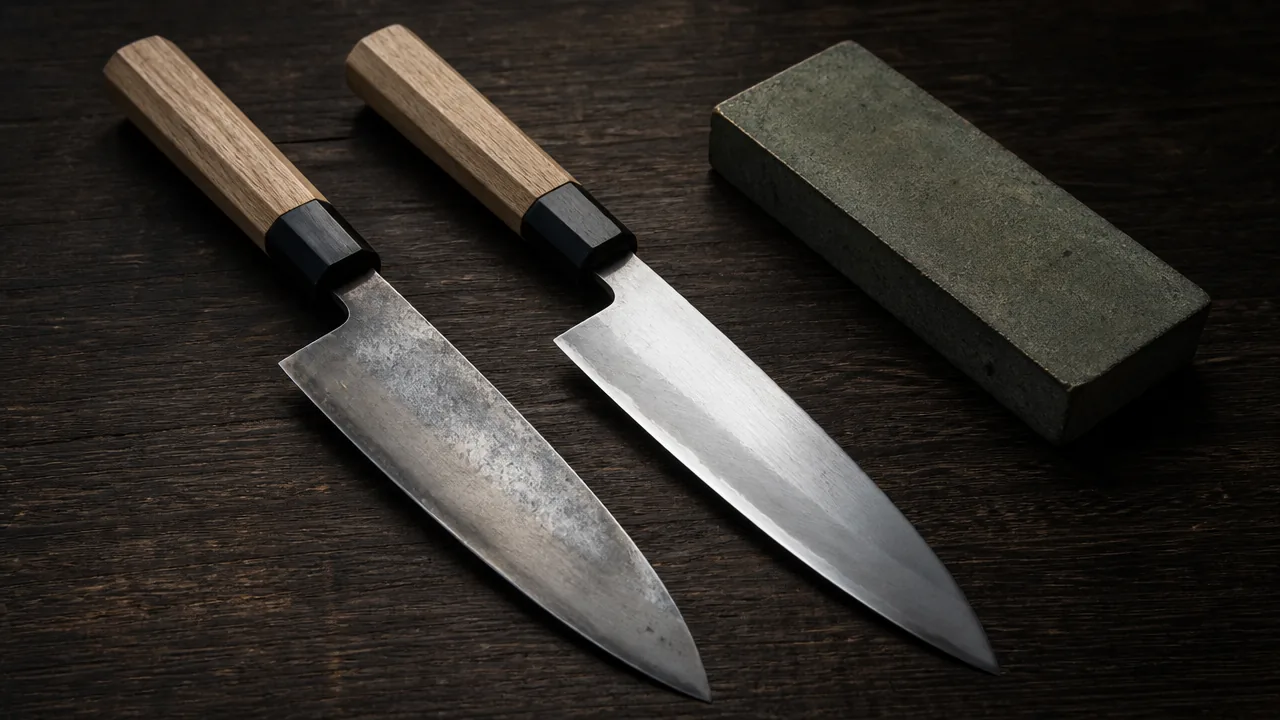
- Carbon Steel: Shirogami (White Steel) and Aogami (Blue Steel)
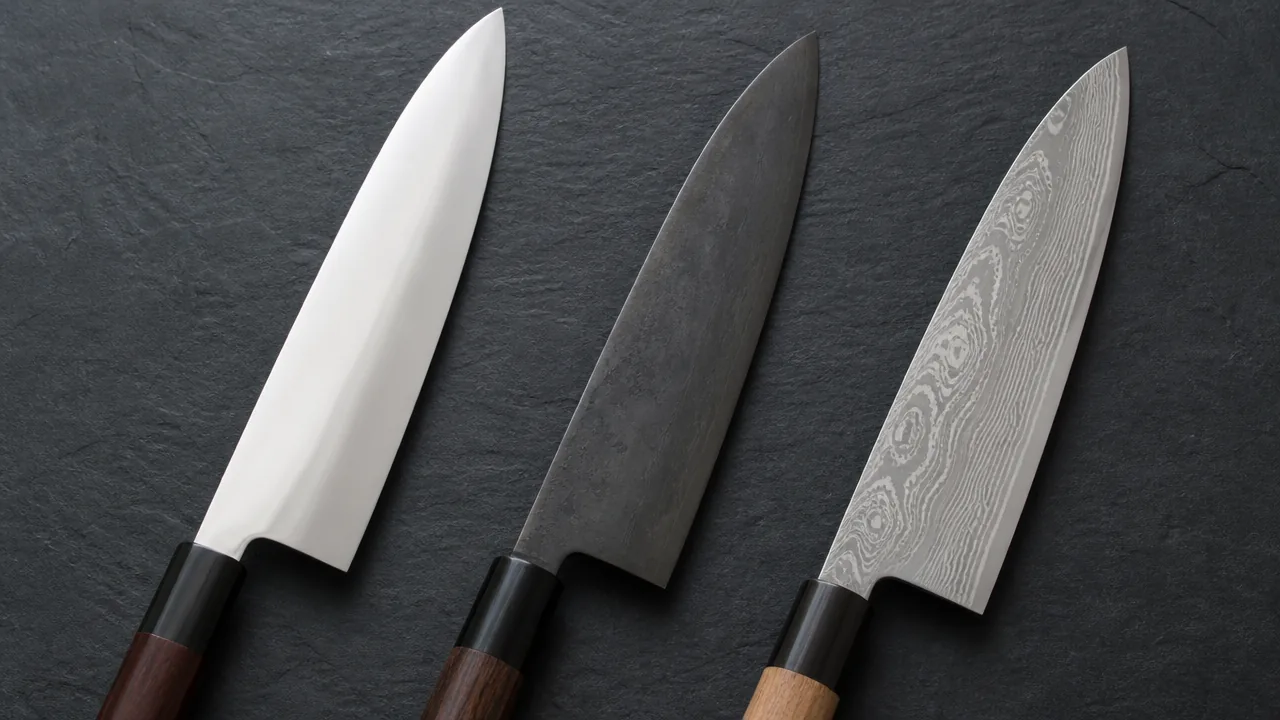
- Damascus: A Manufacturing Technique, Not a Type of Steel
- A Practical Guide for Beginners: Which Steel Should You Start With?
- Frequently Asked Questions
- Bringing It All Together
The Short Answer: The Main Japanese Knife Steels
Most Japanese kitchen knives use either a stainless steel such as VG-10 or a carbon steel such as Shirogami (White Steel) or Aogami (Blue Steel). Damascus is a way of layering steel around that core, not a steel of its own.
| Steel | Type | Care | What sets it apart |
|---|---|---|---|
| VG-10 | Stainless | Resists rust and staining in everyday use | Holds a working edge; harder to sharpen than softer steels; Takefu lists it at HRC 60 or above |
| Shirogami (White Steel) | Carbon | Rusts quickly if left wet; dry after use and oil for storage | Very few alloying additions, so it responds readily to sharpening |
| Aogami (Blue Steel) | Carbon | Needs the same care as other carbon steel | Shirogami with tungsten and chromium added, which improves wear resistance and edge retention |
| Damascus | A construction method | Depends on the core steel | A layered, patterned cladding; cutting performance comes from the core steel |
For a first Japanese knife, this guide suggests a stainless steel such as VG-10, because the blade does not need drying after every rinse. Best Japanese Knife for Beginners compares knives by steel, use and budget.
Why the Steel in Your Knife Matters More Than You Think
When most people start exploring Japanese knives, they focus on the shape — a gyuto, a nakiri, a petty knife. But the steel a blade is made from quietly determines almost everything about how it performs in daily use. The same knife profile ground from two different steels can behave in noticeably different ways: one holds a razor edge through weeks of heavy prep, while another chips on a hard carrot. One asks to be dried and oiled after every wash; the other shrugs off a splash of water without complaint.
The reason comes down to how steel is composed at a metallurgical level. Carbon content influences how hard a blade can get — and hardness, commonly measured on the HRC (Rockwell C) scale, is closely tied to edge retention. Alloying elements like chromium, tungsten, and vanadium each contribute different properties, from corrosion resistance to wear resistance. None of these trade-offs is universal. A steel that suits a professional chef working in a dry kitchen may frustrate a home cook who forgets to dry the blade before putting it away.
Understanding the major steel categories used in Japanese knives — stainless steels like VG-10, traditional carbon steels like Shirogami and Aogami, and the often-misunderstood Damascus pattern — gives you a framework for choosing knives that genuinely fit how you cook. This guide covers each category honestly, without recommending specific products.
Stainless Steel in Japanese Knives: VG-10 and Its Trade-Offs
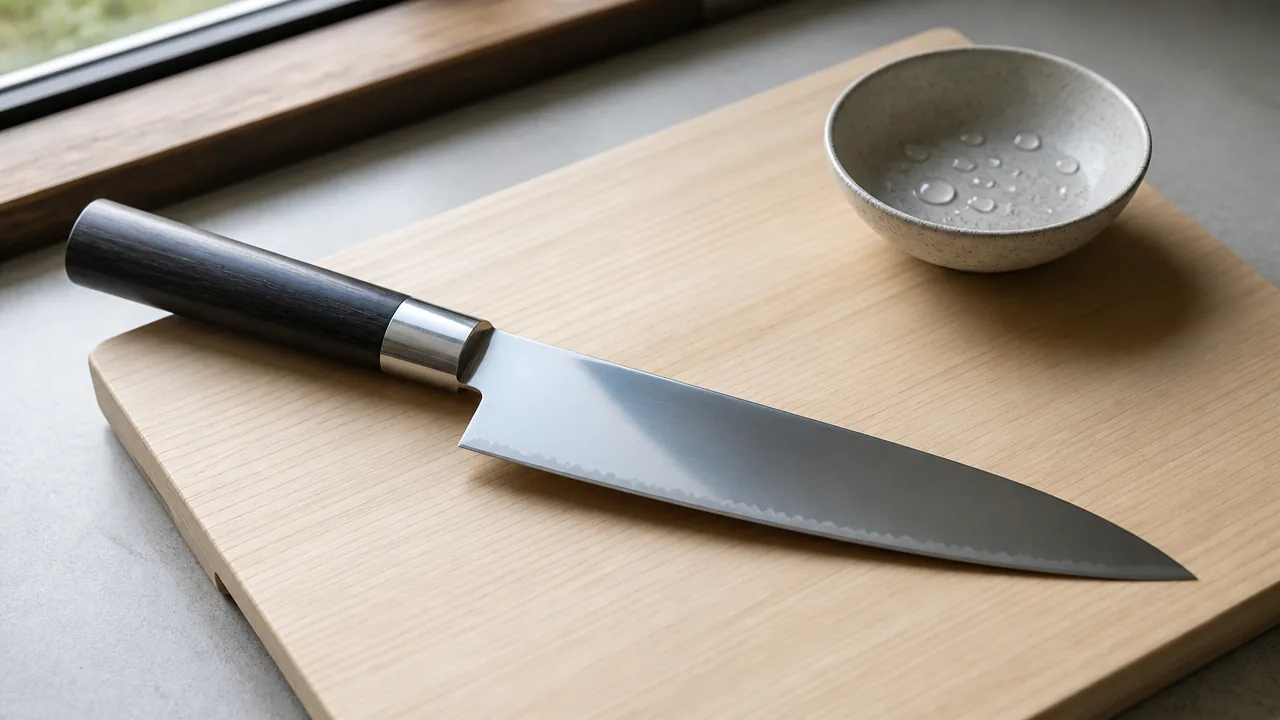
Among stainless steels used in Japanese knife-making, VG-10 is probably the most widely encountered. Its maker, Takefu Special Steel, lists a representative composition of 1.00% carbon, 15.00% chromium, 1.00% molybdenum, 0.25% vanadium and 1.55% cobalt; the chromium is what gives it meaningful corrosion resistance. Beyond chromium, VG-10 also contains molybdenum, vanadium, and cobalt — additions that collectively contribute to wear resistance and edge retention beyond what plain chromium-steel alloys typically offer.
In terms of hardness, Takefu lists VG-10 at HRC 60 or above, and Shun, for example, says it hardens its VG10 to 60–61 on the Rockwell scale. The exact figure depends on each maker’s heat treatment. For context, Shun describes German-steel knives as softer.
The practical advantages of this steel are fairly clear:
- It resists rust and staining well enough for everyday kitchen use without demanding special after-care routines
- It can hold a working edge for a reasonable amount of time between sharpenings
- It is approachable for beginners who are not yet comfortable with the strict drying and oiling rituals that carbon steel demands
The limitations are worth noting too. VG-10 is harder to sharpen than softer steels, and it does not typically achieve the same level of initial sharpness as a well-prepared carbon steel blade. It can also be prone to micro-chipping if used carelessly on hard foods. In recent years, powder-metallurgy stainless steels have emerged that push edge retention even further, but VG-10 remains a common and broadly capable choice in its category.
Carbon Steel: Shirogami (White Steel) and Aogami (Blue Steel)
Carbon steel knives occupy a different philosophical space from stainless ones. They are less forgiving in terms of maintenance, but many experienced cooks consider the sharpness they can reach — and the ease with which they get there — to be genuinely worth the extra care.
Shirogami, or White Steel, is a high-purity carbon steel prized for the fineness of its edge. Because it contains very few alloying additions beyond carbon and iron, it responds readily to sharpening and can be brought to an exceptionally keen edge. Shirogami is sold in grades such as No. 1 and No. 2; the hardness of a finished knife depends on the maker’s heat treatment, so check the figure listed for the knife itself. The downside is direct: Shirogami rusts quickly if left wet or exposed to acidic foods, and users need to dry the blade immediately after use and apply a light coat of food-safe oil during storage.
Aogami, or Blue Steel, is essentially Shirogami with the addition of tungsten and chromium. These alloying elements improve wear resistance, which translates to better edge retention — the blade stays sharper for longer between sessions on the whetstone. Aogami also comes in grades, including No. 1, No. 2 and Aogami Super. As with Shirogami, the hardness of a finished knife is set by the maker’s heat treatment, so use the figure listed for the knife. The higonokami folding knife is sold with Aogami or SK steel blades; Best Higonokami Knife compares the two.
The trade-off between the two carbon steel families is subtle but real. Aogami generally holds its edge longer; Shirogami, in the view of many craftspeople and experienced users, can be brought to a marginally keener initial edge precisely because of its simpler composition. Neither is objectively better — the right choice depends on whether you prioritize peak sharpness or durability between sharpenings.
For readers curious about which knife shapes pair well with these steels, the Best Japanese Nakiri Knife 2026: Top Picks for Vegetable Prep guide explores options across steel types in the context of vegetable prep.
Damascus: A Manufacturing Technique, Not a Type of Steel
This is a point of confusion, so it is worth being explicit: Damascus is not a steel. It is not an alloy, not a grade, and not a material you can look up on a hardness chart. It is a construction method.
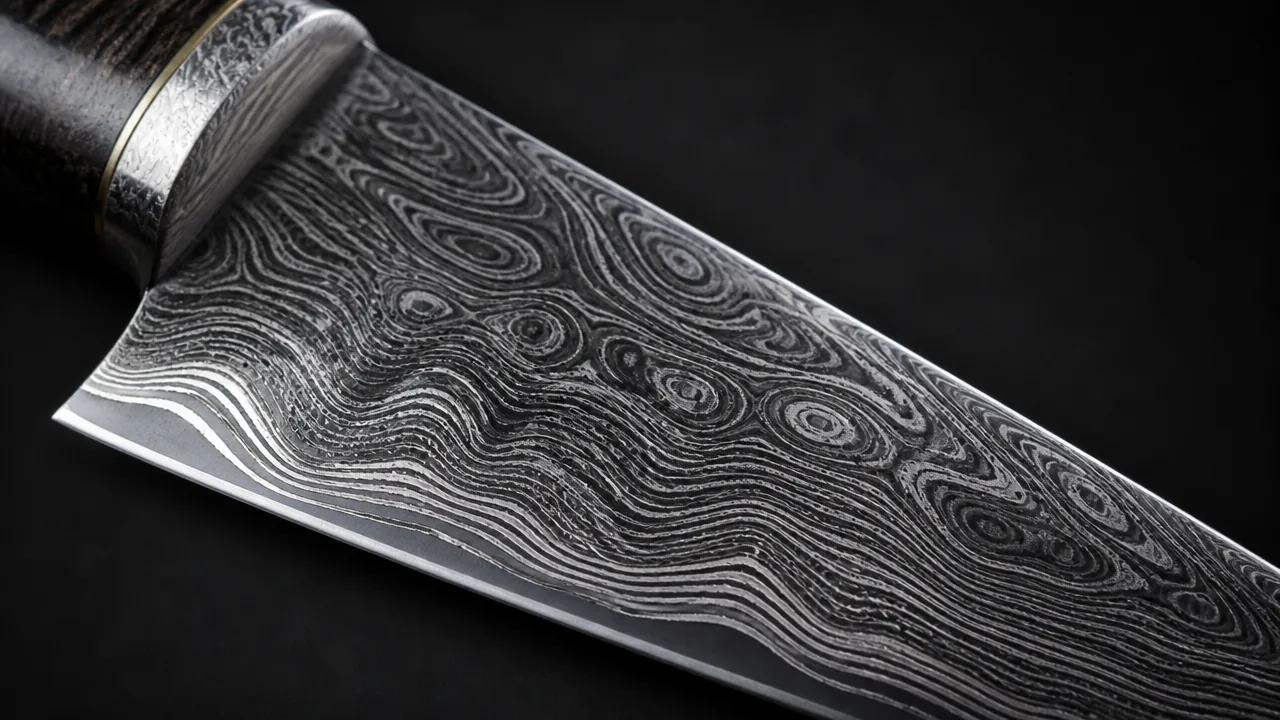
The term refers to the practice of layering multiple types of steel, then forge-welding and folding them together to create a blade with a visually distinctive, flowing pattern. That pattern — the rippling, wavy lines seen on so many premium-looking knives — is brought out by etching the finished blade in an acid solution, which reacts differently with each steel layer and causes them to appear at different tones.
The cutting performance of a Damascus-pattern knife comes entirely from the core steel at the center of the blade, not from the patterned layers surrounding it. In most Japanese Damascus knives, that core is a recognizable steel — often VG-10, Shirogami, or Aogami — while the surrounding Damascus cladding serves primarily as a protective and decorative jacket. The cladding itself typically has little direct effect on how sharp the edge gets or how long it stays sharp.
This distinction matters when making purchasing decisions. Two knives with identical-looking Damascus surfaces can perform very differently depending on what core steel sits at the cutting edge. Conversely, a knife with no Damascus patterning at all might outperform a Damascus-pattern knife if its core steel is of higher quality. When evaluating any knife marketed as Damascus, the first question to ask is: what is the core steel, and at what hardness was it treated?
A Practical Guide for Beginners: Which Steel Should You Start With?
The honest answer is that neither carbon steel nor stainless steel is universally better — the right choice depends on your kitchen habits and how much attention you are willing to give your tools.
For most people who are new to Japanese knives, a stainless steel option like VG-10 is a reasonable starting point. The reasons are practical rather than a reflection of quality:
- You do not need to dry the blade immediately after every rinse
- The risk of rust appearing through simple neglect is low
- The edge still represents a significant step up from most Western knives
- Sharpening is still necessary, but the steel is stable and predictable on a whetstone
If, on the other hand, you already have some comfort with knife maintenance — or you are the type of cook who enjoys the ritual of caring for tools — Shirogami or Aogami carbon steel can be deeply rewarding. The sharpness that a well-maintained carbon steel knife can reach is difficult to match in the stainless category.
A few general principles worth keeping in mind:
- Higher HRC hardness generally means better edge retention but also a more brittle blade — use it on a proper cutting board and avoid bones or frozen food
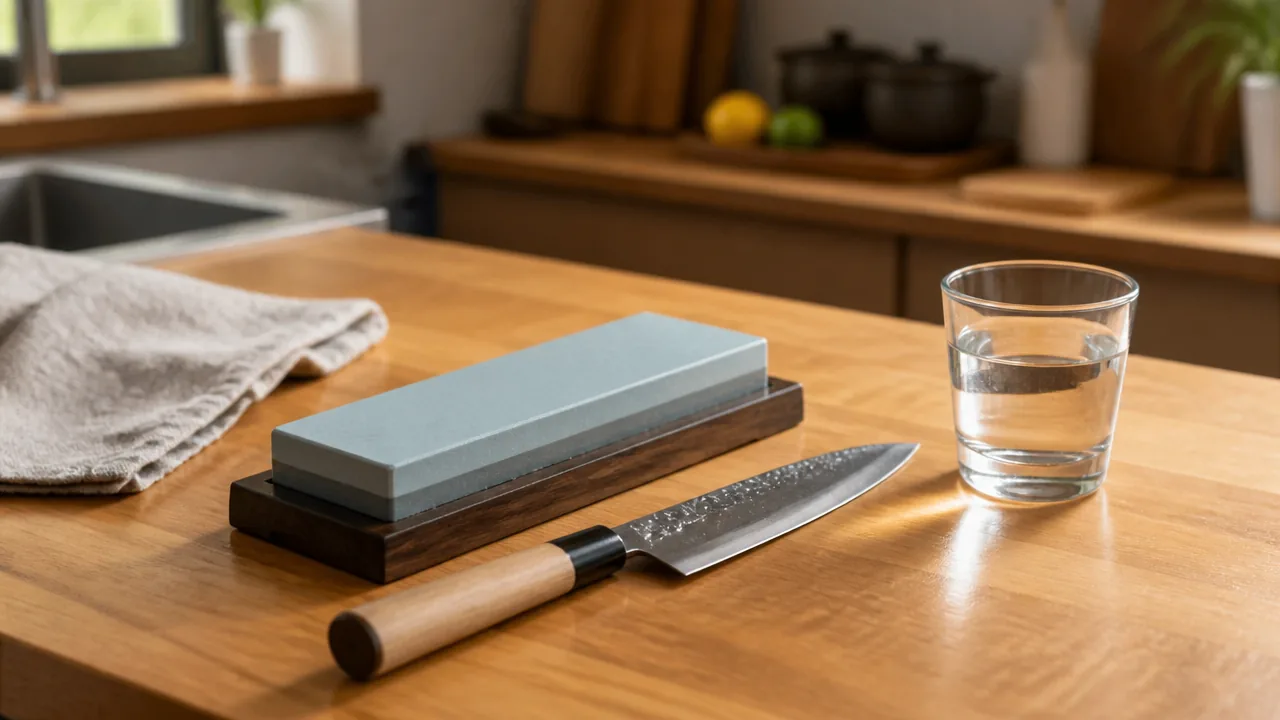
- Whatever steel you choose, a quality whetstone and the willingness to learn basic knife sharpening will matter more than the steel grade itself over the long run
- Damascus cladding does not change this calculus; focus on the core steel specification when comparing knives
For those who want guidance on specific knife shapes suited to beginners, Best Japanese Knife for Beginners: How to Choose by Use and Budget is a useful companion read. If you are leaning toward a general-purpose chef’s knife, Best Japanese Gyuto Knife 2026: Top Picks by Skill Level and Budget walks through what to consider at different experience levels.
Frequently Asked Questions
What is VG-10 steel made of?
Its maker, Takefu Special Steel, lists a representative composition of 1.00% carbon, 15.00% chromium, 1.00% molybdenum, 0.25% vanadium and 1.55% cobalt.
How hard is VG-10?
Takefu Special Steel lists VG-10 at HRC 60 or above, and Shun says it hardens its VG10 to 60–61 on the Rockwell scale. The exact figure depends on each maker’s heat treatment.
Is Japanese knife steel harder than German knife steel?
Shun, which hardens its VG10 to 60–61 on the Rockwell scale, describes German-steel knives as softer. For any particular knife, use the hardness figure its maker lists.
What is the difference between Aogami and Shirogami?
Aogami (Blue Steel) is essentially Shirogami (White Steel) with tungsten and chromium added. Those additions improve wear resistance, so Aogami generally holds its edge longer; Shirogami, with its simpler composition, responds readily to sharpening. Both are carbon steels that rust if left wet.
Is VG-10 or Shirogami better?
Neither is better in every way. VG-10 is stainless, resists rust in everyday use and suits beginners; Shirogami is a carbon steel that responds readily to sharpening but rusts quickly if left wet, so it needs drying after use and oil for storage.
Bringing It All Together
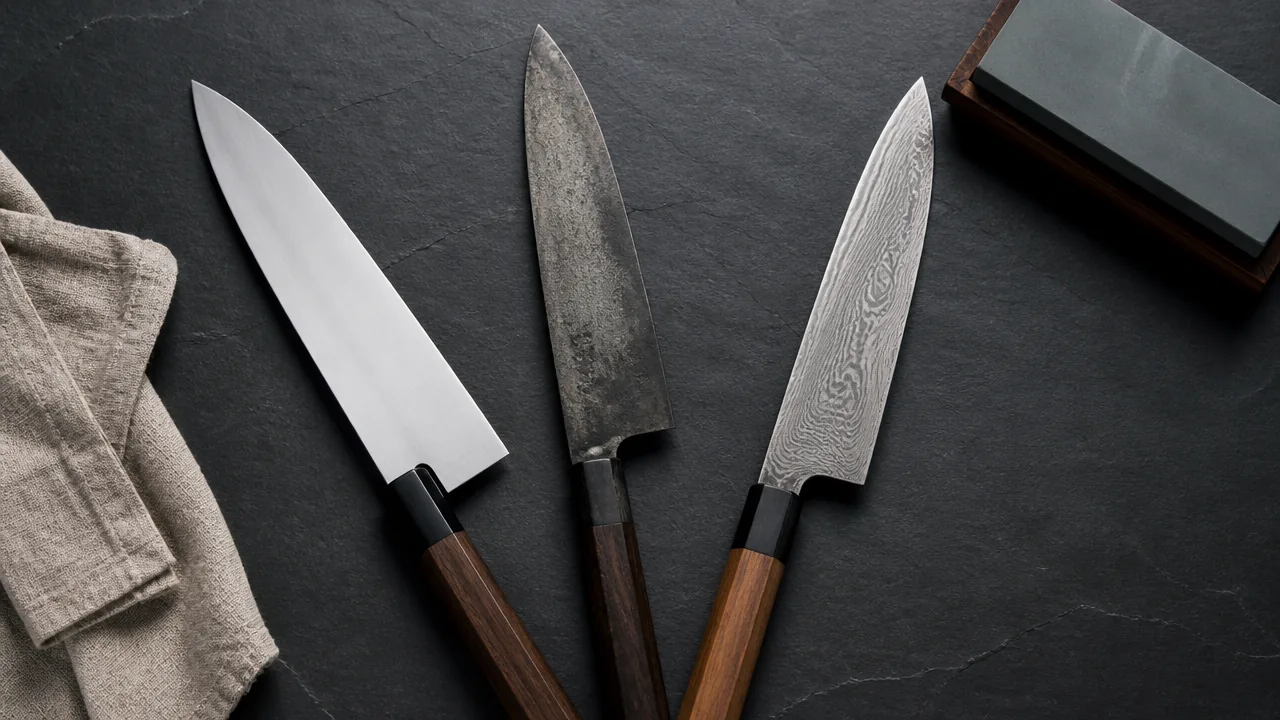
Japanese knife steels can seem complicated at first, but the core ideas are relatively straightforward once the categories are separated clearly. Stainless steels like VG-10 prioritize ease of maintenance and offer solid edge retention in a package that tolerates everyday kitchen conditions. Carbon steels — Shirogami for peak initial sharpness, Aogami for improved edge retention through alloying — ask more of the owner but can take a very fine edge.
Damascus sits in a separate category entirely, because it is not a steel at all. It is a visual and structural construction technique applied around a core steel of some other type. The same construction-versus-material distinction applies to how a blade is forged in the first place — see our guide to Honyaki, the single-steel forging method, for how that differs from the more common clad (kasumi) construction. Understanding this prevents the common mistake of paying a premium for aesthetics while assuming performance will follow automatically.
None of these steels exist in isolation from the hands that made the knife, the geometry of the grind, or the care of the person using it. A beautifully heat-treated Shirogami blade that is never sharpened will not outperform a modest stainless knife that is properly maintained. The steel type sets the ceiling; how you use and care for the knife determines how close to that ceiling you actually get.
Now that you have a clearer picture of how blade steel affects performance, which type of steel do you think fits your cooking style — and are you ready to explore what that means for your next knife choice?