This article contains affiliate links. If you buy through them, we may earn a commission at no extra cost to you.
How this article was made: Research-based comparison. It draws on published information from makers, retailers, and reference sources, not on hands-on testing.
What This Guide Covers (And How It Differs From the Petty Knife Roundup)
This guide focuses strictly on paring-size Japanese knives — blades between 100mm and 110mm — priced at $80 or under. If you’ve landed here after browsing our Best Japanese Petty Knife 2026: Top Picks by Use and Budget, you’ll notice the difference: that article covers a wider range including 120mm–150mm petty knives across multiple price tiers, while this one is deliberately narrow. Smaller blade, tighter budget, sharper focus.
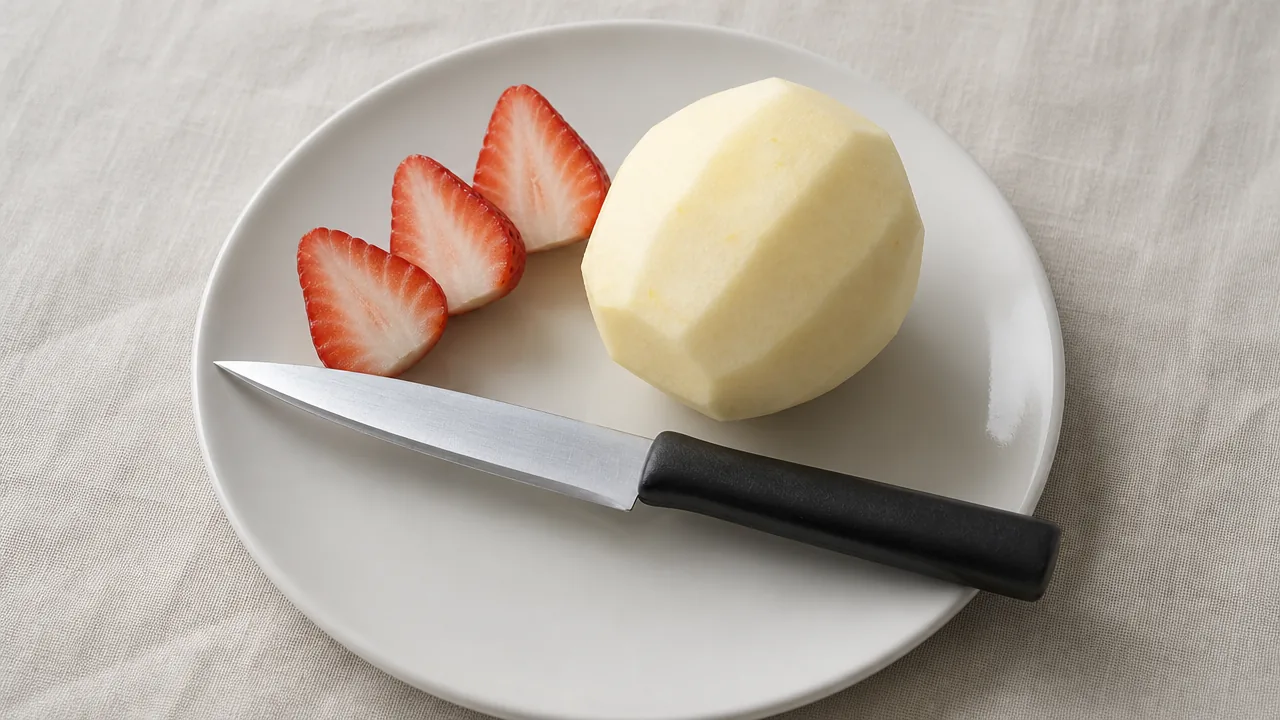
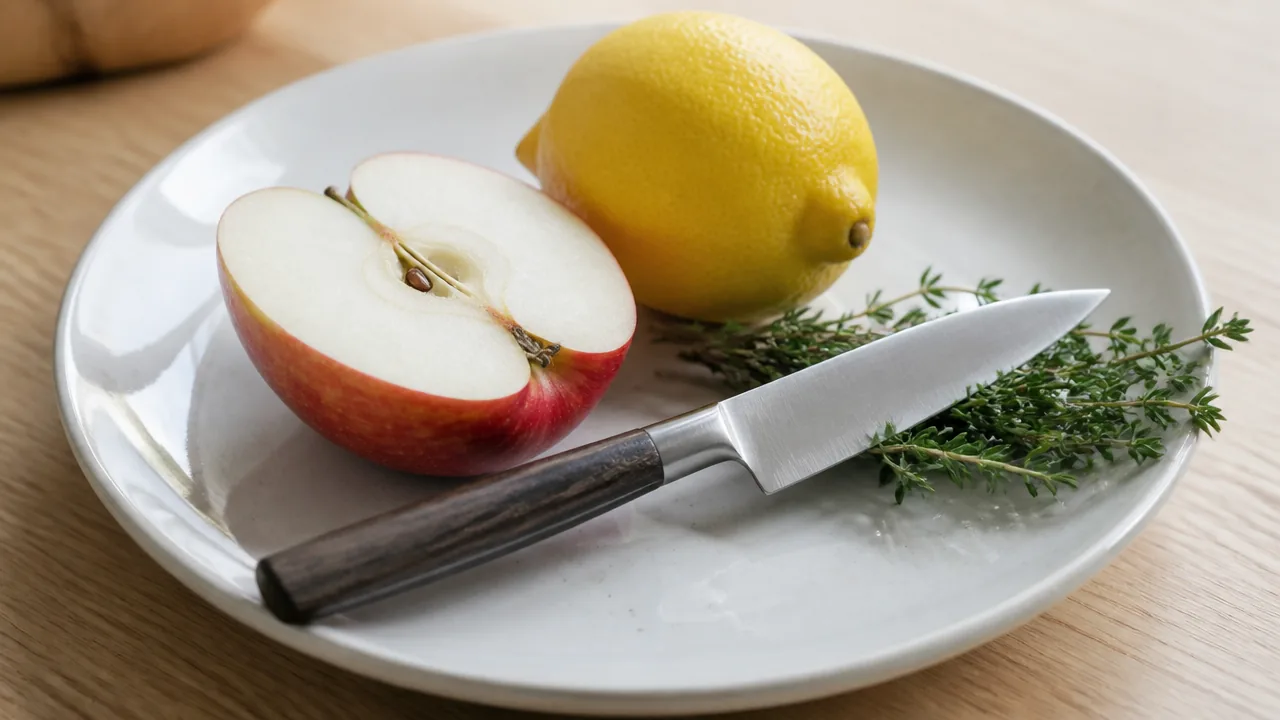
Why does that distinction matter? A 100mm paring knife sits in your hand differently than a 150mm petty. You use it for in-hand work — peeling apples, trimming fat, hulling strawberries — where a shorter, lighter blade gives you more control. Once you go past 115mm, the knife starts functioning more like a prep knife than a true parer.
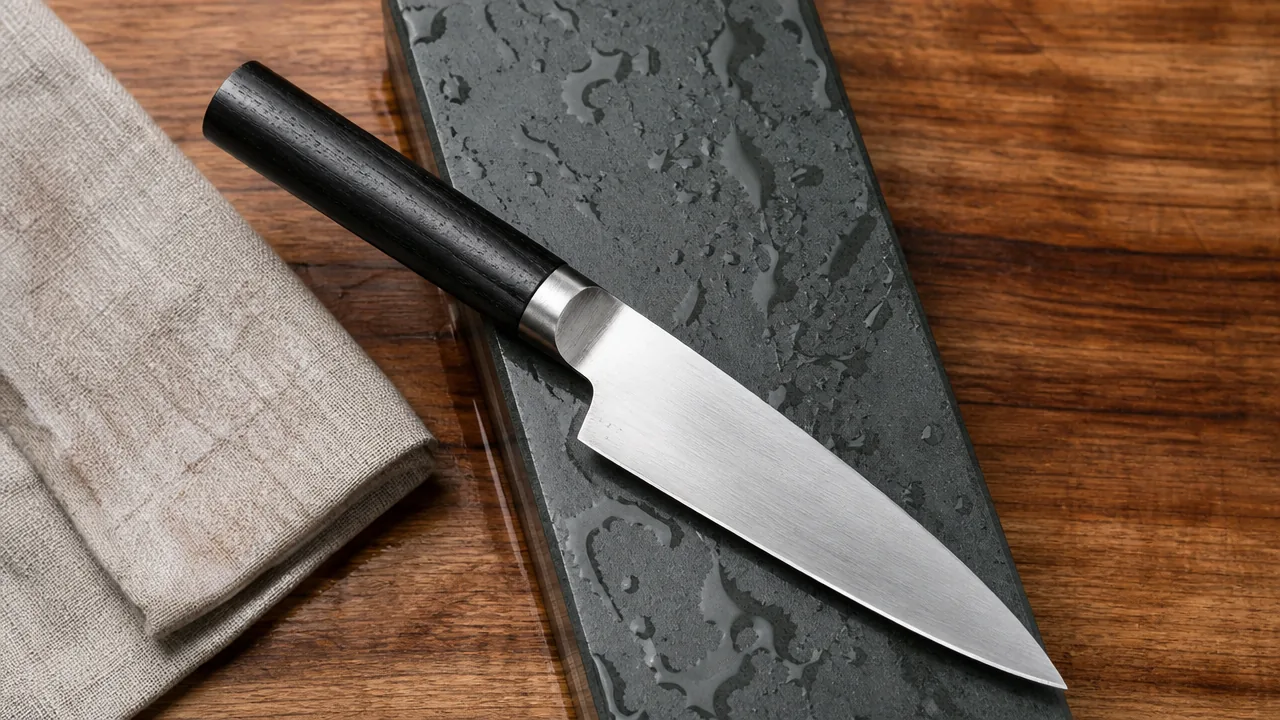
For anyone new to Japanese knives, this size is actually a forgiving entry point. The blades are shorter, so sharpening on a whetstone feels less intimidating. The price range keeps the stakes low. And the skills you build here — understanding HRC ratings, double bevel vs single bevel geometry, handle ergonomics — all carry over when you eventually step up to a Gyuto or Santoku.
How to Choose: What Actually Matters in This Size and Price Range
Under $80, you’re not choosing between bad and good — you’re choosing between trade-offs. Here’s how to think about each factor before looking at specific knives.
Steel hardness matters more than most beginners expect. Japanese knives in this category typically run between HRC 58 and HRC 61. A lower HRC (around 58) means the steel is more forgiving — easier to touch up on a basic sharpening stone and less likely to chip if you accidentally hit a bone or a hard seed. A higher HRC (61+) holds a finer edge for longer but demands more careful handling and a proper whetstone sharpening routine.
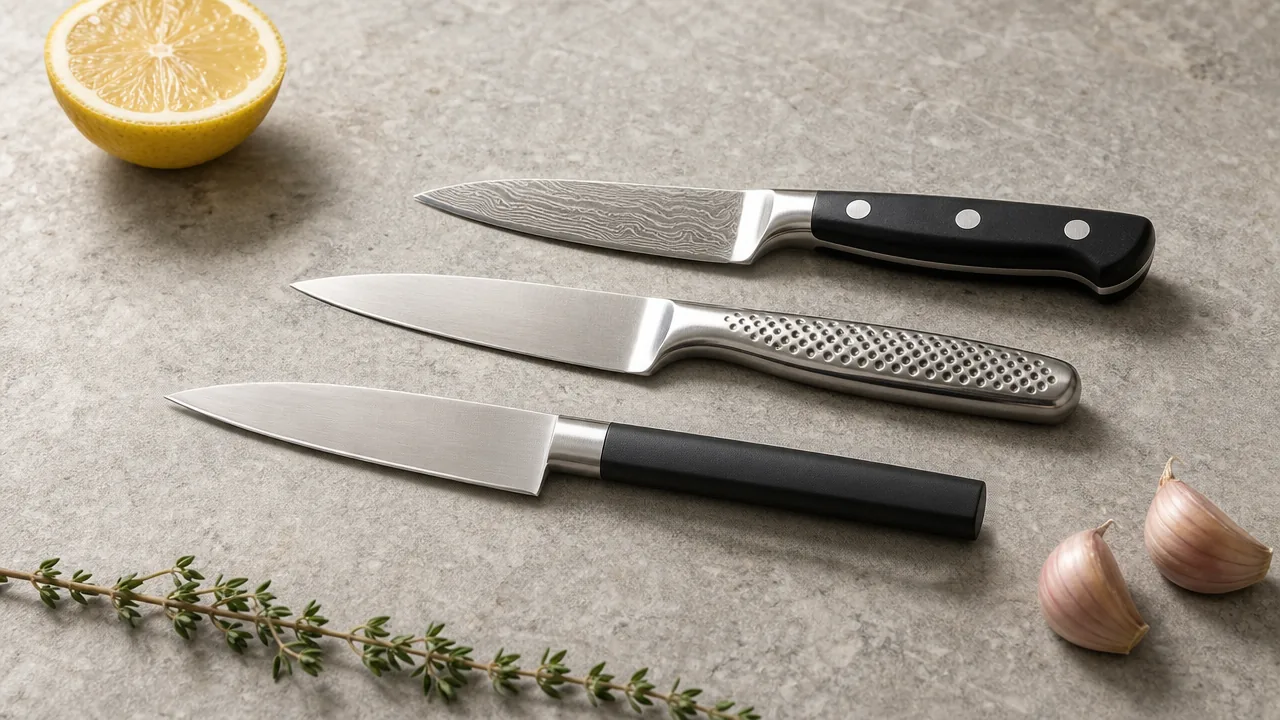
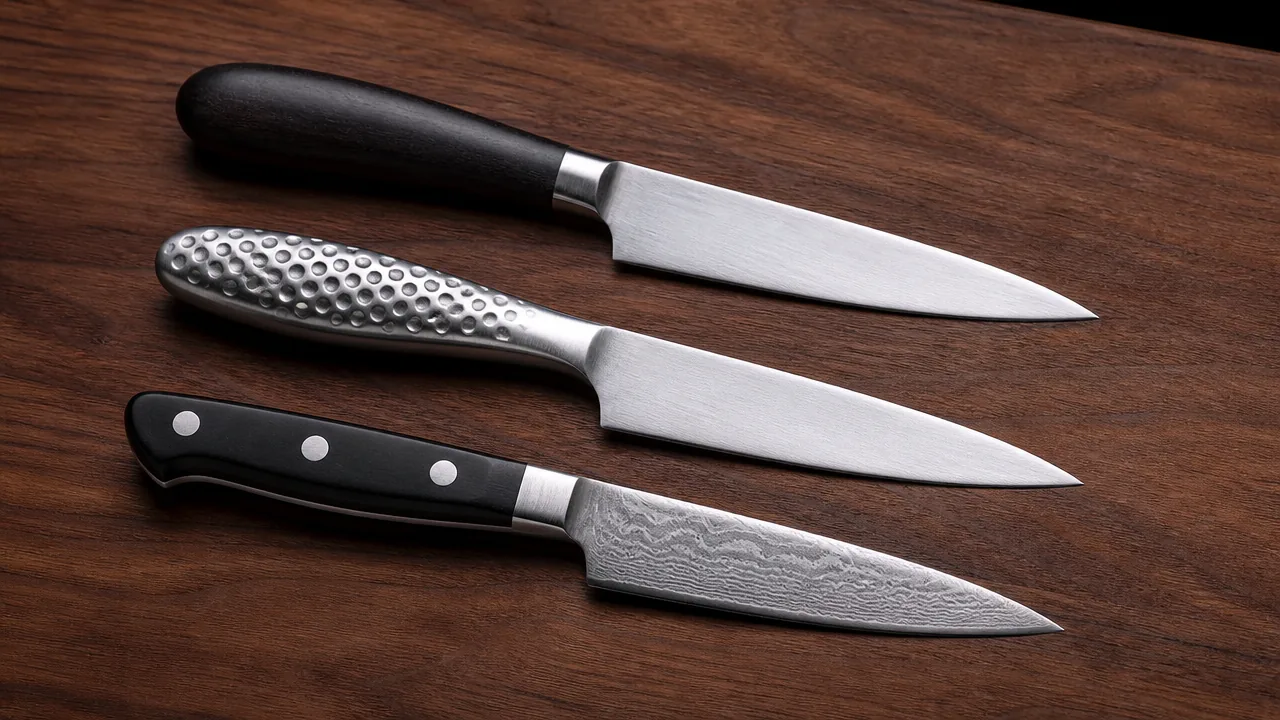
Handle style is worth a moment’s thought, because the three picks here take very different approaches: a chestnut-shaped handle in bamboo-filled polypropylene, a one-piece stainless steel handle, and a riveted Micarta handle. At this blade size the handle does most of the work of keeping the knife steady in your fingers, so it is worth picturing how you will hold it before you buy.
A few other things to keep in mind:
- All three knives here are double bevel, meaning they’re suitable for both right- and left-handed users without modification.
- Blade length of 100–110mm is the functional sweet spot for in-hand peeling and detail work.
- VG-10 steel (used in the top pick) offers a strong balance of edge retention and corrosion resistance at this price point.
- Stainless steel across the board means low maintenance — no oiling, no reactive surface concerns.
The Three Picks: Entry, Mid-Range, and Best
These are the only three knives covered in this guide. Prices and stock were checked on September 28, 2026; the two Amazon prices (Global and Yaxell) were rechecked on October 4, 2026.
Entry: Kai Wasabi Black Paring Knife 100mm
Kai Wasabi Black Paring Knife 100mm — €46.75 (about $53, on sale)
US buyers: about $81 in total with shipping and the 25% tariff.
Made in Japan by Kai, the Wasabi Black line is built for everyday use without fuss. The 100mm blade is made from 6A/1K6 stainless steel hardened to HRC 58±1, a forgiving hardness for beginners that is easy to bring back on a whetstone and less prone to chipping in normal kitchen use. The matte black handle is polypropylene mixed with bamboo powder, and the blade is double bevel.
SharpEdge prices this knife in euros. It is currently €46.75, about $53 at the ECB rate of 1 EUR = 1.1403 USD on September 25, 2026, down from its regular €55.00 (about $63). Even at the regular price it stays under $80, but the listed price excludes shipping, so your total may be higher depending on where you live.
US totals are estimates as of October 2026, based on SharpEdge’s shipping page: (price + €10 shipping) × 1.25 for orders under €300, or price × 1.25 for orders of €300 or more, which ship free. Example: a €51 knife came to €76.10 at checkout for a New York address on October 3, 2026. Tariff rates can change.
Japan Check
Made in: Japan (Kai)
Steel: 6A/1K6 stainless steel
HRC: 58±1
Blade Length: 100mm
Checked Against: sharpedgeshop.com
Last Checked: 2026-09-28
Mid-Range: Global GSF-49 4.5-Inch (110mm) Utility Knife
Global GSF-49 4.5-Inch (110mm) Utility Knife — $67.48
The Japanese brand Global sells this as a utility knife, but at 110mm it overlaps in practice with what most cooks would call a petty or paring knife. The Cromova 18 stainless steel blade is thin and face-ground with a long taper, which makes slicing feel light, and the stainless steel handle carries Global’s dimpled grip with no seam between blade and handle. Amazon showed $67.48 on October 4, 2026, in stock; it was on sale at $61.02 in late September.
Japan Check
Made in: Japan (Yoshida Metal Industry, Tsubame, Niigata)
Steel: Cromova 18 stainless steel
HRC: not stated on the listing
Blade Length: 110mm
Checked Against: amazon.com
Last Checked: 2026-09-28
Best: Yaxell Ran Plus 4-Inch Paring Knife
Yaxell Ran Plus 4-Inch Paring Knife — $79.99 (on sale)
Handcrafted in Seki City, Japan, the Ran Plus uses a VG10 core with Damascus cladding, which brings a genuinely premium edge to a small knife. The $79.99 price is a sale price (the list price is $109.00), so it only fits this guide’s budget while the discount lasts. At HRC 61 with a blade angle of approximately 12°, it takes and holds a fine edge between sharpenings. The black resin and linen canvas Micarta handle is fixed with two rivets on a full tang, and Yaxell backs it with a lifetime warranty.
Japan Check
Made in: Japan (per retailer; Seki City)
Steel: VG10 core, Damascus cladding
HRC: 61
Blade Length: 100mm (4 in)
Checked Against: amazon.com (sold by Cutlery and More)
Last Checked: 2026-09-28
Quick Comparison Table
| Product | Price | Blade Length | Steel | HRC |
|---|---|---|---|---|
| Kai Wasabi Black Paring Knife 100mm | ~$53 (sale, excl. shipping) | 100mm | 6A / 1K6 Stainless | 58±1 |
| Global GSF-49 110mm Utility Knife | $67.48 | 110mm | Cromova 18 Stainless | Not listed |
| Yaxell Ran Plus 4-Inch Paring Knife | $79.99 (sale) | 100mm | VG10 Damascus | 61 |
A note on the Global’s HRC: the Amazon listing for this knife does not give a hardness figure. US retailers list Global’s Cromova 18 knives at roughly 56–58 HRC, the softer end of this group, which is part of why they are easy to maintain.
For anyone weighing the Damascus pattern on the Yaxell against the plain finish on the other two — the visual difference is real, but the functional case for Damascus at this price is mostly about the VG10 core underneath it. Our article Damascus vs Non-Damascus: Does the Pattern Matter? covers this honestly if you want to go deeper before deciding.
Which One Should You Actually Buy?
The honest answer depends on two things: how much you want to spend right now, and how often you’ll actually use a paring knife.
If a paring knife is an occasional tool — fruit prep, garnish work, trimming the occasional vegetable — the Kai Wasabi Black is enough. HRC 58 steel is easy to maintain, the 100mm blade is the right size for in-hand work, and the bamboo-composite handle is simple to live with. At around $53 on sale (remember: shipping is extra, and could push your total above $80 depending on your location), it’s the lowest-risk option.
If you cook daily and want something you’ll use in both in-hand and board work, the Global GSF-49 earns its place. The 110mm blade gives you a little more reach for tasks like breaking down shallots or trimming chicken thighs. The seamless steel handle leaves no gap between blade and handle for food to collect. At $67.48 it is still under $80, though less of a standout value than at its late-September sale price.
If you’re willing to wait for the Yaxell sale price to hold — or if this will genuinely be your primary small knife — the Ran Plus is the one that rewards attention. VG10 at HRC 61 with a 12-degree edge geometry is a meaningful step up in cutting feel. The Micarta handle and lifetime warranty add to the appeal, and Seki City craftsmanship at under $80 is not something you find often. Just be clear: at $109.00 full price, it no longer fits this guide’s budget.
Frequently Asked Questions
What is the difference between a paring knife and a petty knife?
The terms are often used interchangeably, but there’s a practical size distinction. A paring knife typically refers to blades in the 80mm–110mm range, designed primarily for in-hand work — peeling, trimming, hulling. A petty knife (the Japanese equivalent of a small utility knife) often starts at 120mm and goes up to 150mm or longer, making it more suitable for board work. All three knives in this guide are paring-sized (100–110mm). For a broader look at how blade length affects use case, the Japanese Knife Blade Length Guide is a good next read.
Is VG-10 steel worth it on a paring knife under $80?
It depends on how you’ll use the knife. VG-10 holds a finer edge longer than most entry-level stainless steels, and at HRC 61 (as in the Yaxell Ran Plus, with a blade angle of approximately 12°), it can carry a very fine edge. For someone who values long edge retention and doesn’t mind learning to sharpen on a whetstone, yes, it’s worth it. For someone who wants a low-maintenance knife they can touch up on a honing rod, the softer 6A steel in the Kai Wasabi Black is actually a better fit.
Can I put these knives in the dishwasher?
For all three knives in this guide, hand washing is strongly recommended. Dishwasher heat and detergents accelerate corrosion and can damage handle materials over time — even on stainless steel knives. A quick rinse and dry after each use is the right habit to build early.
How do I sharpen a Japanese paring knife at home?
For the Kai Wasabi Black at HRC 58, a basic 1000-grit whetstone followed by a leather strop is sufficient for most home cooks. For the Yaxell Ran Plus at HRC 61, you’ll want a quality whetstone (1000/3000 combination at minimum) and a light touch — harder steel rewards slower, more deliberate passes. In general, avoid electric pull-through sharpeners on any of these knives, as they remove too much metal and can damage the precise edge geometry.
Ready to pick yours? The Kai Wasabi Black ships from SharpEdge, while the Global GSF-49 and Yaxell Ran Plus are available on Amazon — links for all three are in the comparison table above. Sale prices can change without notice, so it’s worth checking current pricing before you decide.