This article contains affiliate links. If you buy through them, we may earn a commission at no extra cost to you.
How this article was made: Research-based comparison. It draws on published information from makers, retailers, and reference sources, not on hands-on testing.
The Short Answer
Two Japanese makers of kintsugi kits say urushi lacquer can be used to repair tableware, and both are cautious about synthetic glues and brass powder. Before you eat or drink from a repaired piece, check the instructions and the product page of the kit you actually have. Chimahaga writes that natural urushi was originally used to join bowls and can be used for repairing tableware. Tsugu Tsugu describes kits based on synthetic glues as not food safe.
- Urushi lacquer: can be used to repair tableware; wait about a month after the repair is finished before using the piece (Chimahaga, Tsugu Tsugu).
- Epoxy and other synthetic glues: most commercially available adhesives are not suitable for use on tableware (Chimahaga); kits based on synthetic glues are not food safe (Tsugu Tsugu).
- Genuine gold powder: the finish used in urushi kits sold for tableware (Chimahaga).
- Brass powder: not certified as food safe (Tsugu Tsugu).
This article reports what makers publish. It is not a laboratory test and not safety advice for a particular product. New to the craft? Start with What Is Kintsugi?
Urushi: The Traditional Material for Tableware
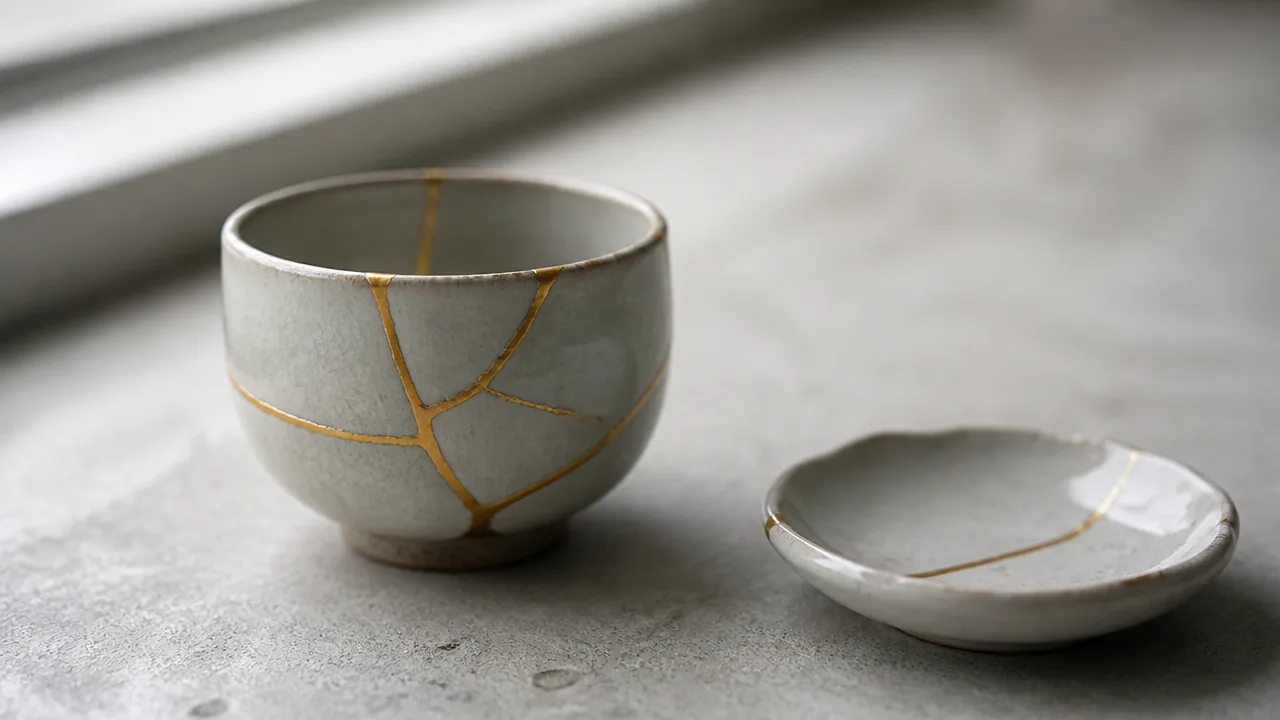
Urushi is the sap of the lacquer tree, and it is the material kintsugi was built on. Chimahaga notes that natural urushi was originally used to join bowls and can be used for repairing tableware (Chimahaga). Urushi does not dry like paint; it cures in warm, humid air. Chimahaga says curing proceeds best at 25°C and around 75% humidity, and Tsugu Tsugu gives 20 to 25°C and around 70 to 80% humidity.
That is why a repair for the table takes time. Chimahaga describes a whole repair as taking about a month, and both makers say to wait about a month after the repair is complete before using the piece (Tsugu Tsugu’s wording is to start using the item at least 1 month after it was repaired). How Long Does Kintsugi Take? goes through the timeline.
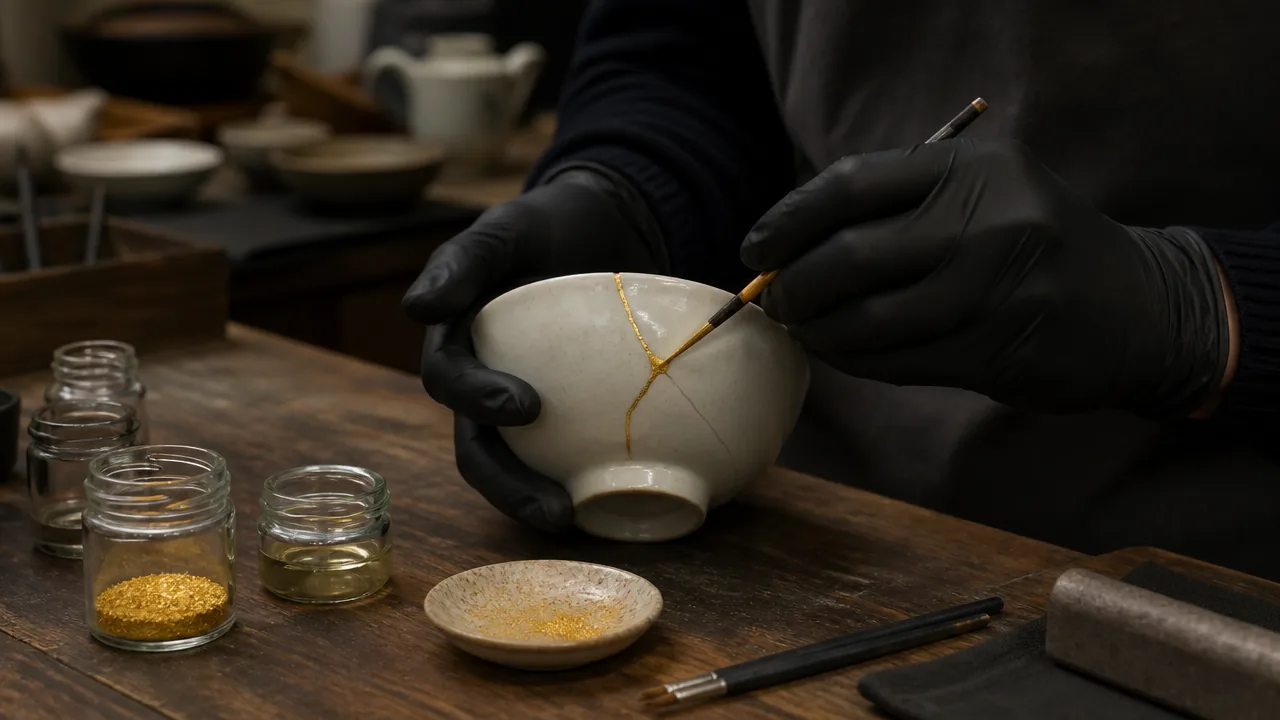
One caution applies while you work: raw urushi contains urushiol, which can cause a skin reaction in people who are sensitive to it. Wear gloves and work in a ventilated space.
Epoxy and Other Synthetic Glues
Epoxy kits are quicker and cheaper, and the two makers do not recommend them for tableware. Chimahaga states that most commercially available adhesives are not suitable for use on tableware, and adds that even adhesives that conform to Japan’s Food Sanitation Law often lack strength and heat resistance (Chimahaga). Tsugu Tsugu describes kits based on synthetic glues as not food safe (Tsugu Tsugu).
Some epoxy kits are described by their sellers as “food-safe”. A seller using the phrase is not the same as naming the food-contact standard the adhesive meets. If the product page names no standard, the cautious reading is to keep that repair for pieces that will not hold food or drink: a vase, a display plate, a plant pot.
For the differences between the two kinds of kit beyond food use, see Authentic Kintsugi Kit vs Synthetic Resin Kit.
Gold Powder and Brass Powder
The powder matters as well as the glue. The urushi kits sold for tableware finish the seam with genuine gold powder. Many low-cost kits use brass powder or gold-colored mica instead, and Tsugu Tsugu describes brass as not certified as food safe. Brass also tarnishes over time.
If you are buying the materials separately rather than as a kit, Best Kintsugi Glue and Gold Powder lists urushi, genuine gold powder and brass powder side by side.
Using a Repaired Piece
Even an urushi repair asks for gentler handling than the piece needed before it broke. The two makers agree on the main points:
- Dishwasher and microwave: no. Chimahaga says a dishwasher may cause damage and gold to peel off and warns of sparks from the seams in a microwave. Tsugu Tsugu rules out the microwave, dishwasher, oven and open fire.
- Washing: by hand, gently, with a soft sponge (Chimahaga).
- First use: about a month after the repair is complete (both makers).
Glass is a separate case: Tsugu Tsugu says kintsugi on glass requires advanced skills. See Can You Use Kintsugi on Glass?
Kits by Material
The two urushi kits below come from Chimahaga, a Japanese maker; the third is an epoxy kit, listed here as an epoxy alternative, not an urushi kit, for decorative pieces.
| Kit | Price | Type | Powder |
|---|---|---|---|
| Chimahaga Basic Kintsugi Kit | $169.00 | Urushi | Gold, 0.1 g |
| Chimahaga Standard Kintsugi Kit | $195.00 | Urushi | Gold 0.1 g, brass 1 g |
| iienjoy Kintsugi Repair Kit Gold | $21.99 | Epoxy | Gold-colored mica, 5 g |
- Food use, Chimahaga kits: the maker states they are food-safe once the urushi has completely hardened.
- Food use, iienjoy kit: the seller describes it as food-safe; no test standard is cited.
Prices are from Amazon.com, checked October 3, 2026. Best Japanese Kintsugi Repair Kits covers what each kit contains and how many pieces it repairs.
Frequently Asked Questions
Is kintsugi food safe?
It depends on the materials. Chimahaga, a Japanese kit maker, says natural urushi can be used for repairing tableware, while it and Tsugu Tsugu, another Japanese maker, are cautious about synthetic glues: Chimahaga says most commercially available adhesives are not suitable for tableware, and Tsugu Tsugu describes kits based on synthetic glues as not food safe.
How long should I wait before eating from a kintsugi-repaired bowl?
Both Chimahaga and Tsugu Tsugu say to wait about a month after an urushi repair is complete before using the piece.
Can a kintsugi-repaired piece go in the dishwasher or microwave?
No. Chimahaga says a dishwasher may cause damage and gold to peel off and warns of sparks in a microwave; Tsugu Tsugu rules out the microwave, dishwasher, oven and open fire.
Is brass powder safe for dishes?
Tsugu Tsugu describes brass as not certified as food safe. The urushi kits sold for tableware use genuine gold powder.
Ready to choose a kit? Best Japanese Kintsugi Repair Kits compares the options above in detail.
Comments