How this article was made: Research-based comparison. It draws on published information from makers, retailers, and reference sources, not on hands-on testing.
- More Than Skill: What Makes a Japanese Blacksmith Different
- Shokunin Spirit: Pride, Responsibility, and the Refusal to Cut Corners
- How Japan’s Artisan Class Took Shape: From the Muromachi to the Edo Period
- Sakai Knives: From the Tobacco Knife to a Designated Traditional Craft
- Takefu Knife Village: Collective Mastery as a Response to Decline
- Why This Philosophy Still Matters When You Choose a Knife
- Frequently Asked Questions
- A Living Philosophy, Not a Museum Piece
More Than Skill: What Makes a Japanese Blacksmith Different
Walk into a traditional forge in Japan and you will notice something that goes beyond technique. The smith works with a kind of focused quiet — not performing, not rushing — simply doing exactly what the task requires and nothing less. This quality has a name: shokunin kishitsu, often translated as shokunin spirit.
The word shokunin itself simply means craftsperson or artisan. But in Japanese culture, the term carries weight that a direct translation cannot fully capture. It implies a relationship between a person and their work that is almost moral in character — an obligation not just to the customer, but to the craft itself and to everyone who came before.
For those encountering Japanese kitchen knives for the first time, understanding this philosophy helps explain why a hand-forged knife made in a small workshop can feel categorically different from a mass-produced blade — not just in sharpness, but in the sense of intentionality behind every choice of steel, every angle of the grind, every hour of finishing work. The knife is, in a sense, a record of that commitment.
Shokunin Spirit: Pride, Responsibility, and the Refusal to Cut Corners
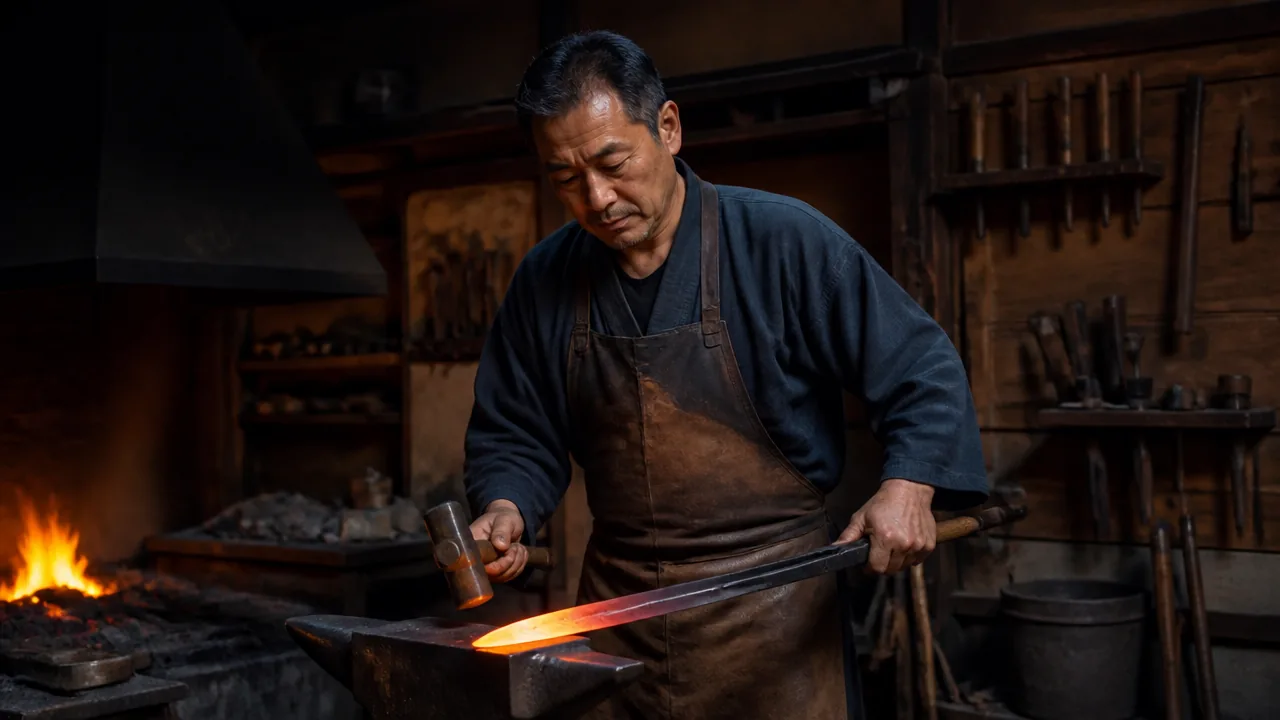
Shokunin spirit is not simply a dedication to doing good work. It encompasses three qualities that together form something closer to a life philosophy than a professional attitude.
First, there is pride in the work itself — not in recognition or reward, but in the internal standard the craftsperson holds. A shokunin does not measure quality by what the customer can detect; they measure it by what they know to be true about the object they have made.
Second, there is social responsibility. In Japanese artisan tradition, a craftsperson’s output reflects on their community, their teachers, and their lineage. Releasing a flawed piece is not merely a personal failure — it is understood as a failure toward everyone who contributed to that skill being passed down.
Third, and perhaps most striking to modern sensibilities, is the willingness to accept economic disadvantage for the sake of quality. A shokunin will spend additional hours on a piece that most buyers would never notice, use more expensive materials when cheaper ones would suffice for appearances, or refuse to increase production volume when doing so would compromise consistency. The craftsmanship philosophy here runs directly counter to the logic of industrial efficiency — and that tension is precisely what makes the tradition worth preserving.
How Japan’s Artisan Class Took Shape: From the Muromachi to the Edo Period
The shokunin tradition did not emerge overnight. Its roots stretch back to the Muromachi period (1336–1573), when craftspeople began to be seen not merely as producers of useful objects but as practitioners of a discipline with its own integrity. Guilds and specialized workshops formed, and the idea that certain skills required lifelong dedication — rather than general labor — began to take hold.
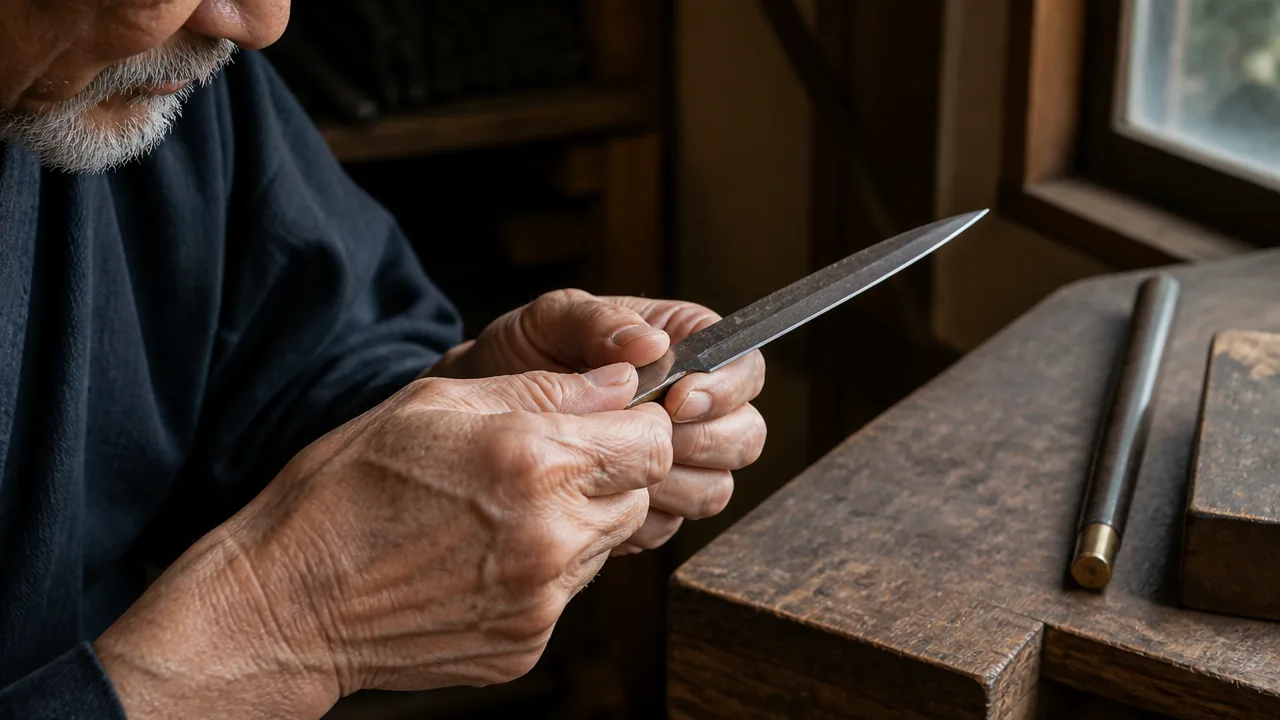
It was under the Tokugawa shogunate during the Edo period (1603–1868), however, that the artisan class truly came into its own. The political stability of those two and a half centuries created conditions in which specialized crafts could mature across generations. Apprenticeship became the standard model: a young person would enter a workshop as a student, spend years on basic tasks, and only gradually earn the right to work on finished pieces. This structure — still recognizable in traditional forges today — was not about withholding knowledge. It was about ensuring that the embodied understanding of a craft was passed on completely, not just the surface techniques.
The apprenticeship system was, in effect, a technology for transmitting values as much as skills. What a young smith learned by watching a master work for years was not only how to forge a blade, but what kind of attention the work deserved.
Sakai Knives: From the Tobacco Knife to a Designated Traditional Craft
Few places in Japan embody the shokunin tradition in blade-making as clearly as Sakai, in Osaka Prefecture. The origins of metalworking in the area are said to go back to the building of Sakai’s great burial mounds, the best known of which is the Nintoku-tenno-ryo Kofun, when craftsmen who made digging tools are said to have settled there. The History of Sakai Knives follows that story with its sources.
The turning point came with the tobacco knife. Tobacco knives began to be made in Sakai in the Tensho era, which started in 1573, and the Tokugawa shogunate later marked them with a quality seal known as Sakai kiwame and sold them under a monopoly, according to the federation of Sakai’s blade makers. This was not a marketing exercise. It was a formal recognition that the craft practiced in Sakai met a standard that could be trusted.
In 1982, Sakai forged blades (Sakai Uchihamono) were designated a national traditional craft.
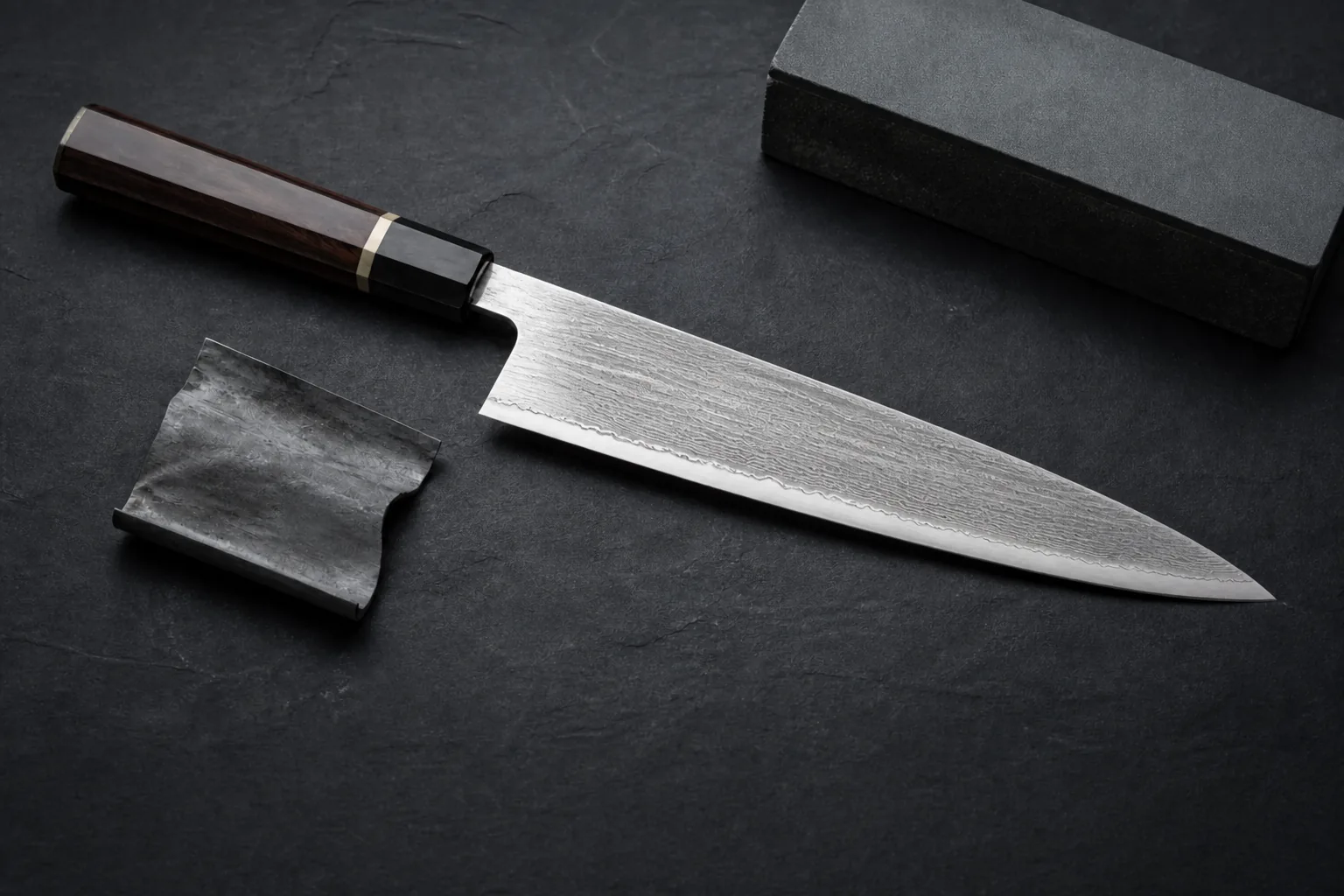
A Sakai forged knife passes through three separate crafts, each done by a different specialist: forging, sharpening, and handle fitting. The Sakai Traditional Crafts Museum describes this division of labor as the defining feature of Sakai forged blades.
Takefu Knife Village: Collective Mastery as a Response to Decline
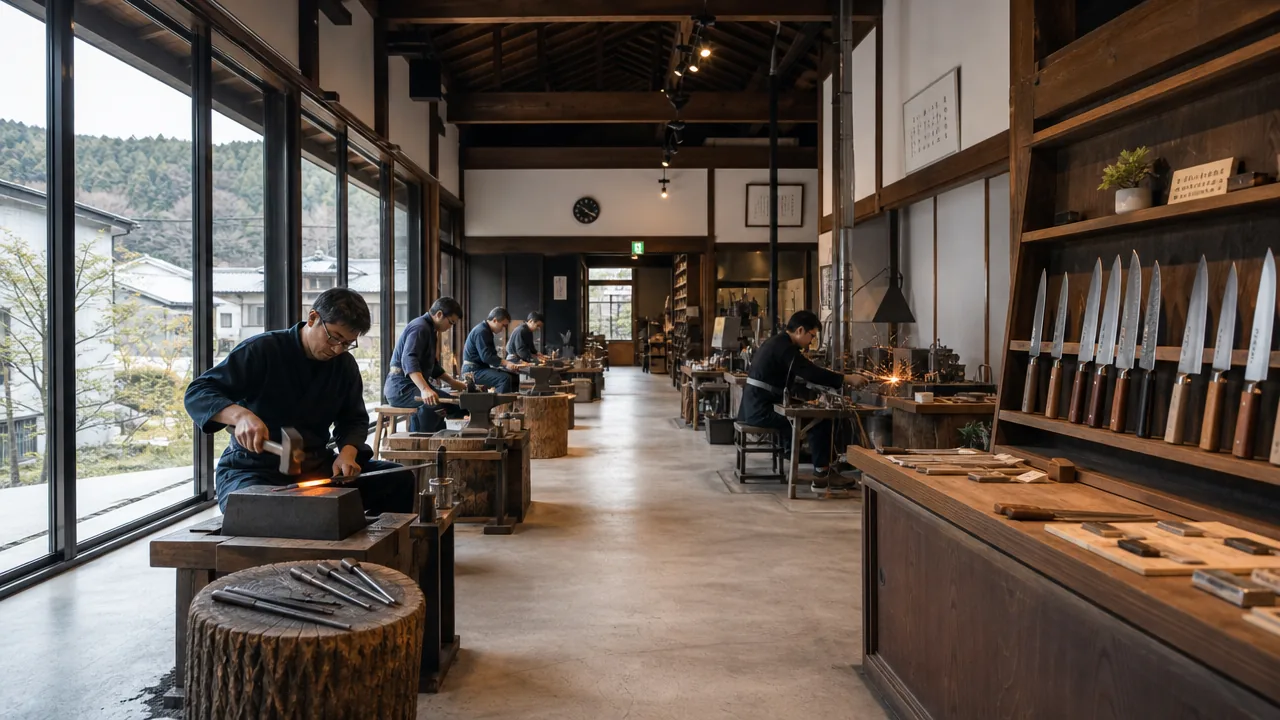
The story of Takefu Knife Village in Echizen City, Fukui Prefecture, begins with a single traveler. According to Takefu Knife Village’s own history, about 700 years ago a Kyoto swordsmith named Chiyozuru Kuniyasu, travelling in search of water suited to forging swords, stayed in what is now Echizen and began making sickles for local farmers alongside his swords. The same account says Echizen sickles are said to have led the country in output from the middle of the Edo period into the Meiji era.
The more recent chapter of this artisan tradition is equally instructive. By the early 1970s, the region’s knife makers were facing two simultaneous pressures: a shortage of young people willing to enter the trade, and intensifying competition from mass-produced stainless steel products. In 1973, a group of younger smiths responded not by abandoning tradition but by organizing. They formed the Takefu cutlery industry study group (Takefu Hamono Kogyo Kenkyukai), with Katsuyasu Kamo among them, according to Takefu Knife Village.
In 1982 the group met the designer Kazuo Kawasaki and went on to launch the Takefu Knife Village brand with him. A shared workshop facility was completed in Echizen City in May 1993. Echizen forged blades had been designated a national traditional craft in 1979, the first in the forged-blade trade, according to the same source.
What makes this history relevant to the shokunin concept is the choice it represents. These smiths could have shifted entirely to industrial methods. Instead, they chose a path that preserved hand-forged knife production while finding new ways to make that work visible and economically viable. The philosophy held, even when the economics argued otherwise.
Why This Philosophy Still Matters When You Choose a Knife
Understanding shokunin spirit changes how you read the differences between knives — and why those differences are worth caring about.
When a blade is described as hand-forged, the meaningful question is not simply whether human hands touched it, but whether the process behind it reflects the values of the artisan tradition: material selection made by judgment rather than specification sheet alone, grinding done by feel as much as by measurement, and finishing work that goes beyond what a quality control camera would flag.
A few practical implications for anyone thinking seriously about Japanese kitchen knives:
- Regional origin matters because it often indicates a specific forging tradition, not just geography. Sakai knives and Echizen knives carry different histories of technique and intention.
- The division of labor in Sakai is one expression of the shokunin approach — each stage is left to a specialist in that stage.
- Apprenticeship lineage, where it can be traced, is a genuine indicator of skill transmission. A fourth-generation smith has absorbed something that cannot be learned from a manual.
- Price points that seem high relative to factory alternatives often reflect hours of skilled labor that simply cannot be compressed without changing the object.
For readers deciding between a Japanese and Western kitchen knife, the structural and philosophical differences are worth understanding before making a choice. The article Japanese Knife vs Western Knife: Which One Is Right for You? walks through those distinctions clearly.
If you are specifically considering a gyuto — the Japanese chef’s knife most influenced by the shokunin tradition of blade precision — Best Japanese Gyuto Knife 2026: Top Picks by Skill Level and Budget offers a practical guide organized by experience level and price range.
Frequently Asked Questions
How did Sakai knives become known across Japan?
Tobacco knives began to be made in Sakai in the Tensho era, which started in 1573. According to the federation of Sakai’s blade makers, the Tokugawa shogunate later marked them with a quality seal known as Sakai kiwame and sold them under a monopoly.
What is distinctive about how Sakai knives are made?
A Sakai forged knife passes through three separate crafts, each done by a different specialist: forging, sharpening, and handle fitting. The Sakai Traditional Crafts Museum describes this division of labor as the defining feature of Sakai forged blades.
How did Takefu Knife Village begin?
According to Takefu Knife Village, a group of younger smiths formed a study group in 1973, met the designer Kazuo Kawasaki in 1982 and launched the brand with him, and completed a shared workshop facility in Echizen City in May 1993.
How old is blade-making in Echizen?
Takefu Knife Village’s own history dates it to about 700 years ago, when a Kyoto swordsmith named Chiyozuru Kuniyasu began making sickles for local farmers. The same source says Echizen forged blades were designated a national traditional craft in 1979.
A Living Philosophy, Not a Museum Piece
Shokunin spirit is sometimes described as though it belongs to the past — a romantic holdover from a pre-industrial world that modern economics have made impractical. The histories of Sakai and Takefu Knife Village suggest otherwise.
What the smiths of those regions have demonstrated, across very different circumstances and centuries, is that the philosophy is adaptive. It does not require ignoring economic reality; it requires placing quality and craft integrity as non-negotiable constraints within which economic decisions are made. When the Takefu smiths formed their cooperative in 1973 and partnered with a designer in 1982, they were not abandoning shokunin values — they were finding a way to sustain them.
The 2011 documentary Jiro Dreams of Sushi, directed by David Gelb, introduced the word shokunin to a global audience through the story of sushi master Jiro Ono — a reminder that this philosophy extends well beyond blade-making. But for those drawn specifically to Japanese knives, the forges of Sakai and Echizen remain among its most tangible expressions.
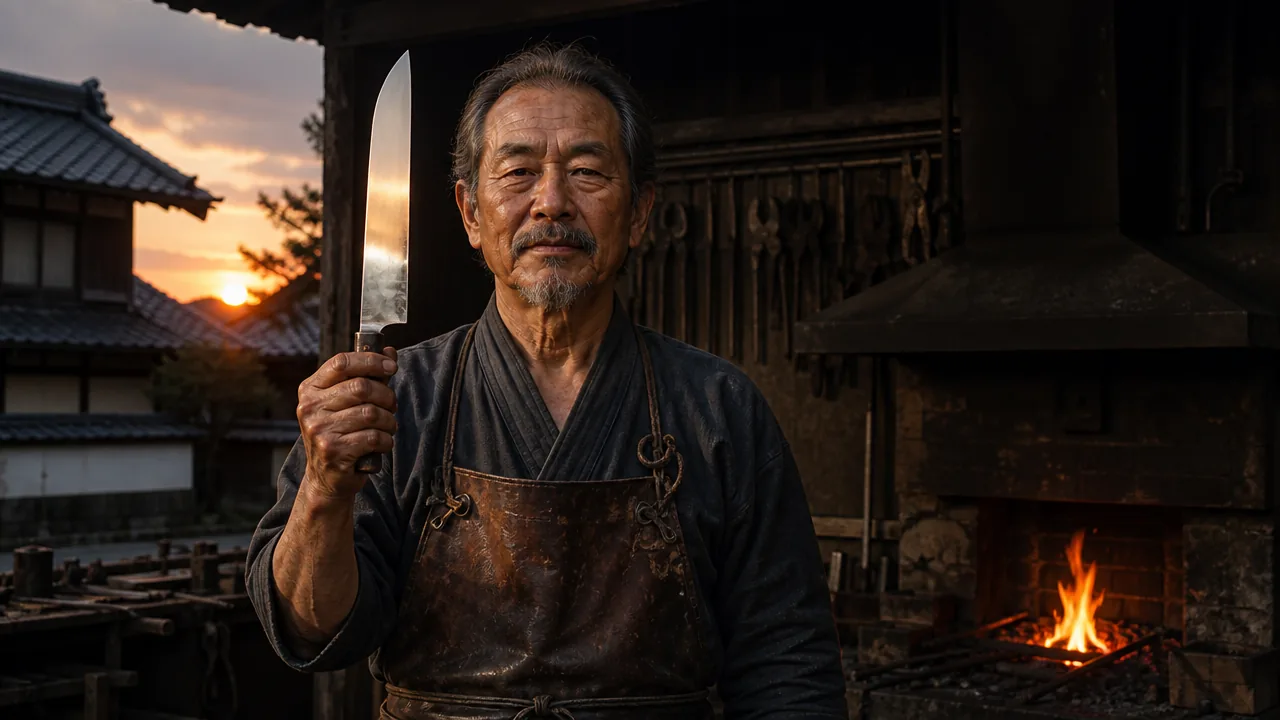
A hand-forged knife made in either tradition is not simply a kitchen tool. It is an object that carries the accumulated decisions of people who chose, repeatedly and at real cost, to do the work properly. That is what shokunin spirit looks like when it takes a physical form.
What draws you most to the shokunin tradition, and has it changed the way you look at the tools in your own kitchen?