How this article was made: Research-based comparison. It draws on published information from makers, retailers, and reference sources, not on hands-on testing.
The Short Answer: How to Tell Real Kintsugi
Traditional kintsugi joins a broken piece with urushi lacquer and finishes the seam with gold powder, so the first thing to check on any kintsugi bowl or vase for sale is what it was repaired with. Japan House London describes kintsugi as a repair that uses urushi, Japanese lacquer, dusted with powdered gold.
Pieces sold as kintsugi fall into three groups:
- Urushi and gold: the traditional method, the one museums and makers describe
- Epoxy or other synthetic glue: a faster, modern way to rejoin a piece, often finished with gold-colored powder
- Kintsugi-inspired designs: pieces sold under the kintsugi name as a design, where the listing may not say how the gold lines were made
If you plan to eat or drink from the piece, check both the repair materials and what the maker says about use; Is Kintsugi Food Safe? sets out what the makers of urushi and epoxy kits say.
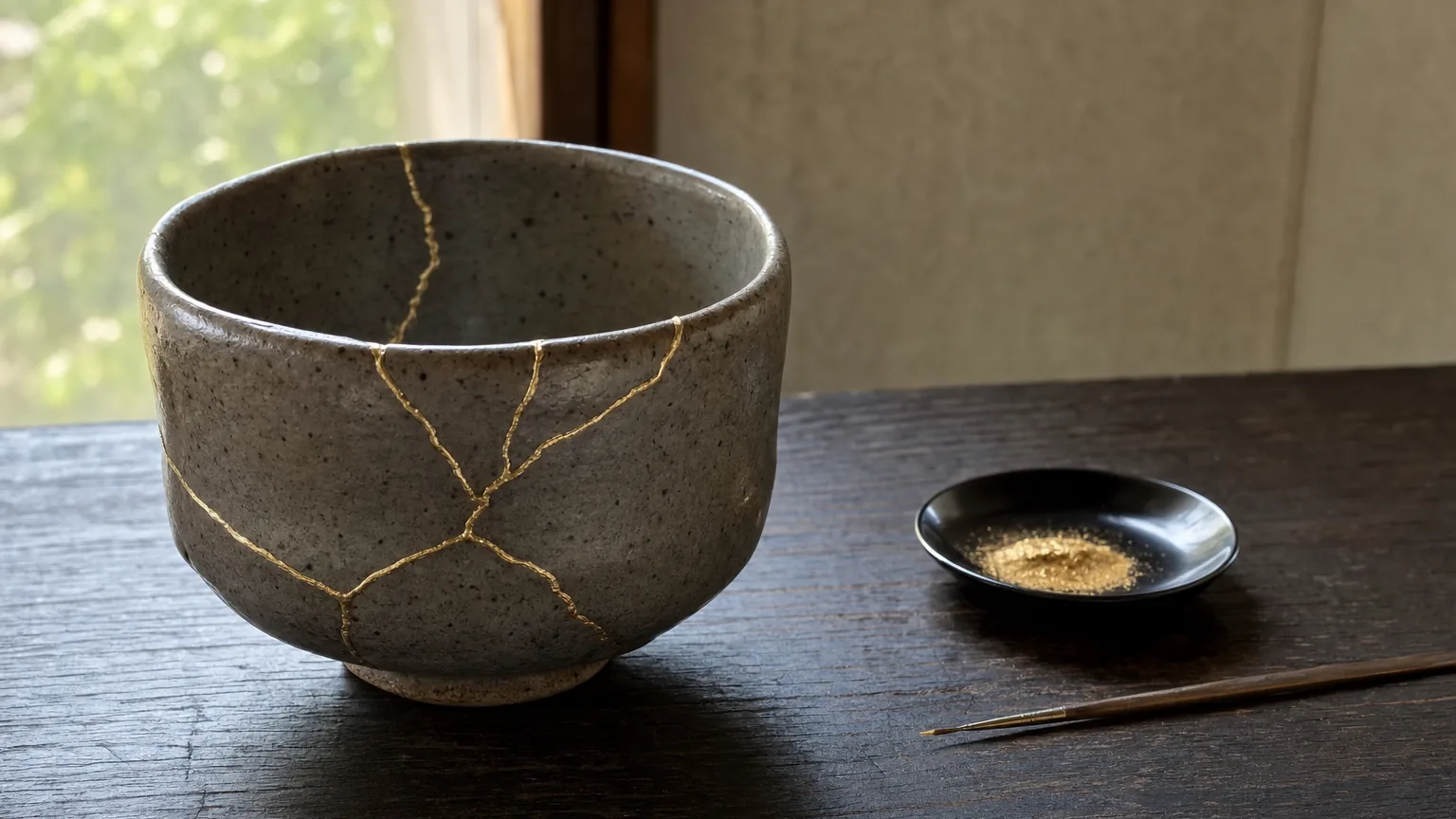
What Traditional Kintsugi Is Made Of
In traditional kintsugi, urushi does the joining and gold is the finishing layer. Japan House London describes an urushi-based adhesive that is left to cure in a drying cabinet for one to three weeks, after which a coat of urushi is applied along the seams and gold powder is sprinkled on top. It names related finishes too: silver (gintsugi), lacquer alone without metal powder (urushitsugi), and pieces of other ceramics used to fill missing parts (yobitsugi). Japan’s National Crafts Museum defines kintsugi as a technique of repairing cracks and chips in ceramics by applying lacquer and gold powder.
Museum collections show what this looks like on old pieces. The Metropolitan Museum of Art lists a 13th-century Chinese celadon tea bowl with “gold lacquer repairs”, and a 17th-century Japanese Shigaraki tea jar with the same entry in its medium line.
Urushi is slow. Chimahaga, a Japanese maker of kintsugi kits, says urushi hardens best at about 25°C and 75% humidity, and that a traditional repair takes about a month. What Is Kintsugi? covers the history and the steps in more detail.
Repairs Made With Epoxy or Synthetic Glue
Many modern repairs use epoxy or another synthetic glue instead of urushi. Japan House London describes one of its own workshops as an adapted approach to kintsugi, using synthetic gold and silver powder and epoxy glue. Museum conservators make the same distinction: in a LACMA article, conservators practising kintsugi explain that traditionally urushi was the binder, while their own practice bowl was joined with a reversible adhesive and filled with a two-part epoxy putty.
Epoxy repairs can come with limits on use. Chimahaga states that most commercially available adhesives are not suitable for tableware, and Tsugu Tsugu, another Japanese kit maker, describes kits based on synthetic glues as not food safe. Some bowls sold as kintsugi on Amazon.com say in their listings that they were rejoined with epoxy resin and gold-toned powder and are for decorative use only (checked on October 20, 2026).
For the full comparison of the two materials, see Authentic Kintsugi Kit vs Synthetic Resin Kit.
Kintsugi-Inspired Designs
Some tableware uses the kintsugi name as a design. The Italian design brand Seletti describes its Kintsugi collection as “Kintsugi Japanese art” that “assumes contemporary shapes”, lists the material as porcelain and gold, and marks the pieces dishwasher safe but not microwave safe. Seletti’s product pages do not say whether each piece was broken and rejoined.
With designs like these, start with the listing, and ask the maker or retailer if it is unclear. If it does not say what was used to join the piece and what the gold line is made of, the information you need to compare it with an urushi repair is missing.
Three Things to Check Before You Buy
Ask the seller three questions, and look for the answers in writing on the listing.
- What was used to join the pieces? Urushi lacquer, epoxy or another synthetic glue. Japan House London and the National Crafts Museum describe traditional kintsugi with lacquer
- What is the gold line made of? Genuine gold powder, brass powder or gold-colored mica. Tsugu Tsugu describes brass powder as not certified as food safe, and some low-cost kits use brass or mica; Best Kintsugi Glue and Gold Powder lists the materials side by side
- What does the maker say about use? For example, whether the piece is suitable for food, hot drinks, the dishwasher or the microwave. Chimahaga says urushi can be used to repair tableware and to wait about a month after the repair before using the piece; some epoxy-repaired pieces on Amazon.com are listed for decorative use only
A listing that answers all three lets you compare pieces by what they are, not by how they look in a photo.
Repairing Your Own Pottery Instead
If you have a broken piece of your own, a kit lets you choose the materials yourself. Best Japanese Kintsugi Repair Kits 2026 compares urushi kits with genuine gold and an epoxy kit, and How to Do Kintsugi at Home walks through each stage of an urushi repair.
Frequently Asked Questions
What is real kintsugi made of?
Urushi lacquer and gold powder. Japan House London describes kintsugi as a repair that uses urushi dusted with powdered gold, and Japan’s National Crafts Museum defines it as repairing cracks and chips in ceramics by applying lacquer and gold powder.
How can I tell if a kintsugi bowl is real?
Check what the listing says about three things: what was used to join it (urushi or epoxy), what the gold line is made of (genuine gold powder, brass or mica), and what the maker says about using it with food. If the listing does not say, ask the seller.
Is kintsugi pottery food safe?
It depends on the materials. Chimahaga says urushi can be used to repair tableware once it has fully hardened, while Chimahaga and Tsugu Tsugu are both cautious about synthetic glues for tableware. Some epoxy-repaired bowls are sold for decorative use only.
Is kintsugi done with real gold?
Traditional kintsugi finishes the seam with gold powder over urushi. Some low-cost repairs and kits use brass powder or gold-colored mica instead, so check the listing.
Can I repair my own pottery with kintsugi?
Yes. Urushi kits with genuine gold and quicker epoxy kits are both sold for home use; the urushi method takes about a month, according to Chimahaga.
Want to eat from a repaired bowl? Read Is Kintsugi Food Safe? first.
The photo in this article is an illustrative rendering and does not show any specific product or museum object.
Comments