How this article was made: Research-based comparison. It draws on published information from makers, retailers, and reference sources, not on hands-on testing.
- Why Japanese Knives Demand Extra Consideration for Left-Handed Cooks
- The Single Bevel Problem: Why One-Sided Edges Are Built for Right Hands
- Double Bevel Knives: The Left-Handed Cook’s Reliable Starting Point
- How to Get a Left-Handed Single Bevel Knife
- What to Check Before You Buy
- Frequently Asked Questions
- Choosing with Confidence as a Left-Handed Cook
Why Japanese Knives Demand Extra Consideration for Left-Handed Cooks
Most Western kitchen knives are double-beveled, so they work fine in either hand. Japanese knives are different — many traditional styles are single bevel, ground on one side only, and built entirely around a right-handed grip. If you pick up one of those knives with your left hand, the blade will not track straight through food. It will drift, resist, and in some cases behave dangerously. That is not a minor inconvenience; it is a structural issue baked into the blade itself.
This article walks through exactly why that happens, which knife types are affected, and what your practical options are as a left-handed cook — whether you are buying your first Japanese knife or reconsidering one you already own.
The Single Bevel Problem: Why One-Sided Edges Are Built for Right Hands
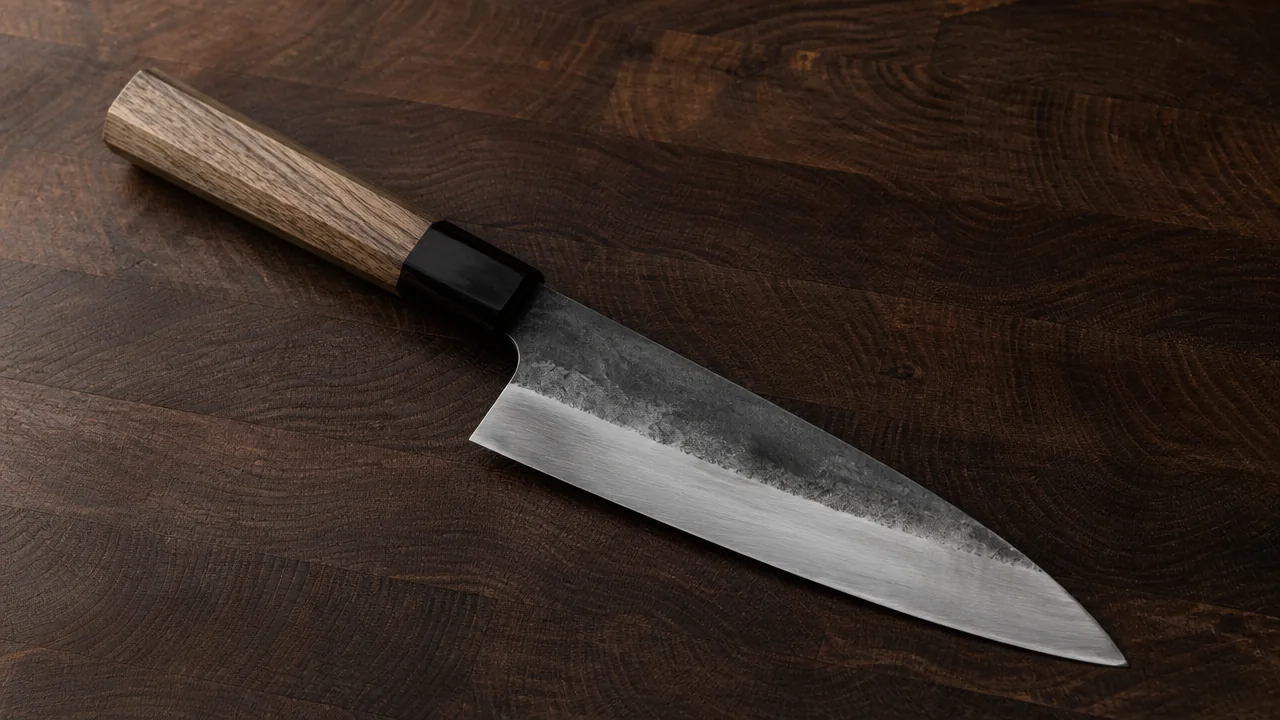
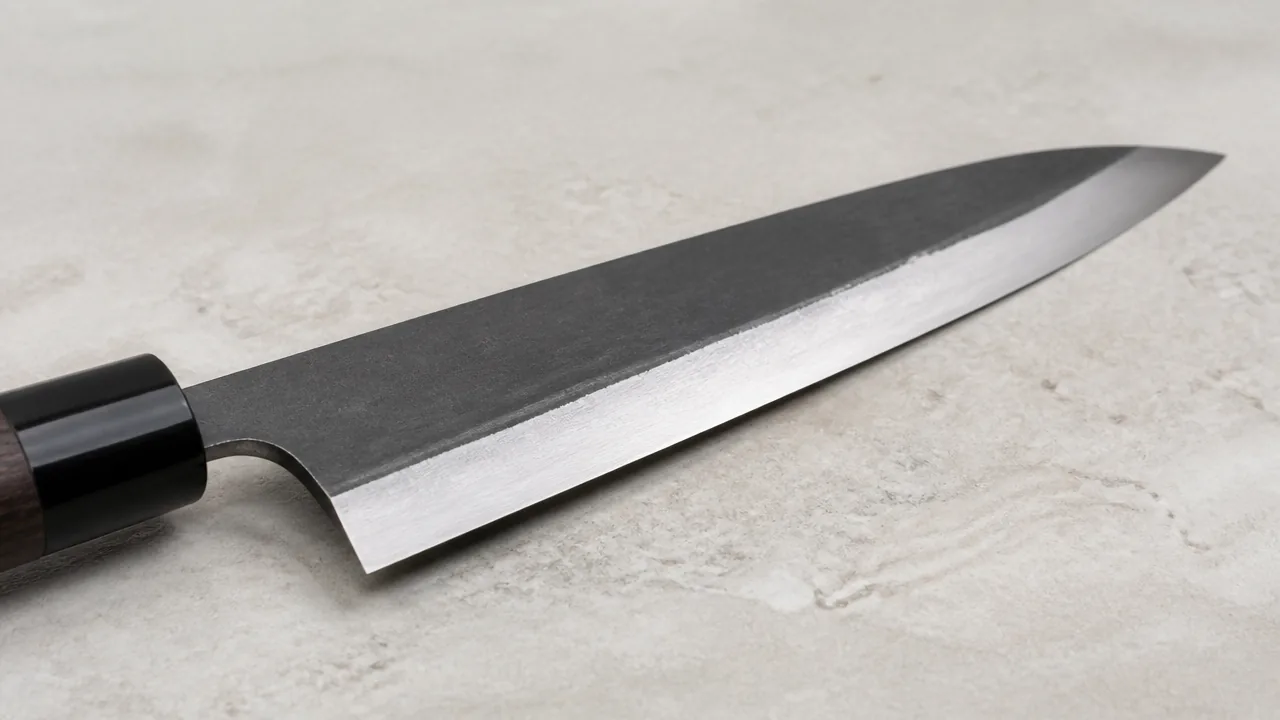
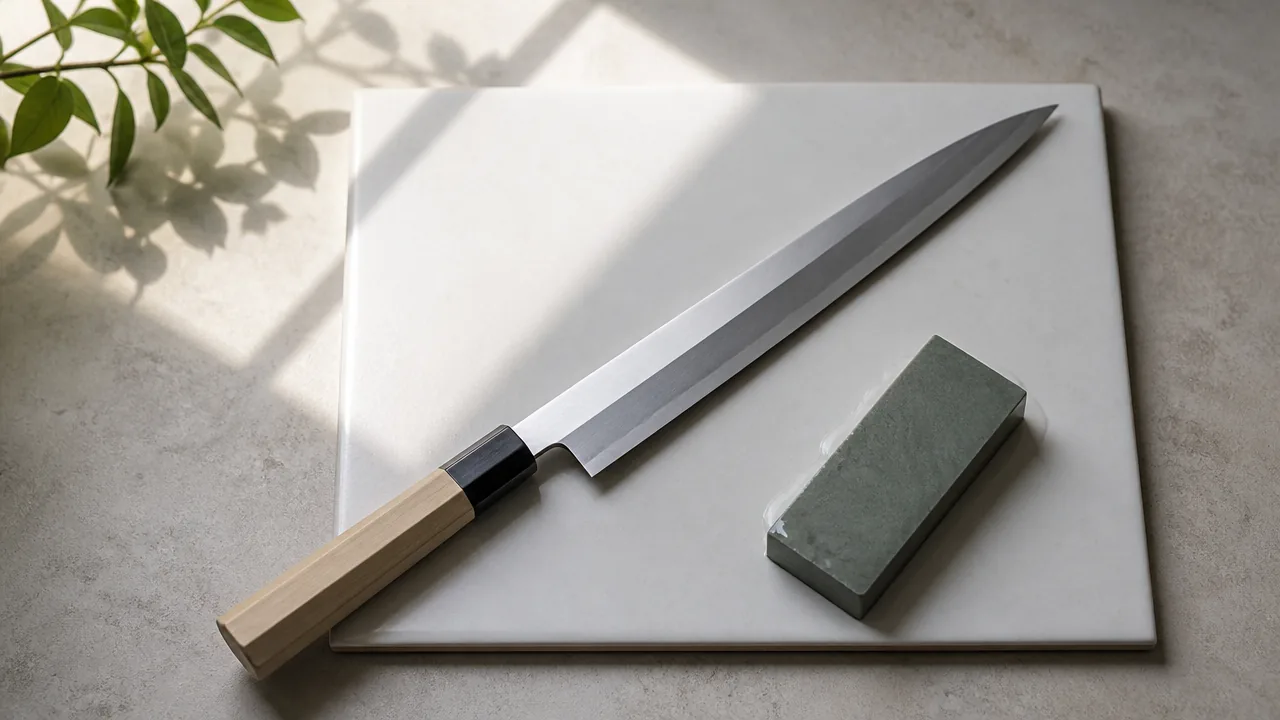
A single bevel knife is sharpened on one side only. The opposite side is left flat or very slightly concave — a hollow known in Japanese as the ura, or urasuki. Only that one face is ground to form the cutting edge.
Because only one side has that angled face, the blade is inherently directional. When a right-handed cook draws a yanagiba through a piece of fish, the bevel on the right side of the blade pushes the food naturally away from the cut. The knife tracks straight because the geometry is working with the grip.
Reverse the grip — use that same knife in your left hand — and the geometry fights you. The beveled face is now on the wrong side relative to the direction of the stroke. Instead of guiding the blade cleanly through the food, it deflects the cut. As noted in our in-depth guide to Single Bevel vs Double Bevel Japanese Knives: What’s the Real Difference?, a right-handed single bevel knife will actually cut incorrectly — and potentially dangerously — in a left-handed grip.
This is not about strength or technique. No amount of practice fully corrects a blade that is ground for the opposite hand. The problem is physical, not skill-based.
Double Bevel Knives: The Left-Handed Cook’s Reliable Starting Point
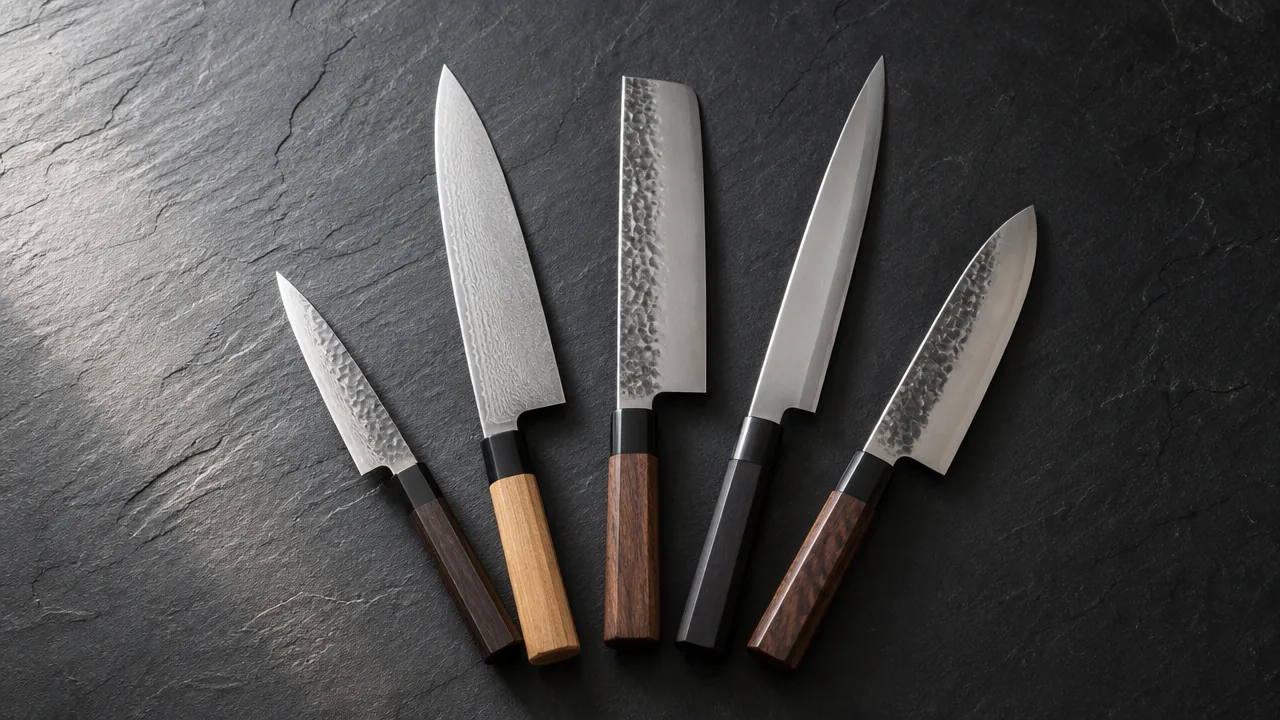
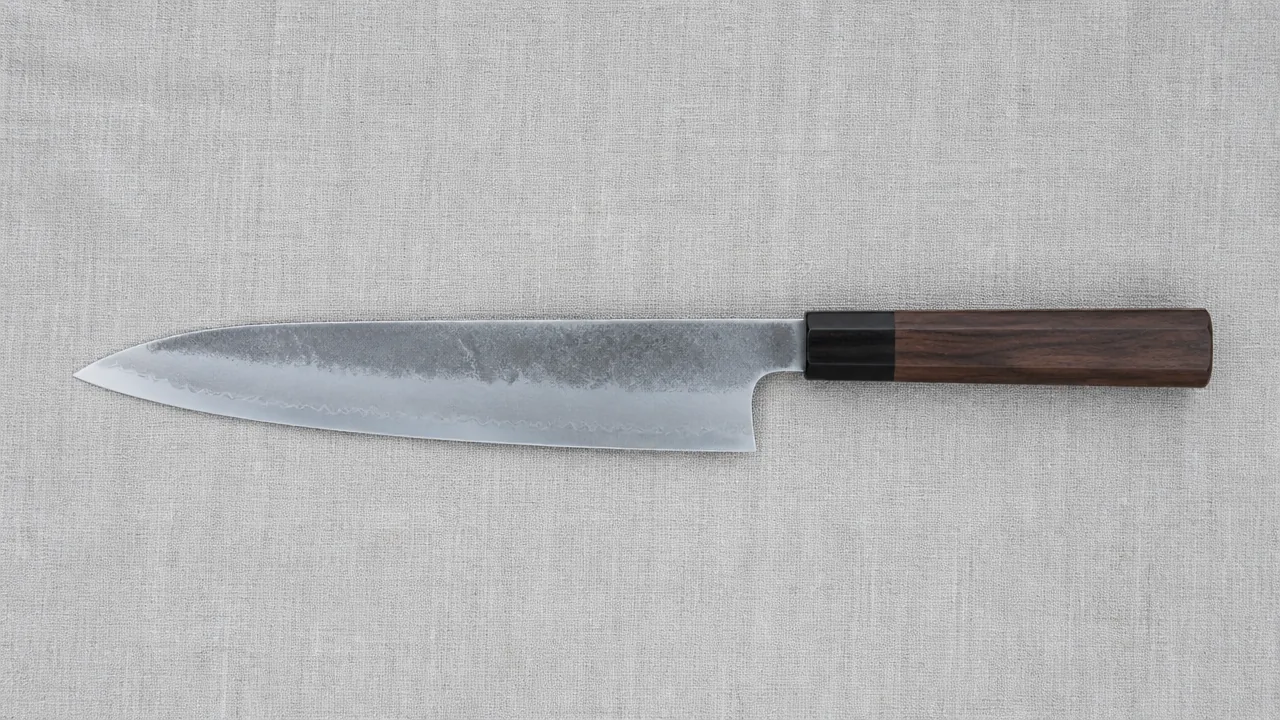
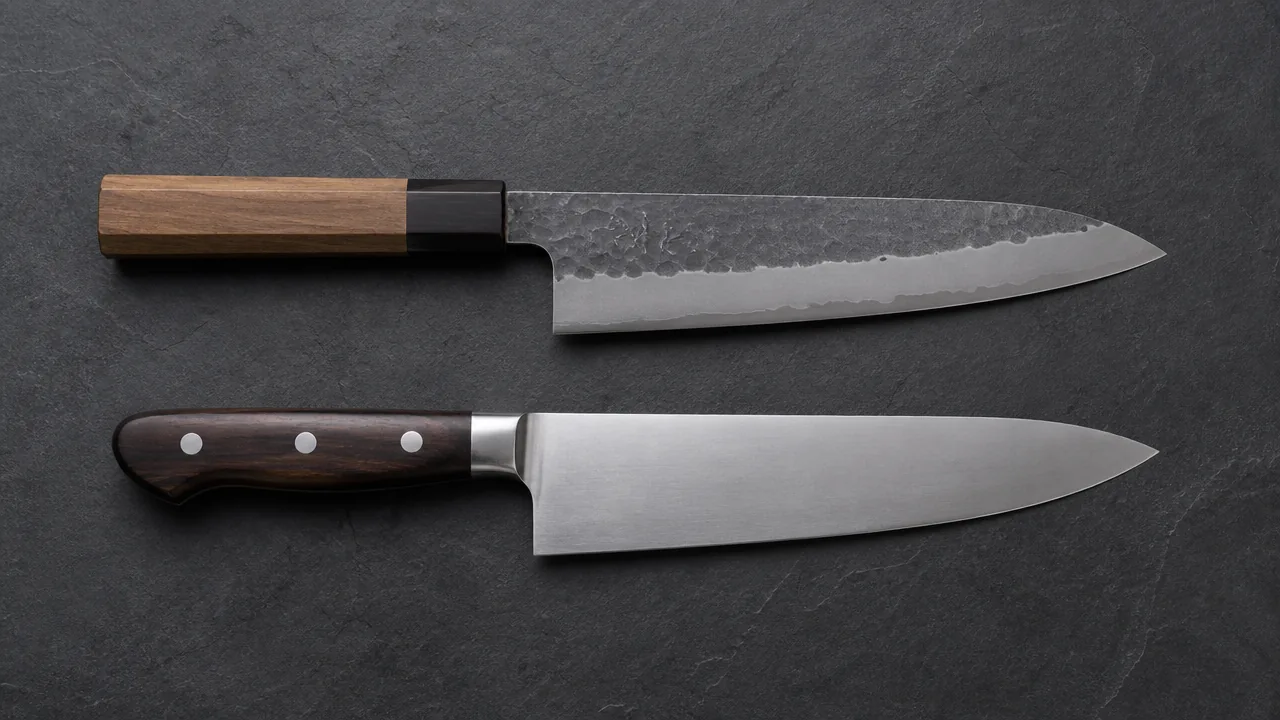
Not every Japanese knife is single bevel. A large number of modern Japanese kitchen knives — including gyuto, santoku, and bunka styles — are double bevel, meaning both sides of the blade are ground. The result is a V-shaped edge; GLOBAL, for example, describes its double-bevel knives as usable by everyone and makes left-handed versions only of its single-bevel knives.
Because the geometry is balanced, double bevel Japanese knives work equally well in either hand without any modification. A left-handed cook can pick one up and use it exactly as intended. There is no drift, no compensation required, and no safety concern related to grip direction.
For many left-handed cooks, starting with a double bevel Japanese knife is simply the most practical path. You get the thin stock, the hard steel, and the precision that makes Japanese knives worth owning — without the handedness complications. If you are just beginning to explore this category, the Best Japanese Knife for Beginners is worth reading alongside this article, as it covers double bevel options suited to new users regardless of dominant hand.
The trade-off is that double bevel knives do not replicate the specific cutting behavior of single bevel blades. For professional sushi preparation, traditional Japanese cooking tasks, or anyone who specifically wants a yanagiba or deba, a double bevel substitute is not always a direct equivalent. But for most home cooks and many professionals, a quality double bevel Japanese knife covers the full range of kitchen work.
How to Get a Left-Handed Single Bevel Knife
If you specifically want a single bevel Japanese knife — a yanagiba for slicing fish, a deba for breaking down whole fish, or a usuba for precision vegetable work — there are a few routes available to left-handed buyers.
The most traditional approach is to commission a left-handed (gyaku-te) version directly from a knife maker. In this case, the craftsperson grinds the bevel on the opposite side from the standard model, producing a blade that is the mirror image of the right-handed version.
Practical options include:
- Ordering a custom left-handed single bevel knife from a specialist maker or retailer who explicitly offers this configuration
- Purchasing from a dedicated Japanese knife retailer that stocks left-handed versions of yanagiba, deba, or usuba as regular inventory items
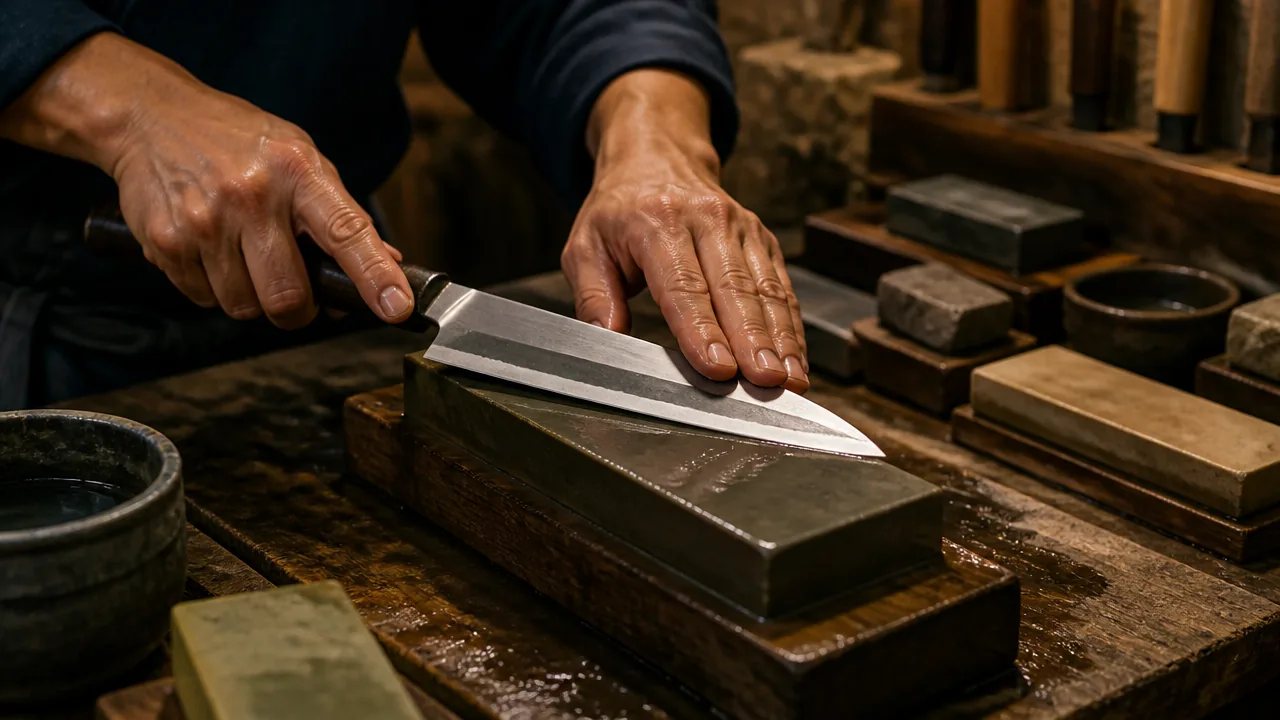
- Having an existing right-handed single bevel knife professionally reground for left-handed use — though this is a significant alteration and requires a skilled sharpener
Note that availability varies. Left-handed single bevel knives are not stocked everywhere, and lead times for custom orders can be longer than for standard models. Planning ahead matters.
What to Check Before You Buy
Shopping for a Japanese knife as a left-handed buyer requires a few deliberate checks that right-handed shoppers can skip entirely.
First, identify whether the knife is single or double bevel. This is the most important question. If a product page does not state the bevel type clearly, look at the blade photographs from the side — a flat or hollowed reverse face indicates single bevel. For a deeper breakdown of what these structural differences actually mean, the guide to Single Bevel vs Double Bevel Japanese Knives: What’s the Real Difference? explains the geometry in detail.
For single bevel knives, check the handedness labeling:
- Look for explicit terms like ‘Right-handed,’ ‘Left-handed,’ or ‘Ambidextrous’ in the product title or specifications
- Some Japanese retailers use ‘hidari-kiki’ (left-handed) or note the bevel side as ‘left’ in their listing details
- If the listing only shows a right-handed version and does not mention a left option, contact the seller directly before purchasing
For double bevel knives, handedness labeling is generally not relevant. You can proceed based on other factors such as blade length, steel type, and handle style. Speaking of steel — the alloy used in the blade significantly affects sharpness retention and ease of maintenance, so it is worth understanding your options. The article on Japanese Knife Steel Types Explained: VG-10 vs Damascus vs Aogami and Shirogami covers the main categories in plain language.
Finally, check the handle. Traditional Japanese handles (wa-handles) are typically octagonal or D-shaped — some D-shaped handles are specifically oriented for right or left hand. Confirm which orientation is included with the knife you are considering.
Frequently Asked Questions
Can left-handed people use a regular Japanese knife?
It depends entirely on the bevel type. If the knife is double bevel, yes — use it exactly as you would any other knife. If the knife is single bevel and designed for right-handed use, it will not track straight in a left-handed grip, and can actually cut in an unpredictable direction. For single bevel knives, you need a version specifically ground for the left hand.
Are left-handed Japanese knives more expensive?
They can be. Left-handed single bevel knives are produced in much smaller numbers than their right-handed counterparts, which means they are less likely to be stocked as standard inventory. Custom or special-order pieces typically carry additional cost. Double bevel knives, by contrast, carry no price premium for left-handed buyers because no modification is needed.
What Japanese knife types are most affected by handedness?
The knife styles most affected are the classic single bevel types: yanagiba (long slicer used for sashimi), deba (heavy knife for fish fabrication), and usuba (thin-bladed vegetable knife). These are all traditionally ground on one side only. Gyuto, santoku, bunka, and most modern Japanese chef’s knives are double bevel and are not affected.
Can a sharpener convert a right-handed single bevel knife to left-handed?
In principle, yes — a skilled sharpener can regrind a single bevel knife so the bevel is on the opposite side, effectively converting it for left-handed use. In practice, this is a significant and irreversible alteration. It requires removing considerable material and completely changing the geometry of the blade. It is an option, but it is not something to approach casually or entrust to a generalist sharpener.
Choosing with Confidence as a Left-Handed Cook
Japanese knives are worth the effort for left-handed cooks — the edge quality, the precision, and the range of specialized blade shapes are genuinely hard to match. The key is going in with clear information rather than discovering the handedness issue after the fact.
For most left-handed cooks, a double bevel Japanese knife is the most straightforward starting point. It requires no special ordering, no conversion, and no compromise on the core qualities that make Japanese knives distinctive. If and when you want to explore traditional single bevel knives — and there are good reasons to — the process of sourcing a left-handed version is manageable once you know what to look for and where to ask.
The main thing to avoid is purchasing a right-handed single bevel knife assuming it will adapt to your grip over time. It will not. The geometry is fixed in the steel.
With that understood, the range of options genuinely open to left-handed buyers is broader than many assume. A little extra research at the buying stage makes all the difference.
Are you navigating Japanese knives as a left-handed cook, or helping someone who is? Share your experience or questions — and if you are still weighing your first Japanese knife, the guide to the Best Japanese Knife for Beginners is a solid next read.