How this article was made: Research-based comparison. It draws on published information from makers, retailers, and reference sources, not on hands-on testing.
- A Broken Bowl Is Not the End of the Story
- Wabi-Sabi: The Philosophy That Makes Imperfection Beautiful
- Why Gold? The Spiritual Logic Behind the Repair
- The Legend of the Shogun’s Bowl — and What the Record Actually Shows
- How Kintsugi Found a New Audience in the West
- Frequently Asked Questions
- What Kintsugi Continues to Ask of Us
A Broken Bowl Is Not the End of the Story
There is something quietly radical about repairing a cracked ceramic bowl instead of replacing it — and then filling those cracks with gold. To many outside Japan, this seems like an extravagant way to fix something broken. But in the context of Japanese aesthetics, the act carries a meaning that goes far beyond craft technique.
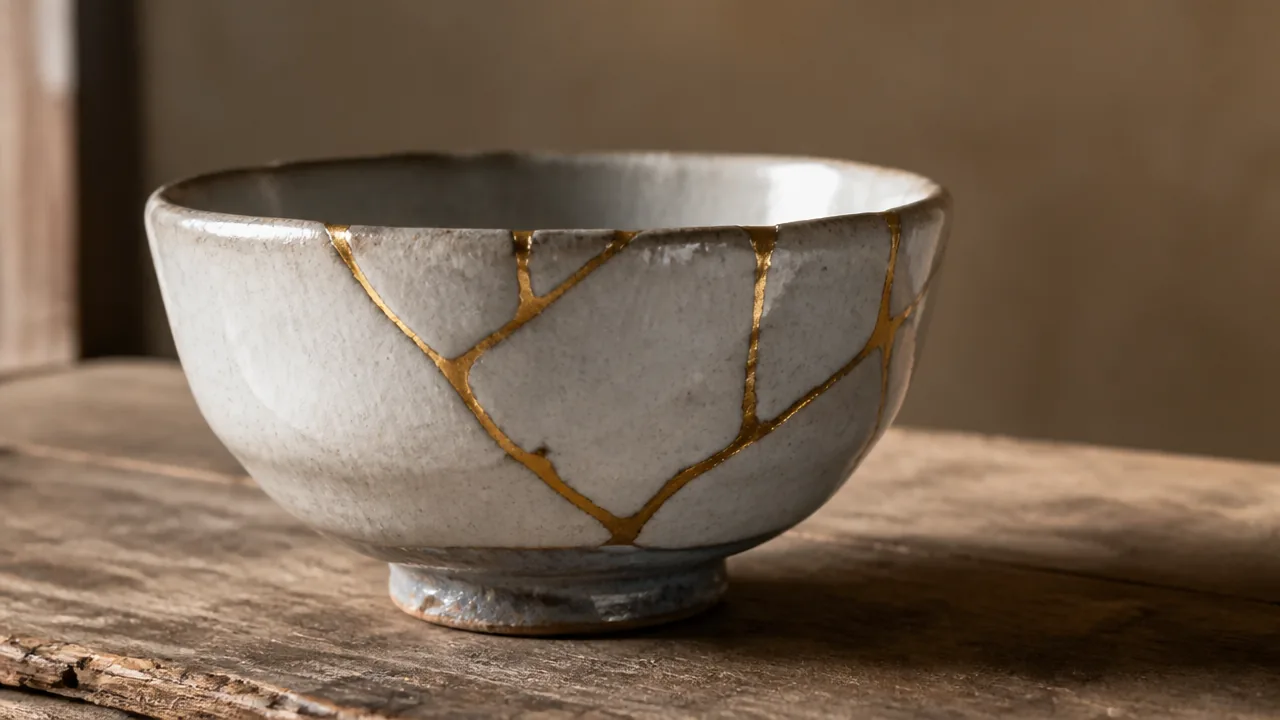
Kintsugi, which translates roughly as ‘golden joinery,’ treats damage not as a flaw to be hidden but as a moment in an object’s life worth acknowledging. The repaired vessel becomes, in a real sense, more itself than it was before — bearing the visible record of what it has survived. This is not merely a design preference. It reflects a broader set of values about impermanence, authenticity, and what we consider worth preserving.
This article explores how kintsugi philosophy is rooted in the wabi-sabi worldview, what it means to celebrate a repair rather than conceal it, and how these ideas have traveled far beyond Japan to reshape how people in other cultures think about resilience and self-acceptance.
Wabi-Sabi: The Philosophy That Makes Imperfection Beautiful
To understand kintsugi, you first need to understand wabi-sabi — the Japanese aesthetic concept that underpins it. The term combines two distinct ideas: ‘wabi,’ which points toward simplicity, humility, and a spare kind of beauty, and ‘sabi,’ which refers to the beauty that comes with age, wear, and the passage of time. Together, they describe a way of seeing the world in which imperfection, impermanence, and incompleteness are not problems to be solved but qualities to be appreciated.
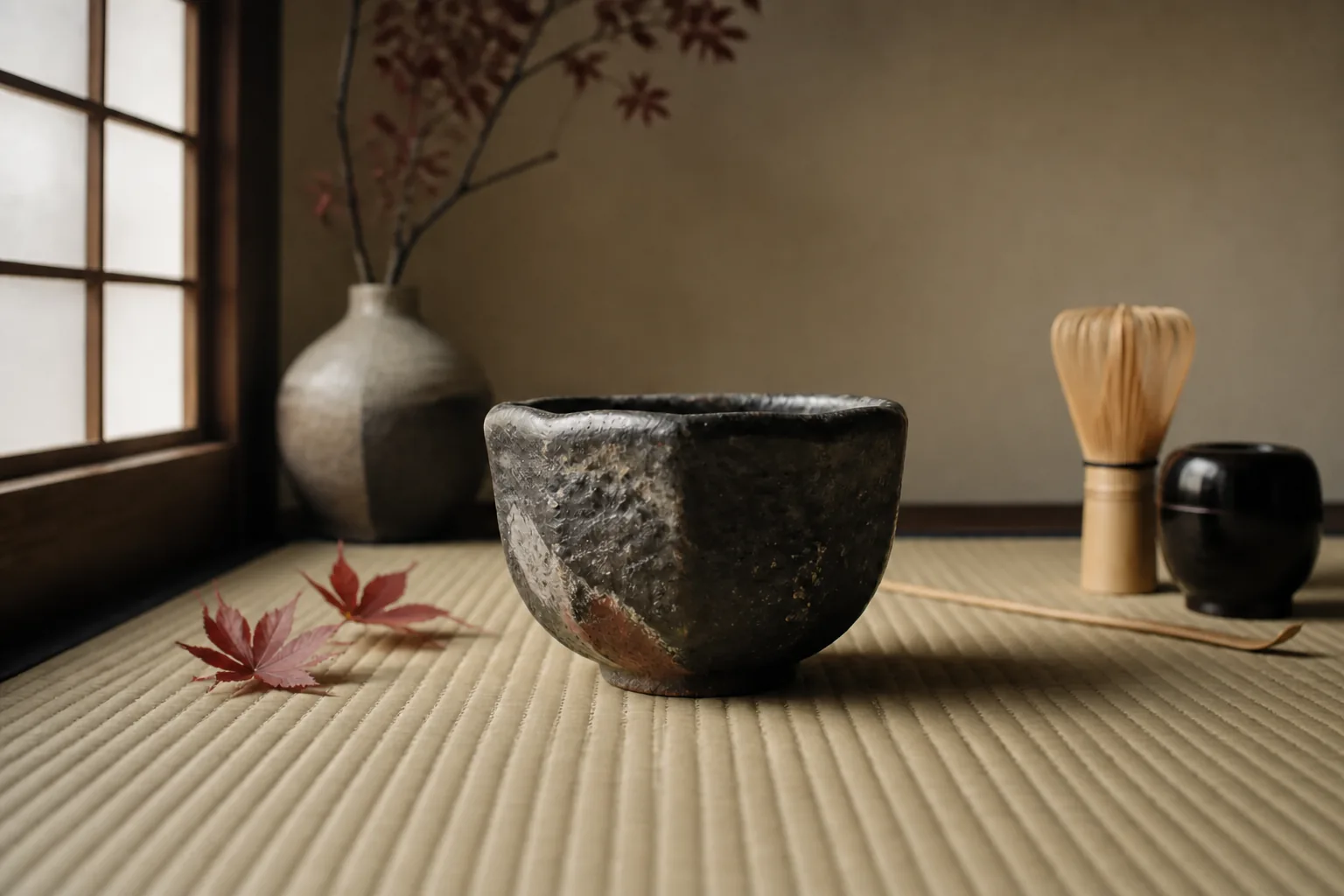
Wabi-sabi has roots in Zen Buddhism. It developed into a more defined aesthetic system through the practice of cha-no-yu — the Japanese tea ceremony — during the fifteenth century. Tea masters of that era deliberately chose rough, asymmetrical, and worn objects over polished, symmetrical ones, finding a deeper honesty in things that did not pretend to be perfect.
The implications of this worldview are wide-ranging. A few of its core observations:
- Nothing lasts, and that transience is part of what gives things meaning
- Nothing is finished — objects continue to change, and change itself has texture
- Nothing is ever perfectly complete, and completeness was never the point
Kintsugi emerges naturally from this framework. If age and damage are part of an object’s authentic history, then a repair is not a correction — it is a continuation.
Why Gold? The Spiritual Logic Behind the Repair
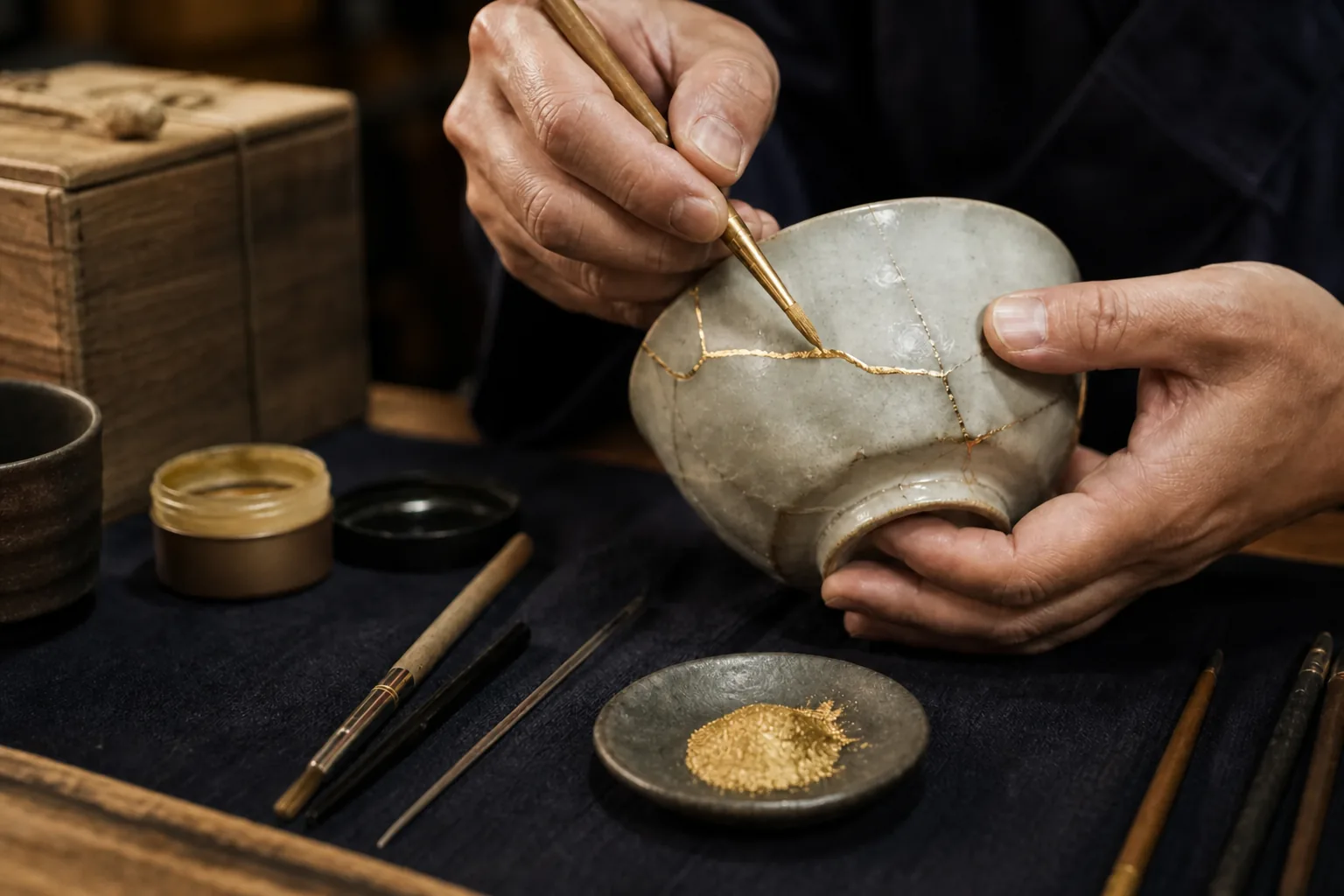
The technique itself is straightforward to describe, even if it takes years to master. Urushi lacquer — derived from the sap of the urushi tree and used in Japanese craft for thousands of years — acts as the adhesive that binds the broken pieces together. Once the structure is sound, gold powder is applied along the seam, transforming the line of damage into something that draws the eye rather than avoids it.
But why gold specifically? The choice is not accidental, and it is not merely decorative.
Using gold along the crack makes a deliberate statement: this repair is not something to be ashamed of. In most repair traditions, the goal is invisibility — the ideal outcome is a mend that cannot be detected. Kintsugi inverts this entirely. The gold seam announces itself. It says, plainly, that this object was broken, and that the breaking mattered enough to be marked with something precious.
This inversion carries a philosophical weight that resonates well beyond ceramics. The logic suggests that suffering, damage, and recovery are not interruptions to a life or an object’s value — they are part of what gives it depth. A bowl that has been broken and repaired with care has a history. A flawless bowl does not.
The concept also connects to the Japanese idea of mottainai — a sense of regret over waste, and a respect for the full lifespan of objects. Discarding a broken but repairable vessel feels like a failure to honor what it has been. Visible mending, in this sense, is an ethical as much as an aesthetic act.
The Legend of the Shogun’s Bowl — and What the Record Actually Shows
No discussion of kintsugi’s origins is complete without the most frequently told story — though it must be approached carefully, because it sits at the intersection of legend and documented history.
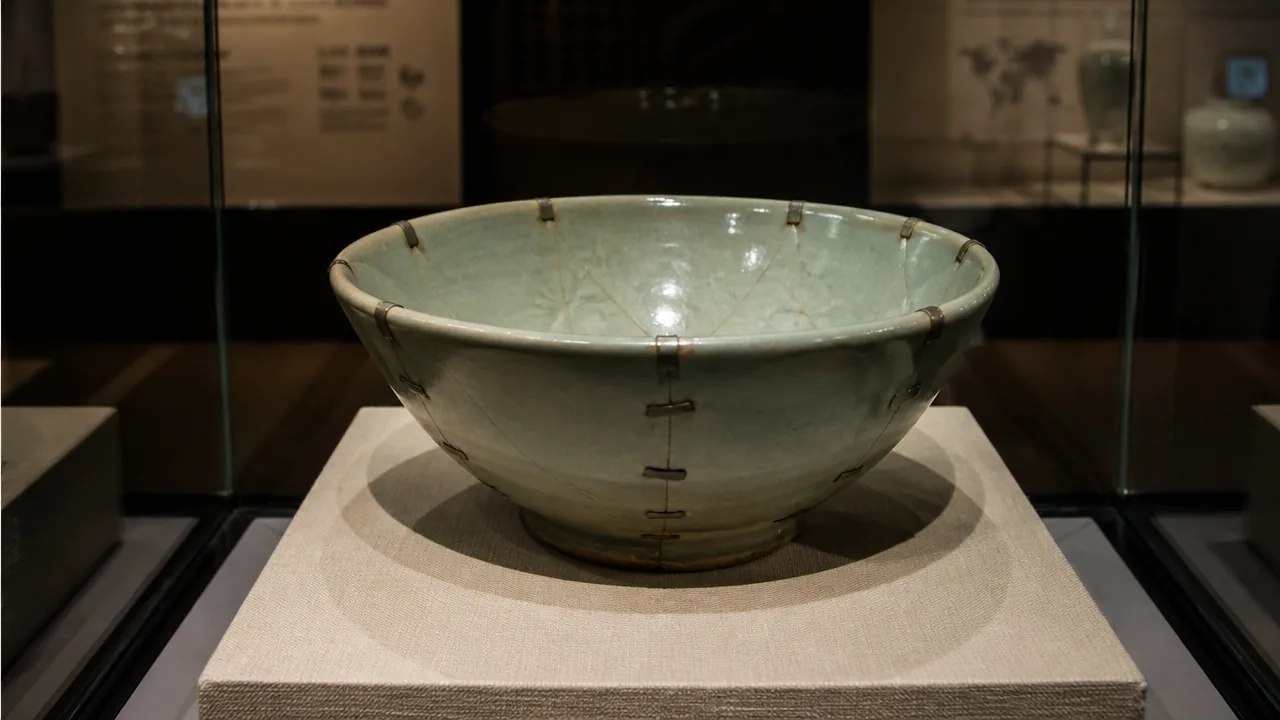
According to a well-known legend, Ashikaga Yoshimasa, a fifteenth-century shogun, possessed a prized celadon tea bowl that had been brought from China. When the bowl cracked, legend has it that he sent it back to China for repair. As the story is often told, what returned was a bowl held together by crude metal staples — functional, but to the refined sensibilities of the Japanese tea world, visually jarring. Yet over time, the stapled repair came to be admired as a kind of unintentional design element, and the bowl acquired the name Bakōhan, said to derive from the staples’ resemblance to a locust clinging to a horse.
The legend continues that this experience — the shock of the stapled repair — inspired Japanese craftsmen to develop a more beautiful alternative using lacquer and precious metals, eventually giving rise to kintsugi as a practice.
It is a compelling story, and it has been widely repeated. However, readers deserve to know where legend ends and documented fact begins. The bowl known as Bakōhan is real and survives to this day as part of the collection at the Tokyo National Museum (Japan’s national museums’ e-Museum describes the bowl and its metal clamps). Crucially, it still bears its original metal staple repairs — with no trace of kintsugi workmanship whatsoever. This discrepancy does not mean the legend is worthless, but it does mean we should hold it lightly. The story may reflect a cultural truth about how the Japanese came to value beautiful repair, even if its specific details do not hold up to scrutiny.
How Kintsugi Found a New Audience in the West
In recent years, kintsugi has attracted significant attention well outside Japan, and the reasons say something interesting about what contemporary Western culture is searching for.
The framing that has resonated most strongly is not primarily about ceramics. It is about resilience — the idea that human beings, like broken bowls, can be repaired in ways that do not erase the evidence of what they went through. In wellness communities, therapeutic contexts, and popular psychology writing, the image of kintsugi has become a widely used metaphor for recovering from trauma, grief, or failure without pretending those experiences never happened.
This reception reflects something genuine in the philosophy. The insistence that scars can be honored rather than hidden, that the process of repair is itself meaningful, and that an object or a person is not diminished by having been broken — these ideas translate across cultures in ways that feel urgent to many people navigating difficulty.
At the same time, it is worth noting that this Western interpretation tends to emphasize individual psychological resilience in ways that differ somewhat from the original Japanese context, where the practice is bound up with ceramic repair, tea ceremony, and a specific aesthetic tradition. Neither reading cancels the other out, but understanding both enriches the concept considerably.
The growing interest has also led many people to want to experience the practice directly — to repair something with their own hands and sit with what that process asks of them. For those drawn to that path, understanding the difference between traditional methods using urushi lacquer and modern synthetic alternatives matters, as explored in Authentic Kintsugi Kit vs Synthetic Resin Kit: What Really Differs?
Frequently Asked Questions
What does kintsugi mean?
The word translates roughly as “golden joinery”. Urushi lacquer, made from the sap of the urushi tree, binds the broken pieces together, and gold powder is then applied along the seam.
What do the words wabi and sabi mean?
Wabi points toward simplicity, humility and a spare kind of beauty. Sabi refers to the beauty that comes with age, wear and the passage of time.
Was the Bakōhan tea bowl repaired with kintsugi?
No. The bowl is in the collection of the Tokyo National Museum, and Japan’s national museums’ e-Museum describes it with its metal clamps. It carries metal staple repairs, not a repair in lacquer and gold.
What Kintsugi Continues to Ask of Us
Wabi-sabi and kintsugi, taken together, offer a coherent and quietly challenging set of ideas. They ask us to reconsider what we mean by ‘damaged,’ to question the reflex toward replacement, and to look more honestly at the stories embedded in worn, broken, and repaired things — whether those things are ceramic bowls or aspects of a human life.
The practice of ceramic repair with urushi lacquer and gold powder is, on one level, a skilled craft tradition developed over centuries within a specific cultural context. On another level, it is a worked example of a philosophy — proof that it is possible to treat impermanence not as a problem but as material to work with.
What makes kintsugi endure as an idea, across centuries and now across cultures, is perhaps this: it takes something that most traditions would classify as failure — breakage, damage, visible flaw — and reframes it as the condition under which something genuinely interesting can happen. The gold does not restore the bowl to what it was. It makes it into something that could not have existed otherwise.
For readers curious about bringing this practice into their own lives, the Kintsugi Kit for Beginners: Authentic Urushi vs Synthetic Resin guide offers a grounded starting point, and Best Japanese Kintsugi Repair Kits 2026: Top Picks by Skill Level and Budget provides further context for choosing the right approach based on your experience and goals. For those who already have some experience and want to source adhesive and gold powder separately rather than as a bundled kit, our guide to choosing the right kintsugi glue and gold powder covers that path.
Have you ever looked at something broken — an object, a relationship, a plan — and found it more interesting for having been repaired?