This article contains affiliate links. If you buy through them, we may earn a commission at no extra cost to you.
How this article was made: Research-based comparison. It draws on published information from makers, retailers, and reference sources, not on hands-on testing.
- What ‘Authentic’ Actually Means in Kintsugi
- How Synthetic Resin Kits Are Built Differently
- A Direct Comparison: Key Differences at a Glance
- The Experience of Working with Each Kit
- Who Should Choose Which Kit
- What to Look for When Buying a Japanese Kit
- Frequently Asked Questions
- Final Thoughts: The Seam You Want to Live With
What ‘Authentic’ Actually Means in Kintsugi
The word ‘authentic’ gets used loosely in the kintsugi market, so it helps to be precise. A genuinely traditional kit centers on urushi, the sap harvested from Toxicodendron vernicifluum trees grown primarily in Japan and parts of East Asia. This lacquer has been used in Japanese craft for over a thousand years, and its chemistry — polymerizing through moisture and oxygen rather than simply drying — creates a bond that is structurally different from any synthetic adhesive.
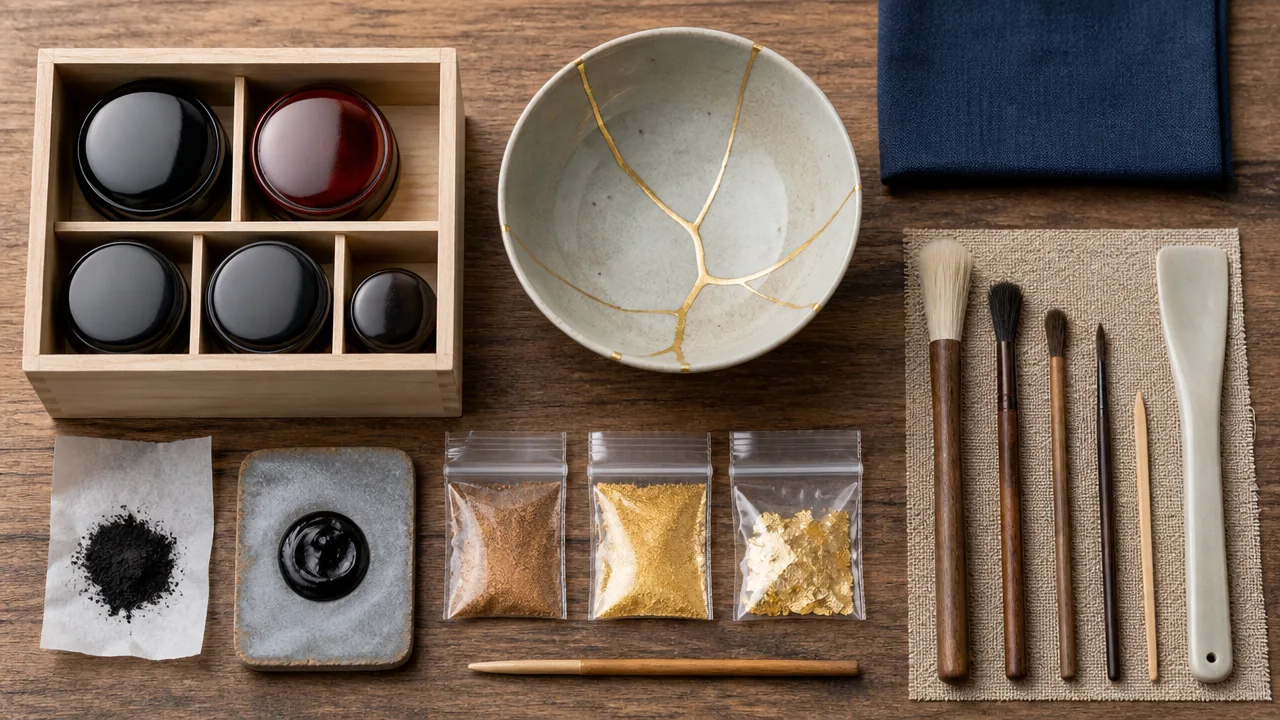
Beyond the adhesive itself, authentic kits typically include:
- Hon-urushi (raw or refined lacquer) or a clearly labeled urushi-based compound
- Mugi-urushi, a wheat-starch-and-urushi paste used as the gap filler
- Pure gold powder (hon-kinpun) or genuine gold alloy powder, not gold-colored mica
- Natural brushes suited to lacquerwork
- Application tools made from traditional materials such as spatulas for mixing
Kits sold as ‘kintsugi’ that omit urushi entirely are, by any technical definition, something else — a craft approximation rather than the practice itself. That distinction matters both for the result you can expect and for how you approach the process.
How Synthetic Resin Kits Are Built Differently
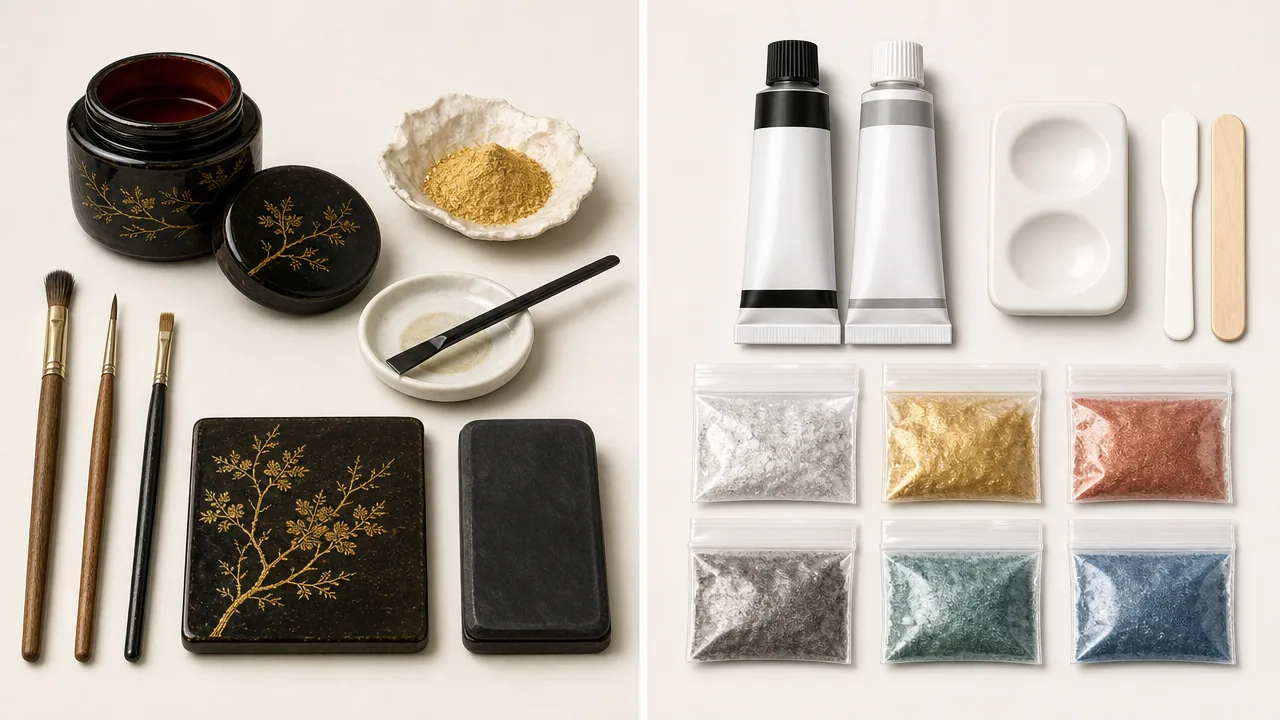
Synthetic resin kits, most of them manufactured outside Japan, replace urushi with epoxy adhesive, UV-curing resin, or two-part acrylic compounds. The gold effect is usually achieved with mica powder, brass powder, or gold-tinted pigment mixed into or applied over the adhesive layer.
This approach is not without practical advantages. Resin kits cure predictably at room temperature without humidity control, the adhesive has no allergen risk (urushi can cause contact dermatitis in some people during application), and the learning curve is considerably shorter. A broken mug can be reassembled and displayed within an afternoon.
However, there are trade-offs worth understanding before you buy:
- Resin bonds can yellow or become brittle over several years, particularly under UV exposure
- Mica and brass powders oxidize differently from gold, and the color shifts noticeably with age
- The repaired seam, while visually similar at first, does not carry the same layered depth that polished urushi and real gold produce
- Makers of urushi kits say most commercially available adhesives are not suitable for tableware (Chimahaga) and describe modern synthetic-glue kits as not food safe (Tsugu Tsugu), whereas they describe completely hardened urushi as food-safe; urushi has historically been used on food vessels Is Kintsugi Food Safe? covers this question on its own.
Resin kits are not inferior for every purpose — for decorative objects, classroom settings, or first-time practice on inexpensive ceramics, they are a reasonable starting point. The issue arises when they are marketed and priced as equivalent to the traditional method.
A Direct Comparison: Key Differences at a Glance
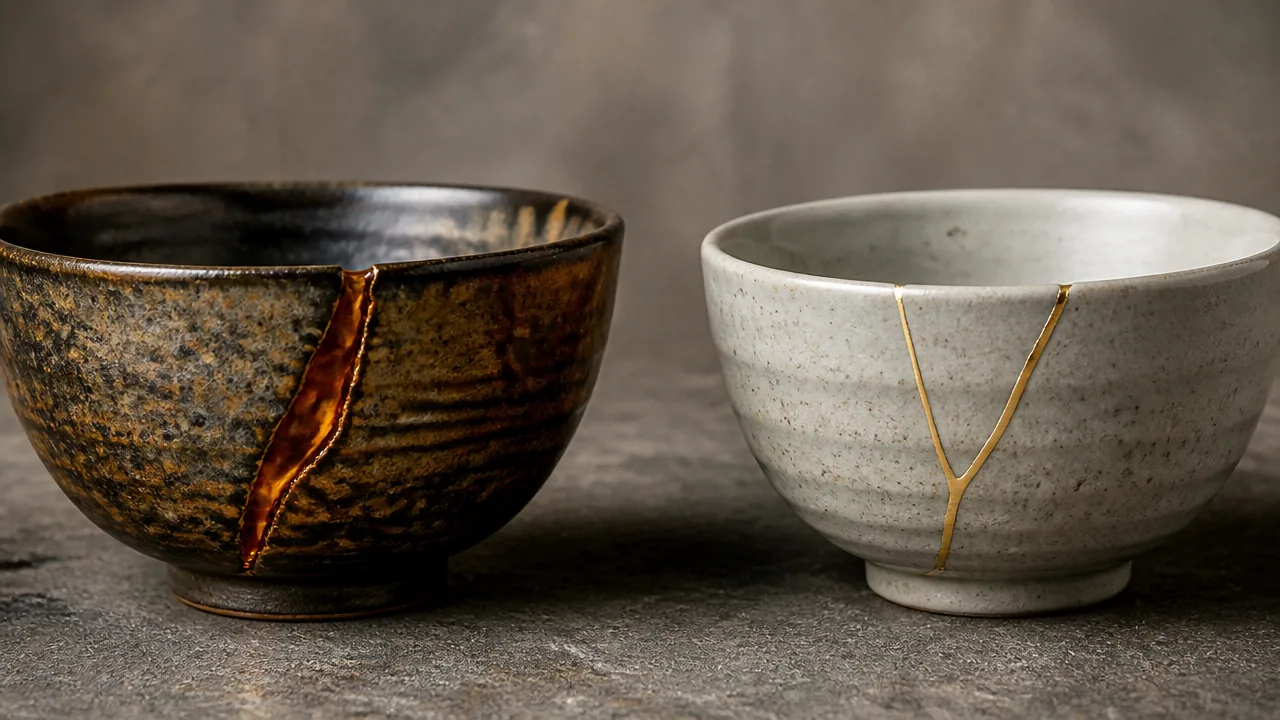
The table below summarizes the main points of difference between the two kit types. Keep in mind that quality varies within each category — not all Japanese kits are equally well-sourced, and a small number of overseas makers do use imported urushi.
| Factor | Authentic (Urushi-based) | Synthetic Resin |
|---|---|---|
| Primary adhesive | Urushi lacquer | Epoxy, UV resin, or acrylic |
| Gold element | Hon-kinpun or gold alloy | Mica, brass, or pigment |
| Curing conditions | Humidity and temperature sensitive | Room temperature, predictable |
| Allergen risk | Yes (during wet application) | Generally low |
| Long-term durability | Decades with proper care | Varies; some brittleness over years |
| Food-vessel suitability | Yes (when fully cured) | Usually no |
| Price range (approximate) | $60–$180+ | $15–$50 |
| Skill curve | Moderate to steep | Low to moderate |
The price gap reflects real material costs. Urushi is labor-intensive to harvest, and hon-kinpun is priced by weight because it is actual gold. When a kit is priced under $25 and claims to be ‘authentic kintsugi,’ the math alone suggests the materials are synthetic.
The Experience of Working with Each Kit
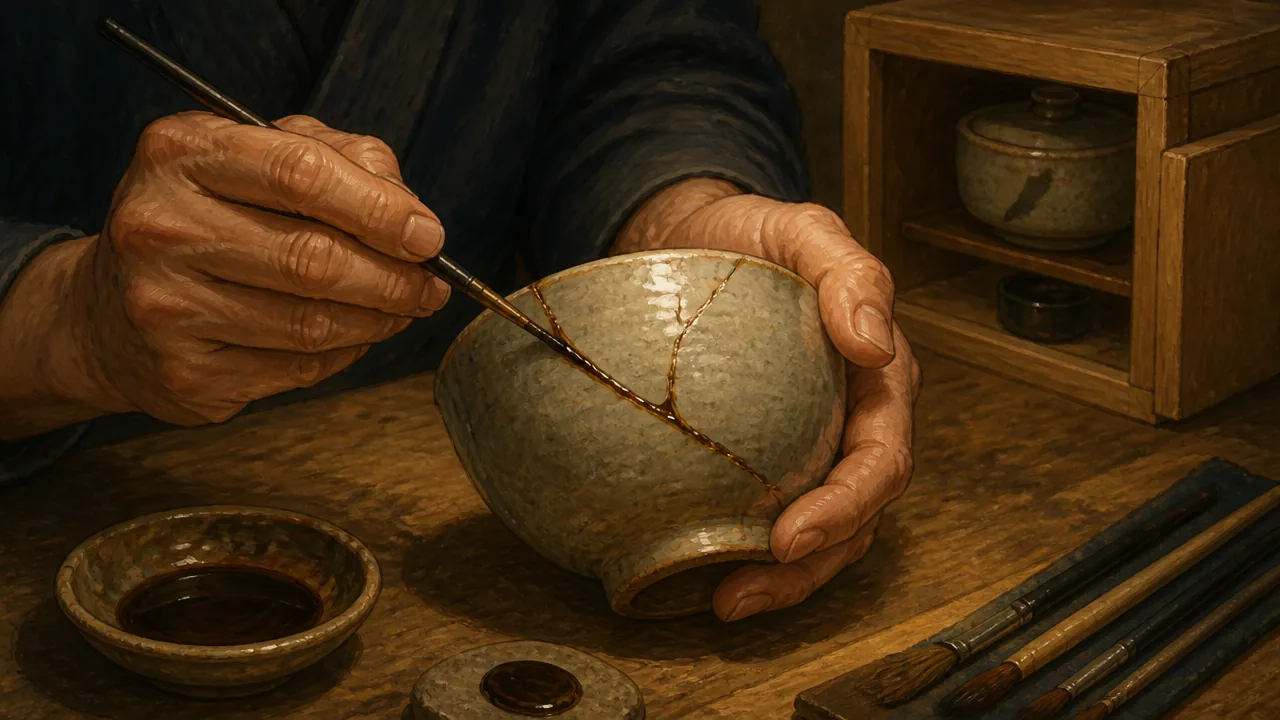
Using an authentic urushi kit is a slow process by design. The lacquer is applied in multiple thin layers, each needing from a few days to a week to dry completely, according to Tsugu Tsugu, inside a humid box called a muro (or a DIY equivalent — a plastic container with a damp cloth works for beginners). Total repair time is about a month according to Chimahaga, and Tsugu Tsugu says two to three months is common.
This pace is not a flaw. Many practitioners find that the waiting periods and the attention required to monitor humidity create a relationship with the object being repaired that is difficult to replicate with faster methods. The physical resistance of the material — the way urushi thickens, strings, and responds to temperature — teaches you something about craft that a resin squeeze tube cannot.
A synthetic resin kit, by contrast, moves quickly. Mix, apply, cure, dust with mica powder, done. For someone who broke a favorite mug and simply wants it back on the shelf looking repaired, this is genuinely useful. For someone working through grief over a broken heirloom, or someone building a practice that they want to deepen over months and years, the shortcut may feel hollow once the initial novelty fades.
Neither path is wrong. But they are different activities dressed in the same name.
Who Should Choose Which Kit
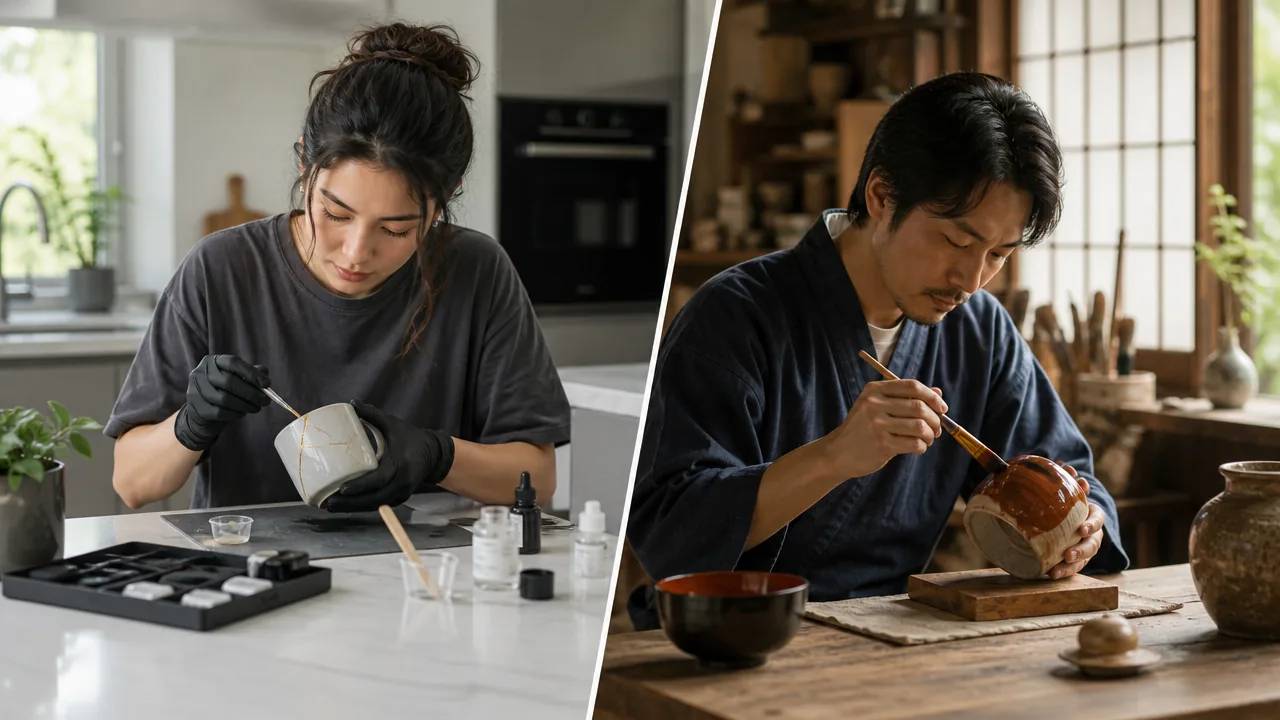
Matching the kit to the actual use case prevents disappointment on both sides. Here is a straightforward breakdown:
Consider a synthetic resin kit if:
- You want to try kintsugi before committing to the full learning process
- The object being repaired is low-sentimental-value or purely decorative
- You have limited time or workspace for multi-day curing cycles
- You are introducing the craft to children or in a group workshop setting
- Allergen sensitivity is a concern for you or people in your household
Consider an authentic Japanese urushi kit if:
- The piece being repaired has significant personal or monetary value
- You intend to use the repaired vessel for food or drink
- You want the repair to age well and remain stable for decades
- You are drawn to the meditative, slow-craft aspect of the practice
- You want the visual result — the particular luster that polished urushi and real gold produce — that photographs and descriptions consistently fail to fully capture
The choice of kit is, in effect, a choice about what you want kintsugi to be for you. One approach treats it as a repair method; the other treats it as a practice.
What to Look for When Buying a Japanese Kit
Japanese-made authentic kits vary considerably in what they include and how transparently they label their materials. A few things to verify before purchasing:
- The word urushi (漆) should appear on the adhesive component, ideally with a note on origin (domestic Japanese urushi commands a premium over Chinese-sourced urushi, though both are real lacquer)
- The gold powder should specify kinpun (金粉) or indicate the purity; ‘gold color powder’ is a red flag that points to mica or brass
- Instructions should mention humidity curing — if the kit says ‘dries in minutes,’ the main adhesive is not urushi
- Look for kits from Japanese craft suppliers or manufacturers with a track record in lacquerware, not general craft retailers
- Starter kits from reputable Japanese sources often include a small practice tile or test ceramic, which is a sign the supplier understands the learning process
Price alone is not a reliable filter in the upper range — some expensive kits sold in Western markets still use synthetic materials in premium packaging. Reading material disclosures carefully, even with translation tools if needed, is worth the extra few minutes.
Frequently Asked Questions
Are synthetic resin kintsugi kits food safe?
Makers of urushi kits are cautious about them. Chimahaga says most commercially available adhesives are not suitable for tableware, and Tsugu Tsugu describes modern synthetic-glue kits as not food safe. Both makers describe completely hardened urushi as food-safe.
How long does an authentic urushi repair take?
Each thin layer of lacquer needs from a few days to a week to dry completely, according to Tsugu Tsugu. Chimahaga puts a whole repair at about a month, and Tsugu Tsugu says two to three months is common.
Does the iienjoy epoxy kit state a food-safety standard?
Its seller describes the epoxy resin as food-safe, but the Amazon.com listing cites no test standard.
Final Thoughts: The Seam You Want to Live With
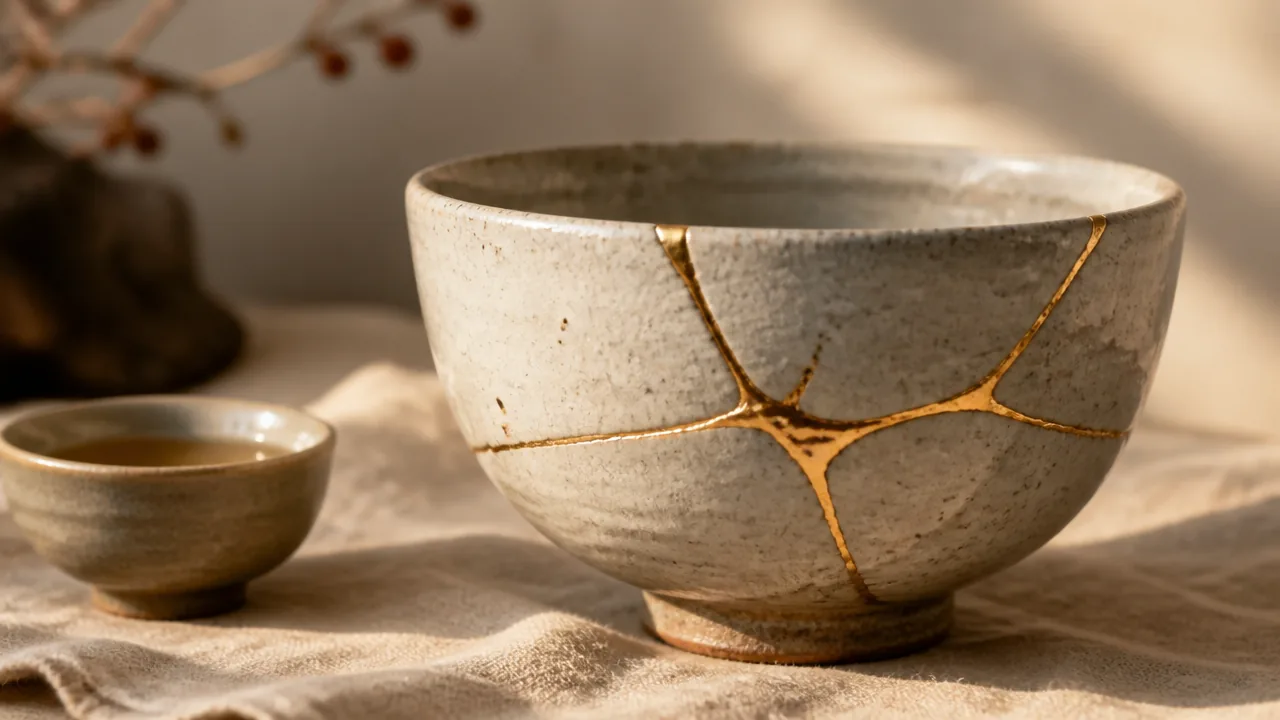
A kintsugi repair is not hidden. It sits on the surface of the object, visible every time the piece is used or displayed. The quality of that seam — its color, depth, texture, and how it changes over years — is something you will notice for a long time.
Synthetic resin repairs look sharp and golden immediately after finishing. Over time, some dull, some yellow slightly, and most do not develop the quiet depth that urushi and real gold acquire through use and age. Authentic repairs may look less dramatic in the first weeks before the final polish, but they tend to improve with time rather than degrade.
For readers who care about that long arc — who want a repaired object that becomes more itself over the years — the additional cost and patience of a genuine urushi kit is a reasonable investment rather than an indulgence. The materials are more demanding, the process is slower, and the result is genuinely different from what any resin kit can produce.
Ready to work with real urushi and genuine gold powder? This site does not sell kits. The guides here compare authentic Japanese kintsugi kits, for beginners and serious practitioners alike, and link to the retailers that sell them.
New to kintsugi and not sure where to start? See our beginner-friendly guide to choosing between authentic and synthetic kits.
If you want to try the traditional route, the Chimahaga Kintsugi Repair Kit for Beginners -Standard- ($195 on Amazon.com, October 3, 2026; 4.3 stars from only 15 ratings so far) is a solid pick — it uses real urushi lacquer and genuine gold powder for an authentic, durable repair. Because real urushi can cause an itchy skin reaction, wear gloves while you work; the kit includes nitrile gloves. If you’d rather start with something more forgiving, the iienjoy Kintsugi Repair Kit Gold ($21.99 on Amazon.com, October 3, 2026) uses an epoxy resin that its seller describes as food-safe (the listing cites no test standard) and dries much faster, making it a practical choice for a first attempt; a 4-color version ($29.99) is available if you want other colors.
Ready to buy? See our top kintsugi kit picks by skill level and budget for specific recommendations at every price point.