This article contains affiliate links. If you buy through them, we may earn a commission at no extra cost to you.
How this article was made: Research-based comparison. It draws on published information from makers, retailers, and reference sources, not on hands-on testing.
- What Is a Japanese Petty Knife — and Why Should You Care?
- How to Choose: Blade Length, Steel, and Handle Style
- Top Japanese Petty Knives for Beginners (Under $80)
- Mid-Range Picks That Offer Real Craftmanship ($80–$200)
- Premium and Artisan Options for Serious Cooks ($200 and Up)
- Comparison Table: Japanese Petty Knives at a Glance
- Frequently Asked Questions
- Final Verdict: Which Petty Knife Should You Buy?
What Is a Japanese Petty Knife — and Why Should You Care?
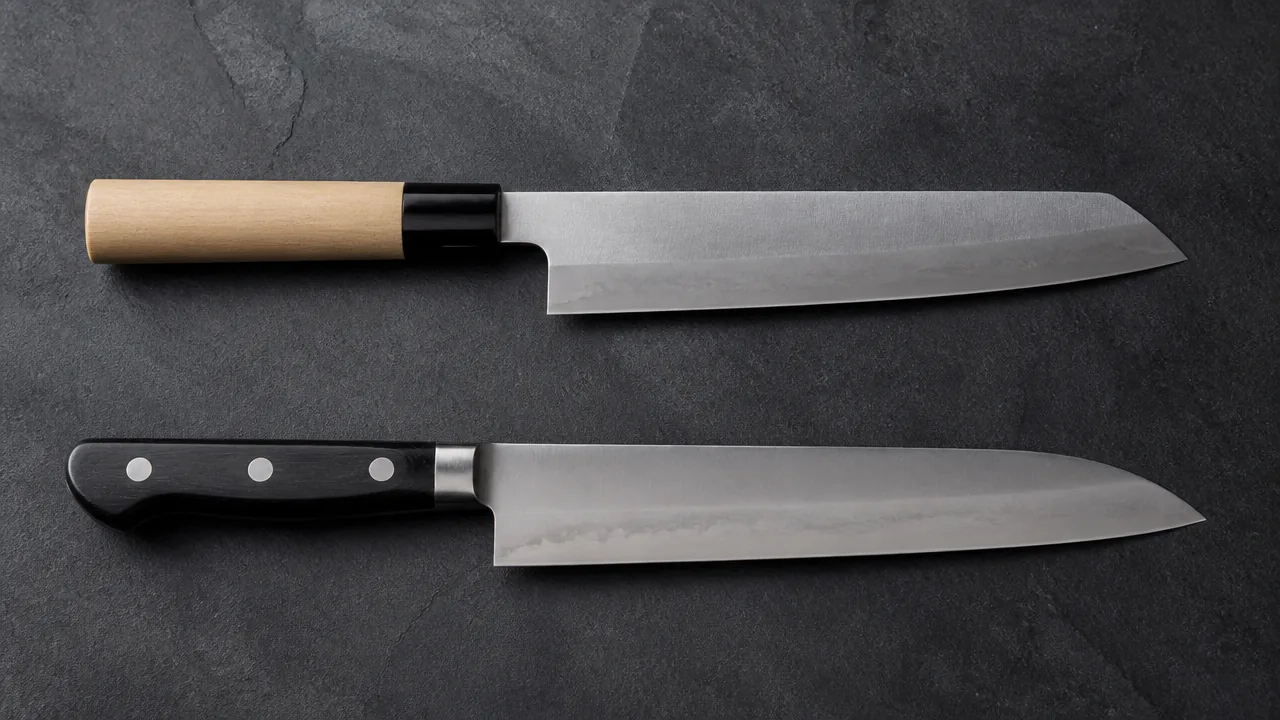
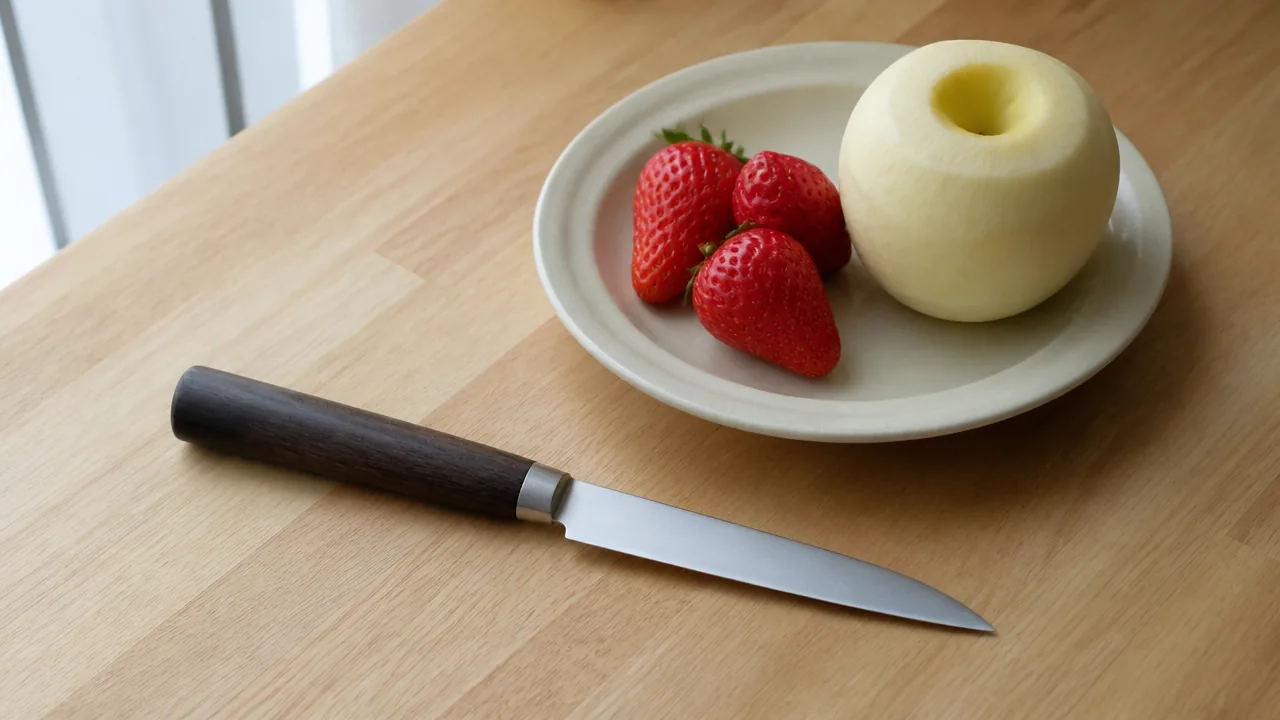
A petty knife is essentially the Japanese answer to a Western paring or utility knife, but it brings a noticeably different feel to the cutting board. Typically 120mm to 180mm in blade length (Tojiro’s Classic series, for example, lists petty knives at 120mm, 150mm and 180mm), it sits between a paring knife and a full-sized Gyuto — small enough for delicate trim work, long enough to slice shallots or segment citrus without frustration.
What sets Japanese petty knives apart from their Western counterparts is the geometry. Most are ground to a much thinner edge angle (MAC, for example, describes about 15° per side and Shun 16°), which makes slicing through herbs, peeling fruit, and breaking down small proteins feel almost effortless. The trade-off is that hard Japanese steel — often VG-10, Aogami Super, or similar high-carbon alloys — requires a bit more care than a soft stainless workhorse. If you already own a Santoku or Nakiri and find yourself reaching for a smaller blade constantly, a petty knife is almost certainly the gap you are trying to fill.
If you are brand new to Japanese knives in general, it helps to first understand how Japanese knives differ from Western-style blades before committing to a petty knife specifically — the handling differences matter more at smaller blade sizes than people expect.
How to Choose: Blade Length, Steel, and Handle Style
Before looking at specific models, it pays to be clear on three decisions that will shape how the knife fits into your daily cooking.
Blade length comes first. A 120mm petty functions almost like an extended paring knife — ideal for working in-hand or on a small board. A 150mm–165mm blade crosses into utility-knife territory (MAC calls its 6-inch, 152mm knife a Utility, and Shun calls its 6.5-inch, 165mm knife a Master Utility), giving you enough reach to handle medium proteins and longer vegetables. 150mm is the middle of the three Tojiro Classic petty sizes. For shorter knives in the 100–110mm range, see Best Japanese Paring Knife Under $80.
Next, consider the steel. For beginners, a double-bevel stainless or semi-stainless steel such as VG-10 is the most forgiving choice — a stainless-clad option with a softer, more forgiving edge is a common choice for beginners, since it resists rust, is easy to maintain, and still holds a very sharp edge. Higher-carbon options like Aogami (Blue Steel) are carbon steels that are not stainless, meaning greater sensitivity to moisture and acidic foods. The difference between single bevel and double bevel grinds is also worth understanding before you buy, since some traditional Japanese petty knives use a single-bevel geometry that suits right-handed users almost exclusively.
Finally, Wa handle vs Western handle is more than aesthetics. Wa handles (the octagonal or D-shaped wood handles common in Japanese knives) keep the blade closer to the fingertips and suit a pinch grip, while Western-style handles offer a fuller palm grip that some beginners find more stable early on.
Top Japanese Petty Knives for Beginners (Under $80)
Spending less does not mean settling for poor quality in this category. Several Japanese brands produce petty knives at approachable prices.
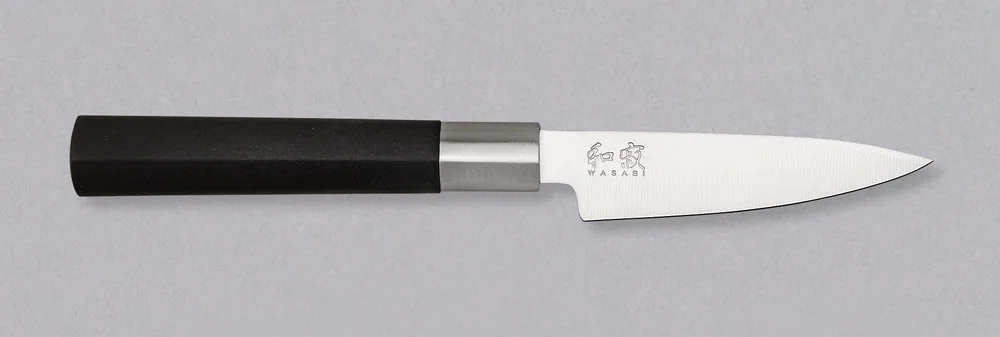
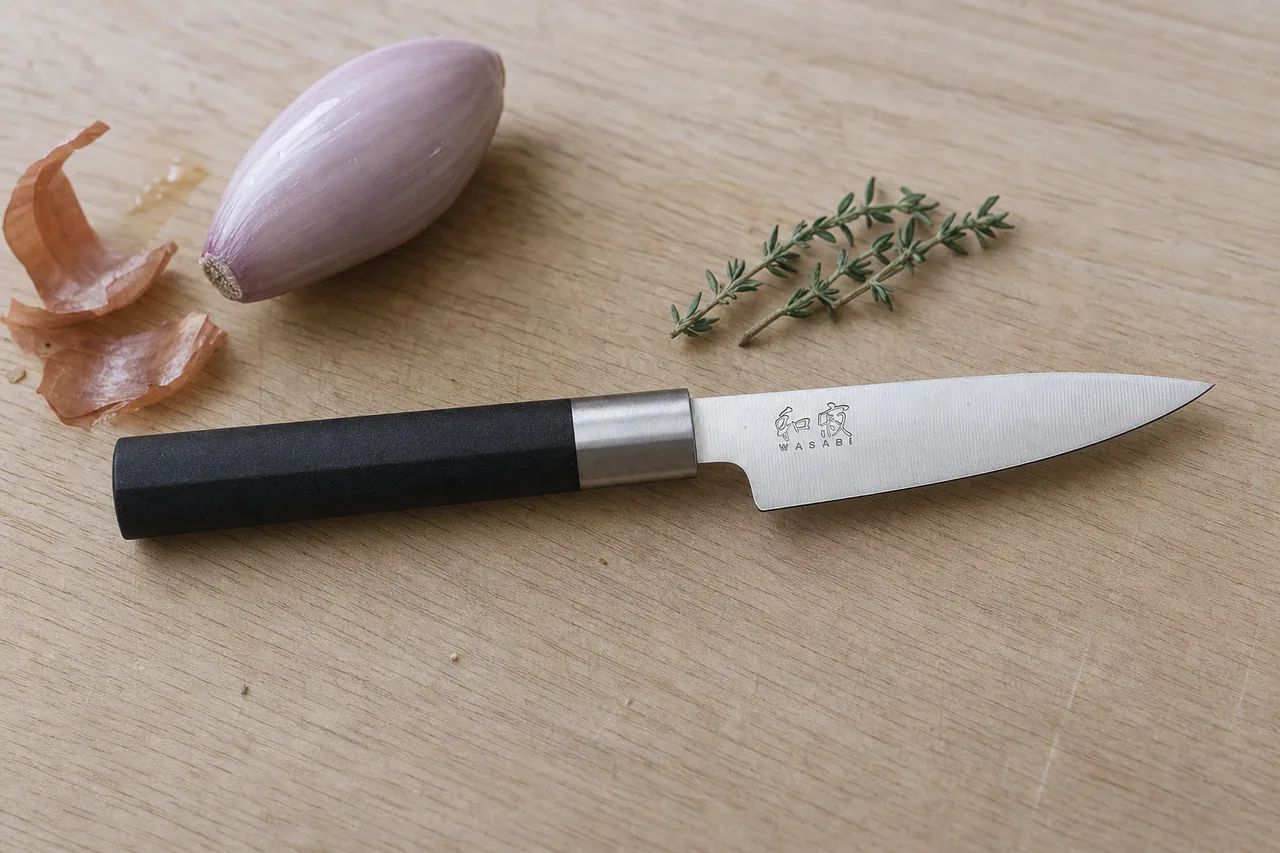
The Kai Wasabi Black Paring Knife 100mm from SharpEdge — €46.75, approximately $52 at the ECB reference rate of 1 EUR = 1.1206 USD on October 9, 2026, shipping not included — is the pick at this tier. US buyers: about $79 in total with shipping and the 25% tariff. Kai lists the Wasabi Black series as made in Japan. It will not wow you with fit and finish, but the 6A/1K6 stainless steel, hardened to HRC 58±1, is forgiving to maintain, and at 100mm it sits at the short end of the petty range, which suits in-hand work like peeling and trimming. That is a sale price (regular €55.00, about $62), so check the current price before you decide. If sharpening is a concern, pairing it with a quality whetstone will extend its lifespan dramatically — this guide to beginner sharpening stones covers what to look for.
Mid-Range Picks That Offer Real Craftmanship ($80–$200)
Once you move past the entry tier, blade geometry, fit, and steel quality improve noticeably. This is the range where Japanese petty knives start to feel like something genuinely special rather than simply functional.
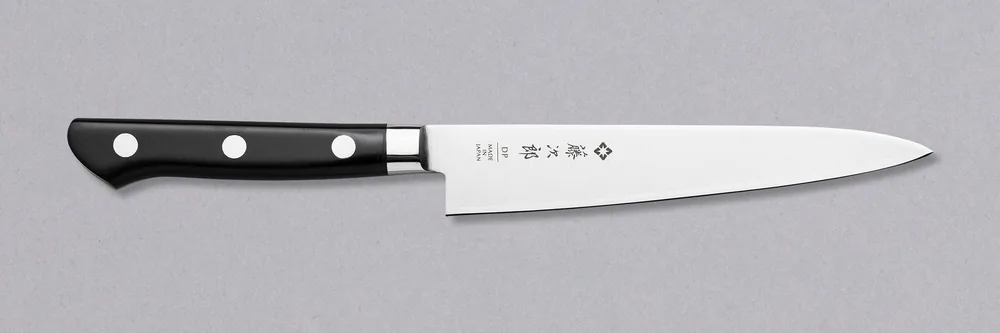
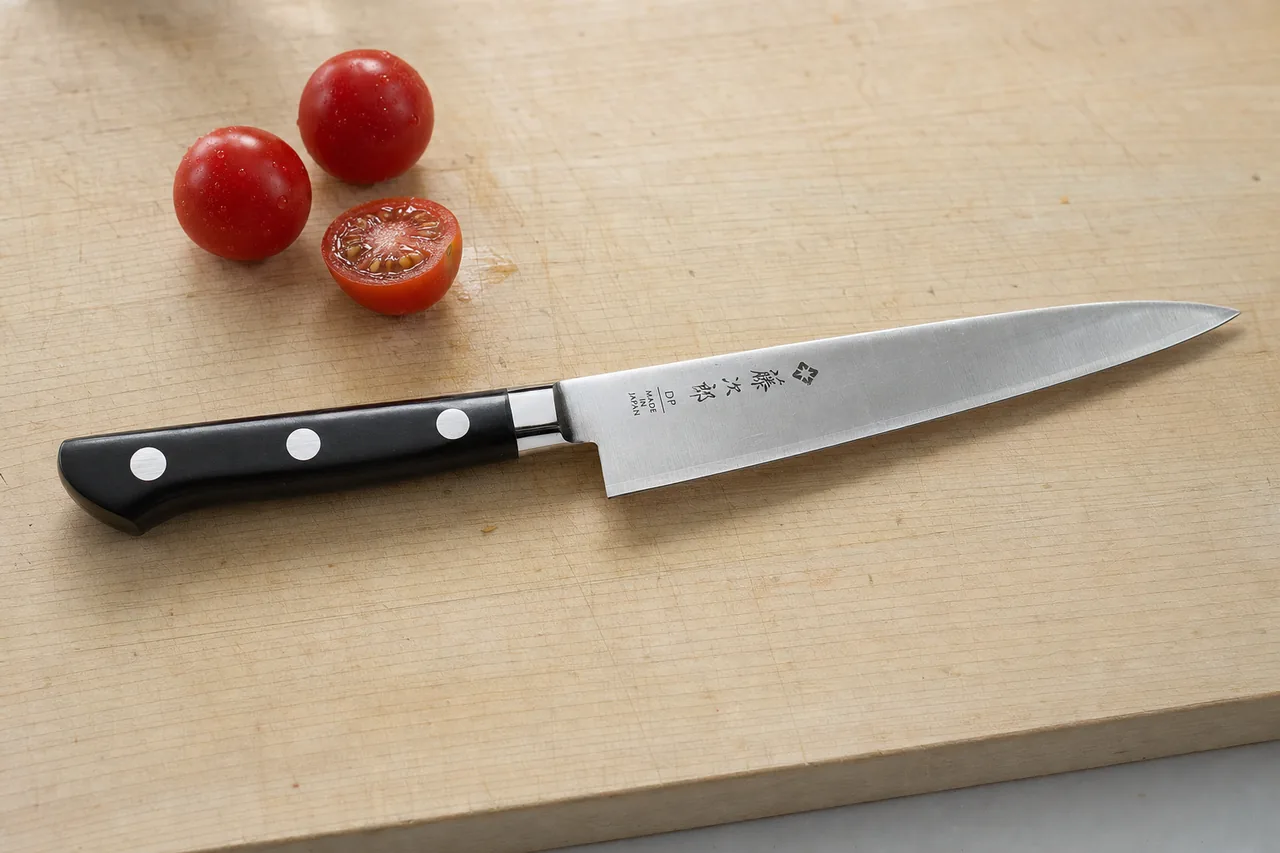
The Tojiro DP Petty 150mm from SharpEdge — €90.00, approximately $101 — is the pick at this tier. US buyers: about $140 in total with shipping and the 25% tariff. This model pairs a VG-10 core, heat treated to 60–61 HRC, with softer stainless cladding and a riveted black Micarta handle, for a blade that is plain to look at but dependable in daily use. Double-bevel grinds dominate at this price point, which keeps a knife like this accessible to left- and right-handed cooks alike, and it can be maintained on a 1000/3000 combination stone without needing specialist sharpening knowledge.
Premium and Artisan Options for Serious Cooks ($200 and Up)
At the upper end of the market, you are largely paying for hand-finishing, higher-grade steel, and the reputation of a named blacksmith or forge. Whether that premium is worth it depends entirely on how much daily use the knife will see and how much you value the experience of using a tool made with exceptional care.
For buyers considering premium Japanese cutlery as a gift, it is worth checking whether a petty knife fits better into a curated set rather than as a standalone purchase. This overview of Japanese knife gift sets includes budget tiers that make the comparison clearer.
Comparison Table: Japanese Petty Knives at a Glance
The table below summarizes the key picks discussed in this article. Prices are approximate as of early October 2026 and may vary by retailer; prices shown with a tilde are converted from euros and exclude shipping.
| Model | Price | US total (est.)* | Blade Length | Steel | Handle Style | Best For |
|---|---|---|---|---|---|---|
| Kai Wasabi Black Paring | ~$52 (€46.75) | ~$79 | 100mm | 6A/1K6 Stainless | Oval, polypropylene | Budget-conscious beginners |
| Tojiro DP Petty | ~$101 (€90.00) | ~$140 | 150mm | VG-10 | Western | Mid-range all-rounders |
*US total (est.) is an estimate for a US buyer, including shipping and the 25% tariff, as of October 2026, based on SharpEdge’s shipping page: (price + €10 shipping) × 1.25 for orders under €300, or price × 1.25 for orders of €300 or more, which ship free. Example: a €51 knife came to €76.10 at checkout for a New York address on October 3, 2026. Tariff rates can change.
Note that most of the Wa-handle options above use a double-bevel grind, making them suitable for all users. If you encounter a traditional single-bevel petty (sometimes called a Shobu or Ko-Yanagiba), be aware it is designed specifically for Japanese-style fish preparation and is not a general-purpose utility knife.

Blade lengths are from the makers’ own product pages: Tojiro, Shun and MAC (read on October 5, 2026). Sizes sold in inches are converted to millimetres.
Frequently Asked Questions
How long is a Japanese petty knife?
Tojiro’s Classic series, for example, lists petty knives at 120mm, 150mm and 180mm.
Is a petty knife the same as a utility knife?
Makers name knives of this size differently. MAC calls its 6-inch (152mm) knife a Utility, and Shun calls its 6.5-inch (165mm) knife a Master Utility.
What edge angle do Japanese petty knives have?
MAC describes about 15° per side for its knives and Shun 16°.
Final Verdict: Which Petty Knife Should You Buy?
The honest answer is that most cooks will be well-served by something in the $50–$105 range, particularly if this is their first Japanese petty knife. The performance gap between an entry-level pick and a $300 artisan piece is real, but it becomes meaningful only once you have developed the sharpening habits and cutting technique to actually exploit a harder, thinner edge.
A practical framework for deciding:
- If you cook casually and want minimal upkeep, start with the Kai Wasabi Black. It is easy to sharpen and very forgiving.
- If you already own a couple of Japanese knives and want something that feels like an upgrade in your hand, the Tojiro DP Petty hits that mark without requiring expert maintenance.
One thing to keep in mind regardless of budget: even a mid-range Japanese petty knife is only as good as the care you give it. Keep it off glass cutting boards, dry it promptly, and give it occasional time on a whetstone. The philosophy behind that kind of ongoing care is something Japanese craft traditions — from knife-making to the kintsugi approach of repairing what you value rather than discarding it — have always understood intuitively.
Ready to pick your knife? Use the product links in the sections above to check current prices and availability at each retailer before you decide.
Product images are illustrative renderings based on retailer product photos.