How this article was made: Research-based comparison. It draws on published information from makers, retailers, and reference sources, not on hands-on testing.
Hongasumi vs Kasumi: The Short Answer
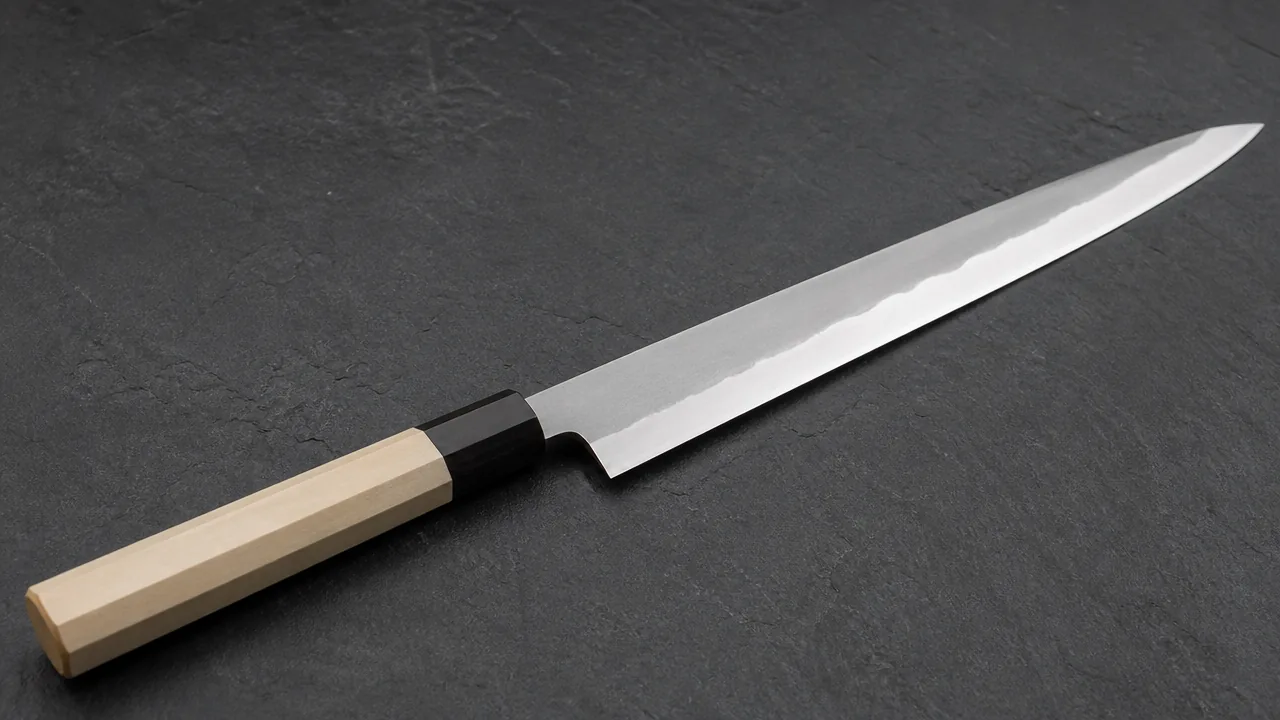
Kasumi and hongasumi knives share the same construction, soft iron forge-welded to a hard steel edge, and hongasumi is generally understood to be the higher grade of the two: more careful grinding and finishing, and often a better steel. The difference is one of grade and workmanship, not of basic structure.
You will see both words on traditional single-bevel knives such as yanagiba, deba, and usuba. Hongasumi is also written hon-kasumi or honkasumi (本霞); they are the same word.
One caution before going further: these are trade terms rather than a certified standard, and makers do not all use them in the same way. This guide explains what each term usually means, shows where knife makers and retailers describe the difference, and then covers what to actually check when you compare two knives.
What Kasumi Means
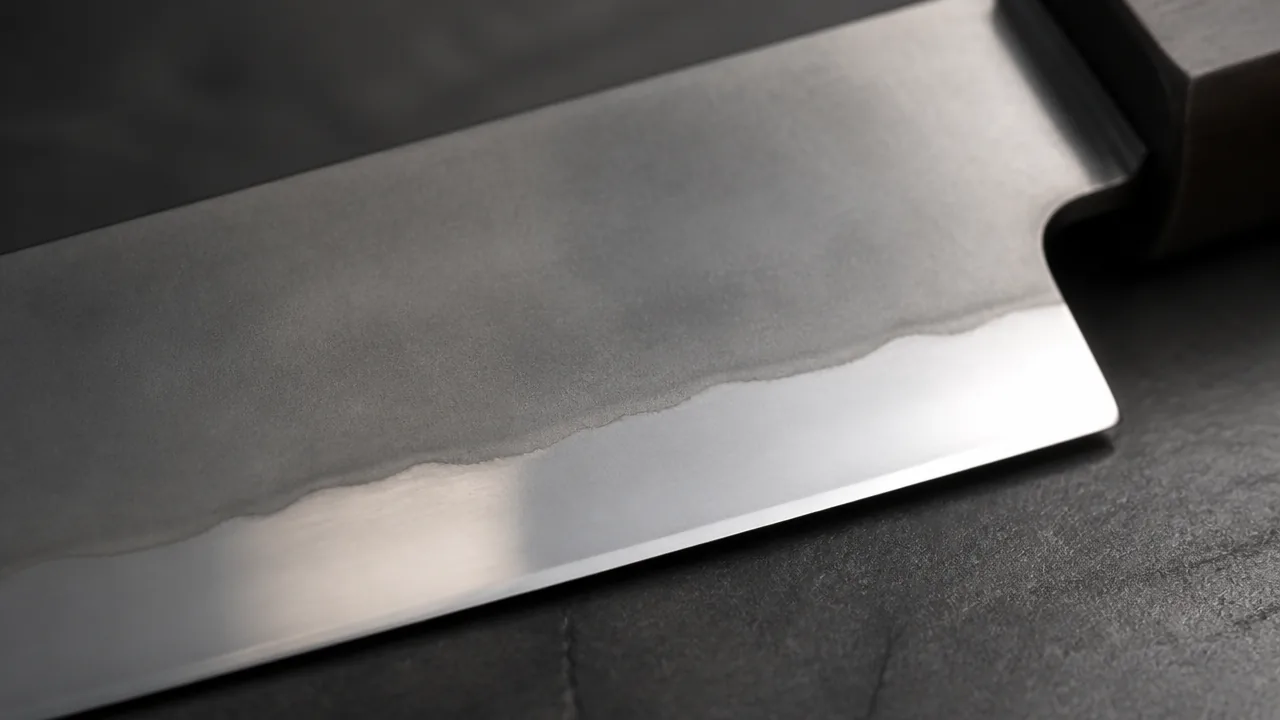
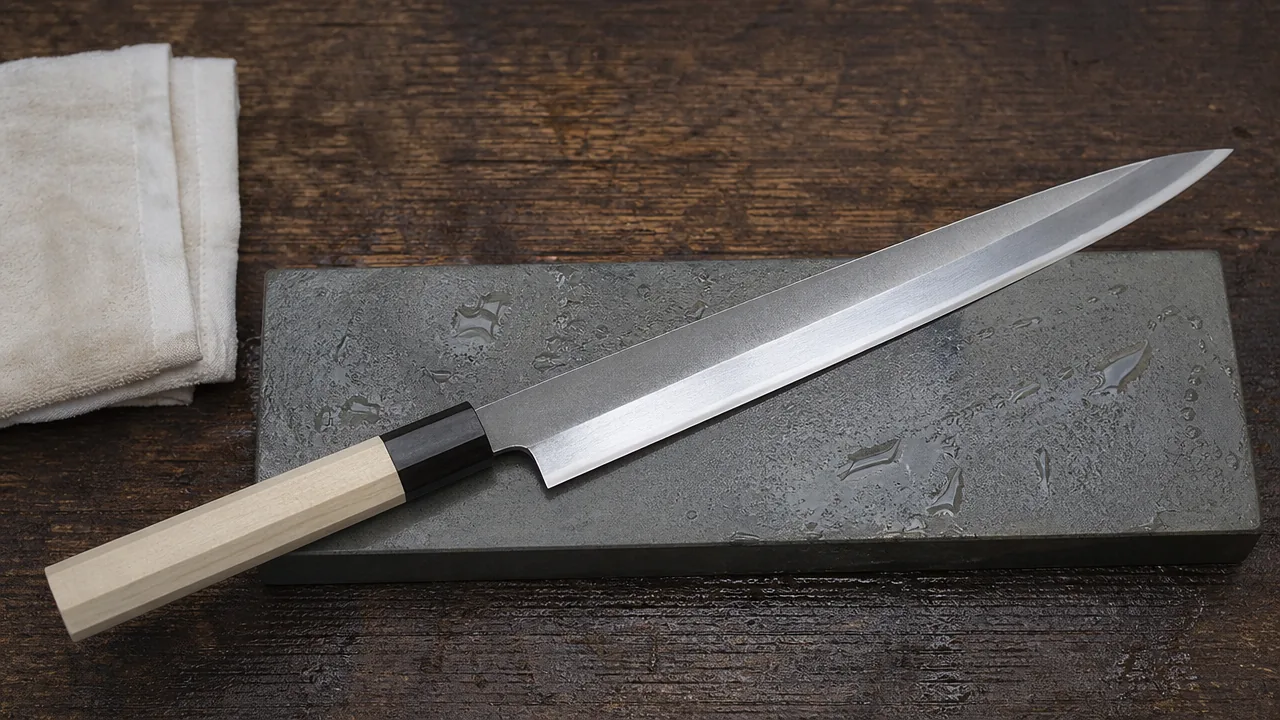
Kasumi (霞) means “mist,” and it describes how the blade looks: the soft iron part stays hazy while the hard steel at the edge takes a bright polish. US knife retailer Korin explains that craftsmen forge kasumi knives by joining a piece of soft iron with a piece of carbon steel, and that the name refers to the hazy appearance of the soft iron body next to the glossy steel.
The Sakai knife maker Suisin gives a practical description of the same thing in its explanation of the terms: when one of these knives is sharpened on a 1000 to 2000 grit stone, the steel shines like a mirror, while the soft iron stays matte, as if covered in mist.
The two materials do different jobs:
- Hagane (hard steel): forms the cutting edge and takes the heat treatment
- Jigane (soft iron): backs the steel and supports it, and does not harden
Because most of the surface you sharpen is soft iron, these knives are generally described as easier to sharpen than honyaki knives, which are made from a single piece of steel. Our guide to honyaki covers that contrast, and Japanese Knife Steel Types Explained explains the steels used for the edge.
What Hongasumi Adds
Hongasumi (本霞) is usually described as high-grade kasumi: the same two-material construction, made with more steps and finished to a higher standard. Korin puts it this way: hongasumi knives are high-grade kasumi knives, often made of higher quality materials, with more steps involved in the forging, tempering, and finishing processes.
Suisin’s explanation focuses on the grinding. In theory the two are the same, it says, and the difference lies in the finish: kasumi gets the standard grade of grinding, while hon-kasumi gets the upper grade. It also describes kasumi as applied to steels such as White #2, and hon-kasumi to steels such as Blue #2, on the reasoning that a better knife is given better edge work, which is why the prices differ.
In practice, the things that tend to separate the two are:
- Finishing time: more hand work on the blade road, the edge, and the overall fit and finish
- Steel: often, though not always, a higher grade of carbon steel
- Price: higher, reflecting the extra labor and material
None of this changes what the knife is. A hongasumi yanagiba and a kasumi yanagiba are the same kind of tool, and both are distinct from honyaki.
Three Grades You May See: Kairyo, Kasumi, and Hon-Kasumi
Some Sakai sellers describe three grades of finish, from kairyo at the bottom to hon-kasumi at the top. A specialty shop for the Sakai Takayuki brand lists them as kairyo-togi, kasumi-togi, and hon-kasumi-togi, and describes kairyo as the least expensive and hon-kasumi as the most expensive and most labor-intensive.
- Kairyo-kasumi (改良霞): the budget finish. Suisin describes it, a little wryly, as a knife where what has been “improved” is the price
- Kasumi (霞): the standard finish. The Sakai Takayuki shop describes the blade road being rubbed and blurred to bring out the misty look, which takes time and gives a more attractive result
- Hon-kasumi (本霞): the grade above kasumi, with the most finishing work
For a look at how Sakai knives are forged and finished, see our report from Sakai Knife Museum CUT.
The Label Is Not a Fixed Standard
The same word can sit on different steels depending on the maker, so the label alone does not tell you what you are buying. Suisin’s explanation links hon-kasumi with Blue #2 steel. Sakai Takayuki, on the other hand, sells a deba line labelled 本霞研 (hon-kasumi finish) that uses White #3 steel, which the shop describes as a little softer than White #2 and easy to sharpen.
Both uses are legitimate. They show that hongasumi describes the level of finish a maker gives a knife within its own range, not a guaranteed steel or a shared industry specification. A hongasumi knife from one maker and a kasumi knife from another are not directly comparable by name alone.
Hongasumi vs Kasumi at a Glance
Side by side, the two differ in finish, typical steel, and price, and match in construction and care.
| Kasumi | Hongasumi | |
|---|---|---|
| Construction | Soft iron joined to hard steel | The same |
| Grade | Standard | Higher grade of kasumi |
| Finishing | Standard grinding and finish | More steps and more hand finishing |
| Steel | Varies by maker | Often a higher grade, but varies by maker |
| Price | Lower | Higher |
| Sharpening | Easier than honyaki | Easier than honyaki |
| Care | Usually carbon steel: wash and dry promptly | The same |
Which One Should You Choose?
For a first single-bevel knife, a kasumi knife from a reputable maker is usually the sensible choice; hongasumi makes sense when you will use the knife often and care about a finer finish.
- Choose kasumi if you are learning to use and sharpen a single-bevel knife, or want a working knife at a lower price. Mistakes on the stones are less costly.
- Choose hongasumi if you already sharpen confidently, use the knife regularly, and are willing to pay for extra finishing and, often, a better steel.
Whichever you choose, look past the label and check three things on the listing: the steel (for example White #2, White #3, or Blue #2), the maker, and how the finish is described. Suisin notes that Blue #2 holds its edge somewhat longer than White #2, so the steel often tells you more about how the knife will behave than the grade name does.
If you are still deciding whether a single-bevel knife is right for you at all, start with Single Bevel vs Double Bevel and Deba vs Yanagiba. When your knife arrives, How to Sharpen a Japanese Knife with a Whetstone walks through the basics.
Final Thoughts
Hongasumi and kasumi are two grades of one traditional construction, not two different kinds of knife. Kasumi names the misty look of soft iron against polished steel; hongasumi signals that a maker has put more work, and often better steel, into the same design.
Because makers use the words in their own way, treat them as a starting point. The steel, the maker’s reputation, and the quality of the finish in front of you matter more than which of the two words is on the box.
Frequently Asked Questions
Is hongasumi better than kasumi?
Hongasumi is generally the higher grade: it is usually described as kasumi made with more steps and a finer finish, and often a better steel. Whether that is worth the extra cost depends on how much you will use the knife.
Is hongasumi the same as honyaki?
No. Hongasumi is still a two-material knife, soft iron joined to hard steel. Honyaki knives are made from a single piece of steel and are harder to sharpen and less forgiving.
Does a hongasumi knife stay sharp longer?
Edge retention depends mainly on the steel and heat treatment, not on the grade name. A hongasumi knife often uses a higher grade of steel, but check the steel listed for the specific knife.
Are hongasumi knives harder to sharpen?
Not because of the grade. Both are mostly soft iron on the surface you sharpen, which is why they are generally considered easier to sharpen than honyaki knives.
Are hongasumi, hon-kasumi, and honkasumi different things?
No. They are different spellings of the same Japanese word, 本霞.
Not sure a single-bevel knife is for you yet? Our guide to single bevel versus double bevel knives is the best place to start.