How this article was made: Research-based comparison. It draws on published information from makers, retailers, and reference sources, not on hands-on testing.
A Brand Name Tells You Less Than Where and How a Knife Is Made
A famous name does not guarantee a good knife, and an unfamiliar one does not rule it out. The most useful clues about a Japanese knife’s quality are its region of origin, how it was made, and the steel at its core, not the logo on the blade. Brands still matter as a shorthand, because each one tends to sit in a recognizable region, price range, and style.
This guide places seven well-known Japanese knife brands in that context, explains how the main knife-making regions differ, and lists what to check before you let a brand name decide your purchase.
Sakai, Seki, Tsubame-Sanjo: How the Main Knife-Making Regions Differ
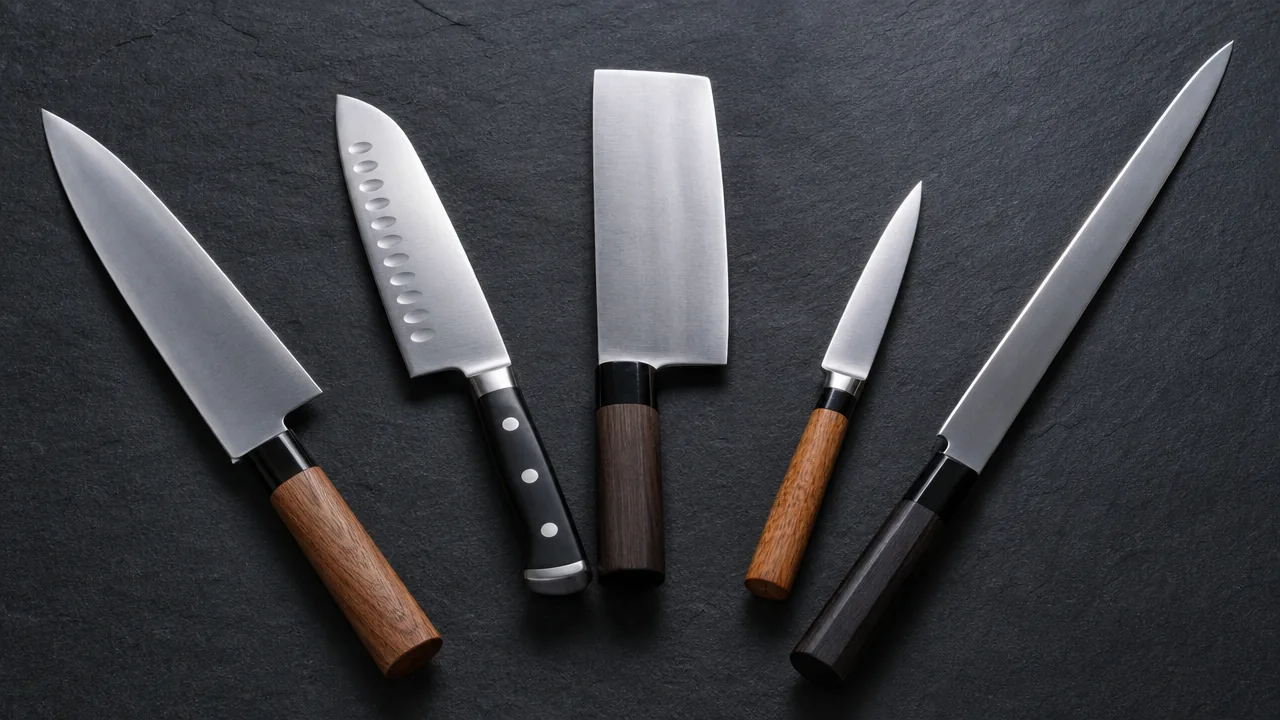
Japan’s knife industry is concentrated in a handful of historic districts, and knowing which one a brand comes from explains a lot about its knives. The descriptions below are general tendencies rather than rules, since every region has both large factories and small workshops.
| Region | Often known for | Brands in this guide |
|---|---|---|
| Sakai (Osaka Prefecture) | A centuries-old blade-making tradition, often associated with professional knives for Japanese cuisine | Sakai Takayuki |
| Seki (Gifu Prefecture) | A sword-making heritage often described as over 800 years old, and today several of the larger cutlery companies | Kanetsune, Misono, Shun, Miyabi |
| Tsubame-Sanjo (Niigata Prefecture) | A traditional metalworking district with a strong tool and cutlery industry | Tojiro |
| Tokyo | Long-established makers serving professional kitchens | Masamoto |
Other centers exist too, such as the Takefu Knife Village in Echizen, Fukui Prefecture, where a group of smiths work together.
Seven Japanese Knife Brands Worth Knowing
Kanetsune is a Seki brand made by Kitasho Co., Ltd., known for accessible stainless lines as well as Damascus-clad VG-10 models that appear in our gyuto and nakiri guides.
Sakai Takayuki comes from Sakai and offers a broad range, from Damascus-clad VG-10 knives to carbon-steel and gift-set options, and it is a common first name people meet when shopping for a Sakai-made knife.
Tojiro is based in Tsubame-Sanjo, Niigata, and its DP line, a hard VG-10 core clad in softer stainless steel, is widely regarded as a strong value for the money.
Misono makes its knives in Seki, and its UX10 line in Swedish stainless steel has a reputation as a favorite among working chefs.
Masamoto is a long-established Tokyo maker with a reputation for traditional knives, including honyaki knives forged from a single piece of steel, as well as double bevel gyuto used in professional kitchens.
Shun is the consumer line of Kai Corporation, a large Seki company, and it brought Japanese-made knives to many Western home cooks in the early 2000s.
Miyabi is a brand of the German company Zwilling, made in Seki, which makes it a useful reminder that ownership and place of manufacture are two separate questions.
A brand is best treated as a starting point for research, not as proof of quality. Lines within a single brand can differ enormously in steel, construction, and price, so the specific model matters far more than the name above it.
What to Check Before You Trust the Brand
Once you have a short list, these features tell you more about a knife than its maker’s name does:
- Core steel and hardness: whether the edge is VG-10, a carbon steel such as Aogami or Shirogami, or another alloy determines sharpness, edge retention, and upkeep. Our guide to Japanese knife steel types explains the main options.
- Construction and finish: a Damascus pattern is a construction technique, not a steel grade, and it does not change how a knife cuts. See Damascus vs Non-Damascus before paying extra for the look.
- Edge geometry: single bevel and double bevel knives suit different tasks and different users, as covered in Single Bevel vs Double Bevel Japanese Knives.
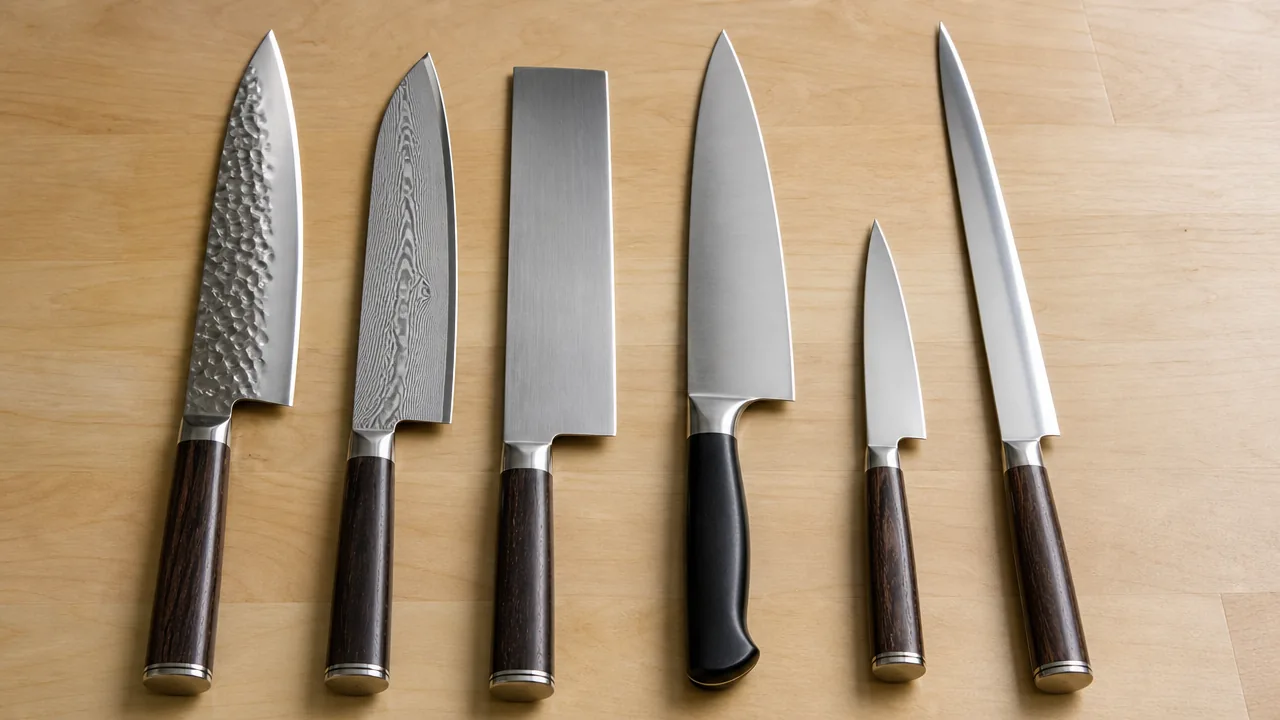
- Knife shape and length: a gyuto, santoku, and nakiri each suit different cooking habits, and a well-chosen shape from a modest brand will serve you better than the wrong shape from a famous one.
- Handle and balance: a wa handle and a Western handle feel different in the hand, and comfort matters as much as the blade.
- Whether the seller states the steel, hardness, and place of manufacture: clear specifications are a better sign than a well-known logo, and vague listings deserve caution, especially for popular brands that are widely imitated.
Frequently Asked Questions
Is a famous brand always better than a lesser-known maker?
No. A well-known name often reflects distribution and marketing as well as quality. Small workshops can make excellent knives without much brand recognition, and large companies can make weaker lines. Judge the specific knife by its steel, construction, and how it is finished.
Does Made in Japan guarantee a good knife?
It tells you where the knife was made, not how well. Quality still depends on the core steel, the heat treatment, and the grind. Look for listings that state the steel type and hardness rather than relying on the origin label alone.
Is Miyabi a Japanese or a German brand?
Both, in different senses. Miyabi is owned by the German company Zwilling, and its knives are made in Seki, Japan. That combination is common enough that it is worth checking ownership and manufacturing location separately for any brand.
Which region makes the best Japanese knives?
There is no single best region. Sakai, Seki, and Tsubame-Sanjo each have strong traditions and produce both entry-level and high-end knives. A region can suggest a style, but the individual maker and model matter more.
Related Reading
If you already know which knife you need, Best Japanese Gyuto Knife 2026 and Best Japanese Nakiri Knife 2026 compare specific models across price tiers. For the technical background behind the advice above, start with Japanese Knife Steel Types Explained, then Damascus vs Non-Damascus and Single Bevel vs Double Bevel Japanese Knives. To see how single-steel forging differs from the more common clad construction, read What Is Honyaki?.
Start from the knife type and the steel you want, then let the brand and region narrow the shortlist.